
Business
How Artificial Turf Increases Curb Appeal with Minimal Maintenance

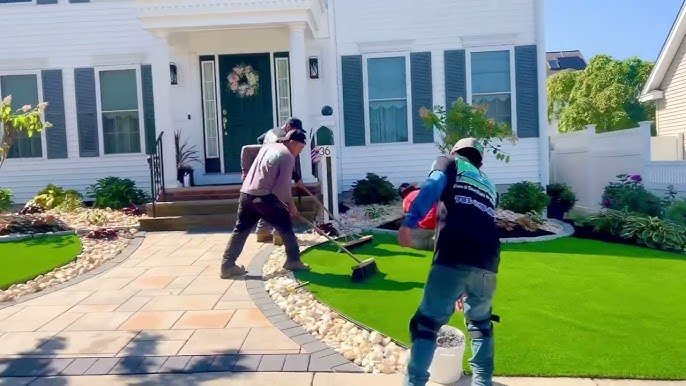
Curb appeal plays a significant role in shaping first impressions, whether for residential properties or commercial spaces. A well-maintained exterior not only enhances visual appeal but can also increase property value and attract potential buyers or clients. However, maintaining a lush, green lawn can be time-consuming and resource-intensive. Artificial turf has emerged as a practical and aesthetically pleasing alternative, offering the appearance of natural grass without the ongoing upkeep. By combining durability, consistency, and versatility, artificial turf provides a reliable solution for improving curb appeal with minimal maintenance requirements.
Consistent Green Appearance Year-Round
One of the primary advantages of artificial turf is its ability to maintain a vibrant, green appearance throughout the year. Natural grass is highly dependent on weather conditions, soil quality, and regular care. Seasonal changes, drought, and foot traffic can lead to brown patches, uneven growth, and an overall inconsistent look.
Artificial turf eliminates these challenges by providing a uniform surface that remains visually appealing regardless of climate conditions. It does not require watering, mowing, or fertilizing to retain its color and texture. This consistency ensures that properties always present a polished and well-kept appearance, which is particularly valuable for homeowners seeking to make a positive impression or businesses aiming to attract customers.
Additionally, modern turf products are designed to mimic the look and feel of real grass, making it difficult to distinguish between synthetic and natural surfaces. This realistic appearance enhances the overall aesthetic of a property without the maintenance burden associated with traditional lawns.
Reduced Maintenance and Long-Term Cost Savings
Maintaining a natural lawn involves regular mowing, watering, fertilizing, and pest control, all of which require time and financial investment. Artificial turf significantly reduces these ongoing maintenance demands, making it an attractive option for busy property owners.
With artificial turf, routine care is minimal. Occasional debris removal, light brushing, and periodic rinsing are typically sufficient to keep the surface clean and functional. This reduction in maintenance tasks frees up time and eliminates the need for specialized equipment such as lawnmowers or irrigation systems.
Over time, these savings can offset the initial installation cost. Lower water usage reduces utility bills, while the absence of fertilizers and pesticides minimizes recurring expenses. For those seeking a balance between aesthetics and practicality, artificial turf offers a cost-effective solution that delivers long-term value.
Enhancing Design Versatility and Landscape Appeal
Artificial turf is highly versatile and can be used in a wide range of landscaping applications. Beyond traditional lawns, it can enhance patios, rooftop gardens, walkways, and decorative areas. This flexibility allows property owners to create visually striking designs that may not be feasible with natural grass.
For example, turf can be installed in areas with poor soil conditions, limited sunlight, or heavy foot traffic—conditions that often challenge natural grass growth. Its adaptability makes it an ideal choice for both residential and commercial properties seeking to maximize their outdoor spaces.
Professional installation also plays a key role in achieving optimal results. Experienced providers, such as artificial turf installers in Tulsa, can ensure proper ground preparation, drainage, and seamless integration with existing landscaping features. This attention to detail contributes to a clean, professional finish that enhances overall curb appeal.
By incorporating artificial turf into creative designs, property owners can elevate the visual impact of their outdoor environments while maintaining a cohesive and polished look.
Environmental and Practical Benefits
While artificial turf is often associated with convenience, it also offers several environmental and practical advantages. Reduced water consumption is one of the most significant benefits, particularly in regions where water conservation is a priority. By eliminating the need for regular irrigation, artificial turf helps conserve resources and supports sustainable landscaping practices.
Additionally, artificial turf eliminates the need for chemical treatments such as fertilizers, herbicides, and pesticides. This reduction in chemical use contributes to a cleaner and safer outdoor environment for families, pets, and visitors.
From a practical standpoint, artificial turf provides a durable surface that can withstand heavy use without showing signs of wear. It is resistant to mud, pests, and uneven growth, ensuring that outdoor spaces remain clean and functional. This durability is especially beneficial for high-traffic areas, where natural grass may struggle to recover.
Increasing Property Value and Market Appeal
Investing in curb appeal can have a direct impact on property value and marketability. A well-maintained exterior creates a strong first impression, making properties more attractive to potential buyers or tenants. Artificial turf contributes to this appeal by offering a consistently neat and visually appealing landscape.
For residential properties, a low-maintenance yard can be a significant selling point, particularly for buyers who prefer convenience and reduced upkeep. For commercial properties, an attractive exterior can enhance brand perception and create a welcoming atmosphere for clients and customers.
Real estate professionals often emphasize the importance of exterior presentation, as it sets the tone for the entire property. By installing artificial turf, property owners can ensure that their outdoor spaces remain in excellent condition with minimal effort, increasing their competitive advantage in the market.
Conclusion
Artificial turf provides a practical and visually appealing solution for enhancing curb appeal while minimizing maintenance requirements. Its ability to maintain a consistent, green appearance year-round, combined with reduced upkeep and long-term cost savings, makes it an ideal choice for modern landscaping. With its versatility, environmental benefits, and contribution to property value, artificial turf offers a comprehensive approach to improving outdoor spaces. For property owners seeking a balance between aesthetics and efficiency, it represents a smart investment that delivers lasting results.


Most property owners spend countless hours perfecting their landscaping, painting exteriors, and upgrading roofing, yet they completely overlook the very first thing visitors interact with. The ground beneath our feet and our vehicles sets an immediate tone for any residential or commercial space. A smooth, pristine surface speaks volumes about the care and maintenance of the property as a whole.
Failing to maintain your driveways, walkways, and parking lots can lead to a cascade of costly problems. Small fissures easily grow into massive potholes, creating tripping hazards and vehicle damage. Beyond the immediate physical risks, neglected asphalt or concrete significantly drags down property value. Buyers and customers form judgments within seconds of arriving, and a crumbling surface often sends them driving in the opposite direction.
Investing in high-quality, professional paving services offers incredible returns. A freshly paved surface provides a seamless, inviting aesthetic that highlights the rest of your property’s architectural features. It demonstrates a commitment to quality and safety, ensuring that every arrival is a smooth experience.
First Impressions Start at the Driveway
People naturally gravitate toward spaces that look clean and well-maintained. When clients pull into a commercial parking lot or guests arrive at a private residence, the condition of the pavement is impossible to ignore. Clean, jet-black asphalt with crisp striping immediately communicates professionalism and attention to detail.
Conversely, a lot littered with cracks, fading lines, and uneven patches signals neglect. These visual blemishes subconsciously tell visitors that the property owner cuts corners. A beautifully paved driveway acts as a red carpet for your property, welcoming people with a flawless surface that enhances the overall aesthetic.
Guarding Against Harsh Weather
Paved surfaces endure a relentless beating from the elements. Scorching summer heat causes materials to expand, while freezing winter temperatures cause contraction and ice wedging. Rainwater constantly seeks out microscopic weaknesses, pooling into areas that eventually erode the foundational base.
Professional paving contractors understand the local climate and utilize materials specifically mixed to withstand these environmental stressors. Proper grading ensures water flows away from the center, preventing the dreaded pooling that leads to structural breakdown. Applying the correct sealants at the right time provides a vital shield against UV rays and moisture, drastically extending the lifespan of the surface.
Prioritizing Safety and Liability
Aesthetic appeal is undeniably important, but safety remains the most critical function of any paved area. Deep potholes and severe cracking present serious liabilities. For business owners, an uneven walking surface drastically increases the risk of slip-and-fall accidents, which can lead to devastating legal claims. For homeowners, a degraded driveway poses a hazard to playing children and visiting elderly relatives.
High-quality paving eliminates these dangers. A perfectly leveled surface removes tripping hazards and provides adequate traction for vehicles, even in wet conditions. Addressing small defects before they escalate into major structural failures keeps everyone safe and keeps your insurance premiums manageable.
The Financial Logic of Quality Surfaces
It is easy to view paving as a heavy upfront expense, but strategic property owners view it as a long-term investment. Patching the same potholes year after year drains your maintenance budget with zero return on investment. A completely new, professionally installed surface eliminates these recurring headaches.
Furthermore, a pristine parking lot or driveway drastically boosts resale value. Real estate appraisers factor the condition of paved surfaces into their final valuations. Properties with flawless exterior infrastructure sell faster and command higher asking prices, effortlessly offsetting the initial cost of the paving project.
Achieving Flawless Surfaces for the Long Haul
Rafferty Paving guarantees smooth, resilient driveways and lots that immediately handle daily wear effortlessly. Achieving a perfect finish requires more than just pouring materials and rolling them flat. It requires a deep understanding of soil mechanics, proper drainage slopes, and precision application techniques.
When you prioritize premium materials and expert installation, you eliminate the constant stress of ongoing repairs. Your property gains a durable, beautiful foundation that withstands heavy traffic and extreme weather for decades. Taking action now ensures your surfaces remain safe, stunning, and highly functional, allowing you to enjoy the lasting benefits of a truly polished property.


Since Brexit, thousands of UK businesses have faced a new strategic question. How do you maintain access to the European single market when your company is registered in a country that is no longer part of it? For many UK business owners, the answer has been to move at least part of their operations to an EU jurisdiction. But the right way to do this is far from obvious. There are multiple paths, each with different costs, tax implications, and operational consequences. Choosing wisely can save years of complications and unlock significant growth. Choosing badly can leave you with a structure that holds your business back.
This guide walks through the main options available to UK companies looking to move into the EU, and how to choose the path and partner that fits your business best.
Understand Why You Are Moving
Before choosing a method, get clear on your real motivation. Is it about maintaining EU customer access for goods and services? Is it about tax efficiency? Are you trying to attract European investors? Do you need EU passporting rights for regulated services? Each motivation points to a different solution. A pure customer-access move may only require an EU subsidiary, while a strategic tax restructuring may justify a full re-domiciliation.
Most UK businesses fall into one of three groups. Those who want to keep the UK entity but add an EU base. Those who want to fully relocate the company to the EU. And those who want to build a new EU holding structure above the existing UK operations.
Option 1: Set Up an EU Subsidiary
The simplest path is to keep your UK company and create a new subsidiary in an EU country. This new subsidiary handles your European operations, holds EU contracts, and serves European customers. The UK parent remains in place.
This option is fast, relatively inexpensive, and minimally disruptive. It works well for businesses that simply need a European face for trading purposes. The downside is that you end up with two entities to manage, two tax filings to coordinate, and the parent-subsidiary structure can create complications around dividends, transfer pricing, and double taxation if not properly planned.
Option 2: Re-Domicile Your UK Company to the EU
Re-domiciliation transfers the legal seat of your UK company to an EU jurisdiction while preserving its legal identity, contracts, banking relationships, and trading history. The company continues to exist as the same legal entity. It simply changes its country of registration.
This is the most strategic option for businesses that want to fully commit to an EU presence. It avoids the complexity of running parallel entities, simplifies tax structures, and signals long-term intent to European partners, customers, and investors. However, it requires careful planning and the right legal partner, since not all EU jurisdictions allow re-domiciliation from the UK.
Option 3: Build an EU Holding Structure
A more sophisticated approach is to set up an EU holding company that sits above your existing UK operations. The holding company becomes the new top of your corporate structure, holds shares in the UK entity, and can also own future EU subsidiaries. This approach is particularly attractive for groups planning multi-country expansion, IP centralisation, or future investment rounds.
The holding company can be based in an EU jurisdiction that offers favourable participation exemptions, treaty access, and stable governance. Cyprus is one of the most popular choices for this purpose, alongside Ireland, the Netherlands, and Luxembourg.
A specialised relocation advisor like Taxwedo, focuses entirely on helping international businesses plan and execute their move to Cyprus, covering strategic structuring and operational setup.
How to Choose the Right EU Jurisdiction
The destination country matters enormously. The most popular options for UK businesses moving to the EU include the following.
Cyprus offers a 15 percent corporate tax rate (raised from 12.5 percent on 1 January 2026 to align with the OECD global minimum tax), an IP Box regime that delivers an effective rate of approximately 2.5 to 3 percent on qualifying IP income through an 80 percent deduction, English common law influence, English-language administration, fast company formation in 8 to 10 working days, and a network of more than 65 double tax treaties. The reform also abolished the deemed dividend distribution rules, reduced the SDC on dividends from 17 percent to 5 percent, and removed stamp duty entirely. The country remains particularly suited to UK businesses thanks to legal and language familiarity.
Ireland offers a similar 15 percent corporate tax rate for large multinationals (12.5 percent for smaller businesses below the OECD threshold), English language, and strong investor credibility, but with significantly higher operating costs and office rents.
The Netherlands is excellent for holding structures thanks to its participation exemption and treaty network, but has a higher headline corporate tax rate of 25.8 percent.
Estonia offers a unique deferred corporate tax system and digital-friendly administration, ideal for fully remote, digital businesses but less suited to traditional operations.
Malta provides specialised regimes for gaming, financial services, and shipping, with an effective tax rate around 5 percent through its refund mechanism, but slower processing and more complex tax mechanics.
For most UK business owners, Cyprus offers the most balanced combination of tax efficiency, common law familiarity, speed of setup, EU access, and reasonable cost.
How to Choose the Right Partner
The path you choose is only as good as the partner who executes it. Whether you set up a subsidiary, re-domicile, or build a holding structure, the quality of advice and execution makes all the difference. Look for a partner with the following qualities.
Dual-jurisdiction expertise covering both UK and the destination country. A multidisciplinary team that includes lawyers, tax advisors, auditors, accountants, and corporate services specialists under one roof. Deep knowledge of the destination tax regime, especially the new post-2026 Cyprus framework. Transparent pricing with no hidden costs. A proven track record working with UK clients. Long-term advisory support after the move is complete. Clear, responsive communication and cultural fit.
A firm like KTC.com.cy in Cyprus, with full corporate, tax, and accounting services, exemplifies the kind of integrated partner UK businesses need when planning a serious move to the EU. You can learn more at https://www.ktc.com.cy/.
Plan for Substance From Day One
Whichever option you choose, modern EU rules require real economic substance. A paper company with no operations, no employees, and no local decision-making will not pass scrutiny from tax authorities. When choosing your partner and your destination, make sure substance planning is built into the strategy from the start. This includes genuine office space, local directors or employees, and operational activity in the country.
Cyprus is particularly attractive on this front because building substance is affordable. Office rents, salaries, and professional services are significantly cheaper than in Ireland, the Netherlands, or Germany, while the legal and regulatory environment remains fully EU compliant. The 2026 reform also extended the loss carry-forward period from five to up to ten years and preserved the 120 percent super-deduction for qualifying R&D expenditure, both of which support businesses building genuine operational presence.
Final Thoughts
Moving your company from the UK to the EU is one of the most consequential strategic decisions a post-Brexit business can make. The right choice depends on your goals, your industry, your tax position, and your growth plans. For most UK business owners, the combination of speed, EU-compliant 15 percent corporate tax, common law familiarity, and reasonable cost makes Cyprus the most balanced destination. The 2026 tax reform brought Cyprus fully in line with OECD standards while preserving its core competitive advantages, which actually strengthens its appeal to UK businesses that want a credible, future-proof EU base. Take the time to compare options, talk to experienced advisors, and choose a partner who can guide you through the legal, tax, and operational details. A well-executed move to the EU does more than solve a Brexit problem. It positions your business for the next decade of European growth.

Keeping employees safe is the fundamental responsibility of any business owner or facility manager. Yet, countless organizations struggle to implement safety protocols that actually become part of the daily routine. Often, companies treat safety as a tedious checklist rather than an integral component of their operational strategy. This reactive approach leaves employees vulnerable to preventable accidents and exposes the organization to severe financial and reputational damage.
When you prioritize the genuine well-being of your staff over basic regulatory compliance, the entire dynamic of your workplace improves. Your workforce feels genuinely valued, absenteeism drops, and overall efficiency naturally increases. Creating this type of environment requires deep expertise, consistent dedication, and the right combination of protective gear and training.
By shifting from a reactive stance to a proactive safety methodology, companies can save lives and protect their bottom line. Let us explore the vital components of a robust safety program and how investing in the right resources completely redefines organizational success.
The True Impact of Workplace Incidents
Accidents on the job carry a heavy toll that extends far beyond the initial medical response. When a worker gets injured, the immediate costs are usually covered by insurance, but the indirect consequences ripple throughout the entire company. Operations come to a sudden halt, investigations take up valuable management time, and replacement staff must be hired and trained on short notice.
Furthermore, frequent incidents severely damage team morale. Employees who feel unsafe are less engaged, less productive, and much more likely to seek employment elsewhere. High turnover rates force companies into a perpetual cycle of hiring and training, draining resources that could otherwise be spent on growth and innovation.
Preventing these incidents requires a comprehensive strategy that addresses physical hazards, human behavior, and institutional policies simultaneously. You cannot simply hand out hard hats and expect injury rates to plummet. True protection demands a systematic approach to identifying risks long before they result in a casualty.
Establishing a Resilient Safety Culture
A strong safety culture exists when every single person in the building, from the executive board to the warehouse floor, takes active responsibility for hazard prevention. This mindset does not develop overnight. It requires consistent communication, transparent reporting processes, and leadership teams that lead by example.
If supervisors bypass safety protocols to meet a tight production deadline, workers will quickly internalize the message that speed matters more than their well-being. Conversely, when managers pause operations to address a potential hazard, it proves that the company genuinely values its people.
To foster this environment, businesses must encourage employees to report near-misses without fear of reprimand. A near-miss is a warning sign, a free lesson that highlights a flaw in the current system. By analyzing these events, safety managers can adjust protocols and remove dangers before anyone actually gets hurt.
Equipping Your Team with Proper Gear
Personal protective equipment serves as the final barrier between a worker and a potential hazard. However, outfitting a team is not as simple as ordering generic supplies from a catalog. Ill-fitting or inappropriate gear can actually create new dangers. For instance, gloves that are too bulky might get caught in machinery, while improperly rated safety glasses can shatter upon impact.
Selecting the right equipment requires a detailed analysis of the specific tasks being performed. Workers handling corrosive chemicals need entirely different protection than those operating heavy construction machinery. Comfort also plays a massive role in compliance. If a respirator is unbearably hot or a harness restricts movement, employees will inevitably find excuses to take them off.
Investing in high-quality, ergonomically designed protective gear ensures that workers remain comfortable and focused throughout their shifts. When employees do not have to fight against their own equipment, they work faster and make fewer mistakes.
Navigating Complex Compliance Standards
Regulatory bodies continuously update their rules to address newly discovered occupational hazards. Keeping track of these changes and ensuring your facility remains fully compliant is a massive administrative undertaking. Fines for non-compliance are incredibly steep, and repeated violations can even result in forced facility closures.
Routine safety audits are essential for maintaining compliance and identifying blind spots in your current program. An objective, thorough audit evaluates your machinery, your chemical storage procedures, your emergency exit routes, and your documentation practices.
By regularly reviewing your procedures against the latest industry standards, you protect your company from costly citations and, more importantly, ensure that your hazard prevention strategies actually reflect modern best practices.
The Power of Continuous Safety Education
Even the most comprehensive safety manual is useless if it simply gathers dust on a shelf. Regular, engaging training sessions are crucial for keeping safety top of mind. As your operations expand and you introduce new equipment, your training programs must evolve accordingly.
Effective education goes beyond watching a generic video once a year. It involves hands-on demonstrations, interactive scenarios, and regular refresher courses. Workers need to know not only how to operate their machinery safely but also how to respond swiftly during an emergency. When people are confident in their knowledge, they make better decisions under pressure.
Securing Your Future with the Right Resources
Arbill provides the exact tools, equipment, and training required to significantly reduce workplace injuries while keeping your daily operations running smoothly. Partnering with seasoned experts allows you to implement proven hazard prevention strategies without relying on trial and error.
By upgrading your protective equipment and refining your internal training protocols, you create an environment where employees can perform their duties with total confidence. Taking these proactive steps demonstrates a profound commitment to your workforce. Ultimately, a safe business is a highly productive business, ready to tackle future challenges with a strong, healthy, and dedicated team.

GamerXO Dot Com: The Truth Behind the Xbox Phishing Network and Why Gamers Should Avoid It

How Artificial Turf Increases Curb Appeal with Minimal Maintenance

The Hidden Impact of Professional Paving on Property Value

Meet Rosemary Turner: The Mother of Actor Callum Turner

Who Is Peter Hernandez? The Real Story of Bruno Mars’ Father

Who Is Shameera? All You Need To Know About Charli XCX’s Mother
-
Biographies4 months ago
Meet Rosemary Turner: The Mother of Actor Callum Turner
-
Celebrity4 months ago
Who Is Peter Hernandez? The Real Story of Bruno Mars’ Father
-
Biographies4 months ago
Who Is Shameera? All You Need To Know About Charli XCX’s Mother
-
 Biographies4 months ago
Who Is Alvin Martin? All About the Whoopi Goldberg’s First Husband
-
 Celebrity4 months ago
All About Jazmyn Bieber: The Justin Bieber’s Little Sister’s
-
 Biographies4 months ago
Who is Todd McRae? Meet Tate McRae’s Father
-
 Biographies3 months ago
Who Is Daniel Mara? The Untold Story of Kate Mara’s Private Sibling
-
 Celebrity4 months ago
Who Is Monica Turner? All About the Life of Mike Tyson’s Former Wife