
Business
Workplace Safety Solutions That Protect Your Team


Keeping employees safe is the fundamental responsibility of any business owner or facility manager. Yet, countless organizations struggle to implement safety protocols that actually become part of the daily routine. Often, companies treat safety as a tedious checklist rather than an integral component of their operational strategy. This reactive approach leaves employees vulnerable to preventable accidents and exposes the organization to severe financial and reputational damage.
When you prioritize the genuine well-being of your staff over basic regulatory compliance, the entire dynamic of your workplace improves. Your workforce feels genuinely valued, absenteeism drops, and overall efficiency naturally increases. Creating this type of environment requires deep expertise, consistent dedication, and the right combination of protective gear and training.
By shifting from a reactive stance to a proactive safety methodology, companies can save lives and protect their bottom line. Let us explore the vital components of a robust safety program and how investing in the right resources completely redefines organizational success.
The True Impact of Workplace Incidents
Accidents on the job carry a heavy toll that extends far beyond the initial medical response. When a worker gets injured, the immediate costs are usually covered by insurance, but the indirect consequences ripple throughout the entire company. Operations come to a sudden halt, investigations take up valuable management time, and replacement staff must be hired and trained on short notice.
Furthermore, frequent incidents severely damage team morale. Employees who feel unsafe are less engaged, less productive, and much more likely to seek employment elsewhere. High turnover rates force companies into a perpetual cycle of hiring and training, draining resources that could otherwise be spent on growth and innovation.
Preventing these incidents requires a comprehensive strategy that addresses physical hazards, human behavior, and institutional policies simultaneously. You cannot simply hand out hard hats and expect injury rates to plummet. True protection demands a systematic approach to identifying risks long before they result in a casualty.
Establishing a Resilient Safety Culture
A strong safety culture exists when every single person in the building, from the executive board to the warehouse floor, takes active responsibility for hazard prevention. This mindset does not develop overnight. It requires consistent communication, transparent reporting processes, and leadership teams that lead by example. Beyond workplace communication, companies can strengthen collaboration and trust through activities such as team building London experiences, which help employees develop stronger connections and improve cooperation across different roles.
If supervisors bypass safety protocols to meet a tight production deadline, workers will quickly internalize the message that speed matters more than their well-being. Conversely, when managers pause operations to address a potential hazard, it proves that the company genuinely values its people.
To foster this environment, businesses must encourage employees to report near-misses without fear of reprimand. A near-miss is a warning sign, a free lesson that highlights a flaw in the current system. By analyzing these events, safety managers can adjust protocols and remove dangers before anyone actually gets hurt.
Equipping Your Team with Proper Gear
Personal protective equipment serves as the final barrier between a worker and a potential hazard. However, outfitting a team is not as simple as ordering generic supplies from a catalog. Ill-fitting or inappropriate gear can actually create new dangers. For instance, gloves that are too bulky might get caught in machinery, while improperly rated safety glasses can shatter upon impact.
Selecting the right equipment requires a detailed analysis of the specific tasks being performed. Workers handling corrosive chemicals need entirely different protection than those operating heavy construction machinery. Comfort also plays a massive role in compliance. If a respirator is unbearably hot or a harness restricts movement, employees will inevitably find excuses to take them off.
Investing in high-quality, ergonomically designed protective gear ensures that workers remain comfortable and focused throughout their shifts. When employees do not have to fight against their own equipment, they work faster and make fewer mistakes.
Navigating Complex Compliance Standards
Regulatory bodies continuously update their rules to address newly discovered occupational hazards. Keeping track of these changes and ensuring your facility remains fully compliant is a massive administrative undertaking. Fines for non-compliance are incredibly steep, and repeated violations can even result in forced facility closures.
Routine safety audits are essential for maintaining compliance and identifying blind spots in your current program. An objective, thorough audit evaluates your machinery, your chemical storage procedures, your emergency exit routes, and your documentation practices.
By regularly reviewing your procedures against the latest industry standards, you protect your company from costly citations and, more importantly, ensure that your hazard prevention strategies actually reflect modern best practices.
The Power of Continuous Safety Education
Even the most comprehensive safety manual is useless if it simply gathers dust on a shelf. Regular, engaging training sessions are crucial for keeping safety top of mind. As your operations expand and you introduce new equipment, your training programs must evolve accordingly.
Effective education goes beyond watching a generic video once a year. It involves hands-on demonstrations, interactive scenarios, and regular refresher courses. Workers need to know not only how to operate their machinery safely but also how to respond swiftly during an emergency. When people are confident in their knowledge, they make better decisions under pressure.
Securing Your Future with the Right Resources
Arbill provides the exact tools, equipment, and training required to significantly reduce workplace injuries while keeping your daily operations running smoothly. Partnering with seasoned experts allows you to implement proven hazard prevention strategies without relying on trial and error.
By upgrading your protective equipment and refining your internal training protocols, you create an environment where employees can perform their duties with total confidence. Taking these proactive steps demonstrates a profound commitment to your workforce. Ultimately, a safe business is a highly productive business, ready to tackle future challenges with a strong, healthy, and dedicated team.

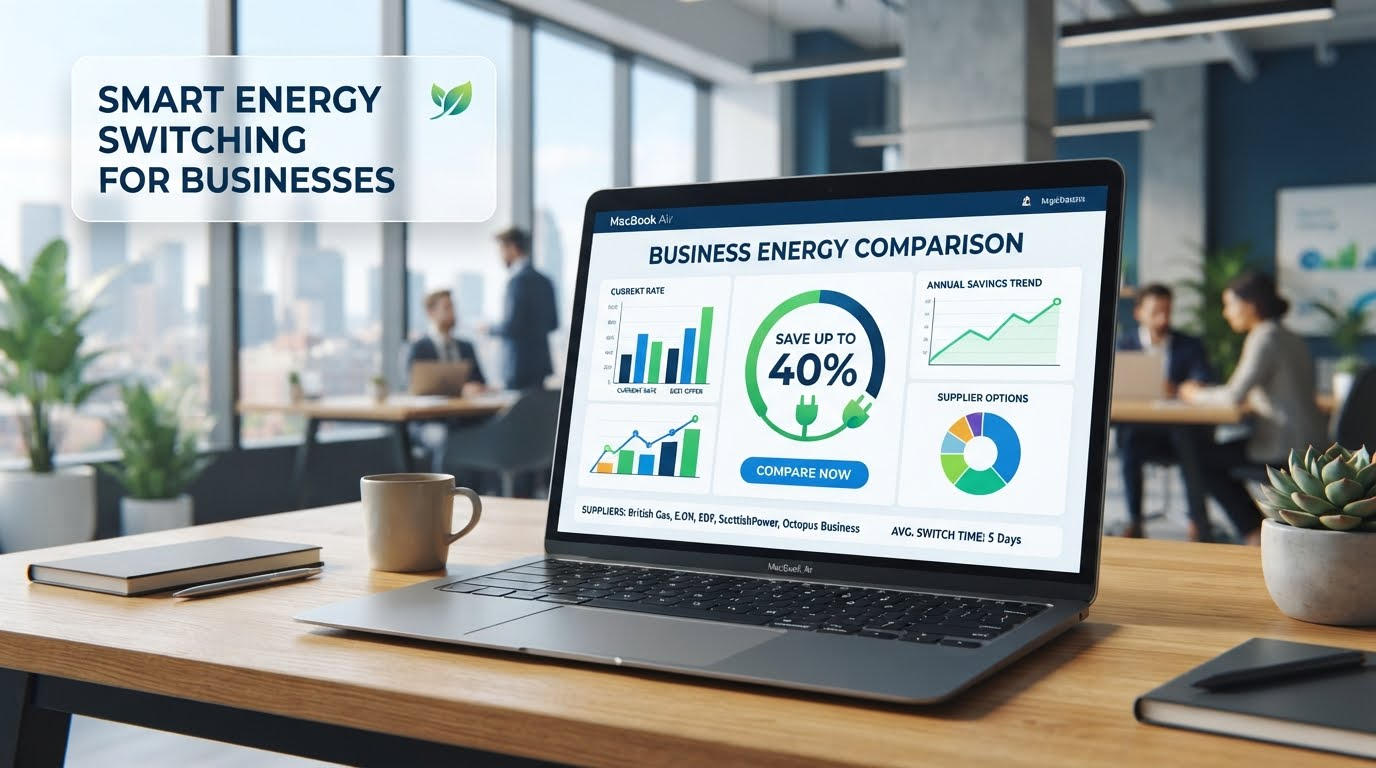
Energy has moved from the back of the ledger to the front of the boardroom. The price shocks of recent years turned what used to be a predictable overhead into one of the most unpredictable costs a business faces. For owners and finance teams trying to plan ahead, the swings have been punishing. The good news is that the same volatility that makes energy frightening also creates opportunities for businesses that approach it strategically rather than passively.
Understanding Why Business Energy Is Different
The first thing to grasp is that business energy is a different animal from the gas and electricity bill at home. There is no price cap shielding businesses from high rates. Contracts are fixed-term and cannot be exited early without penalty in most cases. And crucially, if you do nothing when a contract ends, you are not simply rolled onto a reasonable default. You are moved onto out-of-contract rates, which suppliers set high precisely because they can.
This structure rewards the organised and punishes the passive. A business that tracks its contract dates, shops the market, and times its decisions can pay dramatically less than an identical business next door that lets everything renew on autopilot.
The Case for Comparing the Whole Market
The single most effective action most businesses can take is to compare across the entire market rather than accepting a renewal offer from their current supplier. Your existing supplier has no incentive to offer you their best price at renewal, because they are betting you will not check. When you do check, by looking at what every supplier would charge for your specific consumption, the picture often changes completely.
The potential is significant. Businesses that compare properly can save up to 35% on business energy compared with the rates they would have drifted onto by doing nothing. That is not a marketing fantasy, it is the simple arithmetic of a competitive market where suppliers price aggressively to win new contracts and charge far more to retain customers who do not ask questions.
The reason the gap is so wide comes down to customer inertia. Suppliers know that most businesses will not switch, so they load their margins onto renewal and default rates. The businesses that break this pattern capture the difference.
Timing Is Everything
Energy pricing follows the wholesale market, which moves daily. This creates a timing dimension that businesses can use to their advantage. You do not have to wait until your contract ends to arrange the next one. Suppliers will let you agree a forward contract months in advance, sometimes up to a year ahead. If wholesale prices are low when you look, locking in a long fixed term protects you from future rises. If prices are high, a shorter term keeps you free to switch again when the market cools.
The practical takeaway is to treat your contract end date as a planning milestone, not a surprise. Set a reminder several months before it expires and begin comparing early. Businesses that leave it to the last minute forfeit their negotiating position and risk sliding onto expensive deemed rates in the gap between contracts.
Fixed or Flexible?
A common question is whether to choose a fixed or a variable contract. A fixed contract locks your unit rate for the term, giving you certainty and making budgeting straightforward. You know exactly what you will pay regardless of what the market does. A variable contract moves with wholesale prices, which can save money when prices fall but exposes you when they rise.
For most small and medium businesses, the certainty of a fixed contract is worth more than the gamble of a variable one, particularly in a volatile market where a sharp rise could blow a hole in the budget. Larger businesses with the expertise to manage risk sometimes prefer flexible arrangements that let them buy energy in tranches, but that is a specialist strategy rather than a default choice.
Reducing Consumption Alongside Cost
Securing a better rate is the biggest single lever, but it works best alongside efforts to use less. The combination of a lower rate and lower consumption compounds into a much smaller bill. Practical measures include upgrading to LED lighting, fitting timers and sensors so nothing runs when the premises are empty, servicing heating and cooling systems so they operate efficiently, and improving insulation to reduce the energy wasted on heating and cooling the building.
Smart meters add a layer of visibility that makes all of this easier. By showing exactly when and where energy is used, they help identify waste that would otherwise go unnoticed, such as equipment left on overnight or a heating system running longer than the building is occupied.
Avoiding the Common Pitfalls
Several mistakes crop up again and again. The first is auto-renewal, where a contract rolls over onto worse terms simply because nobody acted. The second is accepting the first renewal quote without comparing alternatives, which almost always means overpaying. The third is forgetting to note the contract end date, which leads to the dreaded gap on deemed rates. The fourth is choosing a contract based on the headline unit rate alone, without checking the standing charge, which can make a seemingly cheap deal expensive in practice.
Reading the full terms, including standing charges, exit fees, and the exact end date, prevents nasty surprises and ensures the deal that looks best really is best.
Frequently Asked Questions
Is there a price cap on business energy?
No. The price cap applies only to domestic energy. Businesses are fully exposed to market rates, which is why comparing and timing your contract matters so much more.
Why can businesses save so much by comparing?
Because suppliers price renewals and default rates high, relying on customers not to check. When you compare the whole market, you capture the gap between those inflated rates and the competitive prices suppliers offer to win new business.
Should I choose a fixed or variable contract?
Most small and medium businesses benefit from the certainty of a fixed contract, especially in a volatile market. Variable contracts can pay off when prices fall but carry real risk when they rise.
How early should I arrange my next contract?
Start three to six months before your current one ends. Suppliers allow forward contracts, so starting early gives you the widest choice and the best chance to time the market favourably.
What happens if I do nothing when my contract ends?
You are moved onto out-of-contract or deemed rates, which are among the most expensive available. Doing nothing is the single costliest choice you can make.
Energy costs will keep moving, but your exposure to them is within your control. Compare the whole market, time your contract wisely, choose the right type of deal, and pair it with sensible efficiency measures, and you can turn one of your most volatile overheads into one of your most managed.


Companies need to deliver quality products, services, and customer service to gain confidence. However, businesses must also be aware of the perception of their customers, competitors, influential parties, and the general audience in order to fully address the confidence they require to operate. Having awareness of one’s reputation allows an organization to be able to perceive the general perception of the brand and build confidence through informed decisions. Monitoring social conversations allows companies to identify and address opportunities.
Understanding reputation awareness
Reputation awareness is the extent to which an organization and its representatives know the opinions of their brand and the potential impact it may have on its customers and business. With the increasing role of social networks, there are many opinions, questions, complaints, advice, and recommendations, which can potentially affect the perception of a company.
Companies can monitor social media conversations of competitors, customers, target groups, and influencers. In other words, they always keep an eye on what user-generated content about the organization circulates on the Internet. In particular, this information is useful for drawing up sales and marketing plans and product development strategies, such as analyzing trends and identifying potential problems.
This ongoing awareness can help the company to develop beyond guesswork and speculation. It helps build confidence by providing the tools necessary for informed decision-making.
Confidence is built on a realistic assessment of the situation and the ability to make the right choice at the right moment, and social listening supports businesses in this.
How AI is revolutionizing reputation insights in 2026
With AI, it has become possible to analyze conversations without looking through each post or mentioning them one by one. Instead, teams can now look at all the mentions and analyze what the AI has pulled out for them, focusing on what decisions they need to make.
Among the many AI tools, the following features are most useful for business:
- Sentiment and emotion analysis: With the ability to sort through thousands of mentions, AI can classify content in terms of emotions, which would be impossible for a person to do in a short time. This allows organizations to measure the general perception and find out what exactly caused positive or negative emotions. Anomaly detection: AI can detect unusual mentions that may indicate a change in perception;
- Theme detection: AI can group mentions by common themes to help analyze what issues are raised and what changes are needed;
- Multilingual analysis: AI can read and understand conversations in different languages to allow companies to monitor all of them without spending time on translations;
- Visual recognition: AI can identify logos and symbols in images and video;
- Summarization: AI can extract all the information needed from thousands of mentions and compile it into a summary for analysis by the leadership.
Thanks to these tools, media monitoring software can give companies the awareness they need to determine what actions to take in different markets, regions, and languages in order to shape their reputation.
How to build an effective reputation awareness strategy
When building an awareness strategy, it is necessary to determine the goals that the company wants to achieve and the information it wants to obtain from social listening. Some of the goals that an organization can set for itself are protecting the brand, identifying and resolving problems, tracking trends, analyzing competitors, and optimizing marketing strategies. It is important to understand that not all channels are useful for achieving specific goals, and it is necessary to choose which channels to monitor, paying attention to which audiences.
Moreover, it is vital to set up notifications about specific mentions, products and services, keywords, hashtags, and industry topics using social media monitoring software. In parallel, teams can decide what actions need to be taken based on mentions. In addition, companies must monitor topics related to competitors to understand what audiences are interested in and how customers are likely to change their opinions.
How to leverage reputation insights to build confidence
It is essential that organizations translate their findings and awareness into specific action and decision-making, thus building confidence. As opinions, complaints, suggestions, and other mentions of the brand on social networks are collected, these data can be used to improve products and services.
For example, companies can find out which benefits are popular and use them in their marketing strategy. Moreover, the popularity of topics allows companies to create more relevant content and have a more personalized conversation with the audience. In addition, organizations can take customers’ questions and concerns and bring them to the attention of the relevant departments, providing an opportunity to resolve the problem and increase satisfaction.
The most important aspect of using reputation monitoring is building confidence throughout the company. By collecting and analyzing information, marketing, product, customer service, and leadership teams can make the right decisions that take into account all customers’ concerns. In parallel, companies can identify opportunities for optimizing the client experience and building confidence. This way, businesses can take a consistent and well-informed approach to reputation monitoring and awareness, which in turn increases their confidence in meeting the needs of society and industry.
Conclusion
Building confidence through reputation awareness means replacing uncertainty with continuous understanding. Businesses that consistently monitor conversations can recognize risks earlier, understand customer expectations, follow industry developments, and identify opportunities for improvement.
AI further strengthens this process by helping teams detect patterns, summarize conversations, and identify important changes at scale. When organizations combine continuous awareness with thoughtful action, they can protect their reputation while building stronger and more confident relationships with their audiences.


Figures are no longer merely numbers on financial accounts in today’s business climate, where data analysis drives decision-making. Rather, these numbers become the foundation of intelligent decision-making. Financial analysis helps CMA course participants use data and information to help firms reduce risks, save money, make a profit, and grow. Through trend analysis, budgeting, forecasting, and performance analysis, they help managers get an overall picture of the firm’s finances.
So what is CMA? It is a professional accounting credential that focuses on financial planning, managerial accounting, analysis, and decision-making. CMA professionals use financial analysis techniques to evaluate the performance of the organisation, comparing the actual performance to the budgeted figures and making pricing, investment and other decisions.
7 Ways CMA Course Professionals Utilise Financial Analytics To Make Informed Business Decisions
1. Analyse Financial Performance and Identify Trends
CMA course professionals use financial analysis to measure performance metrics such as sales, operating expenses, profits, cash flows and return on investment. The comparison of present financial figures with previous results, budgeting and forecasting will help them understand the trend, either positive or negative, and also the cause of any change in business performance.
It will allow the management team to go beyond financial statements and identify meaningful insights. For example, in case of a reduction in profitability despite constant sales, a CMA professional will be able to figure out the cause of such a situation.
2. Improve Budgeting and Financial Forecasting
Financial analytics plays the role of enabling CMAs to conduct evidence-based budgeting and forecasting, whereby they take into account past financial data, sales performance, seasonality, costs, and market trends to create accurate and realistic budgets and forecasts.
Instead of guessing outcomes, finance professionals will be able to use several methods of analysis to analyse the impact of alternative situations. This will help organisations prepare themselves for any changes in income, expenses, cash needs, or market demand.
3. Support Cost Management and Control
Cost control is one critical area in which the expertise of professionals from the CMA course is needed in applying financial analytics. Such professionals can review expenditure across departments, projects, products, and business processes to identify waste.
Financial analysis helps businesses identify the drivers of cost changes. The analysis provides the professional with insights into what measures can be put in place to control costs without undermining business performance.
4. Evaluate Investment and Capital Allocation Decisions
Firms have to make choices regarding the placement of capital, whether in technology, goods, equipment, expansion ventures, or any other form. Financial analysis is carried out by those who have completed the CMA course in order to assess the cost, benefit, risk, and gains associated with such investments.
Some of the financial indicators evaluated might include net present value, payback period, internal rate of return, and return on investment, among others. Sensitivity and scenario analyses can demonstrate how changes to the assumptions will affect the results of the investments.
5. Analyse Profitability of Products and Business Segments
Using financial analytics, CMAs are able to determine which product(s), service(s), customer, or business segment is contributing to profitability. Rather than just considering total revenues, they are able to use such measures as sales volumes, price, cost, contribution margins, and allocations to get a better perspective on profitability.
This knowledge could assist in setting prices for products, segments of customers, or product mix. In other words, even though a particular product earns revenues, that product might not necessarily be profitable because of the costs of production and distribution.
6. Strengthen Risk Management and Scenario Planning
A CMA course professional can make use of financial analytics in determining financial risks and how changes in certain business environments may have an impact on the performance of that business. This may include cash flow analysis, cost variance analysis, debt level analysis, customer concentration and other financial variables.
Scenario analysis and sensitivity analysis can then determine the effects of those changes under certain assumptions. For example, a business may determine the effect of reduced sales, increased raw material costs, increased interest rates or currency changes.
7. Turn Financial Data into Strategic Business Insights
In case you are wondering, What is CMA? It is a professional certification for management accountants that emphasises fields such as financial planning and performance, management and strategic decision-making. This enables CMAs to use financial analysis to prepare reports and interpret financial information into strategic decisions.
CMA professionals can blend financial information with business information to assist management in decision-making. Whether an organisation is considering expanding, improving efficiency, changing its pricing strategy or entering a new market, financial analytics enables it to quantify potential outcomes and connect financial performance with wider business goals.
Final Takeaway
Financial analytics allows CMA professionals to turn financial data into meaningful insights that support better budgeting, forecasting, cost management, strategic decision-making and risk assessment. With knowledge of accounting and data analysis skills, they will be able to assist companies in improving their performance through better decision-making.
Take your first step towards being a successful data-driven finance professional by joining the CMA course offered by Zell Education.
FAQs
1. What financial analytics tools are used by CMA professionals?
CMA professionals make use of Excel, business intelligence systems, ERP systems, financial planning applications and data visualisation systems.
2. Are CMA professionals able to use financial analytics for risk management?
Yes, because CMA professionals can examine financial trends and scenarios to identify financial risks.
3. How does financial analytics help with business forecasting?
Financial analytics uses historical and existing financial information to determine patterns for forecasting revenues and costs.

A Practical Guide to Cutting Your Business Energy Bills in a Volatile Market

Things to Do Near Mayfair Luxury Apartments During a London Stay

More Login Website Access Control: URL Allowlist and Blocklist Rules for Teams

Who Is Shameera? All You Need To Know About Charli XCX’s Mother

Who Is Gulliver Flynn Oldman? The Untold Story of Sir Gary Oldman’s Son

Meet Rosemary Turner: The Mother of Actor Callum Turner
-
Biographies9 months ago
Who Is Shameera? All You Need To Know About Charli XCX’s Mother
-
Biographies8 months ago
Who Is Gulliver Flynn Oldman? The Untold Story of Sir Gary Oldman’s Son
-
Biographies9 months ago
Meet Rosemary Turner: The Mother of Actor Callum Turner
-

 Biographies7 months ago
Who is Alexandra James? Inside The Life of Jeremy Clarkson’s Former Partner
-
 Biographies9 months ago
Who is Todd McRae? Meet Tate McRae’s Father
-
 Biographies8 months ago
Who Is Daniel Mara? The Untold Story of Kate Mara’s Private Sibling
-
 Celebrity9 months ago
Who Is Peter Hernandez? The Real Story of Bruno Mars’ Father
-
 Biographies9 months ago
Who Was Adrian Mayers? The Untold Life of A$AP Rocky’s Late Father