
Blog
How Long Does Simple Syrup Last?

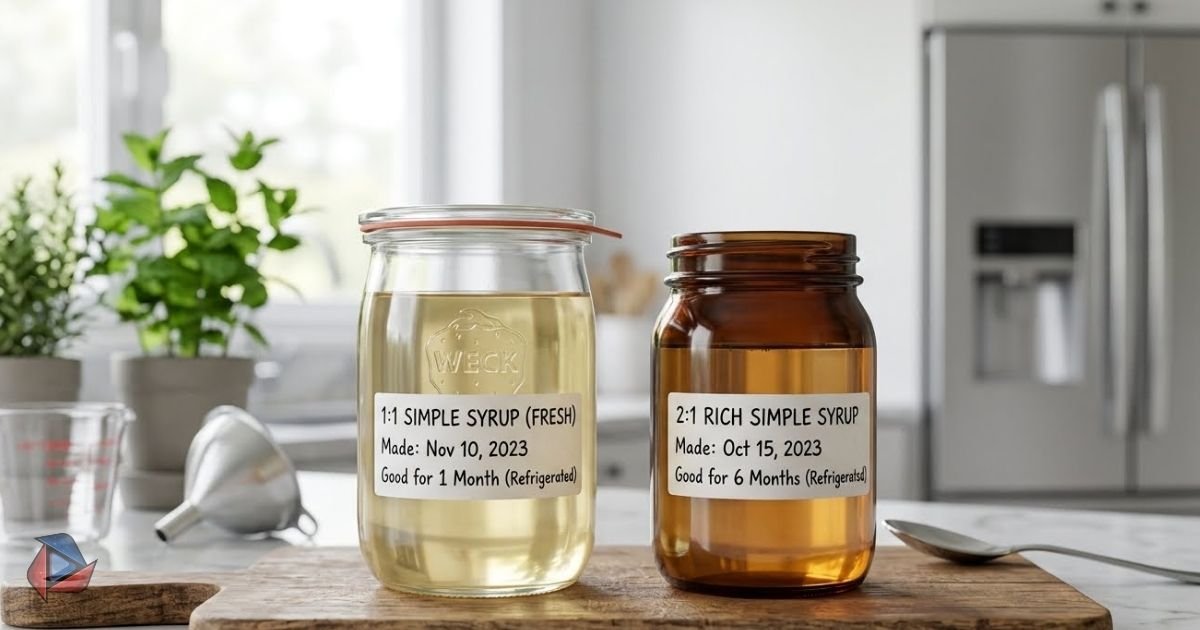
How long does simple syrup last? The answer depends on sugar ratio, storage method, contamination, and ingredients used. A standard 1:1 simple syrup typically lasts about a month in the fridge, while a 2:1 rich syrup can last up to six months due to higher Brix levels and reduced microbial growth. Understanding free water, spoilage signs, and proper storage techniques ensures your syrup stays fresh, safe, and perfectly sweet for cocktails, coffee, and baking.
What Is Simple Syrup and Why Shelf Life Matters
Simple syrup is one of the most essential liquid sweeteners in both home kitchens and professional bars. Made by dissolving sugar into water, it creates a smooth, instantly mixable sweetener that blends seamlessly into cold beverages where granulated sugar would otherwise remain gritty.
Understanding how long does simple syrup last is critical because this seemingly simple mixture is surprisingly sensitive to environmental factors. Unlike dry sugar, which can last indefinitely, simple syrup introduces water into the equation, making it vulnerable to mold, bacteria, and fermentation. The moment sugar dissolves, it transforms into a biological environment that must be managed carefully.
The shelf life of simple syrup is not fixed. Instead, it changes depending on sugar concentration, storage conditions, and exposure to contaminants. This makes it essential to understand the science behind its longevity rather than relying on rough estimates.
Standard Shelf Life of Simple Syrup
When people ask how long does simple syrup last, they are usually referring to the standard 1:1 ratio. This is the most common version used in cocktails, coffee, and baking.
A 1:1 simple syrup, which contains equal parts sugar and water, typically lasts about 3 to 4 weeks in the refrigerator when stored properly in an airtight container. At room temperature, however, its shelf life drops dramatically to around one week, as microbial activity accelerates in warmer environments.
In contrast, a 2:1 rich simple syrup can last significantly longer. Because it contains more sugar, it reaches a higher Brix level, which reduces the amount of free water available for microbes. This allows it to last up to six months in the refrigerator under optimal conditions.
These timelines are not guarantees but averages. The actual lifespan depends heavily on how the syrup is prepared, stored, and handled after opening.
The Science Behind Shelf Life and Brix Levels
To fully understand how long does simple syrup last, you need to look at the concept of Brix, which measures the percentage of sugar in a solution. A standard 1:1 syrup sits around 50° Brix, while a 2:1 syrup reaches approximately 66.7° Brix.
This difference is crucial because sugar acts as a natural preservative through osmotic pressure. At higher concentrations, sugar binds water molecules, leaving less “free water” available for microbial growth. Microorganisms like mold and bacteria require this free water to survive and reproduce.
Food science identifies a threshold around 65° Brix, where solutions begin to become self-preserving. This explains why rich simple syrup lasts much longer than standard syrup. The higher sugar concentration effectively starves microbes, slowing spoilage significantly.
In simpler terms, the more sugar present, the less room there is for bacteria and mold to thrive.
Why 1:1 Syrup Spoils Faster Than 2:1 Syrup
The reason a standard syrup has a shorter lifespan comes down to water availability. In a 1:1 mixture, there is a substantial amount of unbound water, creating an ideal environment for microbial growth.
This is often referred to as the free water problem. Even though the syrup tastes sweet, microbes are not feeding on the sugar directly. Instead, they rely on the water that remains unbound by sugar molecules.
A 2:1 syrup significantly reduces this free water. With more sugar molecules binding the available water, microbes struggle to survive. This is why rich syrup is commonly used in professional settings where longer shelf life is required.
However, even rich syrup is not completely immune to spoilage. Contamination and improper storage can still introduce bacteria and yeast into the solution.
How Storage Conditions Affect Longevity
Storage plays a massive role in determining how long does simple syrup last. Even a perfectly prepared syrup can spoil quickly if stored incorrectly.
Temperature is one of the most important factors. Refrigeration slows down microbial growth, which is why syrup lasts significantly longer in the fridge than at room temperature. Keeping the syrup consistently cold reduces the risk of fermentation and mold formation.
The type of container also matters. Glass containers are generally superior to plastic because they are non-porous and less likely to harbor bacteria. Plastic containers can develop microscopic scratches and pores that trap contaminants over time.
Another overlooked factor is headspace, or the air gap inside the container. A nearly empty bottle contains more oxygen and airborne spores, which can accelerate spoilage. Keeping syrup in a container that is as full as possible helps extend its life.
Proper sealing is equally important. An airtight container prevents new microbes from entering and slows down oxidation.
Signs That Simple Syrup Has Gone Bad
Knowing how long does simple syrup last is only part of the equation. Recognizing when it has gone bad is just as important for safety.
One of the first signs is cloudiness. Fresh syrup should be crystal clear. A cloudy appearance often indicates bacterial growth spreading throughout the liquid.
Another major indicator is mold, which may appear as dark spots, white fuzz, or floating particles. Any visible mold means the syrup should be discarded immediately.
A more subtle but serious sign is the development of a ropey or slimy texture. This is often caused by bacterial contamination, particularly from organisms that produce thick, stringy compounds.
You may also notice a sour or fermented smell, which suggests that wild yeast has begun converting the sugar into alcohol and gas. In some cases, opening the bottle may release a slight hiss, indicating fermentation.
When any of these signs appear, the syrup is no longer safe to use.
The Impact of Ingredients on Shelf Life
Not all simple syrups are created equal. The ingredients used can significantly affect how long does simple syrup last.
Syrups made with white refined sugar tend to last the longest because they contain fewer impurities. In contrast, syrups made with brown sugar or demerara sugar spoil faster due to the presence of molasses and minerals that provide nutrients for microbes.
Honey syrup presents an interesting case. While raw honey can last indefinitely on its own, diluting it with water breaks its natural defenses. As a result, honey syrup can spoil faster than standard sugar syrup.
Syrups infused with fresh fruits, herbs, or juices have the shortest shelf life. These ingredients introduce enzymes, organic matter, and microbial spores, accelerating spoilage dramatically.
On the other hand, syrups made with dried spices may last slightly longer due to their natural antimicrobial properties.
Does Adding Alcohol Make Syrup Last Longer
A common belief is that adding a splash of alcohol can extend the life of simple syrup. While this idea has some basis in science, it is often misunderstood.
For alcohol to effectively preserve a liquid at room temperature, it must reach an alcohol by volume (ABV) of around 20 to 30 percent. A small amount of vodka added to syrup does not come close to this threshold.
In fact, mixing alcohol into the syrup can dilute the sugar concentration, potentially increasing the amount of free water and making the syrup more vulnerable to spoilage.
Some professionals use a different approach known as the floating barrier technique, where a thin layer of high-proof alcohol is placed on top of the syrup rather than mixed in. This creates a protective layer that helps block airborne contamination.
However, for most home users, proper refrigeration and sterilization are far more effective than relying on alcohol.
Best Practices to Extend Shelf Life
If you want to maximize how long your syrup lasts, following a few best practices can make a significant difference.
Start by using clean, sterilized containers. Pouring boiling water into your storage jar before use helps eliminate existing bacteria.
Store the syrup in the refrigerator immediately after preparation and keep it sealed tightly. Avoid leaving it at room temperature for extended periods.
Use glass bottles whenever possible, as they are less prone to contamination than plastic.
Minimize exposure by pouring carefully and avoiding direct contact with utensils or fingers. Every time the bottle is opened, there is a chance of introducing new microbes.
Finally, consider making smaller batches more frequently. This reduces waste and ensures that your syrup is always fresh when used.
Can You Freeze Simple Syrup for Longer Storage
If you are wondering how long does simple syrup last beyond refrigeration limits, freezing is one of the most effective solutions. Unlike water, simple syrup does not freeze into a solid block because sugar lowers the freezing point. Instead, it becomes a thick, viscous gel-like substance that remains scoopable and easy to use.
This unique property makes freezing highly practical. You do not need to thaw the syrup completely before using it. A spoonful can be taken directly from the container and mixed into beverages or recipes without waiting.
When stored in a freezer-safe container, simple syrup can last up to three months or even longer without significant quality loss. However, it is still important to use airtight packaging to prevent absorption of odors from other foods. Freezing does not kill all microorganisms, but it slows their activity to near zero, preserving the syrup effectively.
Cold Process vs Boiled Syrup Shelf Life
Many people assume that boiling is necessary to make simple syrup, but this is not entirely true. The cold-process method, where sugar and water are shaken together until dissolved, can produce syrup with a similar shelf life under the right conditions.
The key factor here is not heat but sanitation. Boiling helps kill bacteria and microbes during preparation, but if a cold-process syrup is made in a properly sterilized container, it can last just as long as a boiled version.
However, boiling introduces another variable. As water evaporates during heating, the syrup’s ratio can unintentionally shift. A mixture intended to be 1:1 may become more concentrated, slightly increasing its shelf life while also altering its sweetness and thickness.
Both methods can be effective, but cleanliness and storage conditions ultimately determine how long does simple syrup last, not the preparation technique alone.
How Infusions and Flavorings Change Shelf Life
Flavored syrups are popular in cocktails, coffee, and desserts, but they significantly impact how long does simple syrup last. Adding ingredients like fresh herbs, fruits, or juices introduces new biological elements into the mixture.
Fresh ingredients contain enzymes, natural sugars, and microorganisms that accelerate spoilage. A syrup infused with mint, basil, or berries may only last one to two weeks, even when refrigerated.
These additions also create nucleation sites, tiny particles where mold spores can attach and grow more easily. This makes flavored syrups much more vulnerable than plain sugar solutions.
On the other hand, using dried spices such as cinnamon sticks or cloves can slightly extend shelf life. These ingredients contain natural compounds with mild antimicrobial properties, which can slow down microbial growth.
For best results, strained and filtered syrups tend to last longer than those with visible particles left inside.
The Role of Containers: Glass vs Plastic
Container choice is often overlooked, yet it plays a critical role in determining how long does simple syrup last. The difference between glass and plastic can be more significant than many people realize.
Glass containers are non-porous and do not retain odors or microscopic residues. This makes them ideal for repeated use, as they are easier to clean thoroughly and less likely to harbor bacteria.
Plastic containers, even food-grade ones, can develop tiny scratches and pores over time. These imperfections can trap microorganisms from previous batches, increasing the risk of contamination in future uses.
Additionally, glass provides better protection against chemical interactions and does not absorb flavors, which is especially important for flavored syrups. For long-term storage and maximum shelf life, glass is the preferred option.
Professional Techniques That Extend Shelf Life
Professional bartenders and food experts use advanced methods to extend the lifespan of simple syrup beyond typical home practices. One of the most effective techniques is thermal shock bottling, also known as the hot-fill method.
In this process, freshly boiled syrup is poured directly into a sterilized, heat-resistant glass container and sealed immediately. As the liquid cools, it creates a slight vacuum inside the bottle, reducing exposure to air and airborne contaminants.
Another technique involves controlling pH levels using small amounts of acid, such as citric acid, to create an environment less favorable for microbial growth. Commercial producers often combine this with preservatives like potassium sorbate to achieve longer shelf stability.
These methods highlight an important principle: controlling contamination at the start is often more effective than trying to fix problems later.
The Truth About Crystallization and Stability
While spoilage is a major concern, crystallization is another issue that affects syrup quality. This occurs when sugar begins to separate from the solution and form solid crystals, especially in 2:1 rich syrups.
Crystallization does not necessarily mean the syrup has gone bad, but it can affect texture and usability. One way to prevent this is through acid-induced inversion, where sucrose breaks down into glucose and fructose.
This process creates invert sugar, which is more stable and less likely to crystallize over time. It also slightly increases sweetness, which may change the flavor profile of the syrup.
Temperature also plays a role. As syrup cools, it becomes thicker and more viscous. In colder environments, it may appear almost syrupy like heavy oil, but this is a physical change rather than spoilage.
Simple Syrup Shelf Life Comparison by Type
Understanding how long does simple syrup last becomes easier when comparing different types side by side.
A standard 1:1 white sugar syrup lasts about one month in the refrigerator, while a 2:1 rich syrup can last up to six months due to its higher sugar concentration.
Syrups made with brown sugar or demerara sugar typically last two to three weeks, as their impurities encourage microbial growth.
Fresh herb or fruit-infused syrups have the shortest lifespan, often limited to one to two weeks because of their organic content.
In contrast, dried spice-infused syrups can last slightly longer, around three to four weeks, due to their lower moisture content and natural antimicrobial properties.
Frozen syrup, regardless of type, can last up to three months, making it the best option for long-term storage.
Common Mistakes That Reduce Shelf Life
Many people unintentionally shorten the life of their syrup by making small but impactful mistakes. These errors can drastically affect how long does simple syrup last.
One common mistake is storing syrup in unsterilized containers. Even a clean-looking jar can contain invisible bacteria that quickly multiply once introduced to the sugar solution.
Another issue is leaving syrup at room temperature for extended periods. Warm environments accelerate microbial activity and increase the risk of fermentation.
Using contaminated utensils, such as dipping spoons directly into the container, introduces new microbes each time the syrup is accessed. This repeated exposure can significantly reduce shelf life.
Improper sealing and excessive headspace also contribute to faster spoilage. The more air inside the container, the greater the chance of contamination.
Avoiding these mistakes can make a noticeable difference in how long your syrup remains fresh and usable.
Nutritional and Practical Considerations
While discussing how long does simple syrup last, it is also worth considering its nutritional and practical aspects. Simple syrup is essentially a concentrated sugar solution, providing quick energy but no nutritional value.
Each tablespoon contains roughly 30 to 40 calories, making it a high-calorie addition to beverages and recipes. Frequent use can contribute to increased sugar intake, which may not align with all dietary goals.
Despite this, its convenience and versatility make it a staple in many kitchens. It ensures consistent sweetness, improves texture, and enhances the overall drinking or dining experience.
For those seeking alternatives, options like agave nectar, maple syrup, or sugar-free substitutes can be used, though each comes with its own storage and stability considerations.
READ ALSO: Rehydration Clause: Rules, Risks, and Boxing Controversy
Final Verdict
So, how long does simple syrup last? The answer depends on several interconnected factors, but clear guidelines can be drawn.
A standard 1:1 simple syrup lasts about one month in the refrigerator, while a 2:1 rich syrup can last up to six months due to its higher sugar concentration and reduced free water.
Flavored syrups, especially those made with fresh ingredients, have much shorter lifespans, often limited to one to two weeks. Freezing can extend shelf life to around three months, making it a reliable long-term option.
Ultimately, the key to longevity lies in proper storage, high sugar concentration, sterilization, and minimizing contamination. By understanding the science behind syrup stability, you can ensure that your simple syrup stays fresh, safe, and ready to use whenever you need it.


The smartphone industry still behaves as though a year is a long time. Every twelve months there is another launch, another chip, another camera claim and another invitation to replace a device that was considered state of the art only recently. Consumers appear increasingly unconvinced.
The interesting part is that the upgrade cycle can lose its emotional grip without changing the economics underneath it. You may keep a phone for three or four years instead of two, but it will still depreciate while you own it. The question is no longer whether to upgrade every year. It is how to choose the point at which continued use is worth more to you than the remaining resale value.
Annual innovation is no longer annual transformation
Recent research examining smartphone-review narratives found a recurring tension between manufacturers’ yearly innovation claims and reviewers’ perception that many changes are incremental. The study argues that improvements in design, performance and software often fail to produce equally large gains in everyday utility. The research is available here.
That matches the lived experience of many phone owners. A three-year-old flagship can still take excellent photos, run banking apps instantly, navigate, stream video and handle messaging without complaint. The technical case for replacing it may be weaker than the marketing case.
But depreciation does not care whether you are bored of upgrading
A phone is both a tool and an asset with a shrinking resale value. Keeping it longer saves you the cost of buying something new, but it also means giving up some of the money you could have recovered by selling earlier. Neither choice is automatically right.
This is where the simple search phrase sell my phone becomes more useful than it sounds. Checking what your current handset is worth does not commit you to selling it. It tells you the price of continuing to own it.
The ‘cost of keeping’ is the missing comparison
Imagine a phone is worth £500 today and £350 a year from now. Keeping it for that year effectively consumes £150 of resale value. That may be fantastic value if the phone still does everything you need. It may be poor value if you were already planning to replace it in three months.
Thinking this way makes upgrade decisions less emotional. You are not asking whether the new phone is exciting. You are asking whether another year of use from your existing phone is worth the depreciation you expect to absorb.
The better upgrade cycle is personal, not annual
· Upgrade when battery life or reliability genuinely affects your day.
· Upgrade when a new feature changes something you actually do, not because a keynote says it is revolutionary.
· Check resale value before a major launch if you already expect to replace the device soon.
· Keep the phone if another year of use is worth more to you than the cash it will lose.
A healthier relationship with new phones
There is nothing wrong with enjoying new technology. The problem begins when the industry calendar becomes your personal replacement schedule. A launch date is useful information, not an obligation.
The smarter habit is to treat your existing phone as part of the purchase equation. Check what it is worth, compare that with the cost and usefulness of the upgrade, and make the decision on your own timetable. Annual launches may continue indefinitely. Annual upgrading does not have to.
Blog
The Graffitifun model: how a 20-year venture turned street art into a major UK experience market

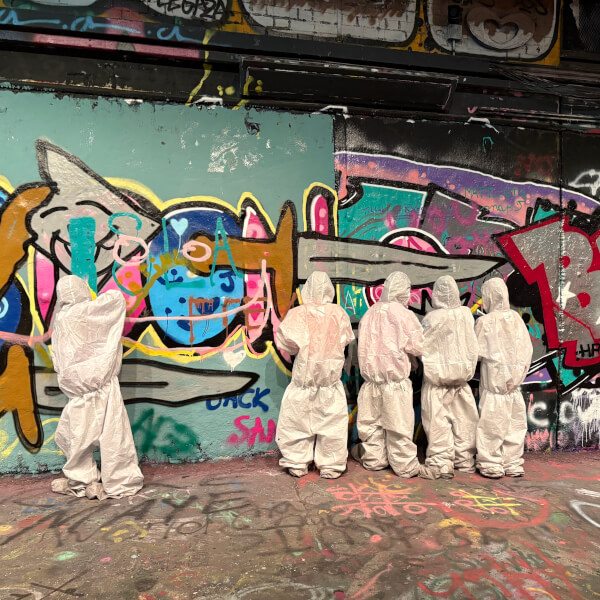
The European experience economy has seen a marked pivot toward authentic, hands-on cultural activities. Leading this transformation is Graffitifun, an enterprise founded in 2005 that spent two decades transforming underground spray-can culture into a highly structured corporate and educational service.
By building a specialized workshop framework and backing it with an international roster of practitioners, the organization has catalyzed the regional growth of urban art masterclasses across Western Europe, London, and the wider United Kingdom.
Engineering a standardized urban art curriculum
When Graffitifun launched 20 years ago, street art lacked an accessible, scalable educational framework. To address this gap, the founders developed a proprietary workshop methodology that balanced creative spontaneity with operational precision.
Instead of unguided painting sessions, Graffitifun built a curriculum centered around three distinct pillars:
- Foundational theory: Direct instruction on spray-art history, typography, color theory, and spatial composition.
- Controlled delivery technology: Utilizing specialized low-pressure cans and fine-line nozzles, allowing complete beginners to master line thickness, gradients, and shading without paint splatters or fumes.
- Operational reliability: Implementing strict safety protocols, protective equipment, and guaranteed artist coverage for large-scale institutional bookings.
This structured approach reframed street art as a legitimate visual discipline, making it viable for corporate retreats, municipal youth programs, and academic institutions.
Scaling operations: 42 core artists and a 250-strong global network
Executing consistent live workshops across multiple international borders requires significant operational depth. Graffitifun solved this logistics challenge by establishing a dual-tiered artist network.
The core of the business is driven by a permanent team of 42 senior artists and workshop leaders who oversee curriculum development and direct major corporate events. Supporting this core is an extended international network of over 250 verified street art professionals worldwide in the Graffitifunworld graffiti company.
Because every instructor is an active practitioner within the street art scene, participants gain direct access to authentic techniques, industry background, and expert guidance.
Expanding across London and the UK market
With its two-decade operational foundation established in continental Europe, Graffitifun has rapidly scaled its presence across key commercial and cultural hubs in the United Kingdom, and graffiti events with a heavy operational focus on London.
In the UK, the company operates across two main sectors:
- Corporate performance and team cohesion: Designing large-scale collaborative mural sessions where corporate teams translate company identity, logos, or values into visual art. The hands-on medium removes office hierarchies and drives cross-functional communication.
- Educational and youth programs: Delivering tailored modules for primary and secondary schools, providing students with a safe, guided introduction to street art history, stencil application, and freehand control.
From corporate headquarters in London to educational institutions across the UK, Graffitifun’s proprietary model continues to prove that street art, when delivered with professional precision, serves as a powerful medium for creative collaboration.


ADHD can affect concentration, organisation, time management, and daily life at any age. If you believe you have symptoms, an ADHD assessment NHS pathway is the first step towards receiving an accurate diagnosis and appropriate support.
For many people, waiting for an assessment can feel overwhelming. Fortunately, eligible patients in England may have access to the NHS Right to Choose pathway, allowing them to select an approved provider for assessment and treatment through their GP referral.
What Is an ADHD Assessment NHS?
An NHS assessment for ADHD is a detailed physical, behavioural and developmental evaluation conducted by a trained professional to identify if a child or young person has ADHD.
The assessment aims to gain an understanding of:
- Your current symptoms
- Childhood behavioural history
- Daily functioning
- Mental health
- Educational and employment challenges
- Family and medical history
Rather than relying on a single questionnaire, clinicians gather detailed information before making a diagnosis.
Who Can Request an ADHD Assessment NHS?
If adults and children have persistent symptoms that impact their daily life, they can discuss this with their GP, who could refer them for an assessment.
Common symptoms include:
- Difficulty concentrating
- Poor organisation
- Forgetfulness
- Restlessness
- Impulsivity
- Difficulty completing tasks
- Poor time management
If your GP believes an assessment is appropriate, they can refer you to an NHS ADHD service or an approved provider through the Right to Choose pathway in England.
Understanding the NHS Right to Choose Pathway
The NHS Right to Choose pathway is one choice that may be available to eligible patients. Patients registered at a GP in England may be able to ask for a referral to an NHS-funded provider rather than to their local ADHD service, where they might be eligible. This choice may allow NHS patients more choice in accessing an ADHD assessment.
Services like ADHD Right to Choose facilitate the referral process and support patients from referral to treatment. The service has a streamlined referral process, a dedicated patient support service, electronic prescribing, ongoing treatment management, and no shared care needs for GP practices, making the entire process easier for the patient and GP practices.
What Happens During an ADHD Assessment?
Each assessment is unique, but most are done in a structured manner.
The clinician may:
- Review completed questionnaires
- Discuss childhood experiences
- Explore current symptoms
- Assess work, education and relationships
- Consider mental health history
- Rule out other possible conditions
The assessment usually involves an in-depth clinical interview rather than a simple checklist.
Preparing for Your ADHD Assessment NHS
Being prepared can make the most of your appointment.
It can help to include useful information such as:
- School reports if available
- Previous medical records
- Notes about your symptoms
- Examples of difficulties at work or home
- Information from family members who knew you during childhood
Many providers also require patients to fill out questionnaires prior to the appointment to gain insight into patients’ experiences.
What Happens After the Diagnosis?
After your ADHD assessment NHS, the clinician will be able to discuss the results with you.
If your child has been diagnosed with ADHD, they may be prescribed:
- Medication
- Behavioural strategies
- Lifestyle advice
- Regular follow-up appointments
- Medication titration where appropriate
- Ongoing clinical reviews
If ADHD is not diagnosed, your clinician might suggest additional tests or other conditions that can mimic symptoms of ADHD.
Benefits of Choosing an Approved Right to Choose Provider
Many patients explore the Right to Choose pathway because local waiting lists can be lengthy.
Approved providers often focus on creating a smoother referral experience by offering:
- Clear communication
- Guided onboarding
- Specialist ADHD clinicians
- Secure electronic prescribing
- Dedicated patient support
- Structured treatment pathways
For example, ADHD Right to Choose, delivered through Harrow Health, supports patients from GP referral to assessment, diagnosis, and ongoing treatment where appropriate. It also manages prescribing and annual reviews, helping reduce the workload for GP practices.
Common Questions About ADHD Assessment NHS
Many people worry about the assessment process before attending.
Some frequently asked questions include:
Is the assessment difficult?
No. It is simply a detailed conversation about your experiences and symptoms.
Can adults receive an ADHD diagnosis?
Yes. Many adults are diagnosed after recognising long-standing symptoms that were never identified during childhood.
Can I choose where I am assessed?
Eligible patients in England may request an NHS-funded provider through the Right to Choose pathway, although referrals must be made by a GP.
Will I receive treatment after diagnosis?
If ADHD is diagnosed, your clinician will discuss the most appropriate treatment options for your circumstances.
Why Early ADHD Assessment Matters
Many aspects of life can be impacted by undiagnosed ADHD, such as:
- Employment
- Education
- Relationships
- Confidence
- Emotional wellbeing
- Financial organisation
An accurate diagnosis can help people understand their issues and access the right treatment and practical support.
Choosing the Right ADHD Assessment Pathway
Starting an ADHD assessment NHS can feel like a significant step, but understanding your options makes the process much easier.
If you are registered with a GP in England and your GP agrees that an assessment is appropriate, you may be able to access the NHS Right to Choose pathway and select an approved provider. Services such as ADHD Right to Choose simplify referrals, provide dedicated patient support, and continue care through diagnosis and treatment where clinically appropriate.
Speaking with your GP is the first step towards obtaining a professional assessment and receiving the support needed to manage ADHD confidently.

A Newcomer’s Guide to Living and Driving in Aldershot

What to Wear in Australia: Essentials Hoodies, T-Shirts, Shorts and Tracksuits

Streetwear Culture 2026: Why Hellstar and Better With Age Are Dominating the US Scene

Who Is Shameera? All You Need To Know About Charli XCX’s Mother

Who Is Gulliver Flynn Oldman? The Untold Story of Sir Gary Oldman’s Son

Meet Rosemary Turner: The Mother of Actor Callum Turner
-
Biographies7 months ago
Who Is Shameera? All You Need To Know About Charli XCX’s Mother
-
Biographies6 months ago
Who Is Gulliver Flynn Oldman? The Untold Story of Sir Gary Oldman’s Son
-
Biographies7 months ago
Meet Rosemary Turner: The Mother of Actor Callum Turner
-

 Biographies5 months ago
Who is Alexandra James? Inside The Life of Jeremy Clarkson’s Former Partner
-
 Biographies7 months ago
Who is Todd McRae? Meet Tate McRae’s Father
-
 Biographies6 months ago
Who Is Daniel Mara? The Untold Story of Kate Mara’s Private Sibling
-
 Celebrity7 months ago
Who Is Peter Hernandez? The Real Story of Bruno Mars’ Father
-
 Biographies7 months ago
Who Is Alvin Martin? All About the Whoopi Goldberg’s First Husband