
Business
Building Confidence Through Reputation Awareness


Companies need to deliver quality products, services, and customer service to gain confidence. However, businesses must also be aware of the perception of their customers, competitors, influential parties, and the general audience in order to fully address the confidence they require to operate. Having awareness of one’s reputation allows an organization to be able to perceive the general perception of the brand and build confidence through informed decisions. Monitoring social conversations allows companies to identify and address opportunities.
Understanding reputation awareness
Reputation awareness is the extent to which an organization and its representatives know the opinions of their brand and the potential impact it may have on its customers and business. With the increasing role of social networks, there are many opinions, questions, complaints, advice, and recommendations, which can potentially affect the perception of a company.
Companies can monitor social media conversations of competitors, customers, target groups, and influencers. In other words, they always keep an eye on what user-generated content about the organization circulates on the Internet. In particular, this information is useful for drawing up sales and marketing plans and product development strategies, such as analyzing trends and identifying potential problems.
This ongoing awareness can help the company to develop beyond guesswork and speculation. It helps build confidence by providing the tools necessary for informed decision-making.
Confidence is built on a realistic assessment of the situation and the ability to make the right choice at the right moment, and social listening supports businesses in this.
How AI is revolutionizing reputation insights in 2026
With AI, it has become possible to analyze conversations without looking through each post or mentioning them one by one. Instead, teams can now look at all the mentions and analyze what the AI has pulled out for them, focusing on what decisions they need to make.
Among the many AI tools, the following features are most useful for business:
- Sentiment and emotion analysis: With the ability to sort through thousands of mentions, AI can classify content in terms of emotions, which would be impossible for a person to do in a short time. This allows organizations to measure the general perception and find out what exactly caused positive or negative emotions. Anomaly detection: AI can detect unusual mentions that may indicate a change in perception;
- Theme detection: AI can group mentions by common themes to help analyze what issues are raised and what changes are needed;
- Multilingual analysis: AI can read and understand conversations in different languages to allow companies to monitor all of them without spending time on translations;
- Visual recognition: AI can identify logos and symbols in images and video;
- Summarization: AI can extract all the information needed from thousands of mentions and compile it into a summary for analysis by the leadership.
Thanks to these tools, media monitoring software can give companies the awareness they need to determine what actions to take in different markets, regions, and languages in order to shape their reputation.
How to build an effective reputation awareness strategy
When building an awareness strategy, it is necessary to determine the goals that the company wants to achieve and the information it wants to obtain from social listening. Some of the goals that an organization can set for itself are protecting the brand, identifying and resolving problems, tracking trends, analyzing competitors, and optimizing marketing strategies. It is important to understand that not all channels are useful for achieving specific goals, and it is necessary to choose which channels to monitor, paying attention to which audiences.
Moreover, it is vital to set up notifications about specific mentions, products and services, keywords, hashtags, and industry topics using social media monitoring software. In parallel, teams can decide what actions need to be taken based on mentions. In addition, companies must monitor topics related to competitors to understand what audiences are interested in and how customers are likely to change their opinions.
How to leverage reputation insights to build confidence
It is essential that organizations translate their findings and awareness into specific action and decision-making, thus building confidence. As opinions, complaints, suggestions, and other mentions of the brand on social networks are collected, these data can be used to improve products and services.
For example, companies can find out which benefits are popular and use them in their marketing strategy. Moreover, the popularity of topics allows companies to create more relevant content and have a more personalized conversation with the audience. In addition, organizations can take customers’ questions and concerns and bring them to the attention of the relevant departments, providing an opportunity to resolve the problem and increase satisfaction.
The most important aspect of using reputation monitoring is building confidence throughout the company. By collecting and analyzing information, marketing, product, customer service, and leadership teams can make the right decisions that take into account all customers’ concerns. In parallel, companies can identify opportunities for optimizing the client experience and building confidence. This way, businesses can take a consistent and well-informed approach to reputation monitoring and awareness, which in turn increases their confidence in meeting the needs of society and industry.
Conclusion
Building confidence through reputation awareness means replacing uncertainty with continuous understanding. Businesses that consistently monitor conversations can recognize risks earlier, understand customer expectations, follow industry developments, and identify opportunities for improvement.
AI further strengthens this process by helping teams detect patterns, summarize conversations, and identify important changes at scale. When organizations combine continuous awareness with thoughtful action, they can protect their reputation while building stronger and more confident relationships with their audiences.


Figures are no longer merely numbers on financial accounts in today’s business climate, where data analysis drives decision-making. Rather, these numbers become the foundation of intelligent decision-making. Financial analysis helps CMA course participants use data and information to help firms reduce risks, save money, make a profit, and grow. Through trend analysis, budgeting, forecasting, and performance analysis, they help managers get an overall picture of the firm’s finances.
So what is CMA? It is a professional accounting credential that focuses on financial planning, managerial accounting, analysis, and decision-making. CMA professionals use financial analysis techniques to evaluate the performance of the organisation, comparing the actual performance to the budgeted figures and making pricing, investment and other decisions.
7 Ways CMA Course Professionals Utilise Financial Analytics To Make Informed Business Decisions
1. Analyse Financial Performance and Identify Trends
CMA course professionals use financial analysis to measure performance metrics such as sales, operating expenses, profits, cash flows and return on investment. The comparison of present financial figures with previous results, budgeting and forecasting will help them understand the trend, either positive or negative, and also the cause of any change in business performance.
It will allow the management team to go beyond financial statements and identify meaningful insights. For example, in case of a reduction in profitability despite constant sales, a CMA professional will be able to figure out the cause of such a situation.
2. Improve Budgeting and Financial Forecasting
Financial analytics plays the role of enabling CMAs to conduct evidence-based budgeting and forecasting, whereby they take into account past financial data, sales performance, seasonality, costs, and market trends to create accurate and realistic budgets and forecasts.
Instead of guessing outcomes, finance professionals will be able to use several methods of analysis to analyse the impact of alternative situations. This will help organisations prepare themselves for any changes in income, expenses, cash needs, or market demand.
3. Support Cost Management and Control
Cost control is one critical area in which the expertise of professionals from the CMA course is needed in applying financial analytics. Such professionals can review expenditure across departments, projects, products, and business processes to identify waste.
Financial analysis helps businesses identify the drivers of cost changes. The analysis provides the professional with insights into what measures can be put in place to control costs without undermining business performance.
4. Evaluate Investment and Capital Allocation Decisions
Firms have to make choices regarding the placement of capital, whether in technology, goods, equipment, expansion ventures, or any other form. Financial analysis is carried out by those who have completed the CMA course in order to assess the cost, benefit, risk, and gains associated with such investments.
Some of the financial indicators evaluated might include net present value, payback period, internal rate of return, and return on investment, among others. Sensitivity and scenario analyses can demonstrate how changes to the assumptions will affect the results of the investments.
5. Analyse Profitability of Products and Business Segments
Using financial analytics, CMAs are able to determine which product(s), service(s), customer, or business segment is contributing to profitability. Rather than just considering total revenues, they are able to use such measures as sales volumes, price, cost, contribution margins, and allocations to get a better perspective on profitability.
This knowledge could assist in setting prices for products, segments of customers, or product mix. In other words, even though a particular product earns revenues, that product might not necessarily be profitable because of the costs of production and distribution.
6. Strengthen Risk Management and Scenario Planning
A CMA course professional can make use of financial analytics in determining financial risks and how changes in certain business environments may have an impact on the performance of that business. This may include cash flow analysis, cost variance analysis, debt level analysis, customer concentration and other financial variables.
Scenario analysis and sensitivity analysis can then determine the effects of those changes under certain assumptions. For example, a business may determine the effect of reduced sales, increased raw material costs, increased interest rates or currency changes.
7. Turn Financial Data into Strategic Business Insights
In case you are wondering, What is CMA? It is a professional certification for management accountants that emphasises fields such as financial planning and performance, management and strategic decision-making. This enables CMAs to use financial analysis to prepare reports and interpret financial information into strategic decisions.
CMA professionals can blend financial information with business information to assist management in decision-making. Whether an organisation is considering expanding, improving efficiency, changing its pricing strategy or entering a new market, financial analytics enables it to quantify potential outcomes and connect financial performance with wider business goals.
Final Takeaway
Financial analytics allows CMA professionals to turn financial data into meaningful insights that support better budgeting, forecasting, cost management, strategic decision-making and risk assessment. With knowledge of accounting and data analysis skills, they will be able to assist companies in improving their performance through better decision-making.
Take your first step towards being a successful data-driven finance professional by joining the CMA course offered by Zell Education.
FAQs
1. What financial analytics tools are used by CMA professionals?
CMA professionals make use of Excel, business intelligence systems, ERP systems, financial planning applications and data visualisation systems.
2. Are CMA professionals able to use financial analytics for risk management?
Yes, because CMA professionals can examine financial trends and scenarios to identify financial risks.
3. How does financial analytics help with business forecasting?
Financial analytics uses historical and existing financial information to determine patterns for forecasting revenues and costs.

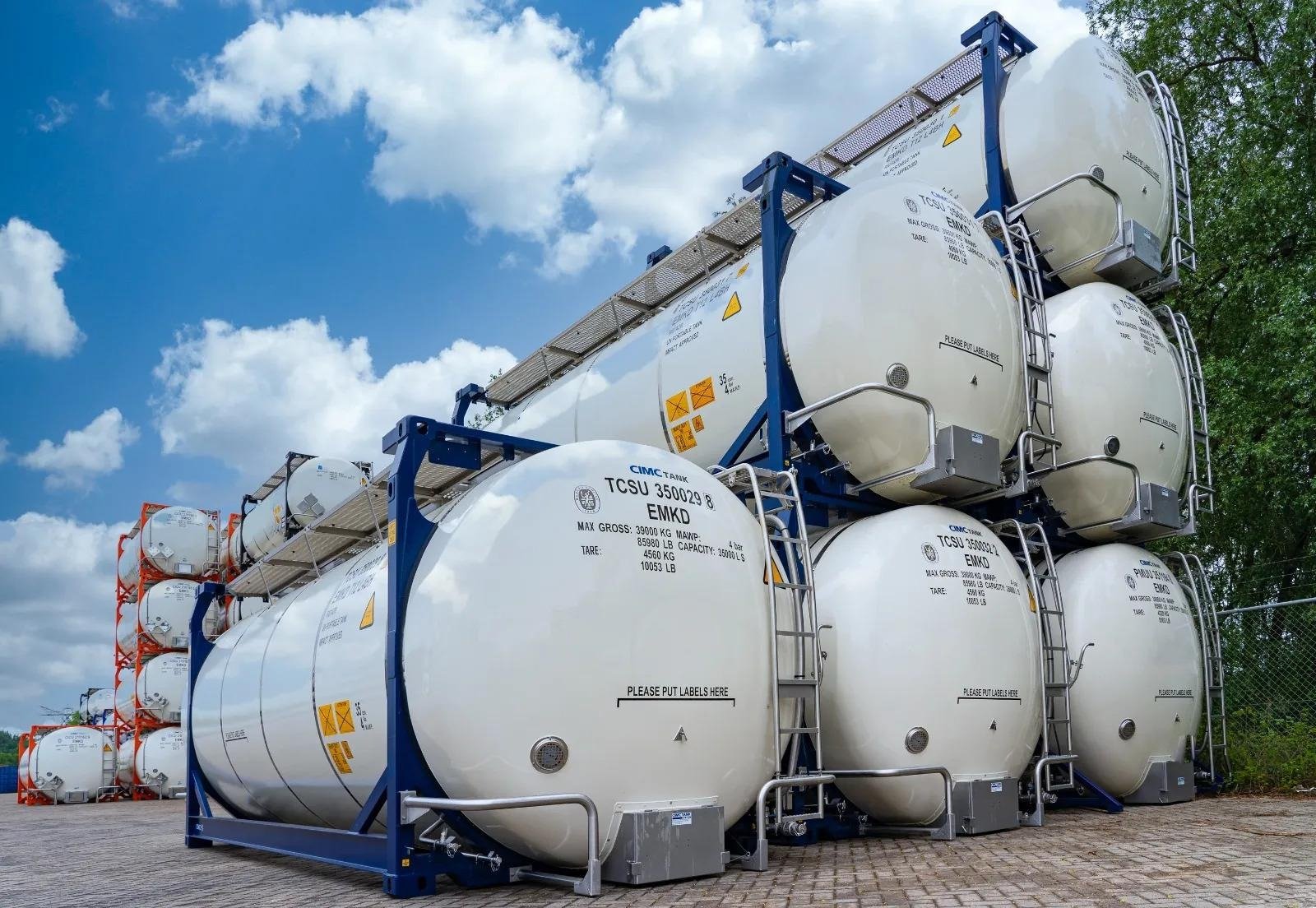
Bulk liquid and gas transport requires equipment that matches the cargo, route and operational conditions of each shipment. Purchasing new equipment can be appropriate for businesses with stable, long-term transport volumes, but it is not the only option. Rental fleets and used tank containers can provide practical alternatives when demand changes, projects are temporary or capital expenditure needs to be controlled.
The decision to rent or purchase used equipment should be based on more than the quoted price. Cargo compatibility, technical specifications, inspection status, cleaning history and maintenance requirements all affect whether a tank is suitable for a particular operation. The availability of compatible loading, transport and discharge infrastructure must also be assessed before the equipment enters service.
When can tank container rental be considered?
A tank container rental arrangement can support companies that need additional equipment without making an immediate purchase. It may be suitable for seasonal demand, temporary contracts, trial routes or projects with uncertain long-term volume.
Rental can also help operators respond to short-term fleet shortages. If existing tanks are undergoing maintenance, cleaning or periodic testing, rented equipment may provide additional capacity. This approach can reduce interruptions, provided the selected tank meets the same technical and regulatory requirements as the units normally used.
The rental period may vary according to operational needs. Some businesses require equipment for a specific shipment or project, while others prefer longer rental arrangements. The agreement should clearly define the rental duration, permitted cargo, geographic area of use, maintenance responsibilities and return conditions.
Availability is another important consideration. Specialised tanks with particular pressure ratings, linings, heating systems or valve configurations may not always be immediately accessible. Equipment requirements should therefore be identified early in the logistics planning process.
What should be checked before renting a tank container?
The first step is to define the product that will be carried. Its classification, density, viscosity, corrosiveness, vapour pressure and temperature requirements influence the type of tank needed. The compatibility of the vessel, valves, seals, gaskets and other product-contact components must be confirmed.
Capacity should be calculated alongside legal transport weight limits. A tank with a higher nominal volume cannot necessarily be filled to its full capacity. Product density, required filling ratio, thermal expansion and road weight restrictions may limit the actual quantity that can be loaded.
The planned route must also be reviewed. International transport can involve road, rail and sea movements, each with its own operational requirements. Tank dimensions, frame design, approvals and handling features must be compatible with the chassis, terminals and vessels used along the route.
Before acceptance, the user should review the unit’s inspection and maintenance documentation. The condition of the frame, pressure vessel, manlid, valves, safety equipment, insulation and heating systems should be assessed according to the tank specification and intended service.
Rental responsibilities should be defined clearly
A rental agreement should explain which party is responsible for routine maintenance, accidental damage, periodic inspections and repairs. It should also address cleaning requirements and the condition in which the tank must be returned.
Restrictions relating to previous or permitted cargoes require particular attention. Carrying a product outside the agreed cargo category may create contamination, compatibility or cleaning problems. Food-grade, chemical and other sensitive operations can have different requirements regarding cargo history.
Transport, delivery and repositioning costs should also be considered. A low rental rate may not represent the total operating cost if the unit is located far from the loading point or must be returned to a specific depot. Collection, redelivery, cleaning and inspection charges can influence the overall budget.
Why do businesses purchase used tank containers?
A used tank container can offer an alternative to new equipment for companies seeking to expand their fleet or establish dedicated storage and transport capacity. Used units may be available more quickly than tanks requiring new manufacture, depending on the requested specification.
The suitability of a used tank depends on its age, technical configuration, condition and service history. The year of manufacture alone does not provide a complete picture. A properly inspected and maintained older unit may remain operationally suitable, while a newer tank with damage or inadequate maintenance may require significant work.
Buyers should first confirm the intended application. A tank previously used for one class of product may not be acceptable for another. Cargo history, cleaning records and internal condition should be reviewed, especially when the next cargo is food-grade, high-purity or chemically sensitive.
Used equipment may also be considered for stationary applications. However, using a transport tank for storage does not remove the need to assess pressure, ventilation, foundations, connections, site safety and local requirements. The proposed use should be defined before purchase so that the unit can be evaluated accordingly.
Technical inspection is essential before purchase
A used tank should be inspected by appropriately qualified personnel before a purchasing decision is finalised. The examination should cover both the vessel and its supporting frame. Corrosion, deformation, impact damage, leakage and previous repairs may affect suitability.
Key areas for review can include:
- The pressure vessel and internal surface
- Frame members and corner fittings
- Manlid, valves and discharge components
- Pressure-relief and safety devices
- Seals, gaskets and closures
- Insulation and external cladding
- Steam, electric or other heating systems
- Ladders, walkways and access equipment
- Data plates, certificates and inspection records
Required tests and inspection dates should be checked to determine when the next examination is due. If repairs, testing or component replacement are necessary, these costs should be included in the purchase assessment.
Rental and used purchase options serve different needs
Rental generally provides greater flexibility for temporary or changing requirements. It can allow a business to access equipment without assuming ownership responsibilities for the full service life of the tank. However, availability, permitted use and return conditions remain subject to the rental agreement.
Purchasing used equipment may be more suitable when demand is regular and the operator wants long-term control over the asset. Ownership allows the tank to be assigned to specific routes or cargoes, but the owner also assumes responsibility for maintenance, testing, cleaning, storage and eventual disposal or resale.
A cost comparison should account for more than rental payments or the initial purchase price. Utilisation rates, financing, depot charges, repositioning, inspections, repairs and periods when the unit is not in service all influence the overall result.
Selecting equipment through Tankcon
Businesses exploring equipment through tankcon should provide detailed information about the cargo, route and planned duration of use. Accurate operational information makes it easier to identify whether rental or used purchase is the more appropriate approach.
Tank type, capacity, working pressure, insulation, heating method and valve arrangement should be confirmed before an agreement is completed. Documentation relating to inspections, maintenance and cargo history should also be reviewed where relevant.
Tank container rental and used equipment can both support flexible bulk logistics. Their value depends on selecting a technically compatible unit, defining responsibilities clearly and maintaining appropriate inspection, cleaning and operational controls throughout the equipment’s use.


AI leadership changes once organizations move beyond isolated pilots. Senior executives must decide which use cases deserve funding, what infrastructure they need, how they will govern risks, and whether a promising experiment can deliver measurable value at enterprise scale.
Those decisions require more than general familiarity with artificial intelligence. A Chief AI Officer may need to evaluate build-versus-buy choices, question technical proposals, establish data and governance standards, manage an AI portfolio, communicate with boards, and coordinate adoption across business functions.
The five programs below approach that responsibility from different angles, including AI investment, governance, enterprise architecture, portfolio management, organizational change, and large-scale deployment.
5 Chief AI Officer Programs to Compare
| # | Program & Provider | Fees | Eligibility | Duration | Credentials |
| 1 | Chief AI Officer Programme – London Business School | £22,000 | Minimum 10 years of experience; responsibility for AI strategy or enterprise transformation | 5 months | Certificate of Completion from London Business School Executive Education |
| 2 | Chief AI Officer Program – Chicago Booth Executive Education | $28,000 | Minimum 10 years of work experience | 10 months | Certificate of Completion + digital badge |
| 3 | Chief AI Officer Program – Texas McCombs | $19,000 | Senior executives and leaders involved in AI strategy, investment, adoption, or governance; no coding required | 7 months | Certificate of Completion + CEUs |
| 4 | Chief Data and AI Officer Certificate Program – Carnegie Mellon University Heinz College | $17,850 | At least 7 years of relevant experience managing projects or people | 7 months | Executive Education Certificate |
| 5 | Chief AI Officer Program – Thunderbird School of Global Management, Arizona State University | $6,400 | 10+ years in senior leadership plus an undergraduate degree or equivalent qualification | 6 months | Certificate from Thunderbird School of Global Management |
1. Chief AI Officer Program – London Business School
The chief ai officer program at London Business School is structured around the decisions senior leaders face when moving from AI opportunity to enterprise transformation. Participants examine investment choices, AI capabilities, governance, cyber and data risk, vertical and Agentic AI, organizational change, and executive communication.
Program Highlights: Two four-day London campus immersions, enterprise AI strategy, investment evaluation, governance, Agentic AI, cybersecurity, experimentation, boardroom simulations, a live organizational AI experiment, and a 100-day AI action plan.
Duration: Five months, combining campus immersions, live online masterclasses, experiment check-ins, and applied work.
Credentials: Certificate of Completion from London Business School Executive Education.
Outcomes: Participants learn to evaluate AI investments, validate use cases with defined success metrics, establish governance structures, influence stakeholders, and convert a tested AI initiative into an enterprise action plan.
Why Choose this Course?
- The live AI experiment ties investment decisions to actual organizational results, rather than leaving strategy at the planning stage.
- The curriculum combines governance with executive influence, including budget discussions, boardroom communication, change, and enterprise adoption.
2. Chief AI Officer Program – Chicago Booth Executive Education
Chicago Booth approaches the CAIO role through business value, infrastructure, scaling, and governance. Participants learn to connect AI strategy with measurable business objectives while evaluating the data, technology, investment, and organizational requirements needed for execution.
Program Highlights: AI maturity assessment, ROI, AI roadmaps, data infrastructure, MLOps, build-buy-partner decisions, scalable deployment, governance, security, regulatory considerations, change leadership, and a capstone.
Duration: Hybrid, 10 months, combining asynchronous study, live online sessions, and an in-person experience.
Credentials: Chicago Booth Executive Education Certificate of Completion and digital badge.
Outcomes: Participants develop AI strategies, quantify investment cases, plan data infrastructure, prioritize use cases, build governance models, and lead adoption across technical and business teams.
Why Choose this Course?
- It treats investment and scale together, covering total cost, architecture, deployment models, and AI lifecycle management.
- The program extends into C-suite leadership, helping executives communicate AI priorities and gain support across the organization.
3. Chief AI Officer Program – The McCombs School of Business at The University of Texas at Austin
The Texas McCombs chief ai officer certification develops the financial and technical judgment required to decide which AI initiatives deserve continued investment. The curriculum progresses from AI strategy into ROI, enterprise architecture, Agentic AI, portfolio management, data readiness, scaling, and board governance.
Program Highlights: 18 live faculty sessions, five-day campus immersion, AI opportunity diagnosis, financial valuation, build-versus-buy analysis, Agentic AI governance, DataOps, MLOps maturity, portfolio management, and board communication.
Duration: Seven months in a blended format, with approximately 4 to 6 hours of weekly commitment.
Credentials: Certificate of Completion and CEUs from Texas McCombs.
Outcomes: Learners evaluate AI proposals, model lifecycle ROI, assess enterprise architecture, decide when pilots are ready to scale, establish governance frameworks, and present AI recommendations to senior stakeholders.
Why to Choose this Course?
- It places financial judgement at the center of AI leadership, including hidden governance costs and decisions about when an initiative should stop receiving investment.
- The progression continues from prototypes to production, covering data readiness, MLOps, governance thresholds, and enterprise-scale adoption.
4. Chief Data and AI Officer Certificate Program – Carnegie Mellon University Heinz College
Carnegie Mellon’s program gives data and AI equal weight. It connects enterprise data management with AI strategy, architecture, responsible AI, emerging technologies, security, privacy, and the operating responsibilities of senior data and AI leaders.
Program Highlights: Enterprise data strategy, governance, analytics maturity, data engineering, AI value creation, scalable AI architecture, MLOps, responsible AI, GenAI, LLMs, cybersecurity, privacy, and a practicum.
Duration: Seven months with synchronous distance learning plus campus sessions that can also be attended virtually.
Credentials: Chief Data and AI Officer Executive Education Certificate from Carnegie Mellon University’s Heinz College.
Outcomes: Participants develop an enterprise data and AI strategy roadmap while learning to connect technology choices, governance, regulation, data quality, and stakeholder support.
Why to Choose this Course?
- It treats data governance as part of AI leadership, which matters when enterprise AI depends on reliable and controlled data.
- The program covers architecture and operations alongside strategy, including scalable systems and AI monitoring.
5. Chief AI Officer Program – Thunderbird School of Global Management at Arizona State University
Thunderbird’s program focuses on building an enterprise AI transformation portfolio across different markets and functions. Its curriculum links competitive strategy with investment cases, technical fluency, Agentic AI, governance, workforce redesign, and global change management.
Program Highlights: 16 live sessions, two-day campus immersion, ROI frameworks, financial governance, RAG and Agentic AI, infrastructure strategy, risk, AI initiative portfolios, operating models, and an AI Global Transformation Playbook.
Duration: Six months.
Credentials: Certificate from Thunderbird School of Global Management at Arizona State University.
Outcomes: Participants learn to build AI investment cases, identify which initiatives should scale, evaluate enterprise architectures, establish governance controls, and create a transformation playbook for their organization.
Why Choose this Course?
- The program connects capital allocation with stage-gated AI experimentation, helping leaders make clearer scale-or-stop decisions.
- Its global focus adds cross-market governance and change considerations, useful for executives working across regions and regulatory environments.
Conclusion
The CAIO role sits at the intersection of technology, investment, risk, and organizational change. Selecting models or approving pilots is only part of the work. Senior leaders also need to decide where capital goes, what controls are required, how success will be measured, and what needs to change before AI can operate across the enterprise.
When comparing chief ai courses, look at the leadership gap you need to close. Some programs place more weight on investment and board decisions, while others go deeper into data strategy, infrastructure, governance, or global transformation. The best fit matches the decisions you are expected to own.

Building Confidence Through Reputation Awareness

Prefinished vs Unfinished Oak Interior Doors: A Room-by-Room Decision Guide

How Do CMA Course Professionals Use Financial Analytics in Business Decisions?

Who Is Shameera? All You Need To Know About Charli XCX’s Mother

Who Is Gulliver Flynn Oldman? The Untold Story of Sir Gary Oldman’s Son

Meet Rosemary Turner: The Mother of Actor Callum Turner
-
Biographies8 months ago
Who Is Shameera? All You Need To Know About Charli XCX’s Mother
-
Biographies8 months ago
Who Is Gulliver Flynn Oldman? The Untold Story of Sir Gary Oldman’s Son
-
Biographies9 months ago
Meet Rosemary Turner: The Mother of Actor Callum Turner
-

 Biographies7 months ago
Who is Alexandra James? Inside The Life of Jeremy Clarkson’s Former Partner
-
 Biographies8 months ago
Who is Todd McRae? Meet Tate McRae’s Father
-
 Biographies8 months ago
Who Is Daniel Mara? The Untold Story of Kate Mara’s Private Sibling
-
 Celebrity9 months ago
Who Is Peter Hernandez? The Real Story of Bruno Mars’ Father
-
 Biographies9 months ago
Who Was Adrian Mayers? The Untold Life of A$AP Rocky’s Late Father