
Technology
Why the Composition of UK Inflation Matters for Sterling


A single inflation number can move the pound, but professional currency analysis rarely stops at the headline rate. The composition of inflation can matter just as much as the total because different components tell different stories about domestic demand, wages, energy costs, and how persistent price pressure may be.
For sterling, those details matter because the Bank of England sets monetary policy with the goal of maintaining price stability. If inflation appears persistent, markets may expect tighter policy for longer. If price pressure is falling for reasons that look durable, expectations can move the other way. Currency markets respond to those changing expectations, not merely to whether inflation is high or low.
Headline inflation can hide very different forces
Headline consumer inflation combines many categories. Energy, food, goods, rents, hospitality, transportation, and other services can move for different reasons. A decline caused by lower energy prices may have different implications from a decline caused by weaker domestic wage pressure.
That distinction is important because central banks have limited influence over some global commodity shocks. They have more reason to focus on signs that inflation is becoming embedded in domestic wages and service prices.
Services inflation can signal persistence
Services tend to be labor-intensive. Restaurants, hotels, professional services, transportation, and other service businesses often have wage costs that adjust more slowly than commodity prices.
If services inflation remains firm while goods inflation falls, policymakers may worry that underlying domestic inflation is still persistent. Markets can then reassess how quickly interest rates might be reduced, which can affect UK bond yields and sterling.
Wage growth connects inflation to the labor market
Pay growth matters because wages are both household income and a major business cost. Strong nominal wage growth can support consumer spending, but if productivity does not keep pace, it can also make it harder for businesses to absorb labor costs without raising prices.
Currency traders therefore monitor wage data alongside employment, vacancies, inactivity, and surveys of hiring conditions. A cooling labor market can reduce wage pressure over time, while persistent wage growth may keep the inflation debate alive even after the headline rate improves.
Markets trade the surprise relative to expectations
The same inflation reading can produce different currency reactions depending on what investors expected. If the market has already priced in a strong number, an outcome that merely matches expectations may create little movement. A small miss in a closely watched services measure can sometimes matter more than a larger move in a volatile component.
That is why anyone building a GBP to USD forecast should distinguish between the economic trend and the market’s prior assumptions. Forecasting the data is only one part of the problem. The second is estimating what has already been priced into interest-rate expectations and sterling.
One month does not establish a trend
Inflation data can be noisy. Seasonal effects, airfares, energy prices, tax changes, and base effects can create large monthly movements. Analysts therefore look for confirmation across several releases rather than treating one print as definitive.
The same applies to wage data, which can be revised and affected by changes in workforce composition. A robust currency view should be able to survive small revisions rather than depending on a single exact number.
Inflation expectations can affect real returns
Currency markets also care about the difference between nominal interest rates and expected inflation. A high policy rate does not necessarily provide an attractive real return if investors expect inflation to remain equally high. When inflation expectations fall faster than nominal yields, real yields can rise, potentially changing the relative appeal of sterling assets.
This relationship is not mechanical because exchange rates respond to global conditions as well as domestic policy. Still, comparing nominal yields with inflation expectations can help explain why the pound sometimes reacts differently than a simple ‘higher inflation means higher rates’ story would imply.
The Bank of England reaction function is not mechanical
Even when inflation is above target, policymakers consider the broader outlook. Growth, labor-market slack, inflation expectations, credit conditions, and evidence of persistence all influence decisions.
Markets try to infer this reaction function from speeches, meeting minutes, forecasts, and voting patterns. Two inflation reports with similar headline numbers can have different consequences if the policy backdrop has changed.
How to build a better inflation dashboard
A practical sterling dashboard can separate headline inflation from core inflation, services inflation, wage growth, and measures of labor-market tightness. It can then add market-based information such as UK government bond yields and expected policy rates.
The goal is not to create more indicators for their own sake. It is to answer a sequence of questions: Is inflation falling? Which components are driving the move? Are domestic pressures easing? Is the labor market cooling? And has the market already adjusted its interest-rate expectations?
Conclusion
For sterling, inflation is not one number. The mix of goods, energy, services, wages, and domestic demand helps determine whether price pressure looks temporary or persistent.
A stronger GBP/USD framework therefore looks beneath the headline release and connects inflation composition to monetary-policy expectations. That approach cannot eliminate forecast uncertainty, but it gives investors a more realistic understanding of why similar inflation numbers can produce very different reactions in the pound.


Cross-border money transfers used to be costly, with slow processing times, hidden exchange markups, and multiple intermediary fees. UR and other cross-border settlement schemes offer a modern solution, dramatically speeding up international transactions for companies and individuals alike. As commerce becomes increasingly globalised, legacy correspondent banking networks are a source of friction, delays and liquidity bottlenecks. Modern digital infrastructure eliminates these structural barriers to enable fast, secure and transparent cross-border movement of money.
International wires generally have to go through a number of correspondent banks and each adds time and cost to the transaction. Payment architectures designed for instant settlement do not leverage these multi-node networks but rather link senders and receivers through single clearing routes. This technological evolution allows international businesses to optimise cash flow, pay remote talent in a timely manner, and manage foreign vendor invoices without waiting days for verification.
The Underlying Reasons for Delay in Legacy Cross-Border Payments
Correspondent Banking Chains and Multiple Intermediaries
Under standard banking rules an international money transfer never goes straight from the originating bank to the destination account. Instead, the transaction passes through a number of intermediary banks, often across different timezones and business hours. Each node along the way checks the funds, processes the manual clearing logs, and assesses a processing fee. This greatly slows down execution.
Fragmented Foreign Exchange Arrangements and Manual Clearing
Legacy banks are limited by batch processing schedules for currency conversions which restrict market windows. If a transaction is received outside of local business hours or during a weekend, processing will resume the next business day. Furthermore, variations in clearing formats between countries require manual intervention if data fields do not match exactly with the formats of recipient accounts.
Features That Speed Up International Money Transfer
Direct Distributed Routing Infrastructure
Today’s cross-border engines leverage integrated network routing to establish direct connections to financial clearing networks around the world. Payment platforms, by eliminating unnecessary middleman nodes, process requests immediately when they are initiated. Real-time confirmation is provided to senders and recipients can get converted funds without any arbitrary holding periods.
Automated Continuously Liquidity Management
Advanced payment infrastructure is based on pre-funded global liquidity pools and automated algorithms for currency matching. Rather than waiting for the local central bank clearing windows to open, these platforms dynamically balance foreign exchange reserves. This continuous provision of liquidity makes it possible to convert FX at any moment of the day, even during weekends when the market is closed.
Automated Compliance Checking in Real Time
Routine international transactions are often flagged by manual anti-money laundering and know-your-customer checks in legacy systems, delaying payments for days. Next-generation platforms have automated compliance engines that can review data in milliseconds. Machine learning algorithms can screen sanctions lists, evaluate risk vectors and clear valid transactions instantly and without human delay.
Cross-Border Methods Compared: Legacy Networks vs. Next-Gen Platforms
The choice of the right transaction path directly impacts the speed of operations, cost predictability and cash flow visibility. Here’s a side-by-side comparison of traditional international wire transfers vs. next-generation settlement platforms:
- Settlement Time: Traditional wire transfers take 2-5 business days to clear, while next-gen settlement engines can complete cross-border transfers in seconds or minutes.
- Fee Structure: Legacy banking fees are unpredictable and include wide exchange rate markups, while modern routing models provide transparent, upfront transaction pricing.
- In terms of hours of operation, traditional systems only process transactions during local banking hours on weekdays, while advanced digital networks operate 24/7/365.
- Transaction Tracking: Traditional international wires offer little visibility into where funds are going, whereas next-gen protocols provide real-time end-to-end tracking updates.
- Data integration: Old school wire systems have limited payment messaging notes. Modern solutions support rich ISO 20022 metadata for automatic invoice reconciliation.
Advantages for Global Enterprises and Business Operation
Vendor and Supply Chain Settlement Made Simple
For global supply chains, predictable payment schedules are crucial to sustaining production momentum. Instant cross-border settlement allows purchasing departments to pay overseas suppliers immediately upon receipt of goods. This speed helps build vendor relationships, capture early payment discounts and mitigate foreign exchange volatility risks.
Zero-Resistance International Payroll Disbursement
With a distributed international workforce, that means sending dozens of localised payments across countries each pay period. Fast digital clearing frameworks allow HR and finance teams to process mass payouts at the same time. Instantly pay remote employees exact localised currency amounts, with no hidden recipient wire fees.
Practical Measures for the Optimisation of International Capital Transfers
Moving to Integrated API-Driven Financial Platforms
Businesses can get the maximum transfer speed by directly linking their internal enterprise resource planning systems with modern payment gateways via APIs. Automated API calls allow for immediate transfer once an invoice is approved, eliminating manual entry errors, and speeding up administrative workflows.
Setting Up a Multi-Currency Operational Account
Modern payment providers maintain localised receiving accounts to remove foreign exchange conversion steps altogether for common trade corridors. Organisations hold balances in destination currencies to make local cross-border payouts, avoiding international clearing channels where possible.
Strategic Significance of Frictionless Global Money Movement
The speed at which international payments are processed directly determines the ability of modern businesses to seize opportunities in the international market. Moving away from legacy correspondent networks to high speed clearing infrastructure cuts operational delays, cuts cross-border costs and maintains transaction margins. Accelerated payment protocols are a means by which businesses can secure a more agile and globally competitive financial footprint.


The phrase aluminum shell furnace sounds as though it describes what goes into the vessel. It describes part of the vessel instead. That naming trap can send a buyer comparing the wrong equipment, especially when an enquiry for a coreless induction furnace mixes questions about structural support, metal suitability and changing alloys. Separate those questions before reading the capacity column.
A DHG steel shell or DHL aluminum shell designation belongs in the equipment description. Melt duty belongs in the application description. Buyers need both, because a familiar construction material does not establish which metals a particular furnace can process or what must change when the production programme changes. The useful comparison starts inside the furnace and works outward.
Look inside the crucible before reading the shell label
The US Department of Energy describes the coreless arrangement as a refractory crucible enclosed by a water-cooled coil carrying alternating current. Electrical current induced in conductive material produces heat through resistance. The exterior shell is therefore only part of the assembly: identifying its material does not describe the refractory, the electromagnetic coupling or the cooling provision required for the proposed melting task.
Read the drawing inward. Ask where the charge sits, what contains the melt and which components require cooling. Those questions help separate construction terminology from process requirements without assuming that every item in a general technical diagram belongs to the offered equipment. The quotation must identify the actual arrangement. A label on its cover cannot substitute for that description.
For a coreless induction furnace enquiry, request a clear distinction between a general illustration and the proposed assembly drawing. Mark any components that are optional or supplied elsewhere, and ask how their absence affects the application response. Keep those qualifications attached to the offer. Otherwise a buyer can interpret the apparent completeness of a diagram as evidence that the quotation includes every item needed for the duty, although the commercial scope has never said so.
Compare product families without assigning them a metal
Dinghong lists the DHG steel shell family at nominal capacities of 0.5–20 tons and the DHL aluminum shell family at 0.1–8 tons. These are catalogue ranges for furnace families. They do not assign steel exclusively to the former or aluminum exclusively to the latter, and they do not establish a common melting cycle for every model within either range.
Write the intended metal beside the model being proposed. Then require the supplier to confirm that combination, including the relevant lining, electrical and cooling conditions, rather than letting the shell name act as a proxy for application approval. This is where metal suitability becomes a checkable statement. Without an identified duty, offers can look comparable while answering different questions about the material and the required state of the melt.
Ask what the structural claim actually covers
Shell rigidity is a reasonable subject for an engineering discussion, but a material name is not a structural assessment. Ask for the manufacturer’s description of the assembled furnace support, the loads it is intended to carry and the inspection requirements that apply to the proposed installation. Keep the question attached to the actual design. It cannot be answered by ranking material names in isolation.
For a DHG steel shell proposal, request evidence specific to that assembly; use the same approach when reviewing a differently constructed vessel. If an offer says the body is more rigid, ask what comparison supports the statement and which operating condition it addresses. No universal advantage follows from the catalogue label alone. This article provides no measured deflection, fatigue life or structural certification for either family, and none should be inferred from their listed capacities.
Changing alloys is a process decision
A plant considering a new metal needs more than a statement that induction can heat conductive materials. The proposed change raises questions about the existing refractory, the required melt condition, residual material and the acceptance checks for the new production route. Name the intended transition explicitly. An enquiry describing only a more flexible furnace leaves the supplier to guess which changes the buyer expects to make.
Prepare an alloy-change enquiry before assuming that the current coreless induction furnace can continue unchanged: identify the present duty, identify the proposed duty, and ask the responsible specialists to state what must be reviewed before the new material is introduced. This is an engineering review request, not an operating procedure. Decisions about lining changes, preparation and handling belong to the equipment and process instructions approved for that installation.
Retain the unanswered questions. They define the remaining work.
Insulation details have a narrower meaning than service life
Dinghong’s melting-furnace page describes coil insulation using 7–11 layers. That is a disclosed construction detail, not a demonstrated service-life figure for a particular customer’s furnace. Turning a layer count into a lifetime promise would require evidence that the product description does not provide, including a defined operating duty and a clear account of what event marks the end of service.
Use the detail to ask a better question. Request the applicable inspection and maintenance instructions, with responsibility for checking the coil and its surrounding components identified in the handover. A DHL aluminum shell model still needs its own approved maintenance basis; a general description elsewhere in the range does not establish every detail of the chosen unit. Construction information is useful when its scope remains visible.
Cooling connections follow the equipment boundary
A closed cooling tower keeps process fluid inside a heat-exchange coil while spray water and air remove heat externally. That distinction matters for a furnace installation because the process circuit and the spray circuit serve different functions. Dinghong’s separate cooling product description establishes that equipment arrangement; it does not select a tower or specify the furnace-side circulation required for an individual melting duty.
Assign the interface. The engineer responsible for the proposed furnace must have the cooling requirements needed to check the selected tower and connecting circuit, while the installation team needs an agreed way to verify those requirements during commissioning. The Dinghong induction furnace equipment range helps identify the product families involved. Suitability still needs confirmation at their connection points, especially when a revised melt duty changes the original application brief.
Limits of category-level comparisons
Comparing a steel shell family with an aluminum shell family is useful for narrowing an enquiry. It stops being useful when the comparison silently becomes a prediction of metal quality, furnace life or output under an unspecified operating programme. Each prediction asks for different evidence. Keep the categories broad and the application statement precise.
Where it stops: neither the general coreless arrangement nor a published capacity range authorizes switching metals, changing a lining or modifying cooling provision. The article explains what to ask, not how to carry out those actions. Before accepting a broad claim of flexibility, require the offered model and proposed metal to appear together in a written application response that names the conditions and exclusions, so the plant can see what has actually been assessed.
Unknown conditions deserve an open entry in the enquiry, rather than an optimistic interpretation.
Turn the enquiry into a model-specific comparison
Use a furnace application comparison that keeps construction and process fields separate. The document does not need an elaborate scoring system. Its purpose is to reveal whether competing offers address the same job and whether an attractive statement has evidence behind it, before price or delivery time dominates the discussion.
- Name the proposed model and its shell construction.
- Specify the metal and the intended batch duty.
- Ask which refractory and cooling requirements apply.
- Request the basis for any structural or service-life claim.
- List proposed alloy changes for explicit engineering review.
- Record the acceptance evidence and unresolved exclusions.
Compare answers, not implied meanings. If a supplier confirms the model but leaves the new metal unanswered, the application is still unresolved. That is a more useful result than treating a construction label as permission to melt whatever the next production order requires.
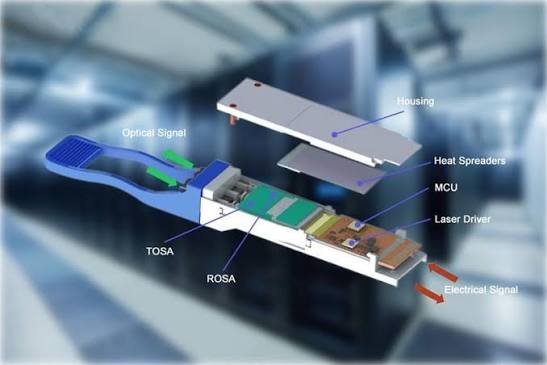
A network upgrade can stall over a pocket-sized component: the optical transceiver ordered for a new switch may fit its socket yet leave the existing fiber route unusable, turning a replacement into an unexpected cabling job. Distance mismatch and power limits deserve attention early.
The purchasing decision therefore involves more than the optical transceiver itself. An MPO cable and a fiber optic patch cord determine how the module reaches the installed cabling. For a business planning an office move, server replacement or storage expansion, the useful question is which combination can be installed, supported and tested during the available maintenance window.
Where the optical transceiver sits in the upgrade
The module converts the switch’s electrical signal into light and receives light from the other end. Its host interface faces the switch; its optical interface faces the cable. Both need to match. A connector that fits proves little about the signaling format, supported fiber, required configuration or behavior of the equipment at the far end.
Name the endpoints first. Record the switch and port models, intended operating speed, software release and corresponding remote port, then ask the network supplier to confirm the proposed module against that combination and explain what happens if a later software update changes support. Keep that answer.
Keep the approval narrow. A successful sample in a spare switch is useful evidence for that test configuration, but it does not cover different chassis, port modes or operating software. Preserve the tested configuration with the purchasing record so that subsequent substitutions can be compared against something concrete.
Match a fiber optic patch cord to the whole route
The familiar single mode vs multimode fiber question is really a route question. Identify the installed fiber before choosing the optics. Include intermediate patch panels, cross-connects and the cords at either end. A short straight-line distance between buildings says little about a cable that travels through risers and underground ducts.
A fiber optic patch cord connects equipment to that route; it does not change the type of fiber already installed, which is why connector polish, the required fiber grade and any undocumented section belong in the survey before a supplier recommends replacement optics. Resolve the unknowns first.
Distance mismatch is also a loss-budget problem. A module’s advertised reach is not permission to ignore dirty connections or added patching. Where records are incomplete, ask for a route test and an explanation of the remaining operating margin before ordering a fleet of replacement modules.
An MPO cable needs a lane map, not just the right plug
Parallel optical interfaces distribute traffic across separate fibers. That makes the MPO cable’s fiber count, mating arrangement and polarity part of the system design. A cable can appear physically suitable while connecting transmitting lanes to the wrong destinations. Replacing a duplex assembly with a multifiber assembly is not a cosmetic change.
T&S Communications lists its 800G OSFP SR8 optical transceiver with MPO16 or 2xMPO12 connection options, while its 800G OSFP DR8 listing specifies 2xMPO12. Those product cards illustrate why the full model and connector option belong on the purchase order. Sharing a headline data rate does not make these optical interfaces interchangeable.
Ask the installer to draw the path from each transmitting lane to its receiving counterpart, including any cassette or breakout. For a preassembled route, obtain the assembly reference and mapping. Stop substitution if the proposed replacement changes the mapping; a generic description such as compatible cable cannot resolve that difference.
Power limits can change the value of a cheaper module
The T&S Communications product listing gives a power limit of ≤14 W for the 800G OSFP SR8 and ≤16.5 W for the 800G OSFP DR8; these model-specific catalogue limits need checking against the host platform’s supported module power and thermal conditions. They are not measured rack consumption.
The same catalogue lists the 400G QSFP-DD FR4 2KM model at ≤10 W. That is a different module and interface choice, not a lower-power substitute for the cited OSFP products. Compare power only after establishing that an option meets the required network function.
The purchasing implication is practical: collect the switch vendor’s requirements for the chosen module and port population, including airflow direction, neighboring equipment and the cable management in front of the intake, because adequate electrical supply does not establish adequate airflow at a densely populated switch. Inspect the planned rack arrangement.
For a rollout, test the intended populated configuration rather than an isolated port on an open bench. Record environmental conditions and alarms. Do not convert a catalogue maximum directly into a promised energy saving; the comparison needs measured operating behavior and the same traffic and cooling assumptions.
Separate fiber optic transceiver compatibility from link-up
A link indicator is a starting observation. Interoperability also involves stable operation under the intended workload, appropriate error correction, diagnostic reporting and recovery after a restart. Buying an optical transceiver on the strength of a light appearing on the front panel leaves these questions unanswered.
Arrange a sample test using the actual endpoint combination: check the configured speed, inspect error counters, run representative traffic and record what happens after reconnecting the link, then agree who will investigate a failure involving equipment from different suppliers. Name the support owner. A warranty phrase alone cannot settle that responsibility.
For product-range enquiries,T&S Communications provides a starting point for matching optical components. Send the endpoint and route information with the enquiry. That gives the supplier a defined compatibility question and gives the buyer a written answer to retain.
Why wavelength division multiplexing changes the cable question
Some optical interfaces carry separate channels at different wavelengths through shared fiber. This wavelength division multiplexing approach differs from assigning each optical lane its own fiber. It can change the required cable arrangement, but it does not remove the need to match both optical endpoints.
Do not assume that a module described as wavelength multiplexed can be plugged into any external wavelength system. Confirm the exact interface specification and whether intermediary equipment is permitted. The module’s optical design and the building’s existing multiplexing equipment need an explicit engineering match.
Compare installed costs. A seemingly expensive module may avoid a new cable route, while a cheaper parallel option may need additional fibers and panel work, so keep civil work, patching and downtime assumptions visible when comparing offers for the same building. Component price is only part of the decision.
Testing reveals limitations that a reach label cannot
The Fiber Optic Association’s testing guide distinguishes installed cable-plant loss testing from component selection. Its cable-plant method includes the fiber, splices and connections in the tested path, using a suitable light source, power meter and reference cables. That supports a simple purchasing rule: retain a measured route result alongside the chosen optic specification.
Define the acceptance boundary before the installer arrives, stating whether the test includes the final equipment cords or stops at a patch panel; otherwise, the commissioning result and the route used in service may describe different assemblies, leaving a gap between acceptance and operation. Record any exception and its owner.
For the cited OSFP models, retain the separate 14 W SR8 and 16.5 W DR8 limits in the equipment schedule. Check the selected model against that schedule when the shipment arrives.
A loss test does not demonstrate every aspect of network performance. Combine physical acceptance with the endpoint trial and operational checks. If a link fails, these separate records help establish whether to investigate the cable path, optical interface or switch configuration without replacing everything at once.
Build a quotation checklist around the installation
Give competing suppliers the same route and endpoint description. Ask each to identify unresolved assumptions before comparing prices. A short installation checklist keeps the decision tied to the network that will actually be built:
- Record the exact host platforms, port modes and software used for compatibility confirmation.
- Compare the fiber type, connector arrangement and lane mapping across the complete route.
- Check module power support and cooling requirements at the intended port population.
- Request the sample-test scope, acceptance limits and responsibility for cross-vendor faults.
- Keep the agreed spare model and substitution process with the installation records.
Choose the combination that has a documented route to acceptance. If an offer depends on an unverified cable type or unspecified switch support, resolve that gap before treating the quoted price as comparable.RTF54W2

Decarbonizing British Gas Networks: Upgrading Biomethane via Pressure Swing Adsorption and Advanced Molecular Sieves

Laser vs. Microneedling for Acne Scar Removal in Singapore: Cost and Results

How to Send Money Internationally Much Faster with UR for Global Payments

Who Is Shameera? All You Need To Know About Charli XCX’s Mother

Who Is Gulliver Flynn Oldman? The Untold Story of Sir Gary Oldman’s Son

Meet Rosemary Turner: The Mother of Actor Callum Turner
-
Biographies8 months ago
Who Is Shameera? All You Need To Know About Charli XCX’s Mother
-
Biographies8 months ago
Who Is Gulliver Flynn Oldman? The Untold Story of Sir Gary Oldman’s Son
-
Biographies9 months ago
Meet Rosemary Turner: The Mother of Actor Callum Turner
-

 Biographies7 months ago
Who is Alexandra James? Inside The Life of Jeremy Clarkson’s Former Partner
-
 Biographies8 months ago
Who is Todd McRae? Meet Tate McRae’s Father
-
 Biographies8 months ago
Who Is Daniel Mara? The Untold Story of Kate Mara’s Private Sibling
-
 Celebrity9 months ago
Who Is Peter Hernandez? The Real Story of Bruno Mars’ Father
-
 Biographies8 months ago
Who Was Adrian Mayers? The Untold Life of A$AP Rocky’s Late Father