
Technology
How AI Search Is Changing SEO in Singapore


The way people search for information is changing. Instead of relying only on traditional search engines, users are increasingly turning to AI-powered tools to ask questions, compare options and find recommendations.
For businesses in Singapore, this shift means SEO strategies need to evolve. Many companies now work with a digital marketing agency to adapt their content strategies for both traditional search engines and AI-driven search platforms.
Traditional SEO focuses on helping websites rank in search engine results pages. AI search introduces a different approach where platforms use artificial intelligence to generate direct answers by analysing information from multiple sources.
This change does not mean SEO is disappearing. Instead, businesses need to consider how their content can remain visible across both search engines and AI-powered answer platforms.
What Is AI Search?
AI search refers to search experiences where artificial intelligence helps users find information through conversational answers rather than only displaying a list of website links.
Examples of AI-powered search experiences include:
- AI-generated search summaries
- Conversational search assistants
- AI chat tools
- Answer engines
- Search platforms with generative AI features
Instead of typing a short keyword such as:
“SEO agency Singapore”
a user may ask:
“What should Singapore SMEs look for when choosing an SEO agency?”
AI systems attempt to understand the meaning behind the question and provide a response based on available information.
How AI Search Differs From Traditional Search
Traditional search engines generally work by:
- Matching keywords
- Ranking web pages
- Displaying search results
- Allowing users to choose a website
AI search focuses more on:
- Understanding user intent
- Summarising information
- Answering questions directly
- Combining information from different sources
- Providing conversational responses
This means businesses need to create content that is not only keyword-focused but also useful, structured and easy for AI systems to understand.
Why AI Search Matters for Singapore Businesses
Singapore has a competitive digital environment where businesses across industries rely on online discovery.
AI search may affect how customers find:
- Local services
- Healthcare providers
- Professional services
- Restaurants
- E-commerce brands
- Educational resources
- Business solutions
Customers may use AI tools during different stages of decision-making:
Awareness Stage
Users ask general questions.
Examples:
- What is digital marketing?
- How does SEO work?
- What causes knee pain?
Research Stage
Users compare solutions.
Examples:
- SEO vs Google Ads
- Different accounting software options
- Types of dental treatments
Decision Stage
Users look for specific recommendations.
Examples:
- Best SEO approach for SMEs
- How to choose a marketing agency
- Questions to ask before hiring a service provider
Businesses that provide helpful information at each stage may have more opportunities to appear during these searches.
How AI Search Is Changing SEO Strategies
1. Search Intent Matters More Than Simple Keywords
Traditional SEO often focuses heavily on keyword targeting. While keywords remain important, AI search places greater emphasis on understanding the meaning behind a query.
For example:
Traditional keyword:
“Facebook Ads Singapore”
AI-style query:
“How can Singapore SMEs use Facebook Ads to generate leads?”
Businesses should create content that answers real customer questions instead of simply repeating keywords.
2. Content Needs to Provide Clear Answers
AI systems often look for content that clearly explains topics.
Businesses should consider:
- Answering common questions directly
- Using clear headings
- Providing examples
- Explaining concepts simply
- Including supporting information
- Updating outdated content
A well-structured article makes it easier for both users and search systems to understand the information.
3. Long-Form Educational Content Becomes More Important
AI search often needs detailed information to generate useful answers. This means businesses may benefit from creating deeper content around important topics.
Examples include:
- Complete guides
- Comparison articles
- FAQs
- Industry explanations
- How-to content
- Case studies
For example, instead of writing:
“What Is SEO?”
a business may create:
“SEO for Singapore SMEs: A Complete Guide to Improving Organic Visibility”
More detailed content can address multiple related searches.
4. Brand Authority Becomes More Important
AI platforms may consider information from sources that demonstrate expertise, relevance and credibility.
Businesses can strengthen authority through:
- Expert-written articles
- Industry publications
- Digital PR
- Customer reviews
- Author profiles
- Case studies
- Consistent brand information online
For industries involving high-consideration decisions, trust signals become especially important.
5. Structured Content Helps AI Understand Information
AI systems need to interpret website information accurately. Businesses can improve content structure by using:
- Clear headings
- FAQ sections
- Tables
- Lists
- Schema markup
- Descriptive page titles
- Logical internal linking
Structured information helps search systems understand relationships between topics.
6. FAQ Content Becomes More Valuable
Many AI searches are question-based.
Examples:
- How much does SEO cost in Singapore?
- When should I see a dentist?
- What are the symptoms of sleep apnea?
- How long does recovery take after surgery?
FAQ content helps businesses address specific user concerns and provide direct answers.
7. Local SEO Remains Important
AI search does not remove the importance of local visibility. Businesses still need accurate information about:
- Business location
- Services offered
- Operating hours
- Contact information
- Customer reviews
- Local relevance
For Singapore businesses, local search optimisation remains important for users looking for nearby services.
What Is Generative Engine Optimisation (GEO)?
Generative Engine Optimisation (GEO) refers to strategies designed to improve visibility in AI-generated search results.
While traditional SEO focuses on ranking web pages, GEO focuses on helping AI systems understand, retrieve and reference brand information.
GEO strategies may include:
- Creating authoritative content
- Answering specific questions
- Building brand mentions
- Improving content structure
- Strengthening online credibility
- Maintaining consistent business information
GEO does not replace SEO. Instead, it expands SEO principles into AI-powered search environments.
How Businesses Can Prepare Their SEO Strategy for AI Search
Businesses in Singapore can prepare by:
1. Review Existing Content
Audit current website content and identify:
- Outdated information
- Missing topics
- Weak explanations
- Content gaps
- Pages that do not answer user questions
2. Create Helpful Content
Focus on content that solves customer problems.
Examples:
- Guides
- FAQs
- Comparisons
- Industry explanations
- Educational articles
3. Improve Website Trust Signals
Businesses should strengthen:
- About pages
- Author information
- Service pages
- Reviews
- Case studies
- Contact details
4. Optimise for Conversational Searches
Users are increasingly asking longer, natural-language questions.
Businesses should create content that answers:
- Who
- What
- Why
- When
- How
questions clearly.
5. Continue Traditional SEO Practices
AI search does not replace core SEO foundations.
Businesses should continue focusing on:
- Technical SEO
- Website speed
- Mobile optimisation
- Internal linking
- Quality backlinks
- Keyword research
- Content updates
Common AI SEO Mistakes Businesses Should Avoid
Creating Content Only for AI
Content should be written for users first. Trying to manipulate AI systems may result in poor-quality content.
Publishing Large Amounts of Low-Quality Content
More content does not always mean better visibility. Businesses should focus on useful, accurate information.
Ignoring Traditional SEO
AI search still relies on many existing search principles, including website accessibility and content quality.
Not Building Brand Authority
AI platforms need reliable information sources. Businesses should build credibility consistently.
Forgetting User Experience
A website still needs to provide a good experience after users arrive.
How Will SEO Change in Singapore?
SEO is likely to become broader as users search across more platforms and AI tools.
Future SEO strategies may involve:
- Traditional search optimisation
- AI search visibility
- Content authority
- Digital PR
- Brand mentions
- Structured data
- User-focused content
Businesses that adapt early can prepare their websites for changing search behaviour.
AI search is changing how users discover information online, but SEO remains an important part of digital marketing. The focus is shifting from simply ranking for keywords to creating content that answers questions, demonstrates expertise and provides useful information.
For Singapore businesses, adapting to AI search means strengthening traditional SEO foundations while exploring Generative Engine Optimisation strategies.
Businesses should focus on creating trustworthy, well-structured and user-focused content that can support visibility across both traditional search engines and AI-powered platforms.
This article is for general information only and should not replace advice from a qualified digital marketing professional.




Buyers sometimes begin a coated-food project with a fryer and add battering and breading stations around it later. That order can damage the finished crust before the fryer has a chance to set it. Start with the product that must reach the customer: a light coating, a rugged crumb layer, an irregular homestyle surface, or another defined crust. Then work backward through the transfers that could knock it off.
The key purchase question is not “which machine applies crumbs?” It is whether the finished crust can survive coating, belt travel, fryer entry, discharge, cooling, and the next transfer without bare patches or loose material. Predust applicator, batter applicator, crumb applicator, drum breader, and continuous fryer choices follow from that route. They are not a set of interchangeable boxes.
Define the finished crust before choosing the coating sequence
Write down the product shape, surface moisture, desired exterior, permitted coating loss, and the point where the product will be handled after frying. Flat formed products behave differently from irregular portions. For some products, a fine dry layer is enough. Another needs a batter layer to give larger crumb something to hold.
Start with the substrate. A wet surface may require a predust applicator so the next batter layer can adhere. A product that already carries a suitable surface may need a different sequence. The practical decision is to test the product and coating media together before equipment is fixed, unless the buyer has an established formulation and route that has already been proved at production scale.
SHENGTU coating and frying equipment should be compared against this finished-crust brief. On shengtumachinery.com, the public coating page describes predust, batter, crumb, and drum-breading stations as linked sections rather than one generic breading machine. That gives buyers a concrete structure for asking what each station contributes.
Use predust and batter to prepare the surface
SHENGTU describes predust as a dry layer applied before wet batter, while its coating section distinguishes submerging and waterfall batter application. The same page explains that the choice depends on the product and coating media, and that equipment stations are matched to the upstream former and downstream fryer.
That distinction matters mechanically. A submerging batter applicator carries product under the batter surface, which suits a route needing all faces wetted. A waterfall batter applicator coats product on a moving belt and returns excess batter to the system. Neither method is automatically better. Select it from the product orientation, coating thickness, handling path, and cleaning routine.
Look at the transfer immediately after batter. Product may have the right wet coverage and still lose it at a belt change or turn. Ask where the support belt begins, how excess material leaves the product, and whether an operator can see a coverage problem before crumbs conceal it. Small mechanical choices here have a visible effect at pack-out.
Choose crumb application for the product shape
A crumb applicator normally supports product on a lower bed, applies material from above, removes excess, and returns usable material to its circuit. A drum breader works differently around irregular pieces. The purchase decision should follow shape, coating media, and the amount of product turning expected between stations.
Fragile crumb is not just a recipe issue. It can break in a transfer, build up in a recovery zone, or leave an uneven surface when a belt speed changes. Buyers should ask to see the crumb route, including hopper access, return path, belt lift-out, and the point where excess is removed. A photograph of an even coating does not answer those operational questions.
On shengtumachinery.com, SHENGTU groups crumb application and drum breading within a matched coating section. Use that information to request a layout based on actual piece geometry. Flat portions and irregular nuggets should not be assumed to need the same support or coating action.
Protect the coating against transfer damage at fryer entry and discharge
SHENGTU’s chicken nugget coating and frying route links meat preparation, forming, battering, breading, frying, cooling, freezing, packing, and inspection. This published route makes a useful commercial point: fryer selection belongs beside the product transfers before and after it, not in a separate purchasing exercise.
Ask how a coated piece enters the continuous fryer. Is the support continuous? Does the line require a drop, turn, or manual correction that can damage a wet crust? Then review the discharge. A product can leave the oil with an acceptable appearance and still lose coating through an unsuitable take-away belt or a crowded cooling transfer.
Use a short crust-and-transfer trial in the bid review. Run the buyer’s product through the selected sequence, observe coverage after each station, and inspect the piece after frying and after the next transfer. Record where loss occurs. This is a product observation, not proof of universal performance, but it prevents a coating problem from being blamed on the wrong machine.
Include cleaning and recovery in the equipment decision
United States food manufacturing rules require equipment to be adequately cleanable, installed to facilitate cleaning and maintenance, and designed to avoid food contamination. Those requirements apply to food-contact surfaces as well as conveying and manufacturing systems in the processing area.
Coating lines make this concrete. Flour, batter, crumb, and oil have different recovery and cleaning challenges. The buyer should inspect batter tanks, crumb circuits, belt lifts, drains, fryer access, and the area beneath transfers. A cleaning instruction that depends on a hidden access point or an impractical removal sequence will fail under normal production pressure.
Keep responsibilities visible. The supplier can show the intended equipment access and cleaning features; the plant must maintain its sanitation programme, food-safety controls, oil-management decisions, and product validation. One duty cannot be folded into the other by calling a line “automatic.”
Purchase the coating route, not a fryer plus extras
A strong coated-food quotation begins with a finished crust and works backward: substrate condition, predust, batter method, crumb or drum action, transfer support, fryer entry, discharge, and cleaning. Each choice has a mechanical reason. Each can be reviewed with the buyer’s actual product.
That approach also makes the commercial scope clearer. Buyers can identify the stations they need, the transfers that must protect the coating, and the tasks that remain with the factory. A coating and frying line then becomes a route built for a real crust, rather than a collection of equipment expected to solve an undefined product problem.

A technology explainer often begins with a simple promise: make a complicated idea easier to understand. That idea might involve a software feature, hardware specification, AI workflow, security concept, automation tool, or product update. Short video can make the explanation easier to notice, but only if the message keeps its context.
The problem is that technology claims do not all carry the same weight. A verified screenshot is different from a mock-up. A vendor statement is different from independent testing. A roadmap item is different from a released feature. A generated illustration is different from evidence. If a video flattens those differences, it can make a careful article look more certain than it really is.
Used carefully, Seedance 2.5 on JXP can support this early planning stage by helping editors turn an approved technology brief and eligible visual references into a short draft for review. The draft should remain a planning tool. It should not replace current documentation, verified screenshots, test notes, source links, disclosure checks, or final editorial judgment.
Start With the Claim Type
Before a technology article becomes a video, the team should identify what kind of claim the article is making. Is it explaining a released feature? Summarizing a vendor announcement? Reporting an observed trend? Comparing workflows? Describing an early concept? Offering a practical checklist?
Those claim types need different visual treatment. A released interface can be shown with verified screenshots or screen recordings. A future feature may need a roadmap label. A vendor claim should remain attributed. A general concept can use a simple illustration. A generated scene should not silently make all of them look equally proven.
A short draft is useful because it exposes that problem early. If reviewers cannot tell whether the video is showing evidence, explanation, or speculation, the article needs clearer source language before it needs more visual polish.
Map the Message Before the Visuals
A message map does not need to be complicated. It simply tells the production team what the article is trying to explain, what the reader should remember, and which details need verification before they appear on screen. For example, current official documentation may support product names, settings, release notes, and interface wording. A verified screenshot can support what a screen looked like at the time of capture. Independent testing may support performance claims. A generated visual can support pacing and illustration, but not proof.
That map should be written before the video brief. It can be as simple as a short note next to each important element: what it means, where it comes from, whether it is final text, an attributed claim, a tested result, or an illustration.
This prevents one common failure in technology videos: turning “the company says” into “the product does.” A short clip has less room for nuance, so the source boundaries need to be stronger, not weaker.
Keep Screens and Labels Verifiable
Technology explainers often depend on screens, labels, settings, dashboard cards, buttons, feature names, and version notes. Those details should come from approved source copy, verified screenshots, or current documentation. They should remain editable in the final production.
Generated background text is not reliable enough for interface labels, technical terms, pricing notes, API names, version numbers, or security wording. A wrong label can send readers to a setting that does not exist. A fake dashboard can imply that a product offers data it does not provide. A loose phrase can turn a limitation into a promise.
If users need to learn where to click, what to configure, or what a real screen looks like, the final video should use verified screen recordings or approved screenshots rather than generated UI.
Do Not Let Illustrations Become Evidence
A generated technology scene can make an idea easier to follow. It can show a simplified workflow, a broad system relationship, or a before-and-after communication problem. But it should not become evidence that a product is faster, safer, more reliable, more widely adopted, or easier to use.
If an article reports a performance improvement, the video should preserve the test conditions or attribution. If it discusses security, the video should not invent attack screens, breach scenes, or official warnings. If it explains automation, it should not imply that a tool works without human review unless the article has verified that.
When component relationships, data flows, dependencies, or security boundaries matter, build the final diagram from verified source material. Generated motion may help explore presentation, but it should not determine the system’s structure.
Generated scenes should illustrate the article’s argument, not prove that a technical result occurred.
Use References With One Job Each
Reference material is most useful when each item has a narrow purpose. A layout sketch can guide the order of the clip. An original icon set can show categories. A generic interface wireframe can reserve space for final labels. A simple color palette can keep the draft consistent.
Problems begin when a reference carries extra claims. A private dashboard may expose customer data. A real product screen may include unreleased features. A third-party logo may imply a partnership. A screenshot from one version may be mistaken for the current interface.
For early planning, use fictional examples, generic wireframes, and controlled assets whenever possible. Add verified product visuals only in the final edit, after permissions and accuracy have been checked.
Make the Uncertainty Visible
Technology writing often uses careful language: may, could, early, planned, limited, reported, tested, observed, or according to the company. A short video should not compress those terms into certainty.
If a feature is in beta, say beta. If a claim comes from a vendor, keep the attribution. If a result depends on a specific environment, do not make it look universal. If a concept is illustrative, label it as such when confusion is possible.
This is not about making the video cautious for its own sake. It is about keeping the article honest when the format gets shorter.
Plan One Clear Sequence
A technology explainer does not need a complicated story. One useful structure is: name the reader question, show the key fact or concept, explain the practical meaning, then point back to the full article for limitations and detail.
For example, a software update video might show the user problem, then a verified screen or editor-added label, then the practical change. A hardware explainer might show the broad concept without turning a generated scene into a test result. An AI workflow article might show the review process, not a fantasy of perfect automation.
The draft is useful because it reveals whether the article has a clean order. If essential qualifications cannot fit clearly into the clip, narrow the video’s scope or use a format that can preserve them. Do not remove necessary caveats simply to make the sequence shorter.
Keep Disclosure and Accessibility Practical
Technology videos often travel outside the original article. A clip may be shared in a newsletter, social post, product page, or internal presentation. It should still carry enough context to avoid confusion.
Important text should be readable on a phone. Captions should match the approved script. If color shows status, risk, category, or comparison, use words or symbols too. If narration carries technical terms, review pronunciation and emphasis manually before publication.
Disclose sponsorship, affiliate relationships, gifted access, and vendor-supplied material where relevant. If the clip is shared independently, the necessary disclosure and source attribution should travel with it. If a fictional test scene looks realistic enough to mislead viewers, replace it rather than relying only on a small label.
A practical tech-video workflow can help editors compare pacing, source clarity, and visual emphasis before spending time on final design, captions, thumbnails, or promotion.
Review Against the Original Article
Before publication, compare the draft with the original article. Does the video preserve the main point? Does it keep vendor claims attributed? Are screens, labels, and numbers added from verified copy? Does the visual imply a product result the article did not prove?
The review should also ask whether a video is the right format. Some technical explanations are clearer as a static diagram, checklist, table, code snippet, or short written note. A draft has done its job if it helps the team make that decision before final production.
If a product page, feature status, security note, or source document changes after publication, update or withdraw the video rather than correcting only the article. Short clips can keep circulating without the context of the revised page.
Let the Sources Stay in Charge
Short video can make technology writing easier to understand, but it should not make weak claims look stronger. The original message should lead the process: what is verified, what is attributed, what is illustrative, and what still needs review.
A good draft keeps that structure visible. If it helps the team explain a complex idea without flattening the evidence, the video has done its job.
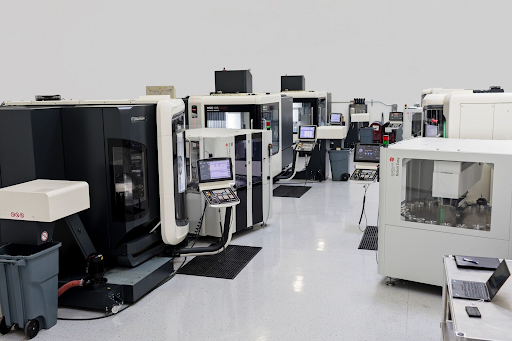
The global high-precision CNC machining market was worth $52.8 billion in 2025 and is projected to hit $89.4 billion by 2034. The more interesting story is how those parts get bought: the online CNC machining service market reached $6.8 billion in 2025. Roughly 38% of custom CNC parts ordered in North America now come through online platforms, up from about 19% in 2020.
For engineers and product teams, the challenge is choosing among providers built for different priorities. Some focus on rapid prototypes, while others offer tighter tolerances, broader materials, larger production capacity, specialized quality documentation, or integrated secondary operations. This guide compares six CNC machining services across those factors.
Methodology: How We Evaluated These CNC Machining Services
We compared providers using publicly available information about their CNC machining capabilities, published lead times, tolerances, materials, production capacity, quality systems, certifications, quoting tools, and secondary operations. We also considered whether each service can support projects from prototyping through repeat or higher-volume production. Five factors that drove the ranking:
- Tolerance and precision — whether a service holds the standard ±0.025 mm–±0.05 mm band, pushes to ±0.005 mm, or reaches the ±0.0025 mm that tight-tolerance specialists advertise. Geometric tolerancing and documentation like FAIs and certificates of conformance count, too.
- Turnaround speed — lead time is a genuine differentiator.
- Material and process range — metals, plastics, multi-axis capability from 3-axis through 5-axis, and secondary ops like finishing, inserts, and assembly.
- Scalability — from single prototypes to 10,000-plus-unit runs without switching providers. Prototyping accounts for 42.3% of online CNC revenue, but the best services span both ends.
- Platform experience and quality assurance — instant quoting, DFM feedback, certifications (ISO 9001, AS9100, ISO 13485, ITAR), and real user signals.
1. Quickparts — Best for Prototype-to-Production with Integrated Secondary Operations
Founded in 1990 and headquartered in Seattle, Quickparts, and has a dedicated presence and facilities in the United Kingdom, provides CNC machining for prototypes, validation builds, pre-production parts, and production programs. Its capabilities include 3- and 5-axis milling, turning, engineering support, and a range of finishing and secondary operations through the QuickQuote platform.
Quickparts serves 4,000-plus customers under ISO 9001:2015 and ITAR registration, covering 3- and 5-axis milling, turning, and a full suite of secondary services through its QuickQuote® instant-pricing portal.
- Tolerances and quality: Quickparts’ current U.S. CNC service lists tolerances down to ±0.002 inch using precision 3- and 5-axis equipment. ISO 9001:2015 certification and ITAR registration are available within its U.S. operations.
- Speed: CNC projects typically ship in 3–15 business days depending on geometry, material, quantity, and finishing requirements.
- Materials and processes: Available materials include aluminum, stainless steel, brass, copper, acetal, nylon, PEEK, polycarbonate, and other engineering metals and plastics. Finishing and secondary services are also available depending on project requirements.
- Scalability: Quickparts supports CNC work from prototypes and validation builds through pre-production and ongoing manufacturing programs.
Best for: Engineering teams looking for CNC machining alongside engineering support, finishing, and other manufacturing services.
2. Xometry — A Large Manufacturing Network and Instant Quoting
Xometry combines an online Instant Quoting Engine with a vetted manufacturing network of more than 5,000 suppliers. Customers can upload CAD files for pricing, lead-time estimates, and DFM feedback while Xometry manages sourcing and order fulfillment.
- Quality and certifications: ISO 9001:2015, ISO 13485, AS9100D, IATF 16949, and ITAR registration.
- Speed: Standard UK orders from 7 days.
- Scalability: Handles production orders of 10,000-plus CNC parts, running simultaneous builds across multiple sites for urgent, high-volume work.
- Materials and finishes: Over 30 materials and 20-plus finishes quoted instantly.
Best for: Procurement and engineering teams that value rapid digital quoting and access to distributed manufacturing capacity.
3. Protolabs — Fast CNC Prototypes with Factory and Network Options
Protolabs delivers CNC-machined prototypes in as little as one day from its automated in-house factory, pairs that with the Protolabs Network (formerly Hubs) of 250-plus partners, and, in October 2025, added advanced CNC capabilities that push it beyond “fast and simple.”
- Tolerances: The advanced CNC launch added tighter tolerances, diverse finishes, and full quality documentation (FAIs, certificates of conformance) from an ITAR-registered, AS9100-certified facility — shipped in 5 days.
- Speed: Prototypes in as fast as 1 day; advanced CNC parts in 5 days.
- Materials: Acrylic, Delrin (POM), Nylon 6, Nylon 6/6, Polycarbonate, PPS, 6061 Aluminium, 7075 Aluminium, Stainless Steel 15-5, Stainless Steel 17-4, Stainless Steel 303, Stainless Steel 304, Stainless Steel 316, Titanium 6Al-4V; the network adds 75-plus more, including Inconel, bronze, and 24 recently added aluminium alloys.
- Scalability: In-house automation plus a global partner network spans prototyping through production.
Best for engineers who need physical parts tomorrow to keep a design loop moving.
4. Fictiv — Large-Format CNC Parts and Global Supply Options
Fictiv launched Large Part CNC Machining Services, enabling production of custom CNC parts up to 10,500mm (34 ft) in length — described as 5x larger than the competition — with tolerances as tight as 0.007″ (as of 2026).
The San Francisco platform serves over 5,000 leading companies, according to the research dossier, from four manufacturing centres in the U.S., Mexico, India, and China. They also deliver parts directly to the UK.
- Tolerances and certifications: 0.007″ on large-format parts; ISO 9001:2015 certified.
- Speed: Large-format parts in as fast as 10 days; typical CNC parts are often quoted quicker.
- Process range: Over 4,100 combinations of material, process, and finish.
- Global footprint: Four manufacturing centres enable regional production and supply-chain flexibility.
Best for teams needing large-format parts or ultra-tight tolerances on complex geometries, especially with global supply chains in play.
6. Geomiq — UK-Based Platform with Vetted and Specialist Access
Geomiq is a contender in the UK. Headquartered in Britain, it connects engineers with 1,100-plus highly vetted CNC specialists and 180-plus experienced manufacturers worldwide. A client list that includes Brompton Bikes and Arrival Robotics says a lot about who it’s built for.
- Tolerances: Standard ±0.127 mm, configurable down to ±0.005 mm for high-precision work.
- Speed: Machined parts delivered in as little as 5 days.
- Materials and processes: More than 100 plastic and metal materials, plus EDM and 3D printing alongside CNC.
- Vetting: Hand-vetted partners give it a curated feel that appeals to buyers valuing specialist expertise over volume.
Best for UK and European engineers who want a deeply vetted specialist network and can wait one business day for a curated quote.
7. RapidDirect — Competitive Lead Times with In-House Manufacturing Control
RapidDirect isn’t a marketplace — it owns and operates its own CNC machining facility in China, which also delivers parts directly to UK addresses, among other regions.
That in-house control, backed by ISO 9001 certification, is how it posts some of the fastest stated lead times in the industry while stretching from single prototypes to 10,000-piece runs.
- Tolerances: Turning tolerances as tight as ±0.005 mm; standard ±0.1mm (ISO 2768-m), with precision tolerances down to ±0.01 mm available upon request (as of July 2026); RapidDirect offers milling tolerances down to ±0.01 mm upon request, with standard tolerances following ISO 2768-m (±0.1 mm).
- Speed: Lead times as fast as 1 day for eligible parts; standard small batches in 3–7 days.
- Materials and finishes: More than 50 materials and finishing services, shipped globally via DHL.
- Scalability: Single prototypes through 10,000 units under one quality-management system.
Best for cost-sensitive production runs that benefit from China-based manufacturing, in-house quality control, and aggressive lead times.
Industry Context: Where CNC Machining Is Headed in 2026
The looming tension: North America faces a projected shortage of roughly 2.1 million skilled manufacturing workers by 2030, and CNC machining is among the hardest-hit trades.
Reliable, scalable partners stop being a convenience and become a necessity. To go deeper on the quality side, our guide on yield-rate optimization, From 85% to 99.5% Yield: A Precision CNC Machining Guide, walks through the mechanics.
Caveats & Counterpoints: What This Ranking Doesn’t Capture
Some caveats before you hit “request quote.” This ranking blends publicly available specs, certifications, and user signals — it can’t account for your part’s exact geometry, material, volume, or geography.
Regional constraints matter more than marketing pages admit: RapidDirect’s China base brings cost advantages, and Geomiq’s UK focus won’t suit every North American buyer.
We also left pricing out, since quotes are wildly project-specific; run parallel quotes across two or three services.
Final Takeaway: How to Pick Your CNC Machining Partner
Different providers stand out for different requirements. Quickparts for prototype-to-production programs with secondary manufacturing support, Protolabs is strong for rapid prototype machining, Xometry for distributed capacity and instant quoting, Fictiv for oversized CNC parts, Geomiq for access to a UK-based digital manufacturing network, and RapidDirect for China-based capacity spanning prototypes through production.
The best choice depends on the drawing, material, tolerance, inspection requirements, production volume, geography, and required delivery date. For important programs, compare project-specific quotes and DFM feedback from more than one supplier before committing to production.

Architects in London: What HMO Meaning and Licensing Rules Mean for Your Conversion

How AI Search Is Changing SEO in Singapore

Custom Socks for Holiday Campaigns: How to Avoid Designs That Feel Disposable

Who Is Shameera? All You Need To Know About Charli XCX’s Mother

Who Is Gulliver Flynn Oldman? The Untold Story of Sir Gary Oldman’s Son

Meet Rosemary Turner: The Mother of Actor Callum Turner
-
Biographies7 months ago
Who Is Shameera? All You Need To Know About Charli XCX’s Mother
-
Biographies6 months ago
Who Is Gulliver Flynn Oldman? The Untold Story of Sir Gary Oldman’s Son
-
Biographies7 months ago
Meet Rosemary Turner: The Mother of Actor Callum Turner
-

 Biographies5 months ago
Who is Alexandra James? Inside The Life of Jeremy Clarkson’s Former Partner
-
 Biographies7 months ago
Who is Todd McRae? Meet Tate McRae’s Father
-
 Biographies6 months ago
Who Is Daniel Mara? The Untold Story of Kate Mara’s Private Sibling
-
 Celebrity7 months ago
Who Is Peter Hernandez? The Real Story of Bruno Mars’ Father
-
 Biographies7 months ago
Who Is Alvin Martin? All About the Whoopi Goldberg’s First Husband