
Blog
Construction Waste Removal: The Regulations Your Builder Probably Hasn’t Told You About

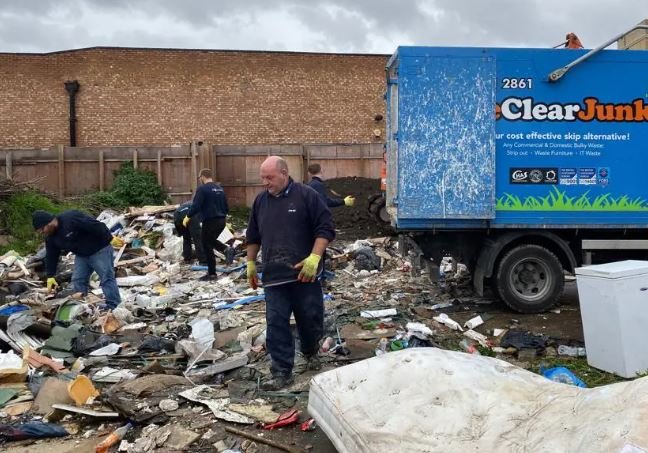
You’ve hired a builder. You’ve signed the contract. The skips start filling up, the dust starts flying, and you assume someone responsible is dealing with all that rubble, timber, and packaging waste piling up on your drive.
But here’s the uncomfortable truth most builders won’t bring up over a cup of tea: the legal responsibility for construction waste removal doesn’t always sit squarely on their shoulders. In many cases, it sits on yours.
If that’s news to you, you’re not alone and you’re not in trouble yet. But it’s worth understanding how this works before you find yourself on the wrong end of a fine, an investigation, or a nasty letter from the Environment Agency.
Let’s break it down in plain English.
Why Construction Waste Is a Legal Minefield
Construction and demolition waste is one of the largest waste streams in the UK. According to government figures, it accounts for well over 60% of total waste produced annually. That’s an enormous amount of rubble, plasterboard, metal, wood, packaging, and hazardous materials moving around the country every single day.
Because of the volume and the potential environmental impact, the rules around construction waste management are strict and the penalties for getting it wrong are genuinely serious.
We’re talking about:
• Unlimited fines for illegal waste disposal
• Criminal prosecution in severe cases
• Fixed penalty notices of up to £400 for householders
• Potential liability even if someone else physically moved the waste
Yes, even if your builder loaded the van, if the waste ends up fly-tipped in a layby or taken to an unlicensed site, you could share in the consequences.
The Duty of Care: What It Actually Means For You
The cornerstone of UK waste law is something called the Duty of Care. It applies to anyone who produces, imports, carries, keeps, treats, or disposes of controlled waste which includes virtually all construction and demolition waste.
Under the Environmental Protection Act 1990, as a householder or site owner, you have a duty to:
• Ensure your waste is only handled by authorised carriers; anyone transporting your construction waste for hire or reward must be registered with the Environment Agency (or Natural Resources Wales / SEPA in devolved nations).
• Get a Waste Transfer Note every time construction waste changes hands, there should be a written record of it. If your builder or clearance company can’t produce one, that’s a red flag.
• Not allow illegal disposal even unintentionally. “I didn’t know” is rarely an adequate defence.
The practical implication? Before any rubble, plasterboard, tiles, or mixed construction debris leaves your property, ask your builder or building waste removal company two very simple questions:
• Are you a registered waste carrier?
• Can I have a copy of the Waste Transfer Note?
If either answer is vague, evasive, or missing don’t proceed.
Registered Waste Carriers: The One Check Most Homeowners Skip
This is the single biggest gap between what people assume and what the law requires.
Anyone who transports waste as part of a business including builders, skip hire companies, and dedicated construction waste clearance teams must be registered as a waste carrier with the Environment Agency. It’s free to check. It takes about 30 seconds.
You can verify carrier registration at the Environment Agency’s public register. Just search by company name or registration number.
An unregistered carrier is a serious warning sign. It might mean:
• The waste will be fly-tipped
• It’ll end up at an unlicensed tip where disposal is cheaper but illegal
• You could be implicated if the waste is traced back to your property
The sad reality is that dodgy operators often advertise the lowest prices, and homeowners take them at face value. That ‘bargain’ clearance quote sometimes ends up costing thousands in fines or legal fees.
Hazardous Materials: A Whole Different Level of Regulation
General construction waste disposal rules are one thing. Hazardous waste is another level entirely.
If your project involves any of the following, different and stricter regulations apply:
• Asbestos Found in properties built or renovated before 2000.containing materials (ACMs) cannot be disposed of in standard skips or general waste. Licensed contractors must handle removal, and disposal must go to a licensed hazardous waste site. Your builder is legally required to carry out an asbestos survey before any demolition or significant renovation work.
• Lead paint Common in older properties, requires specific handling and disposal procedures.
• Fluorescent tubes and lighting contain mercury, classified as hazardous.
• Certain adhesives, solvents, and coatings Check the safety data sheets if you’re unsure.
If hazardous waste is mixed with general construction debris, the entire load may be reclassified as hazardous, significantly increasing disposal costs and legal obligations.
Ask your builder directly: “Have you identified any hazardous materials, and how are you managing their disposal?” If they look confused or brush it off, that’s a problem.
Site Waste Management Plans: Do You Need One?
For larger commercial construction projects in England and Wales, Site Waste Management Plans (SWMPs) were previously a legal requirement. While they’re no longer mandatory under law, the Environment Agency still strongly recommends them and many local authorities, contractors, and planning conditions require them anyway.
For domestic projects, you’re less likely to need a formal SWMP. But the principle behind them is still sound:
• Estimate what waste your project will produce
• Identify how each waste type will be managed
• Record what actually happened
Even an informal version of this, discussed with your builder at the outset, can prevent a lot of problems. Ask them: “What’s your plan for waste management on this project?”
What Good Construction Waste Management Actually Looks Like
To be fair to the many excellent builders and clearance companies operating professionally, here’s what legitimate, compliant construction waste management looks like in practice:
• Segregation on site Separate skips or designated areas for wood, metal, plasterboard, inert materials (rubble, soil), and general mixed waste. This isn’t just good practice, it makes economic sense because segregated materials attract lower disposal costs and recycling credits.
• Licensed skip hire or carrier All waste movement is handled by registered carriers with documentation.
• Waste Transfer Notes Issued for every load that leaves the site. Kept on file for a minimum of two years.
• Receipts from licensed facilities Evidence that waste reached a legitimate destination.
• Hazardous waste consignment notes For any hazardous materials, a separate consignment note system applies, with stricter tracking requirements.
A reputable building waste removal company will have all of this as standard. They won’t find the questions annoying, they’ll appreciate that you’re asking.
How to Protect Yourself: A Simple Checklist
Before your next construction or renovation project begins, run through this:
• Ask your builder for their waste carrier registration number and check it
• Confirm who is responsible for arranging skip permits (if applicable)
• Ask how hazardous materials will be identified and managed
• Request Waste Transfer Notes for all construction waste leaving site
• Check your planning conditions for any waste specific requirements
• Get a written statement from your builder about their waste management approach
• If using a separate clearance company, apply the same checks
It takes maybe an hour of admin. That hour could save you from a very stressful situation down the line.
When to Bring in a Dedicated Clearance Company
Sometimes it makes more sense to separate the construction waste clearance entirely from the build work. Specialist clearance companies:
• Handle all waste types in a single visit
• Carry the necessary registrations and insurance
• Provide full documentation as standard
• Can often recycle a higher proportion of materials than a general builder
This is particularly useful at the end of a project when you’ve got a mixed accumulation of materials and just want it gone properly. It’s also useful during longer projects where waste has been building up and your builder’s focus is on the build, not the administration.
The key, again, is checking credentials before anyone turns up with a van.
FAQS
Q: Who is legally responsible for construction waste removal, me or my builder?
A: Both of you can share responsibility, but as the property owner, you are never fully off the
hook. Under the Environmental Protection Act 1990, the Duty of Care applies to anyone who produces or arranges the disposal of controlled waste. Even if your builder physically removes the waste, if it ends up fly tipped or taken to an unlicensed site, you could face fines or investigation. Always confirm your builder is a registered waste carrier before work begins.
Q: Do I need a permit for a skip outside my house?
A: Yes if the skip is placed on a public road or pavement, a permit is required from your local council. Your skip hire company should arrange this on your behalf, but it’s worth confirming before the skip arrives. An unpermitted or unlit skip on a public road can result in a fixed penalty notice, and the liability typically falls on the permit holder, not the skip company.
Q: What happens if construction waste is disposed of illegally?
A: The consequences can be serious. Illegal construction waste disposal can result in unlimited fines, a criminal record in severe cases, and fixed penalty notices of up to £400 for
householders. If waste is traced back to your property and you cannot produce Waste Transfer Notes proving it was handled by a licensed carrier, you may be held partly or fully liable even if a third party physically dumped it.
Q: Can all construction waste go into the same skip?
A: No. Effective construction waste management requires segregating different material types.
Plasterboard and gypsum must be kept separate under Landfill Directive rules. Asbestos, tyres, fridges, and electrical items are prohibited from standard skips entirely. Mixing hazardous
materials with general waste can cause the entire skip load to be reclassified as hazardous, leading to significantly higher disposal costs or outright rejection at the waste transfer
station.
Q: How do I check if a waste carrier is registered?
A: You can verify any waste carrier’s registration for free on the Environment Agency’s public register (or the equivalent body in Scotland and Wales). Search by company name or registration number takes under a minute. Any legitimate building waste removal or construction waste clearance company will have their carrier number readily available. If a contractor is evasive or cannot provide it, treat that as a serious red flag and do not proceed.
Conclusion
Don’t Leave Construction Waste to Chance Most problems with building waste removal come down to one thing:
assuming someone else is handling it. WeClear takes that assumption off the table entirely.We’re fully licensed, fully documented, and ready to clear your site the right way no corners cut, no nasty surprises. Get your free, no obligation quote today and let us handle The hard part.
👉 Request a Free Quote — WeClear.co.uk


A condo viewing is more useful when it goes beyond whether the rooms look appealing. In Malaysia, heat, heavy rain, shared facilities and ongoing building costs can all affect daily life. Prepare a short list of questions before you go, then give yourself time to observe as well as listen. An agent or seller may not have every answer on the spot, so note what needs written confirmation. The aim is not to find a flawless home; it is to understand what you would be committing to.
Does the unit work for your everyday routine?
Walk through the home as though you already live there. Where would you leave shoes, dry laundry, store cleaning supplies and place a work desk? Check whether doors open fully without blocking furniture or walkways. Ask what is included in the sale or tenancy, particularly appliances, fittings and built-in cabinets. If the unit is occupied, distinguish the space itself from the current resident’s furniture and styling.
Notice daylight, airflow and noise with windows both open and closed. A pleasant view may matter less if nearby activity disturbs your usual sleeping hours. Ask which direction the main windows face, but judge the comfort of the rooms for yourself. If possible, visit at a different time of day before deciding. A single viewing offers only a brief snapshot of how the unit feels.
What condition is the unit really in?
Look beyond fresh paint. Scan ceilings, walls and areas around windows for stains, bubbling or musty smells. Test switches, taps and water pressure where permission is given, and ask whether any leaks or electrical problems have been reported. In a climate where intense rain is familiar, it is reasonable to ask how the unit has performed during downpours. Do not treat a dry wall on viewing day as proof that problems cannot occur.
Ask when major items such as air conditioners and water heaters were last serviced, and who would be responsible for repairs under the proposed arrangement. For a purchase, consider an independent inspection if you need help assessing condition. For a rental, agree on the condition of existing items before signing and keep a written record. Clear questions now can prevent disagreements about what was already worn or damaged.
How do the shared spaces function?
The journey from the entrance to the unit is part of the viewing. Observe lift waiting times, corridor lighting, cleanliness and the condition of stairwells. Ask how visitors and deliveries enter, where rubbish is disposed of, and whether there is a practical route for moving bulky items. If you rely on a car, confirm the parking arrangement rather than assuming that an available bay belongs to the unit.
Ask which facilities residents can use and whether there are booking procedures or additional charges. Notice whether shared areas seem maintained, but avoid drawing firm conclusions from one visit: a temporary repair or busy hour can change the impression. It may help to return at a time when you would normally arrive home. The question is whether the building supports your routine, not simply whether its photographs look inviting.
What will the monthly commitment include?
The advertised price is only one part of affordability. For a purchase, ask for the current maintenance charges, sinking fund contributions and any other regular payments associated with the unit. Find out whether outstanding amounts need to be settled and request relevant documents for review. Charges can change, so build room into your budget rather than treating today’s figure as permanent. A qualified adviser can help with financing questions specific to your circumstances.
What would your first month at 9 Bukit Utama cost, rather than just the advertised rent? Set out the deposit and any agreed move-in payments separately from recurring expenses. Ask what the rent covers and who pays for utilities, internet, parking and access cards. Confirm payment dates and the conditions affecting the deposit’s return in the written agreement. Bring this breakdown to the viewing so the person handling the tenancy can resolve the missing figures before you decide whether the rental fits your budget.
Which documents and arrangements need checking?
Before moving forward with a purchase, ask who owns the unit, what documents are available and whether there are restrictions or obligations that could affect your plans. The answers may depend on the property and transaction, so have a conveyancing lawyer review matters you do not understand. Ask for written clarification of anything described verbally as included, from parking to fixtures. A viewing is the place to identify questions, not to substitute for due diligence.
For either buying or renting, ask about building guidelines that matter to your household, such as renovation work, pets or use of shared spaces. Do not assume one condo follows the same practices as another. If you expect to work from home or have frequent visitors, explain your needs and check the relevant arrangements. Request the current written guidelines where available, rather than relying solely on an informal summary.
What should you do after the viewing?
Immediately afterwards, write down what you observed and separate it from what you were told. Photograph details only with permission, and keep a list of unanswered questions for follow-up. Compare homes using the same categories: unit condition, everyday convenience, shared spaces, total costs and documents. This makes it easier to avoid favouring the most recently viewed unit merely because its presentation is fresh in your mind.
Finally, ask yourself which concerns can be resolved with evidence and which reflect a genuine mismatch with your needs. A repair promise should be documented; a commute or layout you dislike is unlikely to improve through negotiation. Take time to review the answers, revisit if necessary and seek professional advice where appropriate. A good viewing does not have to produce an immediate decision. It should leave you better equipped to make one.
Blog
Decarbonizing British Gas Networks: Upgrading Biomethane via Pressure Swing Adsorption and Advanced Molecular Sieves


The United Kingdom faces an accelerated mandate to decarbonize its domestic and commercial heating infrastructure to meet legally binding net-zero targets. Injecting biomethane derived from anaerobic digestion into the national transmission and distribution network provides an immediate, scalable pathway to displace fossil-derived natural gas without requiring wholesale replacement of existing pipeline assets.
However, raw biogas generated from agricultural waste, wastewater treatment sludges, and food waste facilities cannot be directly blended into municipal networks. Untreated biogas typically contains 35% to 45% carbon dioxide (), saturated water vapor, hydrogen sulfide (
), and trace volatile organic silicon compounds (siloxanes). Transforming this variable raw mixture into pipeline-quality biomethane requires advanced gas separation systems capable of high volumetric throughput, exceptional recovery efficiency, and zero solvent-disposal liabilities.
Gas Upgrading Thermodynamic Pathways: PSA vs. Amine Scrubbing and Membrane Separation
Mass Transfer Dynamics in Pressure Swing Adsorption (PSA)
Achieving high methane purity from complex biogas streams requires rigorous thermodynamic control over multi-bed adsorption cycles. Technical specifications from synthetic zeolite manufacturer Jalon highlight that modern 13X and specialized carbon molecular sieves, synthesized with tight crystalline pore distributions and dynamic adsorption capacities exceeding 18 wt% under moderate pressure, allow multi-column PSA plants to selectively strip polar carbon dioxide molecules while maintaining high methane slip recovery above 98%. This precise pore uniformity prevents co-adsorption losses common in heterogeneous sorbents.
The physical separation inside a PSA column exploits differences in molecular dimensions, polarizability, and diffusion rates across crystalline aluminosilicate frameworks:
- Electrostatic Selectivity: The permanent quadrupole moment of carbon dioxide interacts strongly with the extra-framework cations inside the synthetic zeolite lattice, whereas non-polar methane (
) exhibits negligible electrostatic interaction.
- Transient Mass Transfer Zones: As pressurized raw gas flows upward through the packed bed, a sharp mass transfer zone (MTZ) develops, saturating the zeolite with
while permitting high-purity methane to pass unhindered into the product manifold.
- Desorption via Depressurization: Regenerating the bed requires no thermal input; reducing column pressure to near-atmospheric levels destabilizes the physisorbed
, releasing the captured gas into an off-gas stream.
Parasitic Energy Loads and Operational Expenditure Comparisons
Selecting an upgrading technology dictates long-term plant economics. Chemical amine scrubbing routes rely on reversible exothermic liquid reactions, requiring continuous thermal inputs of 0.5 to 0.8 kWh per normal cubic meter () of raw biogas to boil and regenerate liquid amine solutions.
Conversely, dry solid-bed PSA units function entirely via physical adsorption, operating without steam boilers, hot water circuits, or liquid chemical replenishments. The sole primary energy consumer is electrical compression (typically 0.20 to 0.28 ).
Furthermore, solid-bed PSA completely eliminates hazardous liquid chemical handling, preventing amine degradation, solvent foaming, and costly environmental disposal protocols.
Molecular Sieve Pore Architecture: Optimizing Recovery and Rejection
13X vs. Carbon Molecular Sieve (CMS) Selectivity Profiles
Industrial PSA architectures leverage targeted adsorbent media based on distinct separation kinetics:
- Type 13X Zeolite (Faujasite Framework): Operates on thermodynamic equilibrium separation. Possessing an effective pore opening of 10 Angstroms (1.0 nm), 13X selectively traps polar
molecules within its supercage structure, achieving exceptional capacity under operating pressures of 6 to 8 bar.
- Carbon Molecular Sieves (CMS): Rely on kinetic rate-selective separation. Narrow pore apertures (approximately 3.8 to 4.0 Angstroms) match the kinetic diameter of linear
(
), allowing it to diffuse into the carbon matrix hundreds of times faster than spherical
(
).
By configuring multi-stage PSA arrangements—often placing high-capacity 13X zeolite upstream to capture bulk polar fractions, followed by fine-tuning CMS beds—operators achieve methane purities exceeding 98.5% with methane slip rates below 1.5%.
Preventing Adsorbent Hydrothermal Breakdown and Bed Attrition
Continuous pressure swing operations subject solid adsorbent beads to aggressive mechanical stress. Rapid pressurization, counter-current blowdown, and cyclic gas velocity changes induce particle fluidization, bead friction, and mechanical attrition.
To maintain continuous gas upgrading without operational degradation:
- High Bulk Crushing Strength: Synthetic zeolite beads must exhibit individual crush strengths exceeding
to prevent bed compaction and physical fracturing under cyclic mechanical loads.
- Low Attrition Rates: High-density, binder-optimized aluminosilicate beads resist dusting, preventing fine particulate carryover that fouls downstream gas chromatography analyzers, check valves, and export compressors.
- Pneumatic Bed Packing: Implementing dense packing methods ensures zero void movement during bidirectional gas flow, preventing channeling and localized velocity spikes.
Upstream Dehydration: Safeguarding Separation Beds from Hydrothermal Sintering
Guard Bed Configurations with 3A and 4A Desiccants
Water vapor represents a severe thermodynamic poison for carbon dioxide selective adsorbents. Because water molecules possess an exceptionally high dipole moment, synthetic zeolites preferentially adsorb moisture over carbon dioxide. If wet gas reaches the primary PSA separation beds, moisture binds irreversibly during standard ambient-temperature depressurization, permanently deactivating adsorption sites.
To protect the main separation vessels, robust upgrading plants integrate regenerative upstream dehydration guard beds packed with type 3A or 4A synthetic zeolite desiccants:
- 3A Zeolite (Pore Diameter ): Adsorbs moisture (
) while completely excluding methane (
) and carbon dioxide (
), preventing co-adsorption energy losses.
- Dew Point Depression: High-performance desiccant beds depress the gas moisture dew point below under system pressure, eliminating trace water condensation.
- Siloxane and Volatile Co-Adsorption: Specialized 4A and 13X guard layers capture volatile organic silicon compounds, preventing downstream micro-turbine wear and grid sensor poisoning.
Cyclic Regeneration Cycles and Thermal Swing Adsorption (TSA) Balancing
Upstream desiccant guard beds utilize thermal swing adsorption (TSA) regeneration, heating the offline bed to using recovered compressor heat. Balancing purge-to-feed gas ratios ensures zero methane loss during desiccant regeneration loops.
Regulatory Compliance and Long-Term Grid Injection Protocols
UK Gas Safety (Management) Regulations and Wobbe Index Stability
Before any upgraded agricultural or landfill gas can enter municipal distribution pipelines, it must be verified to ensure combustion interchangeability with natural gas reserves. In standard energy infrastructure, pipeline-grade biomethane must be virtually free of corrosive water vapor and volatile siloxanes, maintaining a stable calorific value that prevents burner tip instability and soot accumulation across residential heating equipment.
Under the UK Gas Safety (Management) Regulations (GS(M)R), injected gas must comply with strict physical and chemical parameters:
- Methane Content: Maintained continuously at or above.
- Oxygen Limits: Kept strictly below to prevent pipe corrosion in transmission mains.
- Moisture Limits: Dew point held below at maximum network pressure (up to 7 bar in local transmission systems).
- Wobbe Index (WI): Maintained between 47.2 and 51.41
. In practice, operators enrich upgraded biomethane with a metered volume of propane (typically 2–5%) to align calorific values with North Sea natural gas.
Life-Cycle Assessment (LCA) of Solid Synthetic Zeolite Beds
High-grade synthetic aluminosilicate adsorbents exhibit exceptional hydrothermal stability under continuous pressure cycling. When protected from liquid oil carryover and moisture saturation, modern zeolite beds demonstrate operational lifespans exceeding 5 to 7 years.
Furthermore, inert crystalline aluminosilicates present no toxic disposal burdens at end-of-life, functioning as benign mineral fillers or soil conditioning additives after thermal decommissioning.
Key Takeaways
| Area | Key Takeaway | Impact/Data |
| Energy OPEX | Adopt solid-bed PSA over amine scrubbing | Cuts energy to 0.20–0.28 kWh/Nm³; 0 solvent waste |
| Gas Purity | Combine 13X zeolite and CMS beds | Achieves >98.5% CH4 purity; slip <1.5% |
| Bed Life | Enforce high bead crush strength | Resists >25 N/bead; extends life to 5–7 years |
| Guard Bed | Pre-dry raw biogas with 3A zeolites | Zero bed poisoning; TSA regenerates via waste heat |
| Grid Compliance | Enrich product gas with propane | Meets UK GS(M)R; stabilizes Wobbe Index (47.2–51.41 MJ/m³) |
Conclusion
Decarbonizing the United Kingdom’s gas distribution networks requires high-performance, economically viable upgrading technologies that eliminate operational waste.
By deploying high-mechanical-integrity synthetic zeolites and carbon molecular sieves in robust PSA configurations, biomethane operators can achieve strict National Grid compliance, preserve maximum methane yield, and build a resilient foundation for the UK’s net-zero transition.

A UK property can be a strong long-term asset, but the tax bill attached to it surprises many overseas buyers. Stamp duty, rental income tax, capital gains and inheritance tax each follow separate rules, and your residence status changes how every one of them applies. Specialist resources such as Spice Taxation often point out that investors lose the most money on timing and paperwork errors rather than on the tax rates themselves.
This guide walks through each tax in the order you will meet it: buying, renting, selling and passing the property on. Read it before you commit to a purchase, because several decisions become expensive or impossible to reverse once contracts are signed.
Taxes You Pay When Buying UK Property
Stamp Duty Land Tax and the Non-Resident Surcharge
Buyers in England and Northern Ireland pay Stamp Duty Land Tax (SDLT) on the purchase price. Non-UK residents pay an extra 2% on top of all standard stamp duty rates. If the property is a second home or buy-to-let, the additional property surcharge of 5% stacks with it, so a non-resident pays the standard rate plus 7% across the whole price.
Scotland and Wales use their own systems. Scotland charges Land and Buildings Transaction Tax, and Wales charges Land Transaction Tax, each with different bands and rates. Check the regional rules before you shortlist properties.
Who Counts as Non-Resident for Stamp Duty?
The SDLT test differs from the general tax residence test. You count as non-resident if you spent fewer than 183 days in the UK during the 12 months ending on your purchase date. Expats who plan to move to the UK soon after buying should ask about reclaiming the surcharge, because a refund is possible once you become UK resident within the set period.
Taxes on Rental Income
Income Tax Applies to Overseas Landlords
Living abroad does not remove your UK tax liability on rent. Non-residents who rent out UK property owe income tax on their rental profits. Rates currently follow the usual bands of 20%, 40% and 45%, depending on your total UK income. Announced reforms may raise property income rates from April 2027, so confirm the latest figures with HMRC before you model your returns.
The Non-Resident Landlord Scheme
Letting agents and tenants may have to deduct basic rate tax from your rent before paying you. You can apply to HMRC to receive rent gross, then report the income through Self Assessment. Approval depends on a clean tax record, so file every return on time.
Mortgage interest also works differently. Individual landlords receive a basic rate tax credit rather than a full deduction, which reduces the benefit for higher rate taxpayers. Companies follow corporation tax rules instead, so the ownership structure you choose affects your annual bill as well as your purchase costs.
Taxes When You Sell
Capital Gains Tax and the 60-Day Rule
Non-residents pay capital gains tax on UK residential property. Current rates are 18% or 24%, based on your income level. You must report the sale to HMRC and pay any tax due within 60 days of completion. Late reporting triggers penalties and interest, even when you owe nothing.
Keep records of the purchase price, legal fees, stamp duty and improvement costs. These reduce your taxable gain, but only if you can prove them. Many expats lose money here because they discard paperwork after buying.
Comparing Ownership Structures
Choosing between personal and company ownership shapes your tax position for years. Use this comparison to see where each route differs:
- Personal ownership: Rental profits face income tax, gains face capital gains tax at 18% or 24%, and the property sits directly in your estate.
- Company ownership: Profits face corporation tax, and annual charges can apply to higher value residential property held through a company, so structuring needs careful advice.
- Trust ownership: Trusts can help with succession planning, but they bring reporting duties and their own tax charges.
No single option suits every investor. Your nationality, other income, family plans and exit timeline all influence the right choice.
Inheritance Tax on UK Property
UK residential property remains within the UK inheritance tax net for non-residents, whether you hold it personally or through certain structures. The standard rate is 40% on value above the available allowances. Overseas investors often assume their home country rules override this. They do not, although a treaty or foreign tax credit may reduce double taxation.
Review your will and consider whether the UK property needs a separate UK will. Life insurance written in trust can cover the expected bill and spare your heirs from selling the home to pay it.
Practical Steps Before You Invest
Start with five checks:
First, confirm your residence status under the Statutory Residence Test for the relevant tax year. Second, calculate total acquisition costs, including the SDLT surcharges, before you make an offer. Third, decide on ownership structure with an adviser who understands both UK law and your home country. Fourth, register for the Non-Resident Landlord Scheme before the first rent payment arrives. Fifth, diarise every filing and reporting deadline, including the 60-day capital gains window and the 31 January Self Assessment deadline.
Double taxation treaties may give you credit for tax paid abroad, but you must claim relief correctly and hold evidence. Treat record keeping as part of your investment strategy, not an afterthought.
Final Takeaways for Overseas Property Investors
UK property tax for expats rewards preparation. Surcharges raise the cost of entry, rental profits face income tax, sales trigger tight reporting deadlines, and inheritance tax can reach the whole value of the home. Model every cost before you buy, choose your ownership structure deliberately, and keep clean records from day one. This article offers general information only and does not replace personalised tax advice from a qualified adviser.

The Only Number That Matters: How to Compare Research Peptide Prices in the UK

Building Confidence Through Reputation Awareness

Prefinished vs Unfinished Oak Interior Doors: A Room-by-Room Decision Guide

Who Is Shameera? All You Need To Know About Charli XCX’s Mother

Who Is Gulliver Flynn Oldman? The Untold Story of Sir Gary Oldman’s Son

Meet Rosemary Turner: The Mother of Actor Callum Turner
-
Biographies8 months ago
Who Is Shameera? All You Need To Know About Charli XCX’s Mother
-
Biographies8 months ago
Who Is Gulliver Flynn Oldman? The Untold Story of Sir Gary Oldman’s Son
-
Biographies9 months ago
Meet Rosemary Turner: The Mother of Actor Callum Turner
-

 Biographies7 months ago
Who is Alexandra James? Inside The Life of Jeremy Clarkson’s Former Partner
-
 Biographies9 months ago
Who is Todd McRae? Meet Tate McRae’s Father
-
 Biographies8 months ago
Who Is Daniel Mara? The Untold Story of Kate Mara’s Private Sibling
-
 Celebrity9 months ago
Who Is Peter Hernandez? The Real Story of Bruno Mars’ Father
-
 Biographies9 months ago
Who Was Adrian Mayers? The Untold Life of A$AP Rocky’s Late Father