
Technology
The 6 Best CNC Machining Services in 2026 (Ranked for Speed, Precision & Scalability)

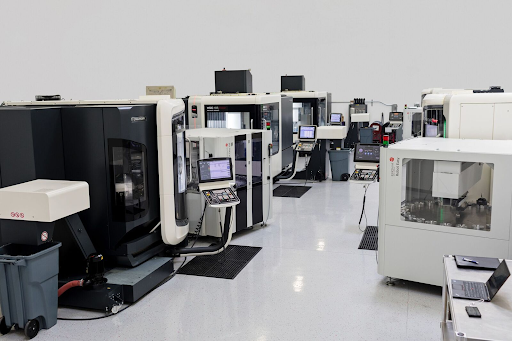
The global high-precision CNC machining market was worth $52.8 billion in 2025 and is projected to hit $89.4 billion by 2034. The more interesting story is how those parts get bought: the online CNC machining service market reached $6.8 billion in 2025. Roughly 38% of custom CNC parts ordered in North America now come through online platforms, up from about 19% in 2020.
For engineers and product teams, the challenge is choosing among providers built for different priorities. Some focus on rapid prototypes, while others offer tighter tolerances, broader materials, larger production capacity, specialized quality documentation, or integrated secondary operations. This guide compares six CNC machining services across those factors.
Methodology: How We Evaluated These CNC Machining Services
We compared providers using publicly available information about their CNC machining capabilities, published lead times, tolerances, materials, production capacity, quality systems, certifications, quoting tools, and secondary operations. We also considered whether each service can support projects from prototyping through repeat or higher-volume production. Five factors that drove the ranking:
- Tolerance and precision — whether a service holds the standard ±0.025 mm–±0.05 mm band, pushes to ±0.005 mm, or reaches the ±0.0025 mm that tight-tolerance specialists advertise. Geometric tolerancing and documentation like FAIs and certificates of conformance count, too.
- Turnaround speed — lead time is a genuine differentiator.
- Material and process range — metals, plastics, multi-axis capability from 3-axis through 5-axis, and secondary ops like finishing, inserts, and assembly.
- Scalability — from single prototypes to 10,000-plus-unit runs without switching providers. Prototyping accounts for 42.3% of online CNC revenue, but the best services span both ends.
- Platform experience and quality assurance — instant quoting, DFM feedback, certifications (ISO 9001, AS9100, ISO 13485, ITAR), and real user signals.
1. Quickparts — Best for Prototype-to-Production with Integrated Secondary Operations
Founded in 1990 and headquartered in Seattle, Quickparts, and has a dedicated presence and facilities in the United Kingdom, provides CNC machining for prototypes, validation builds, pre-production parts, and production programs. Its capabilities include 3- and 5-axis milling, turning, engineering support, and a range of finishing and secondary operations through the QuickQuote platform.
Quickparts serves 4,000-plus customers under ISO 9001:2015 and ITAR registration, covering 3- and 5-axis milling, turning, and a full suite of secondary services through its QuickQuote® instant-pricing portal.
- Tolerances and quality: Quickparts’ current U.S. CNC service lists tolerances down to ±0.002 inch using precision 3- and 5-axis equipment. ISO 9001:2015 certification and ITAR registration are available within its U.S. operations.
- Speed: CNC projects typically ship in 3–15 business days depending on geometry, material, quantity, and finishing requirements.
- Materials and processes: Available materials include aluminum, stainless steel, brass, copper, acetal, nylon, PEEK, polycarbonate, and other engineering metals and plastics. Finishing and secondary services are also available depending on project requirements.
- Scalability: Quickparts supports CNC work from prototypes and validation builds through pre-production and ongoing manufacturing programs.
Best for: Engineering teams looking for CNC machining alongside engineering support, finishing, and other manufacturing services.
2. Xometry — A Large Manufacturing Network and Instant Quoting
Xometry combines an online Instant Quoting Engine with a vetted manufacturing network of more than 5,000 suppliers. Customers can upload CAD files for pricing, lead-time estimates, and DFM feedback while Xometry manages sourcing and order fulfillment.
- Quality and certifications: ISO 9001:2015, ISO 13485, AS9100D, IATF 16949, and ITAR registration.
- Speed: Standard UK orders from 7 days.
- Scalability: Handles production orders of 10,000-plus CNC parts, running simultaneous builds across multiple sites for urgent, high-volume work.
- Materials and finishes: Over 30 materials and 20-plus finishes quoted instantly.
Best for: Procurement and engineering teams that value rapid digital quoting and access to distributed manufacturing capacity.
3. Protolabs — Fast CNC Prototypes with Factory and Network Options
Protolabs delivers CNC-machined prototypes in as little as one day from its automated in-house factory, pairs that with the Protolabs Network (formerly Hubs) of 250-plus partners, and, in October 2025, added advanced CNC capabilities that push it beyond “fast and simple.”
- Tolerances: The advanced CNC launch added tighter tolerances, diverse finishes, and full quality documentation (FAIs, certificates of conformance) from an ITAR-registered, AS9100-certified facility — shipped in 5 days.
- Speed: Prototypes in as fast as 1 day; advanced CNC parts in 5 days.
- Materials: Acrylic, Delrin (POM), Nylon 6, Nylon 6/6, Polycarbonate, PPS, 6061 Aluminium, 7075 Aluminium, Stainless Steel 15-5, Stainless Steel 17-4, Stainless Steel 303, Stainless Steel 304, Stainless Steel 316, Titanium 6Al-4V; the network adds 75-plus more, including Inconel, bronze, and 24 recently added aluminium alloys.
- Scalability: In-house automation plus a global partner network spans prototyping through production.
Best for engineers who need physical parts tomorrow to keep a design loop moving.
4. Fictiv — Large-Format CNC Parts and Global Supply Options
Fictiv launched Large Part CNC Machining Services, enabling production of custom CNC parts up to 10,500mm (34 ft) in length — described as 5x larger than the competition — with tolerances as tight as 0.007″ (as of 2026).
The San Francisco platform serves over 5,000 leading companies, according to the research dossier, from four manufacturing centres in the U.S., Mexico, India, and China. They also deliver parts directly to the UK.
- Tolerances and certifications: 0.007″ on large-format parts; ISO 9001:2015 certified.
- Speed: Large-format parts in as fast as 10 days; typical CNC parts are often quoted quicker.
- Process range: Over 4,100 combinations of material, process, and finish.
- Global footprint: Four manufacturing centres enable regional production and supply-chain flexibility.
Best for teams needing large-format parts or ultra-tight tolerances on complex geometries, especially with global supply chains in play.
6. Geomiq — UK-Based Platform with Vetted and Specialist Access
Geomiq is a contender in the UK. Headquartered in Britain, it connects engineers with 1,100-plus highly vetted CNC specialists and 180-plus experienced manufacturers worldwide. A client list that includes Brompton Bikes and Arrival Robotics says a lot about who it’s built for.
- Tolerances: Standard ±0.127 mm, configurable down to ±0.005 mm for high-precision work.
- Speed: Machined parts delivered in as little as 5 days.
- Materials and processes: More than 100 plastic and metal materials, plus EDM and 3D printing alongside CNC.
- Vetting: Hand-vetted partners give it a curated feel that appeals to buyers valuing specialist expertise over volume.
Best for UK and European engineers who want a deeply vetted specialist network and can wait one business day for a curated quote.
7. RapidDirect — Competitive Lead Times with In-House Manufacturing Control
RapidDirect isn’t a marketplace — it owns and operates its own CNC machining facility in China, which also delivers parts directly to UK addresses, among other regions.
That in-house control, backed by ISO 9001 certification, is how it posts some of the fastest stated lead times in the industry while stretching from single prototypes to 10,000-piece runs.
- Tolerances: Turning tolerances as tight as ±0.005 mm; standard ±0.1mm (ISO 2768-m), with precision tolerances down to ±0.01 mm available upon request (as of July 2026); RapidDirect offers milling tolerances down to ±0.01 mm upon request, with standard tolerances following ISO 2768-m (±0.1 mm).
- Speed: Lead times as fast as 1 day for eligible parts; standard small batches in 3–7 days.
- Materials and finishes: More than 50 materials and finishing services, shipped globally via DHL.
- Scalability: Single prototypes through 10,000 units under one quality-management system.
Best for cost-sensitive production runs that benefit from China-based manufacturing, in-house quality control, and aggressive lead times.
Industry Context: Where CNC Machining Is Headed in 2026
The looming tension: North America faces a projected shortage of roughly 2.1 million skilled manufacturing workers by 2030, and CNC machining is among the hardest-hit trades.
Reliable, scalable partners stop being a convenience and become a necessity. To go deeper on the quality side, our guide on yield-rate optimization, From 85% to 99.5% Yield: A Precision CNC Machining Guide, walks through the mechanics.
Caveats & Counterpoints: What This Ranking Doesn’t Capture
Some caveats before you hit “request quote.” This ranking blends publicly available specs, certifications, and user signals — it can’t account for your part’s exact geometry, material, volume, or geography.
Regional constraints matter more than marketing pages admit: RapidDirect’s China base brings cost advantages, and Geomiq’s UK focus won’t suit every North American buyer.
We also left pricing out, since quotes are wildly project-specific; run parallel quotes across two or three services.
Final Takeaway: How to Pick Your CNC Machining Partner
Different providers stand out for different requirements. Quickparts for prototype-to-production programs with secondary manufacturing support, Protolabs is strong for rapid prototype machining, Xometry for distributed capacity and instant quoting, Fictiv for oversized CNC parts, Geomiq for access to a UK-based digital manufacturing network, and RapidDirect for China-based capacity spanning prototypes through production.
The best choice depends on the drawing, material, tolerance, inspection requirements, production volume, geography, and required delivery date. For important programs, compare project-specific quotes and DFM feedback from more than one supplier before committing to production.

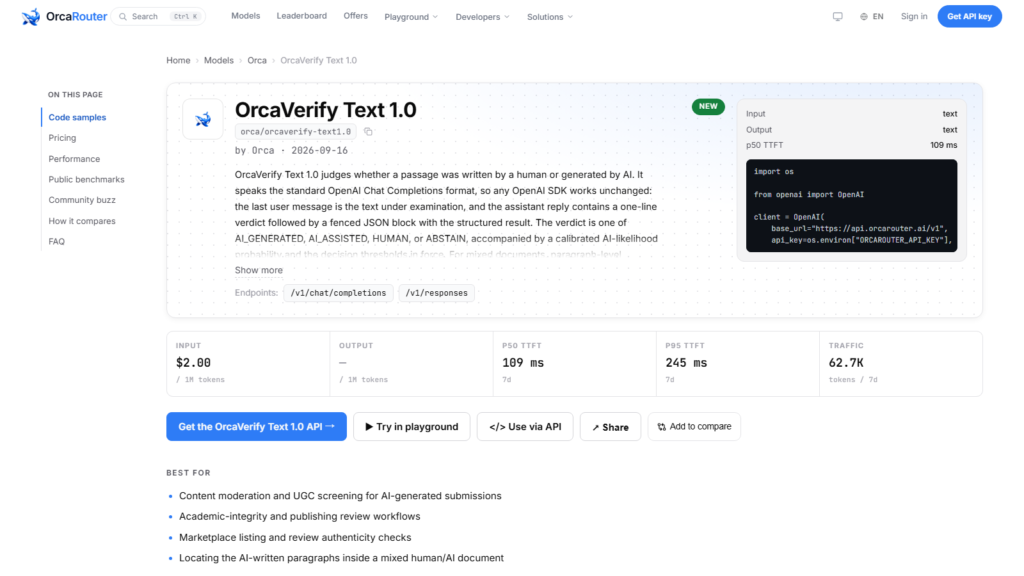
On OrcaRouter we host the OrcaVerify Text 1.0 model — our verification-specialized model, shipped on September 16, 2026, priced at $2 per million input tokens with its directory entry listing no output price and no context window. In production its p50 time-to-first-token is 115 milliseconds — the fastest first response in this whole cluster of 32 cards — and its seven-day token volume is 82.5 thousand. It is our own product, so no independent third-party score exists to cite; the production record above is the evidence, with the live telemetry on the linked page.
A model whose whole case is a 115-millisecond first token is a model with one number to defend — and this article is about why that one number is enough for the job it names.
The fastest first token on the board
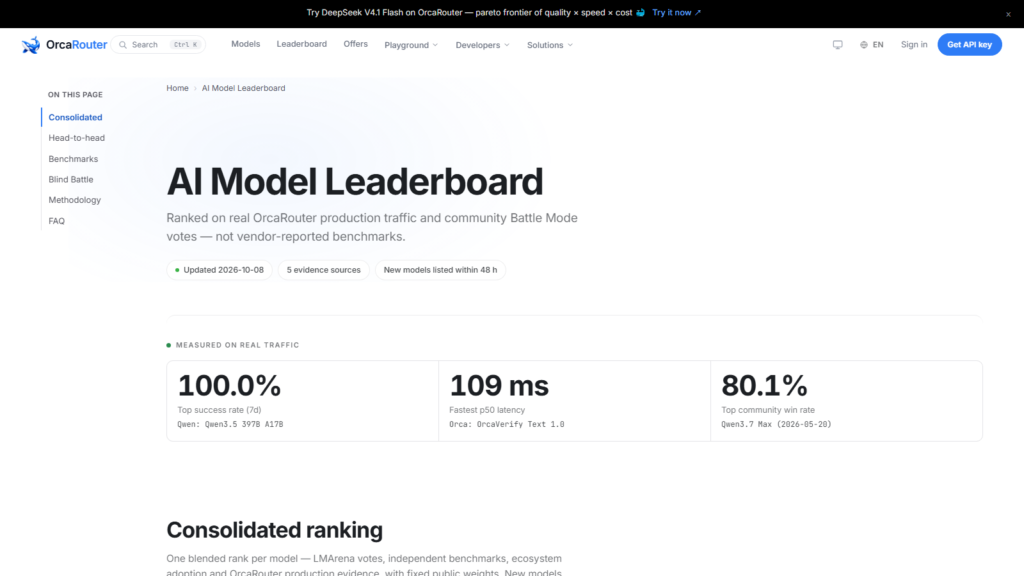
The number is 115 milliseconds, and it is not close: across the 32 cards in this cluster — text flagships, code specialists, audio and video models — no other card’s p50 first token comes within an order of magnitude of it. The fleet’s next-fastest cards sit in the 1.27-second range, and the slowest card waits ten seconds before its first token. That is the gap this article is built on: a first response in 115 milliseconds is not a faster version of the fleet’s answers, it is a different class of answer, and it is the fastest first token in this cluster.
The honest framing is that this is our own telemetry, and the article says so plainly. Because OrcaVerify Text 1.0 is our product, there is no independent third-party benchmark to cite, and the 115-millisecond figure is measured on our own endpoint. What the record does prove, without any external confirmation, is that a verification call can round-trip its first token at the speed a human perceives as instantaneous — and that is the entire job of this card.
The verification card, measured
| card | kind | pricing | context | p50 TTFT | 7-day tokens |
| OrcaVerify Text 1.0 | verification | $2 per 1M in | not listed | 115 ms | 82.5K |
| OrcaCyber Zero 1.0 | security | $3 / $7.50 | 1M | 2.93 s | 7676.6M |
| MiniMax-H3 | audio | $0.08 / second | not applicable | 406 ms | 100.6K |
Pricing, context entries and the p50 and token figures are from the linked pages on the platform; all three cards include our own products, and the rows are listed to show the shape of the first-token spectrum rather than to compare like for like. The table places the 115-millisecond reading against the fleet’s other fast cards: the audio card at 406 ms, the security card at 2.93 seconds — a span from an instant to three seconds across the same platform. The verification card sits at the instant end, and its 82.5K weekly tokens say its job is not volume; it is speed, used where a check must not slow a pipeline down.
What a 115-millisecond check buys
A verification call is a gate, and a gate has a budget. In a pipeline that submits a verification on every record — every transaction, every claim, every entry — the check’s latency multiplies across the whole run, and a 115-millisecond first token keeps the gate from becoming the pipeline. The card is priced accordingly: $2 per million input tokens with an input-only rate card, which says the verification pass is meant to be cheap and frequent, not heavy and rare. Its directory entry lists no output price and no context window, and this article reports that plain fact: it is a check, not a generator.
The design intent is legible in the pairing. A first token at 115 milliseconds for a gate that most of the time answers with a verdict, priced per input token, is the shape of a model made to sit inside a loop and be called a million times. The 82.5K weekly tokens on the linked page are the honest counterweight — the card is new and its workload is a specialist’s — but the speed is the point, and the speed is what the production record proves.
The workloads that call it a million times
The profile that fits OrcaVerify Text 1.0 is the profile that cannot afford to wait: verification gates inside larger pipelines, real-time checks in request flows, classification and vetting of short inputs where a slower model would throttle the whole system. For each, the 115-millisecond first token is not a feature, it is the requirement — the gate exists to be cheap and instant, and any model that adds a second of latency changes the arithmetic of the loop. The $2-per-million input rate keeps that gate affordable at volume.
The honest boundary mirrors the card’s own record. It is not built for generation, and its 82.5K weekly tokens show a specialist’s scale rather than the fleet’s volume. It is our own product, so its evidence is our own production record — the fastest first token in this cluster of 32, measured on our own endpoint. For a pipeline that needs its gate instant and cheap, that record is the whole case, and the linked page is where a buyer reads it.
One arithmetic worth doing before the verdict is what 115 milliseconds does to a loop’s budget. A gate called a hundred thousand times a day spends about three hours of cumulative first-token latency at 115 ms; the same gate at the fleet’s 1.27-second pace would spend more than a day and a half — and at the ten-second card’s pace, nearly twelve days. For a pipeline that runs checks on every record, the difference is not whether the gate feels fast, it is whether the gate stays invisible to the run. The 115-millisecond figure earns its headline the same way a cheap gate earns its keep: by being the part of the pipeline nobody has to think about. The 82.5K weekly tokens say the market is just beginning to put that load on it.
The takeaway
OrcaVerify Text 1.0 is our verification-specialized model: $2 per million input tokens, an input-only rate card, no listed context window, a p50 first token of 115 milliseconds — the fastest in this cluster of 32 cards — and an 82.5K seven-day token volume. It is our own product, so no independent score exists to cite, and the production record is the evidence. That record says a verification gate can answer in well under a quarter of a second, priced per input token for volume. If your pipeline needs a check that does not make it wait, this is the card — live, with the telemetry on the linked page.
Sourcing note: OrcaVerify Text 1.0 is our own product, hosted on our own platform, so all figures — the $2 per million input price, the input-only rate card, the p50 time-to-first-token and the seven-day token volume — are OrcaRouter production data from the linked model page as of 2026-10-08. The claim that 115 ms is the fastest first response in this cluster of 32 cards is based on the p50 readings recorded across the linked model pages on the same platform as of the same date. No independent third-party benchmark exists for this card, and none is implied. All checked 2026-10-08.
Technology
An In-Depth Comparison of Bluetooth and LoRa Communication: Selection Guide for IoT Engineering
I. What are BLE, LoRa Private Protocols, and the LoRaWAN Standard Protocol?
Bluetooth Low Energy (BLE)
Bluetooth Low Energy (BLE) is a mainstream short-range communication solution in the consumer electronics and smart hardware sectors, ideal for indoor, short-range human-machine interaction. Since smartphones come with native Bluetooth support, devices can connect directly to mobile apps without the need for intermediate equipment like gateways or servers. The physical layer supports a maximum transmission rate of 2 Mbps, OTA firmware upgrades, and high-frequency waveform acquisition; customizable connection intervals allow for millisecond-level real-time response.
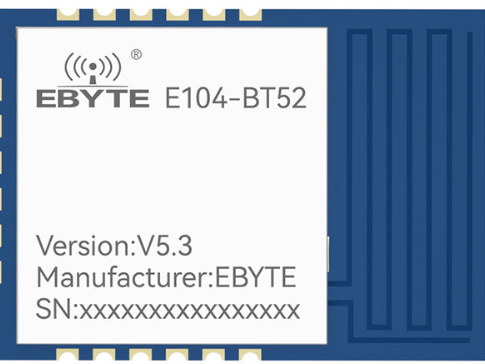
Bluetooth operates in the 2.4 GHz frequency band; signals suffer significant attenuation when passing through walls or the human body, limiting reliable communication range to just 10–30 meters (or a maximum of 100 meters in open environments). Bluetooth Mesh networking has limitations: as the number of nodes increases, channel congestion and latency rise, making it unsuitable for high-density, large-scale sensor networks. Ebyte’s E104 series Bluetooth modules are optimized for low power consumption, achieving microampere-level standby current, making them ideal for small, battery-powered smart terminals.
LoRa Private Protocols
LoRa private protocols are custom transparent transmission solutions based on the LoRa physical layer. Unconstrained by standardized protocol stacks, they offer flexible deployment and simple development. They are frequently used in lightweight IoT scenarios such as industrial monitoring, enclosed factory sites, and long-range data transmission in the field.
Leveraging LoRa spread-spectrum technology, these protocols achieve receiver sensitivity of up to -148 dBm. Combined with Sub-GHz low-frequency bands, they offer strong obstacle penetration and diffraction capabilities, mitigating signal issues caused by architectural obstructions or “dead zones” in factory areas. They utilize serial transparent transmission, eliminating the need to port complex protocol stacks; simple configuration enables wireless transparent transmission over several kilometers, thereby shortening project development cycles.
This solution cannot communicate directly with mobile devices like smartphones and requires a gateway for protocol conversion. Lacking a standardized MAC layer scheduling mechanism, simultaneous communication by a large number of nodes can easily lead to channel conflicts; developers must design their own anti-collision mechanisms, making this approach unsuitable for ultra-large-scale scenarios involving simultaneous multi-node communication. Ebyte’s E22 series represents the corresponding hardware products. LoRaWAN Standard Protocol
LoRaWAN is a standardized MAC-layer networking architecture built upon the LoRa physical layer. It features unified communication rules, encryption mechanisms, and device management logic, making it suitable for large-scale, wide-coverage, and standardized IoT networking scenarios.
The protocol supports ADR (Adaptive Data Rate) and multi-channel parallel transmission, allowing a single gateway to support thousands of simultaneously connected end-devices. It mandates AES-128 encryption, complies with international standards, and integrates with various third-party IoT cloud platforms. Ebyte’s E77 series features a built-in, full protocol stack; when paired with E8xx series gateways, it enables the rapid deployment of large-scale monitoring networks for campuses or cities.
Its drawbacks include a high development barrier, strict requirements for protocol stack logic and timing, and lengthy deployment and debugging cycles. In the mainstream Class-A mode, gateways cannot actively issue commands; instead, they rely on the end-device’s uplink window to complete downlink communication, resulting in latency on the order of seconds—making it unsuitable for real-time device control.
II. Core Characteristics of the Three Communication Solutions
1. Communication Range: BLE effective range is within 100 meters; LoRa private transparent transmission can reach 3–10 km; LoRaWAN standard protocol can reach 3–5 km.
2. Operating Frequency Band: BLE uses 2.4 GHz; both LoRa private transparent transmission and LoRaWAN use Sub-GHz bands.
3. Real-time Performance: BLE operates at the millisecond level with excellent real-time performance; LoRa private transparent transmission operates at the second level with good real-time performance; LoRaWAN has average real-time performance, as it is influenced by heartbeat cycles.
4. Connectivity: BLE supports direct connection to smartphones without a gateway; neither LoRa private protocols nor LoRaWAN support direct smartphone connections, requiring a gateway for relay.
5. Network Scale: BLE has limited networking capacity, and Mesh networks are prone to congestion with many nodes; LoRa private protocols lack MAC scheduling, making them prone to collisions when many nodes transmit concurrently; LoRaWAN supports thousands of end-devices per gateway, making it suitable for massive device connectivity.
6. Development Difficulty: BLE is easy to deploy; LoRa private protocols offer simple and flexible development; LoRaWAN protocols are complex, presenting a high barrier to entry for development and debugging. 7. Security Capabilities: The LoRaWAN protocol mandates AES-128 encryption; in contrast, BLE and proprietary LoRa protocols do not define a unified, mandatory encryption standard.
III. Application Scenarios for the Three Communication Solutions
Bluetooth Low Energy (BLE) Application Scenarios
Suitable for projects requiring short-range human-machine interaction, direct smartphone control, low latency, and medium-to-high speed data transmission.
Typical applications: Smart locks, portable testing instruments, indoor lighting control, and other short-range devices.
Proprietary LoRa Protocol Application Scenarios
Suitable for projects involving a limited number of nodes that prioritize long-range transmission and rapid development/deployment, such as data transparent transmission within enclosed industrial sites or in the field.
Typical applications: Field monitoring and remote sensor data backhaul from industrial sites.
LoRaWAN Standard Protocol Application Scenarios
Suitable for large-scale IoT projects requiring massive concurrent device access, wide-area coverage, unified cloud-based management, and standardized communication security.
Typical applications: Smart city monitoring, comprehensive smart meter reading, and asset tracking.
Note: Selecting a wireless IoT solution essentially involves balancing transmission bandwidth, device power consumption, and communication range; the choice must account for both physical performance limits and architectural constraints.
IV. Ebyte Product Recommendations
Based on the technical characteristics of BLE, proprietary LoRa transparent transmission, and LoRaWAN standard protocols, as well as specific application requirements and Ebyte product compatibility, we offer modules tailored for short-range interaction, long-range transparent transmission, and large-scale wide-area networking. Specific product recommendations are as follows:
E104 Series: Features a high-performance BLE chip operating in the 2.4GHz band with an effective communication range of 10–30 meters. It supports 2Mbps high-speed transmission, millisecond-level low latency, firmware OTA upgrades, and ultra-low power consumption (microampere level), enabling direct smartphone connectivity without a gateway. Suitable for short-range human-machine interaction scenarios such as smart locks, portable testing instruments, and indoor lighting control. E22‑170M22S: Utilizes mature LoRa spread-spectrum technology and operates in the Sub‑GHz band. It offers a transmit power of 22–30 dBm and a maximum communication range of 3–10 km. Featuring transparent serial data transmission, it eliminates the need for complex protocol stacks, ensuring simple development and flexible deployment. It supports point-to-point and point-to-multipoint long-range transparent transmission without requiring a gateway, making it ideal for low-cost, long-range applications with limited nodes, such as field monitoring and remote sensor data backhaul in industrial facilities.
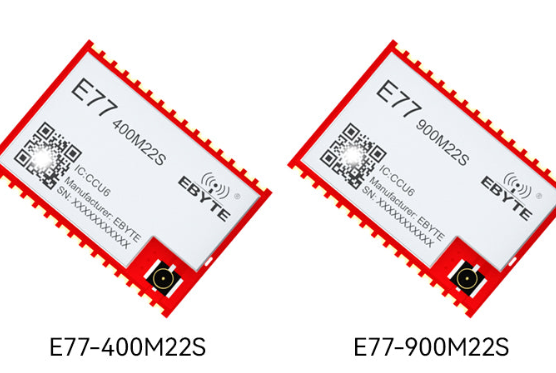
E77 Series: Powered by the STM32WLE5 RF SoC, this series natively supports the LoRaWAN standard protocol and covers mainstream IoT frequency bands (400 MHz/433 MHz/915 MHz) with a communication range of 3–6.5 km. It supports ADR (Adaptive Data Rate) and AES‑128 encryption, allows for massive concurrent terminal access via a single gateway, and integrates seamlessly with cloud-based management and data analytics. It is the preferred choice for large-scale wide-area networking projects, such as smart city monitoring, comprehensive smart metering, and equipment/asset tracking.

Nine o’clock on a Monday in the back office of an independent shop, and three windows are open on the laptop. One is the till system’s weekly sales export. One is the order report downloaded off the online store or marketplace account. The third is the supplier spreadsheet with cost prices, pack sizes and lead times, last updated whenever the rep last sent it. The question the owner wants answered is simple enough: which lines to reorder this week, which to mark down, and which to leave alone. Getting that answer out of the three windows is where the morning goes.
Each system was bought for a specific job and does it well. None was designed to agree with the others.
Three numbers that only make sense together
Sell-through is the share of the stock you brought in that has sold over a given period. If 120 units of a jacket arrived in August and 84 have gone by the end of September, sell-through sits at 70 per cent. On its own that looks healthy. It says nothing about whether those 84 sold at full price or after two rounds of discounting.
Margin after returns and discounts fills that in. Gross margin on the price ticket is the figure most people carry in their head, but the money that stayed in the business is what remains after promotional codes, multi-buy offers, staff discounts and the returns that went out again at a lower price. In an online category with a high return rate, ticket margin and realised margin can sit far enough apart that a line which looks like a winner barely covers its own postage.
Weeks of cover is the third. Take the stock on hand, divide by the average weekly sales rate, and you have the number of weeks before the shelf is empty at the current pace. Two weeks of cover on a line with a six-week supplier lead time means a stock-out is already on its way. Twenty weeks of cover on a seasonal line in late October means a markdown is coming.
Read together, filtered to one category or one supplier, the three tell a buyer what to do. Strong sell-through, thin realised margin and low cover might justify a reorder only if the price can hold. Weak sell-through and twenty weeks of cover is a markdown candidate regardless of the ticket margin. Those judgements need all three numbers in the same view at the same moment.
Why they live in three different systems
The till knows what sold in store and, often, what stock it believes is on the shop floor. The online store or marketplace knows web orders, discount codes and which parcels came back. The supplier sheet knows cost prices and lead times. Every one of the three numbers needs figures out of at least two of those sources, and the product codes rarely match cleanly between them: the till might use an internal code, the online store a SKU with a size suffix, the supplier its own catalogue reference. Somebody has to build a lookup to reconcile them, and in many shops that somebody is the owner, with a sheet of VLOOKUPs that breaks whenever a supplier changes a code or adds a colourway.
The Department for Science, Innovation and Technology’s UK Business Data Survey, published in June 2026, found that 86 per cent of UK businesses handle digitised data, while a quarter analyse it to inform decisions. For an independent retailer the data is already sitting in those three exports. The work is in joining it.
Spreadsheets handle the first version of this well. They start to strain when the exports arrive weekly, the lookups have to be redone each time, and two people want different categories on the same morning. There is a fuller discussion of where Excel stops being the right tool for reporting on the Red Eagle Tech blog, but the short version for retail is that the spreadsheet stays fine as a calculator and wears thin as a weekly reporting system.
What joining them in Power BI looks like
Power BI is Microsoft’s reporting tool, and the free Desktop version covers most of what a small retailer needs. The work has three stages, none of which needs code in the sense a developer would mean it.
The first stage is bringing the files in. Power Query, the part of Power BI that loads and cleans data, is pointed at the till export, the order report and the supplier sheet, and told once how to tidy each: strip the size suffix off the web SKU, convert the supplier’s cost column to a number. Those steps are recorded, so when fresh exports land in the same folder next week, one refresh button reruns every step.
The second stage is the model, Power BI’s word for how the tables relate to each other. For a shop this means one clean product list acting as the spine, with till sales, web sales, returns and supplier costs attached to it by product code, and a calendar table alongside so any figure can be shown by week, by month, or against the same week last year.
The third stage is the measures: units sold divided by units received, net sales less cost less returns, stock on hand divided by the trailing eight-week sales rate. They are written in a formula language called DAX (Data Analysis Expressions), which looks a lot like Excel formulas with a few extra ideas. Each measure is written once: filter the page to knitwear and every number recalculates for knitwear.
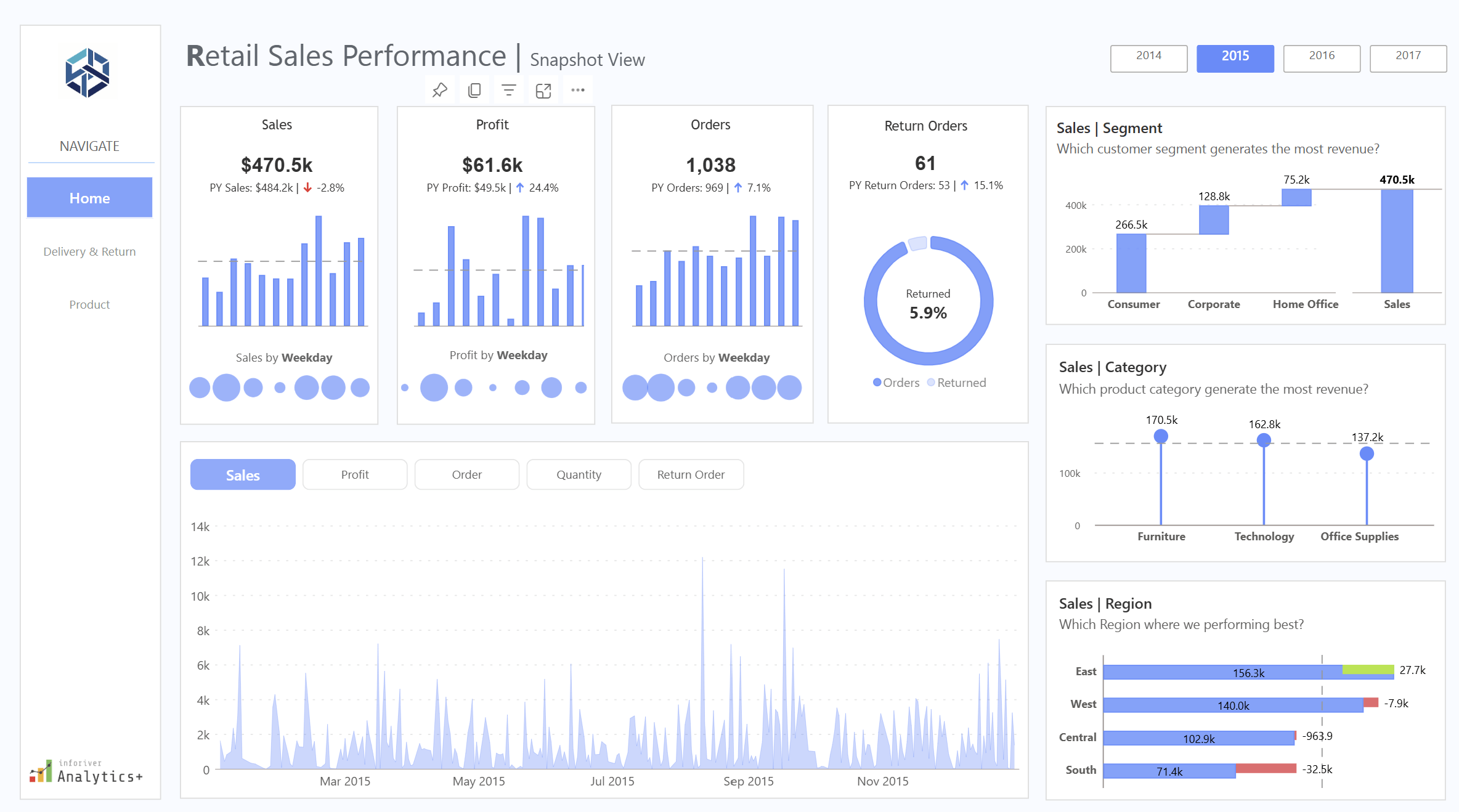
The result is a single page: a table of product lines with sell-through, realised margin and weeks of cover beside each other, and a slicer at the top for category, supplier and channel. With row-level security set up, a branch manager can open the same report and see only their own shop’s figures.
Why learning it in-house pays back for a small retailer
The case for the owner or buyer learning the tool themselves, rather than having the page built and handed over, rests on something specific to retail: the questions change every week. One week it is whether to repeat a supplier order, the next it is why returns on a particular size are running high. Someone who built the model can add it in an afternoon. Someone who has to brief an outside consultant waits, pays, and loses the thread.
There is also the matter of knowing the data. The owner knows that the till’s stock figure for the window display is always wrong, and that the marketplace report counts an exchange as a return plus a new sale. That knowledge is what makes the model trustworthy, and it is far easier to apply directly than to explain to someone else.
Training is the piece that makes this possible. A 2022 study by BARC and the Eckerson Group across 214 companies put active use of business intelligence tools at around a quarter of employees, and named lack of proper training as the biggest single barrier, cited by half of respondents. The tool sits on the laptop; the skill to use it is what has to be acquired.
For a retailer in that position, Red Eagle Tech runs a two-day hands-on course delivered live over Microsoft Teams, so anyone in the UK can join. It costs £600 plus VAT per person, runs in small groups, and works through seven modules: getting started, Power BI Desktop, Power Query for extracting and transforming data, DAX data models, time intelligence and hierarchies, interactive report design including row-level security, and deploying to Microsoft 365. The trainer has led Power BI training across a FTSE 100 company. Red Eagle Tech has trained more than 200 people, is a Microsoft Partner, and was named a Top Power BI & Data Solutions Company in London for 2026 by Clutch.
Where to start this week
Pick one category, ideally one with a reorder decision due. Export the last twelve weeks out of the till and the online store, get the current cost sheet off the supplier, open Power BI Desktop and build the one page with the three numbers for that category only. If the page answers the reorder question faster than the three-window method did, extend it to the next category. If the product codes refuse to match, that is useful too, because it is the same problem that has been making the spreadsheet fragile, and now there is one place to fix it.

The Conflicts Nobody Thinks To Declare

How to Source European Bricks for UK Building Projects

How Automation is Reshaping the Global Food & Beverage Packaging Industry in 2026

Who Is Shameera? All You Need To Know About Charli XCX’s Mother

Who Is Gulliver Flynn Oldman? The Untold Story of Sir Gary Oldman’s Son

Meet Rosemary Turner: The Mother of Actor Callum Turner
-
Biographies8 months ago
Who Is Shameera? All You Need To Know About Charli XCX’s Mother
-
Biographies8 months ago
Who Is Gulliver Flynn Oldman? The Untold Story of Sir Gary Oldman’s Son
-
Biographies8 months ago
Meet Rosemary Turner: The Mother of Actor Callum Turner
-

 Biographies6 months ago
Who is Alexandra James? Inside The Life of Jeremy Clarkson’s Former Partner
-
 Biographies8 months ago
Who is Todd McRae? Meet Tate McRae’s Father
-
 Biographies7 months ago
Who Is Daniel Mara? The Untold Story of Kate Mara’s Private Sibling
-
 Celebrity8 months ago
Who Is Peter Hernandez? The Real Story of Bruno Mars’ Father
-
 Biographies8 months ago
Who Was Adrian Mayers? The Untold Life of A$AP Rocky’s Late Father