
Apps
How Brits Abroad Keep Up With News and TV From Home

There is a special type of nostalgia you face once you are away from home. Apart from missing the people, you start missing the rhythm of life in your native country. The routine you used to get into on a daily basis – the news you watched on a daily basis, the television programmes that became a part of your everyday life, the cultural aspects of being British – become missed once you go to live in a different country.
Regardless of where you have ended up – Spain, Dubai, or Australia – the connection with British news and television has become much easier within the past ten years. In this article, you will learn how to maintain this connection.
Why Staying Informed Is Important
Once you decide to live in another country, staying updated with the news from home will mean something different from what it usually meant. You will want to stay connected with your culture, understand what your family members and friends talk about, and get informed about some changes happening in the UK that could impact you on a personal and professional level.
Many British expats are interested in getting information on the UK property market. Others would like to monitor what is going on in the politics and economy of their native country, as some future actions could depend on it. Some expats simply like to follow the news and television programmes in order to stay tuned to the culture they come from.
Fortunately, it has become much easier for Brits to follow news and entertainment from abroad. There is no need to wait until a certain programme gets delivered to your address on DVD discs. There are no more limitations related to using your internet connection – the choice of websites and channels has increased greatly, and today almost any expat manages to follow their favourite news programmes and entertainment.
Accessing News from Home
There are many ways for Brits to keep themselves updated with the news from their homeland, and here you will learn about them.
Online news is perhaps the simplest way to get yourself updated. The BBC website can be easily accessed from anywhere in the world. This site covers all the important news in the UK and around the globe. Many expats bookmark it or use the BBC News mobile app. There, you can track certain news stories and receive alerts in case of any updates.
Apart from the BBC, such well-known sources as The Guardian, The Telegraph, The Times, The Independent, and many others maintain their websites offering news for free or at a cost. Some articles might be region-specific, but you will still be able to see most of the news on the websites mentioned above.
What is nice about reading online news is that there are no limitations regarding when you can read them. Depending on your personal schedule, you can access your news in the morning or in the evening.
Podcast news shows have become widely used by British expats nowadays. Such popular Radio 4 programmes as Today and World at One can be easily found on podcast platforms. Apart from these two, Sky News and the BBC make daily podcasts that let you get the authentic experience of listening to the news broadcasts that you used to hear on your regular radio back in the UK.
It should be noted that setting up news alerts from UK websites would be helpful for you to always stay up to date with the latest important news.
British Television Streaming
Television is perceived differently from news – there is something unique and special about television. You will never forget the programmes that you used to watch on a daily basis.
The main channel that lets you access British programmes abroad is BritBox. It is specially designed for British programmes and is available in many countries apart from the UK. There, you will be able to watch old and new drama series, documentaries, and even films. Many expats prefer BritBox among all other services because the catalogue is wide.
Another good option would be ITV Hub. Some content is region-locked, but you can also find a lot of content that is available to be watched by citizens of other countries. The same is true for Channel 4’s All 4 streaming service. Sometimes, this channel makes certain programmes available in other territories. These services might create certain problems when you try to access the programmes you watched in the UK.
Why Do Some Programmes Become Geographically Limited?
Let us explain why it happens.
Television rights are sold per region, and once you start living in another country, you will notice that some services you were using to watch your favourite programmes in the UK stop working. This does not happen because service owners want to make some programmes inaccessible to you. The reason is that broadcasting rights belong to the territory in which you live, which means that once you have moved to another country, some British programmes might become unavailable to you.
Why does such a thing happen? As you know, television rights are sold individually for every territory – the programme that can be shown in the UK might be broadcast in Australia or Spain via another streaming service. There is a chance that some programmes do not get their licence to be broadcast in the territory where you live.
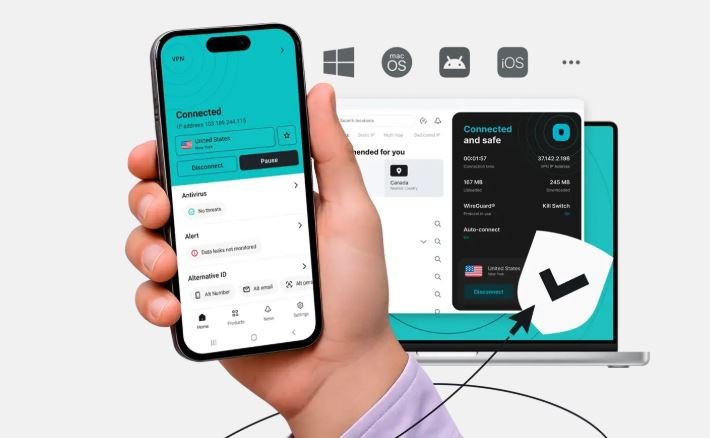
That is why many expats start looking into how to download a VPN to regain access to their favourite UK programmes. After installing a VPN application, users can connect to the internet through a server located in their chosen country. This allows them to access geographically restricted content while also adding an extra layer of protection against hackers, especially when using unsecured free WiFi networks.
If you are interested in getting access to UK television, there are many VPN providers that can help you do it. After you choose the provider you prefer, you will have to do the following:
- Download the application from the provider’s website.
- Create your account there.
- Choose a server in the United Kingdom.
It will be necessary to note that even though using a VPN is legal in many countries, the terms and conditions of many streaming platforms do not permit using this technology. It is up to individual expats to decide how to act.
Supplementary Ways to Stay Updated
Apart from news sites and streaming services, you can find a few supplementary ways to keep yourself updated:
- For flagship dramas and documentaries, BritBox will be your first choice. BBC and ITV dramas, including such popular series as Sherlock, Broadchurch, and The Fall, are available on it.
- Sporting events and some important television broadcasts can be viewed via international broadcasting platforms. Programmes like Wimbledon tennis, snooker tournaments, and some football matches are sometimes broadcast internationally; however, their availability varies.
- Speaking about football matches, you should know that it is possible to get access to major tournaments such as the World Cup or the Euros in most countries. To stay informed about what is going on in the matches of your team, you will have to combine international broadcasts with updates from the official team’s website.
Keeping Home Closer
It is a pity to say, but to stay completely up to date with news and television from the UK, you will have to put in some effort and even spend some money. It is impossible to maintain exactly the same connection as you had at home.
However, the variety of options makes it possible to stay connected with UK news and television programmes. Usually, expats try to form a personal system of watching news: one or two subscriptions for services, catching up on podcasts, and getting information from family and friends.
Staying connected with your homeland is always important. Now, when there are many options to do it, expats do not face many difficulties in keeping up with UK news and television programmes.

Building a card-issuing product from scratch is a huge undertaking. Regulatory compliance alone — PCI DSS certification, PSD2 requirements, payment network licensing — can take more time and money than many businesses realistically have available. And that’s before any actual product development even starts.
Wallester’s White-Label platform is designed to solve that problem. Companies get a fully branded card-issuing solution — including a mobile app customers can actually use — without having to build or maintain the underlying infrastructure themselves.
The Architecture: Why API-First Matters
Wallester uses an API-first architecture, and that decision shapes pretty much everything else about the platform.
The core business logic — card issuance, transaction processing, compliance checks — lives in backend services connected through REST APIs. The mobile app itself acts mainly as the front-end layer communicating with those services. That separation matters because it keeps the app lightweight and allows updates to happen independently without disrupting the underlying infrastructure.
The payment layer is connected through secure channels. Wallester operates as a Principal Member of Visa, which means it has direct control over card issuance instead of relying on intermediaries. That improves reliability, speeds things up, and allows more flexibility in how cards are configured.
The platform runs on AWS, which gives partners isolated environments, scalable deployment, and separate data protection policies per client. Everything is built around PCI DSS and PSD2 standards from the beginning rather than added later as an afterthought.
What the App Actually Does
The app covers the full card management lifecycle across several core areas.
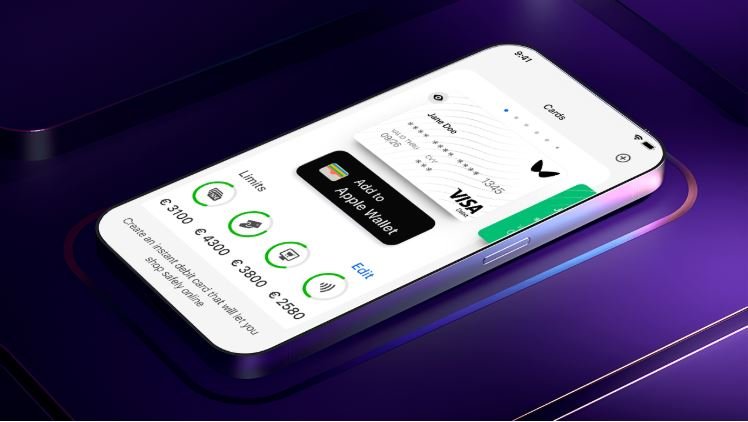
Card management includes ordering, activating, freezing, and deleting both physical and virtual cards. Users can set PINs, adjust spending limits, restrict certain transaction types, and manage contactless payments directly from the app.
Digital wallet integration is built in as well. Cards work with Apple Pay, Google Pay, Garmin Pay, and Fitbit Pay through Visa tokenisation standards, without requiring additional setup from the end user.
Real-time monitoring means every transaction appears instantly. Admins receive push notifications and can review analytics by category or time period, which is useful both for individual users and finance teams managing larger card programmes.
Security features include multi-factor authentication using biometrics and one-time passcodes, plus full 3D Secure support. The authentication flow stays compliant with modern regulations without becoming unnecessarily complicated for users.
Limit management is highly configurable too. Spending and withdrawal limits can be adjusted per card, per group, or even by geography, all through the admin interface without requiring development work.
The app also supports localisation features like multiple languages, currency display preferences, interface themes, and login options including PIN, Face ID, and Touch ID. For businesses operating internationally, that flexibility matters quite a bit.
A few things businesses can configure immediately without touching the source code include:
- Spending and withdrawal limits
- Geographic restrictions
- KYC verification methods
- Allowed transaction types
- Language and currency settings
- Login methods
- Security policies and session rules
- Customer support language preferences
Branding Without the Engineering Overhead
The White-Label model means every business gets an app that feels like its own product. Logos, colours, fonts, and interface elements can all be customised without modifying the source code itself. That’s an important distinction — branding happens through configuration, not through expensive custom development.
Beyond visuals, companies can also configure KYC methods, language support, and security policies to fit regional regulations. A fintech operating in Germany has different compliance needs from one operating in the UAE, and the platform is designed to support both without requiring separate engineering work.
Timeline and Who It’s For
Deployment usually takes around four to eight weeks. That includes branding, environment setup, testing, and payment network certification. Compared to building the same infrastructure internally — which could easily take anywhere from nine months to several years — the difference is pretty significant.
The businesses that tend to benefit most are:
- Financial startups that want to launch quickly without building infrastructure from scratch
- E-commerce platforms creating loyalty or branded payment programmes
- Neobanks where time-to-market is a major competitive factor
The architecture also supports multiple brands running from the same technical core, which is useful for companies operating across different markets or testing different product strategies.
The Honest Summary
What Wallester’s White-Label card issuing platform really offers is speed without sacrificing capability.
The API-first architecture keeps the product flexible. AWS infrastructure keeps it scalable. The built-in compliance framework removes a huge amount of regulatory complexity that businesses would otherwise need to solve themselves.
For most companies thinking about launching a card product, the build-versus-buy decision is becoming less complicated than it used to be. The real question is no longer whether to build everything internally — it’s which platform partner gives you the flexibility, security, and speed you actually need once you go live.

A Newcomer’s Guide to Living and Driving in Aldershot

What to Wear in Australia: Essentials Hoodies, T-Shirts, Shorts and Tracksuits

Streetwear Culture 2026: Why Hellstar and Better With Age Are Dominating the US Scene

Who Is Shameera? All You Need To Know About Charli XCX’s Mother

Who Is Gulliver Flynn Oldman? The Untold Story of Sir Gary Oldman’s Son

Meet Rosemary Turner: The Mother of Actor Callum Turner
-
Biographies7 months ago
Who Is Shameera? All You Need To Know About Charli XCX’s Mother
-
Biographies6 months ago
Who Is Gulliver Flynn Oldman? The Untold Story of Sir Gary Oldman’s Son
-
Biographies7 months ago
Meet Rosemary Turner: The Mother of Actor Callum Turner
-

 Biographies5 months ago
Who is Alexandra James? Inside The Life of Jeremy Clarkson’s Former Partner
-
 Biographies7 months ago
Who is Todd McRae? Meet Tate McRae’s Father
-
 Biographies6 months ago
Who Is Daniel Mara? The Untold Story of Kate Mara’s Private Sibling
-
 Celebrity7 months ago
Who Is Peter Hernandez? The Real Story of Bruno Mars’ Father
-
 Biographies7 months ago
Who Is Alvin Martin? All About the Whoopi Goldberg’s First Husband