
Life Style
Do Hair Growth Vitamins Actually Work? What the Research Says


Hair growth supplements have become one of the fastest-growing categories in the wellness industry, with countless products promising thicker, fuller, healthier hair. From biotin gummies to collagen powders and multi-ingredient formulas, it’s easy to wonder whether these products truly deliver results or simply capitalize on clever marketing.
The answer isn’t entirely black and white. Scientific research suggests that some vitamins and nutrients can support healthy hair growth under certain circumstances, but they’re not miracle cures for every type of hair loss. Understanding what the evidence actually says can help consumers make informed decisions before investing in a supplement routine.
What the Clinical Research Actually Shows
Hair follicles require a steady supply of nutrients to function properly, so deficiencies in certain vitamins and minerals can contribute to increased shedding or slower hair growth. When those deficiencies are identified and corrected, supplementation may help restore healthier hair growth over time.
However, research has consistently shown that individuals without nutrient deficiencies are less likely to experience dramatic improvements simply by taking additional vitamins. Reviews of the scientific literature conclude that supplementation appears to be most beneficial when a true deficiency exists, while evidence for routine use in otherwise healthy individuals remains limited.
That doesn’t mean all supplements are ineffective. Many modern hair formulas combine multiple vitamins, minerals, amino acids, and botanical ingredients designed to support overall hair health. Some clinical studies have reported modest improvements in hair density, reduced shedding, and patient satisfaction with certain multi-ingredient formulations, although researchers continue to call for larger, independently funded studies to strengthen the evidence.
For consumers interested in learning which nutrients dermatologists commonly discuss in relation to hair health, resources covering dermatologist recommended vitamins for hair growth can provide helpful educational information. Likewise, men researching nutrition-based approaches often explore information about the best hair supplements for men to better understand which ingredients are most frequently recommended for maintaining healthy hair.
Biotin, Collagen, and Other Common Ingredients: Evidence Breakdown
Biotin is perhaps the best-known hair supplement ingredient, largely because it plays an important role in keratin production. Despite its popularity, clinical evidence suggests biotin supplementation is most beneficial for people with an actual biotin deficiency, which is relatively uncommon. For most healthy individuals, additional biotin has not consistently been shown to dramatically increase hair growth.
Collagen is another frequently marketed ingredient. Because collagen contributes to healthy skin structure and contains amino acids involved in connective tissue formation, it’s often promoted as a way to support healthier hair. While collagen may contribute to overall wellness, direct evidence linking collagen supplementation to significant hair growth remains limited, and additional research is still needed.
Other commonly included nutrients—such as iron, zinc, vitamin D, and vitamin C—may provide greater benefits when laboratory testing identifies a deficiency. Correcting nutritional deficiencies can support healthier hair growth, but taking excessive amounts of vitamins without medical guidance is unlikely to produce better results and, in some cases, may even be counterproductive.
As consumers compare different formulations, many also look for a cheaper alternative to nutrafol to evaluate ingredients, pricing, and overall value before selecting a supplement that fits their needs.
Final Thoughts
Hair growth vitamins aren’t magic pills, but they can play a supportive role in overall hair health when used appropriately. The strongest evidence suggests that supplementation is most effective for individuals with nutritional deficiencies or when using thoughtfully formulated multi-ingredient products alongside healthy lifestyle habits. Pairing realistic expectations with balanced nutrition and guidance from a healthcare professional offers the best approach to supporting long-term hair health and making informed decisions about supplementation.


Hollywood has always fascinated audiences with its ability to transform familiar actors into completely different characters. From dramatic physical changes and elaborate prosthetics to subtle makeup techniques, some of cinema’s most memorable performances depend on far more than acting talent alone.
Behind these transformations are teams of makeup artists, costume designers, hairstylists, and visual effects specialists who work together to create believable appearances. Their efforts can make a young actor appear decades older, turn a recognizable celebrity into an unfamiliar historical figure, or bring an imaginary creature to life.
While advanced technology has expanded the possibilities, traditional craftsmanship remains essential. The most convincing transformations combine technical precision with an understanding of character, personality, and storytelling.
Exploring these behind-the-scenes techniques reveals how Hollywood creates remarkable visual changes while maintaining the emotional authenticity audiences expect from great performances.
Preparing Actors for Physically Demanding Transformations
Major film transformations often require actors to spend considerable time preparing for their roles. Changes in hairstyle, facial hair, posture, and physical conditioning can help performers portray characters whose appearances differ significantly from their own.
These preparations may involve demanding filming schedules and lengthy periods in makeup chairs. Maintaining personal comfort becomes important when actors spend hours wearing costumes, wigs, and prosthetic appliances.
The entertainment industry has long influenced lifestyle trends, with actors, filmmakers, and other creative professionals often drawing attention to the products and routines they incorporate into their lives. This connection between popular culture and personal interests extends to the wellness market, where https://medterracbd.com/ offers hemp-derived products for adults exploring different approaches to personal care.
Beyond the spotlight, the film industry brings together individuals with diverse lifestyles and preferences. From time spent between productions to personal routines away from the camera, these individual choices contribute to the broader culture surrounding entertainment and the people who work within it.
Makeup Artists Create Remarkable Changes Through Small Details
Professional makeup artists play an essential role in establishing characters’ appearances. Their work extends beyond conventional beauty makeup to include aging effects, realistic injuries, altered facial features, and historically accurate styles.
Even subtle adjustments can make a significant difference on camera. Changes in eyebrow shape, skin texture, facial shading, and complexion help communicate a character’s age, occupation, or emotional state.
Skin preparation is particularly important because performers may undergo repeated makeup applications throughout lengthy filming days. Beauty retailers such as https://paulaschoice.com/ offer skincare formulations designed for different skin needs, illustrating the range of products available for gentle personal care routines.
On professional sets, makeup departments select and test products according to individual skin requirements, filming conditions, and compatibility with theatrical materials.
The most effective makeup transformations support the actor’s performance without distracting viewers from the story.
Prosthetics Can Make Familiar Actors Almost Unrecognizable

Prosthetic makeup has produced some of Hollywood’s most impressive visual transformations. Specialized artists use sculpted appliances, silicone materials, and detailed paintwork to change facial structures and create convincing physical characteristics.
Gary Oldman’s portrayal of Winston Churchill in Darkest Hour demonstrates how prosthetics can help recreate the appearance of a recognizable historical figure. Similarly, Brendan Fraser’s transformation in The Whale relied on extensive prosthetic work to establish his character’s physical appearance.
Creating these effects requires careful collaboration between designers, technicians, and performers. Appliances must remain visually convincing while allowing sufficient facial movement for acting.
Lighting and camera angles also influence how prosthetic details appear on screen. Materials that look realistic in ordinary conditions may require additional refinement under powerful studio lighting.
The success of prosthetic makeup depends on combining technical craftsmanship with the expressive requirements of the performance.
Costume Design Reveals Personality Before Characters Speak
Clothing is one of cinema’s most effective storytelling tools. A carefully designed costume can communicate a character’s background, profession, financial circumstances, or personal transformation without requiring explanatory dialogue.
Costume designers begin by examining the screenplay and discussing character development with directors. They then research suitable fabrics, silhouettes, colors, and accessories that reflect the intended setting.
Historical films present particular challenges because clothing must evoke a recognizable period while remaining practical for performers.
Fantasy productions offer greater creative freedom, allowing designers to invent distinctive visual identities for imaginary societies and characters.
Costumes can also evolve throughout a film. Changes in color, fit, and appearance may reflect growing confidence, emotional struggles, or shifting relationships.
When costume design works effectively, audiences understand something about a character before hearing a single line.
Digital Effects Expand the Possibilities of Character Design
Computer-generated imagery has transformed Hollywood’s ability to alter appearances. Digital artists can create imaginary creatures, modify facial characteristics, and combine live-action performances with elaborate visual environments.
Motion-capture and performance-capture technologies have become especially important in films featuring digitally created characters.
Andy Serkis’s performance as Gollum in The Lord of the Rings films illustrates how an actor’s movements and expressions can contribute to a character brought to life through digital techniques.
However, convincing effects require cooperation between performers, animators, and visual effects supervisors. Sophisticated software alone cannot replace believable movement or emotional expression.
Many productions combine digital technology with practical makeup, costumes, and physical sets to create cohesive results.
The most successful effects allow viewers to concentrate on the character rather than the technology behind the transformation.
Acting Techniques Complete the Visual Transformation
Physical appearance is only one element of a convincing screen transformation. Actors must also consider how their characters speak, move, react, and interact with others.
Dialect coaching, movement training, and detailed character research can help performers develop behaviors that differ from their ordinary personalities.
An actor portraying an older character might adjust their walking rhythm and gestures, while someone playing a historical figure may study recorded speeches and documented mannerisms.
These details become particularly important when audiences already recognize the person being portrayed.
Collaboration also helps maintain consistency. Directors, makeup artists, costume designers, and performers must ensure that physical appearance supports the same interpretation of the character.
A visually spectacular transformation can feel unconvincing when the performance does not match the design.
Ultimately, Hollywood’s most memorable transformations succeed because every creative department contributes to a believable fictional identity.
From traditional makeup brushes to advanced digital animation, the techniques continue evolving, but their purpose remains unchanged: helping audiences forget the familiar actor and become absorbed in the character’s story.


Fashion is rarely one-size-fits-all, and nowhere is that more evident than in the world of custom apparel. Whether you are dressing for a sun-soaked holiday, a casual weekend, or a branded team event, the right custom t-shirt can anchor your entire wardrobe. Today, more people are turning to personalised clothing not just as a novelty, but as a genuine expression of identity, culture, and lifestyle. The custom t-shirt industry has evolved dramatically, offering everything from bold graphic prints to minimalist designs that work across seasons and settings.
Why Custom T-Shirts Have Become a Wardrobe Staple
The humble t-shirt has always been a canvas for self-expression. From band merchandise in the 1970s to political slogans in the 1990s, printed tees have long carried cultural weight. What has changed in recent years is the accessibility of customisation. Advances in digital printing, screen printing, and embroidery technology mean that individuals, small businesses, and large organisations alike can produce high-quality custom garments without needing to order in the thousands. This democratisation of design has made the custom t-shirt one of the most versatile and sought-after items in modern fashion.
Beyond personal style, custom t-shirts serve a wide range of practical purposes. Sports teams use them to build unity and identity. Businesses use them as walking advertisements. Event organisers use them to create memorable experiences. Families use them for reunions and celebrations. In each case, the garment does more than cover the body — it communicates something meaningful about the wearer and the group they belong to.
The Influence of Travel and Climate on Custom Apparel Choices
One of the most interesting drivers of custom t-shirt demand is travel. When people visit warm-weather destinations or relocate to sunnier climates, their clothing choices shift significantly. Lightweight fabrics, breathable cuts, and vibrant prints become priorities. This is particularly relevant for destinations like Australia, where the climate demands a wardrobe built around comfort and versatility. Understanding what to wear in Australia reveals just how central the t-shirt is to everyday dressing in warm, active environments — and why so many travellers and residents seek out custom options that reflect both local culture and personal taste.
The connection between climate and custom apparel extends beyond practicality. Warm-weather fashion tends to embrace colour, pattern, and personality in ways that colder climates often suppress. A custom t-shirt designed for a beach holiday or an outdoor festival carries a different energy than one made for a corporate event — and the best custom apparel providers understand how to translate that energy into a finished product.
Tropical Prints and the Rise of Statement Tees
Few trends illustrate the expressive power of custom apparel better than the resurgence of tropical and Hawaiian-inspired prints. Once considered purely novelty items, bold floral and island-themed designs have made a significant comeback in mainstream fashion. According to a detailed look at the evolution of Hawaiian shirts in contemporary style, these prints have transcended their kitsch origins to become genuine fashion statements embraced by designers, celebrities, and everyday wearers alike. The same creative energy that drives Hawaiian shirt culture is now being channelled into custom t-shirt design, with individuals commissioning bespoke tropical prints that reflect their personal aesthetic.
This trend speaks to a broader shift in how people think about clothing. Rather than buying off-the-rack items that approximate their vision, more consumers are investing in pieces that are exactly what they want — in terms of colour, pattern, fit, and message. Custom t-shirts are uniquely positioned to meet this demand because they offer complete creative control without the complexity or cost of bespoke tailoring.
Designing a Custom T-Shirt That Stands Out
Creating a custom t-shirt that genuinely stands out requires more than uploading a logo or slogan. The most effective designs consider the relationship between artwork and garment — how the colours of the print interact with the fabric colour, how the placement of the design affects visual balance, and how the overall aesthetic aligns with the intended purpose of the shirt. Typography, illustration style, and print technique all play a role in determining whether a custom tee looks polished and intentional or rushed and generic.
For those without a background in graphic design, working with an experienced custom apparel provider is invaluable. The best providers offer design support alongside production, helping clients refine their ideas into print-ready artwork that translates beautifully onto fabric. This collaborative approach is what separates truly memorable custom t-shirts from forgettable ones.
Fast Turnaround Without Compromising Quality
One of the most common frustrations with custom apparel is the gap between what is promised and what is delivered — both in terms of quality and timing. Many providers offer attractive prices but struggle to meet deadlines or maintain consistent print quality across large orders. For businesses, event organisers, and individuals with firm timelines, this unreliability can be a serious problem. Fast Shirt Factory addresses this challenge directly by combining rapid production capabilities with a commitment to quality that does not waver under pressure. Their streamlined process ensures that custom t-shirts are produced efficiently and delivered on time, making them a trusted choice for customers who cannot afford to compromise on either speed or finish.
What to Look for in a Custom T-Shirt Provider
Choosing the right custom apparel partner involves evaluating several key factors. Print quality is paramount — the design should be crisp, vibrant, and durable enough to withstand repeated washing without fading or cracking. Fabric quality matters equally, as the best print in the world will not compensate for a shirt that feels uncomfortable or loses its shape after a few wears. Turnaround time, minimum order quantities, and customer service responsiveness are also critical considerations, particularly for time-sensitive projects.
Transparency is another important marker of a reliable provider. Clear pricing, honest timelines, and straightforward communication about what is and is not possible within a given budget all contribute to a positive customer experience. Providers who invest in these qualities tend to build long-term relationships with their clients rather than relying on one-off transactions.
Custom T-Shirts as a Long-Term Investment
It is worth reframing how we think about custom apparel. Rather than viewing a custom t-shirt as a disposable or purely functional item, consider it an investment in identity and communication. A well-designed, well-made custom tee can serve as a brand ambassador, a conversation starter, a team-building tool, or simply a piece of clothing that brings genuine joy to the person wearing it. When produced with care and intention, custom t-shirts have a longevity — both physical and cultural — that mass-produced garments rarely achieve.
Conclusion
The custom t-shirt sits at the intersection of fashion, identity, and practicality. Whether inspired by tropical travel aesthetics, team spirit, brand promotion, or pure creative expression, a thoughtfully designed custom tee has the power to communicate something genuine about the person or organisation behind it. As the industry continues to evolve — with faster production, better printing technology, and greater design accessibility — the barrier to creating truly exceptional custom apparel has never been lower. The key is choosing the right partner, one who understands that speed and quality are not opposites but complementary goals in the pursuit of great custom clothing.
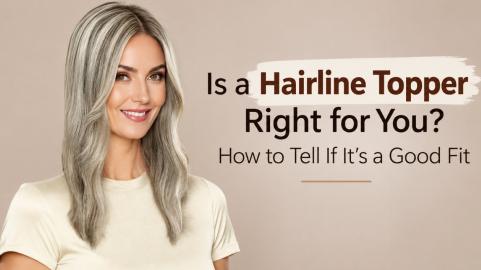
Hair loss around the front of the scalp can be particularly noticeable. Even when the crown and back of the head still have plenty of hair, thinning around the hairline or temples can change the way your hairstyle looks and make certain styles more difficult to achieve.
For women dealing with this type of hair loss, a hairline topper can be a practical way to add coverage and fullness exactly where it is needed. Unlike a traditional topper designed to cover a larger area of the scalp, a hairline topper focuses primarily on the front of the head and can blend with your existing hair.
But is a hairline topper right for everyone? Not necessarily. The best option depends on where your hair is thinning, how much coverage you need, and how much natural hair you have available for blending.
What Is a Hairline Topper?
A hairline topper is a smaller type of hair topper designed specifically for areas such as the front hairline, temples, and sides of the forehead.
Because it covers a more limited area, the back and crown of your head remain uncovered. Your own hair can then be blended with the topper to create a fuller-looking hairline while maintaining a natural appearance.
Some hairline toppers use a halo-wire attachment instead of traditional clips. The thin wire sits around the head and helps hold the piece in place without requiring clips, glue, or combs. This can be particularly useful for people who want a lightweight attachment method or prefer to avoid placing tension directly on fragile hair around the hairline.
Who Can Benefit From a Hairline Topper?
1. Hair Loss Concentrated Around the Hairline
If most of your hair is still relatively full but the front hairline has become thinner, a small topper may provide the coverage you need without covering the rest of your head.
This can be helpful for women experiencing a receding hairline or reduced density around the forehead and temples. Instead of using a larger hairpiece to cover areas that do not need additional coverage, a hairline topper targets the area where you want more fullness.
2. Thinning at the Temples
Hair loss around the temples can be difficult to disguise, especially when wearing your hair away from your face.
A properly fitted hairline topper can add density to these areas and help create a more balanced transition between the front of the topper and your natural hair. For localized thinning, this type of targeted coverage may be more convenient than wearing a full wig.
3. Frontal Hair Loss Associated With FFA
Frontal Fibrosing Alopecia (FFA) commonly affects the frontal hairline and can also involve the temples. When hair loss is mainly concentrated in these areas while the rest of the scalp still has good coverage, a hairline topper may be worth considering.
For anyone experiencing ongoing or changing hair loss, however, product choice should be based on the current condition of the hair and scalp rather than the diagnosis alone.
4. Naturally Fine Hair at the Front
Not every thinning hairline is related to a specific hair-loss condition. Some women simply have less density around the front of their scalp due to genetics, aging, hormonal changes, or years of styling.
If you still have enough hair around the crown and back, a smaller topper can add the appearance of fullness without requiring full-head coverage.
When Should You Consider a Larger Topper Instead?
A hairline topper is designed for targeted coverage, so it may not be the best solution when hair loss extends significantly beyond the front of the head.
Hair Loss Across the Crown or Top of the Scalp
If thinning has progressed beyond the hairline and into the crown, a larger-base hair topper may provide better coverage.
The goal is to make sure the base of the topper covers the areas that actually need additional density. Choosing a piece that is too small can leave visible areas of thinning uncovered and make blending more difficult.
Widespread or Diffuse Hair Loss
For women experiencing thinning across a larger portion of the scalp, a small frontal piece may not provide enough coverage.
In this situation, consider a larger hair topper designed to cover more of the top of the head. If hair loss becomes more extensive and there is not enough natural hair available for blending or attachment, a wig may be a more suitable option.
What About Very Short Hair?
Your existing hair also matters.
Hair toppers generally work best when there is enough natural hair around the covered area to help with blending and styling. If the hair around your sides or front is extremely short, creating a seamless transition may be more challenging.
That does not automatically mean a topper is impossible. It simply means you may need to consider the attachment method, base design, and amount of coverage more carefully.
How to Choose the Right Hair Topper for Your Hair Loss
Once you know where your hair is thinning, the next step is choosing a topper that matches your coverage needs.
Consider these factors:
Coverage area: Measure the area where you need additional density rather than choosing a topper based only on appearance.
Base size: A larger base provides more coverage, while a smaller base can be lighter and more targeted.
Attachment method: Clips work well for many users, while a halo-wire or other attachment option may be preferable for those who want less tension around the hairline.
Hair color and texture: The closer the topper matches your natural hair, the easier it will be to blend.
Hair type: Human hair toppers offer more flexibility for styling and can be a good option when you want the piece to behave similarly to your own hair.
Hairline Topper vs. Full Wig: Which One Do You Need?
The simplest way to think about the difference is coverage.
If your main concern is a thinning hairline or temples while you still have sufficient hair throughout the rest of your head, a hairline topper may be enough.
If thinning extends across a larger area, a larger hair topper may make more sense. And when hair loss affects most or all of the scalp, a full wig can provide the comprehensive coverage that a small topper cannot.
There is no single solution that works for every stage of hair loss. Your ideal choice can change as your hair density and coverage needs change.
Final Thoughts
Hairline toppers can be a useful option for women who want targeted coverage around the front of the scalp without covering the entire head. They can add fullness to areas such as the hairline and temples while allowing your natural hair to remain visible elsewhere.
The key is to choose based on where your hair loss is located and how much coverage you actually need. A smaller topper can be a great fit for localized frontal thinning, while more extensive hair loss may call for a larger topper or a wig.
If you are unsure which option is right for you, consulting a professional can help you compare different base sizes, attachment methods, and hair types before making a decision.

Best SaaS GEO Agencies: Who’s Winning AI Search in 2026

The Secrets Behind Hollywood’s Most Convincing On-Screen Transformations

Flying Home After Plastic Surgery: Why Flight Time Matters More Than You Think
Who Is Shameera? All You Need To Know About Charli XCX’s Mother
Who Is Gulliver Flynn Oldman? The Untold Story of Sir Gary Oldman’s Son

Meet Rosemary Turner: The Mother of Actor Callum Turner
-
Biographies9 months ago
Who Is Shameera? All You Need To Know About Charli XCX’s Mother
-
Biographies8 months ago
Who Is Gulliver Flynn Oldman? The Untold Story of Sir Gary Oldman’s Son
-
Biographies9 months ago
Meet Rosemary Turner: The Mother of Actor Callum Turner
-

 Biographies7 months ago
Who is Alexandra James? Inside The Life of Jeremy Clarkson’s Former Partner
-
 Biographies9 months ago
Who is Todd McRae? Meet Tate McRae’s Father
-
 Biographies8 months ago
Who Is Daniel Mara? The Untold Story of Kate Mara’s Private Sibling
-
 Celebrity9 months ago
Who Is Peter Hernandez? The Real Story of Bruno Mars’ Father
-

 Blog5 months ago
AI Video for Social Media: How Small Brands Keep Up Without Burning Out