
Business
Are Ebike Conversion Kits Legal in the UK? 250W Road Rules vs Off-Road Systems

The difficult questions start when a conversion has a throttle, an “off-road” button, a motor labelled above 250W, or a display that can unlock a higher assisted speed. In those cases the honest question is not “is this kit legal?” but a more precise one — the question this whole guide is built to answer:
What legal category does the completed bicycle fall into, in the exact configuration and place where it will be ridden?
Answer that once, before you buy, and the rest is detail. This guide applies it to both road-focused 250W conversions and higher-power systems intended for private land or authorised venues.
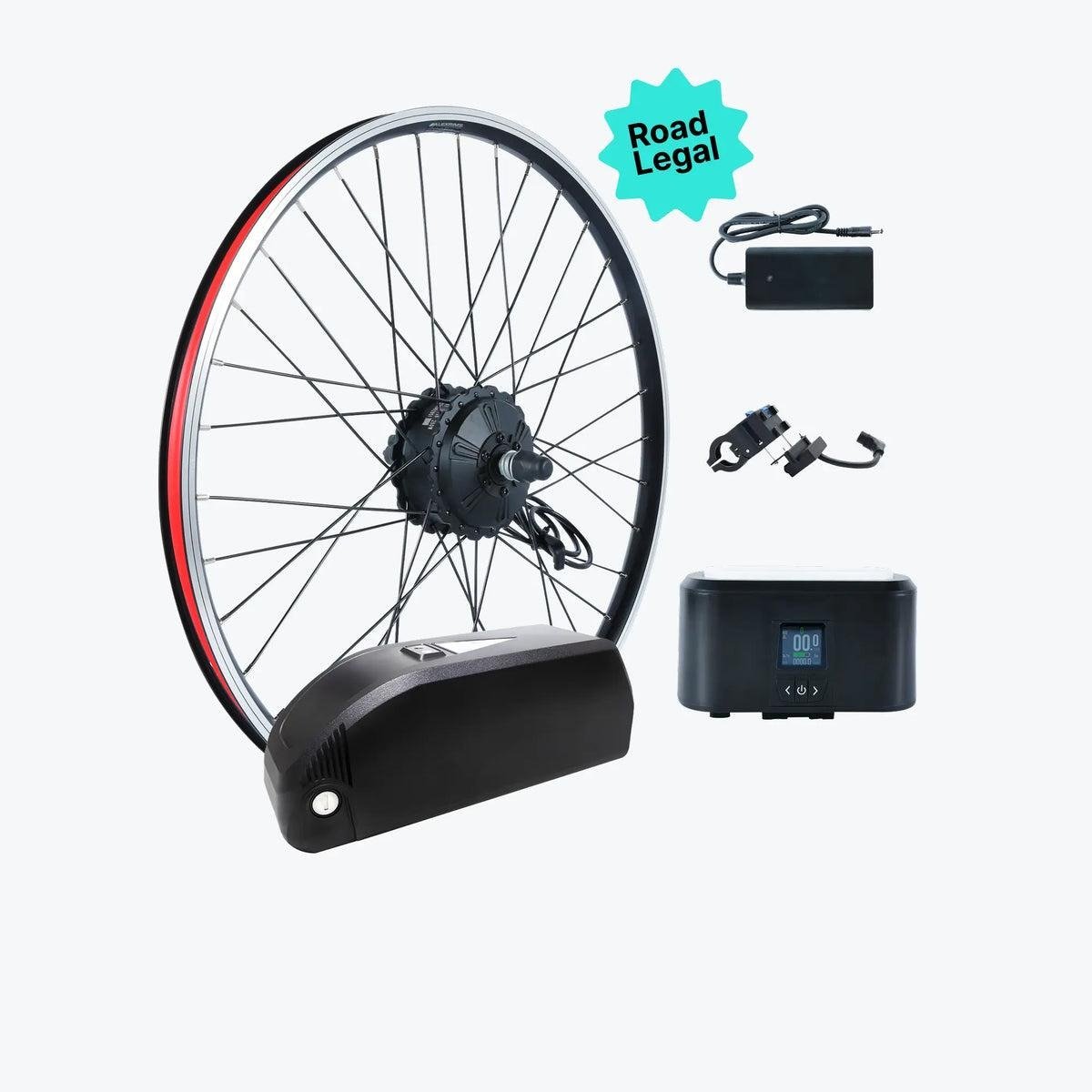
The cleanest way to be road-legal is to buy road-legal: a 250W pedal-assist kit designed around the EAPC limits, rather than a high-power system a menu setting is asked to restrain later. [alt: KirbEbike EZ Rider 250W ebike conversion kit with a Road Legal badge, front wheel, battery and charger]
UK EAPC Rules at a Glance
An EAPC (electrically assisted pedal cycle) is treated broadly like an ordinary pedal cycle: no driving licence, vehicle registration, Vehicle Excise Duty or compulsory insurance is required, and it may use cycle lanes. Make these checks against the FINISHED conversion, not one component in the box:
| EAPC requirement | What it actually means |
| Usable pedals | The cycle must be propellable by pedalling — the motor assists, it does not replace pedalling |
| ≤ 250W continuous rated | The motor’s maximum CONTINUOUS rated output — not a peak figure or a battery-side number |
| Assist cut-off at 15.5mph | Motor propulsion must stop above 15.5mph (24km/h); pedalling faster is fine |
| Rider aged 14+ | Minimum age for EAPC use in Great Britain |
| Accurate markings | Manufacturer, power and voltage / assisted-speed information on the finished cycle |
These conditions work together. A 250W motor is not an EAPC if it keeps assisting at 20mph; a 15.5mph cut-off does not rescue a motor rated above 250W. Compliance is the whole set, passed at once.
Continuous Rated Power Is Not the Same as Peak Power
The word “continuous” carries most of the weight. GOV.UK refers to the motor’s maximum continuous rated power — not the highest number that can flash up for a moment. Three figures get mixed together in product chatter, and only one is the legal threshold:
- Continuous rated output: the power the motor is rated to deliver continuously under defined conditions — the relevant EAPC threshold.
- Peak / short-duration output: a temporary figure during acceleration or another brief demand — not the legal number.
- Battery-side input: an estimate from battery voltage × controller current. Electrical input is not mechanical output at the wheel.
The point cuts both ways. Multiplying 36V by a 14A controller gives 504W of nominal battery-side input — that does not, on its own, make the motor a 504W motor. And the reverse: a motor genuinely rated and sold as 1000W does not become a 250W motor because the display is set lower. A wattage sticker is evidence only when it accurately represents the documented motor and system; it is not a tool for reclassifying a high-power build. Ask for a clear continuous rating in writing and keep the specification, invoice and any declaration of conformity.
The 15.5mph Rule Limits Assistance, Not the Bicycle
An EAPC is not forbidden from exceeding 15.5mph. A rider may pedal faster or gain speed downhill. The legal requirement is that the MOTOR stops propelling the cycle above 15.5mph — the contribution should taper and cut off predictably, not drop out abruptly. So a rider seeing 18mph on the display has not proved the bike is illegal; the question is whether that speed comes from the motor or from legs and gravity.
This is also why altering wheel-size settings can create a compliance problem. Tell the controller a 29-inch wheel is much smaller and the display can under-read speed, pushing the real cut-off above the legal threshold while the screen still looks compliant. Do not adjust wheel-size values to buy assisted speed.
| OUR VIEW: build legality in — you cannot bolt it on afterwards.The most common — and most expensive — mistake is treating road-legality as something a Bluetooth limit or an “off-road/road” toggle can supply after the fact. It cannot. A completed vehicle that CONTAINS an accessible function to exceed 15.5mph, or a motor rated above 250W, has a legal status set by what it is capable of, not by which mode the owner promises to leave selected. If your riding is public roads and cycle paths, choose a kit whose STANDARD configuration already meets the EAPC limits. If you genuinely need high power, choose a lawful venue first and build for it openly. The one thing that never works is buying performance and hoping a menu makes it legal. |
What Happens If the Converted Bike Is Not an EAPC?
If the finished bicycle falls outside the EAPC requirements, GOV.UK treats it as a motor vehicle. Depending on the machine and intended road use, that can bring:
- Vehicle or individual approval (type approval or MSVA)
- Registration and Vehicle Excise Duty
- Motor insurance
- An appropriate driving licence
- An approved motorcycle helmet
- Compliance with the relevant moped or motorcycle category
A non-EAPC motor vehicle may not use cycle tracks or cycle lanes just because it still looks like a bicycle, and using an unregistered or uninsured one on public roads carries real consequences. None of this means high-power systems are pointless — it means their lawful home is different: private land or an authorised venue, built and used openly as what they are.
Public Road, Cycle Path or Private Land?
The phrase “off-road” causes more confusion than wattage. In product language it means rough terrain; in law the decisive question is who controls the land and what vehicles are permitted. A bridleway, byway or unpaved public right of way is not “private land”. Private land means the landowner’s permission on land without public motor-vehicle access — and if a high-power bike is meant for a private venue, plan how it gets there. Riding it on public roads to reach the venue is not made lawful by the destination.
Why an “Off-Road Mode” Is Not a Road-Legal Switch
Some systems advertise a road setting and a temporary off-road setting: 250W/15.5mph on the road, more power unlocked elsewhere. GOV.UK guidance is unhelpful to that idea — where an off-road mode lets the motor propel the vehicle above 15.5mph, the government’s view is that such vehicles are not EAPCs. The issue is not whether the rider promises to leave the mode off; it is that the completed vehicle contains an accessible function that changes what it can do. There can be technical distinctions between a fixed road system, one needing a physical component change, and one unlocked from the handlebars — but for ordinary commuting, compliance should be part of the build, not an item on a menu.
Are Throttles Legal on UK Conversion Kits? (The Twist-and-Go Detail)
“All throttles are illegal in the UK” is too broad — and “a limited throttle is fine” is too loose. The real position turns on what the control does, when the vehicle entered service, and whether it has approval. This is the part most guides get wrong, so it is worth getting right:
- Walk assist ≠ throttle: a low-speed function (guidance treats assistance up to about 3.7mph / 6km/h separately) to help push the bike is not the same as a throttle that carries you along at cycling speed without pedalling.
- Twist and Go & approval: a cycle that can sustain motor propulsion without pedalling is commonly called Twist and Go. It can still be an EAPC, but typically only where the specific vehicle has the required approval — and the rules differ for vehicles placed on the market before and after 1 January 2016.
- The 15.5mph trap: no throttle is road-legal simply because it stops at 15.5mph; approval and function still decide it. And adding an optional throttle to a pedal-assist road build can change the vehicle’s status.
For product selection this nuance is practical, not academic. A kit may offer an optional throttle for markets or venues where it is permitted, while its UK road configuration stays pedal-assist. If you buy for UK roads, confirm what the exact completed vehicle is approved to do — do not infer legality from the throttle’s speed limiter alone.
The EZ Rider as a Road-Focused 250W Example
The EZ Rider kit is a useful illustration of designing AROUND the rules rather than restraining a high-power build afterwards. Its standard specification centres on a 36V 250W front geared hub motor, pedal assistance and a listed assisted speed of 15mph — below the 15.5mph EAPC ceiling. Two batteries give about 792Wh (36V × 22Ah), with a listed 40–60 mile range estimate and a 4A charger. Range is not a legal figure and is not guaranteed; the legally relevant characteristics are the 250W rating, pedal-assist operation and 15mph listed assisted speed.
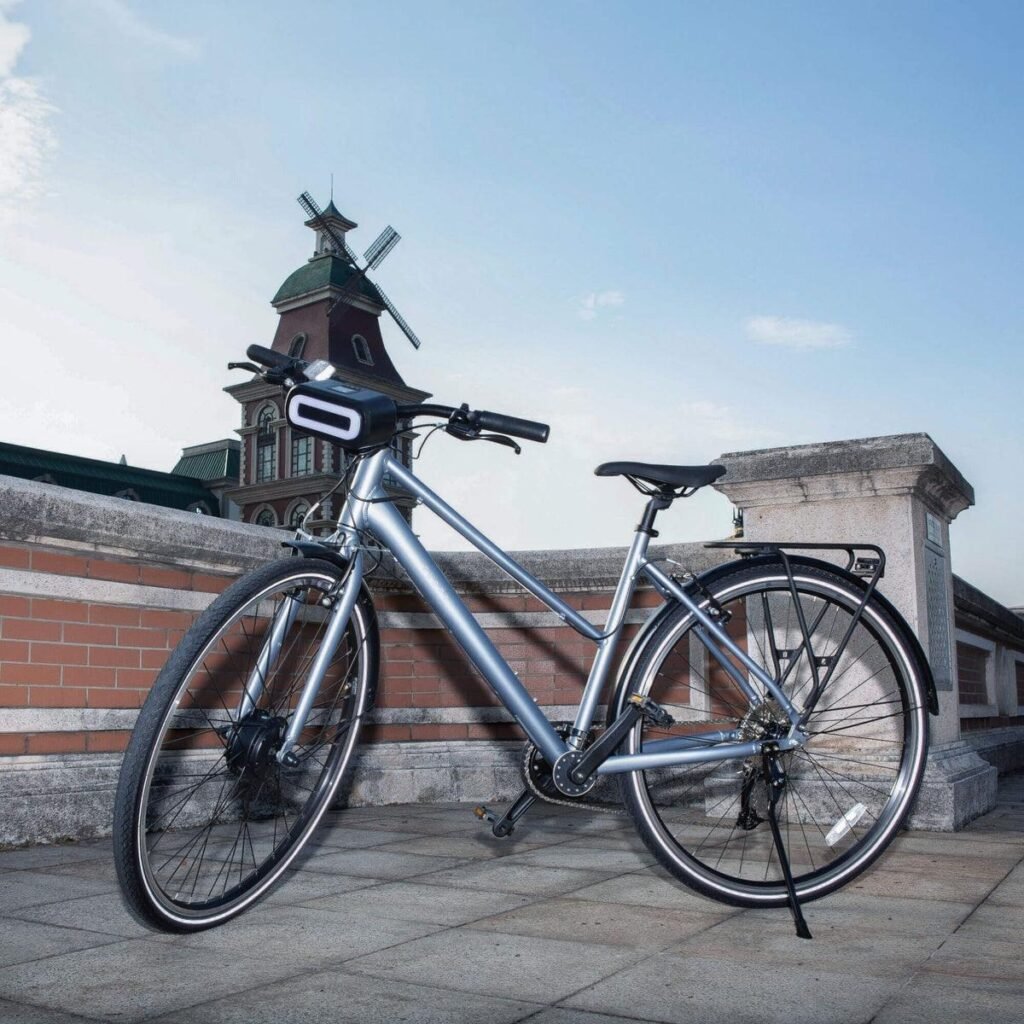
A 250W front-hub conversion on an ordinary city bike — pedal-assist, cutting off well within the limit. This is what building legality in looks like in practice, rather than restraining a high-power kit with a setting. [alt: city bike converted with a KirbEbike 250W front hub motor and frame-bag battery, road-legal EAPC configuration]
Fit stays separate from legality. The Brompton motor-wheel version is built around a 74mm front dropout and 16-inch 1-3/8 wheel; universal fits use other formats — but a correct mechanical fit does not, by itself, prove legal compliance. It is more accurate to say the standard EZ Rider pedal-assist specification is DESIGNED around the main EAPC power and assisted-speed limits than to declare any converted bicycle legal in the abstract.
250W Road Kit vs Higher-Power System
These are not competitors for the same job. One prioritises ordinary road access; the other prioritises performance where that power is permitted.
| 250W road-focused kit | Higher-power system | |
| Legal home | Public roads & cycle paths as an EAPC | Private land / authorised venue only |
| Design goal | Built around 250W + 15.5mph cut-off | Built for performance, structure & braking |
| Getting there | Ride it anywhere a bike may go | Transport it to the venue — don’t ride it there on the road |
| The wrong move | — | Buying it hoping a display setting makes it road-legal |
A rider who needs public-road transport should start with an EAPC-oriented system. A rider who genuinely needs high off-road power should find a lawful venue first, then build the bicycle around the added structural, braking and electrical demands. Riders still comparing complete configurations can review electric bike conversion kits with battery after separating road-focused from private-land requirements — not before.
Pre-Conversion Legal and Mechanical Checklist
A reliable conversion begins with written specifications. Work through this in order:
- Define the riding environment. Public roads, cycle routes, private land or an authorised venue — decide first.
- Verify the continuous motor rating. Ask for the documented maximum continuous rated output, not a peak figure.
- Confirm the assistance cut-off. The system must stop motor propulsion at 15.5mph for ordinary EAPC use.
- Identify every control mode. Pedal assist, walk assist, throttle, cruise, and any off-road / unlock function.
- Check approval requirements. If it can propel itself without pedalling, determine whether type approval / MSVA applies.
- Confirm the markings. Accurate manufacturer, power and voltage / assisted-speed information on the finished cycle.
- Inspect the donor bike & interface. Frame, fork, headset, wheels, tyres, drivetrain, brakes; dropout spacing, axle type, brake clearance.
- Match battery & charger and keep the evidence. Voltage, connector, polarity, BMS; retain specification, invoice, conformity and instructions.
Post-Installation Compliance Test
Installation is not finished when the connectors power up. Commission the bike in a controlled area:
- Lift the driven wheel; confirm correct rotation and fully-seated, correctly-tightened axle hardware.
- Verify pedal-assist at low speed; confirm the brake sensor cuts motor power promptly.
- Confirm walk assist (if present) stays a low-speed walking function.
- Compare the display against an independent GPS reading; confirm assistance tapers and stops at 15.5mph.
- Confirm any speed above the threshold comes from pedalling or gravity, not the motor.
- Check cables at full steering lock; reinspect axle, brakes, spokes and connectors after the first rides.
Do not alter wheel-size values to gain assisted speed — it makes the display inaccurate and can move the real cut-off above the EAPC threshold. If compliance cannot be confirmed with a safe test, keep the bike off public roads until a supplier or competent technician resolves it.
Safety and Installer Responsibility
Legal power does not guarantee a safe conversion. Government battery-safety guidance warns that retrofitting a kit to a cycle not designed for it can introduce risk, and that the person who installs a conversion may be responsible for the safety of the completed product — even when fitting it themselves. The donor cycle should be sound, able to carry the extra mass, and fitted with more than adequate braking. Battery and charger matching matters: a plug that fits can still carry the wrong voltage or charge profile. And follow safe charging practice — charge while awake, never on an escape route, away from flammable materials, uncovered, and stop using any pack that is swollen, damaged, hot or smells unusual.
Seven UK Ebike Law Mistakes to Avoid
- “The kit is legal to buy, so it is legal to ride anywhere.” Vehicle status depends on the completed configuration and place of use.
- “A 250W sticker proves compliance.” The marking must reflect the real motor and system.
- “A 1000W bike is legal if I stay below 15.5mph.” The motor’s rating and propulsion capability still count.
- “Road mode turns a high-power motor into an EAPC.” An accessible unlock function can affect classification.
- “Off-road means any trail without tarmac.” Access rights and vehicle restrictions still apply.
- “Every throttle is illegal / every limited throttle is legal.” Walk assist, Twist-and-Go and approval are separate questions.
- “A compliant motor makes the whole bike compliant.” Pedals, cut-off behaviour, controls, markings, brakes and installation all count.
Frequently Asked Questions
Are ebike conversion kits legal to buy in the UK?
Kits can be bought and installed, but that does not decide where the completed vehicle can be used. For ordinary public-road use, the finished cycle must qualify as an EAPC: usable pedals, no more than 250W maximum continuous rated power, and assistance cutting off at 15.5mph.
Is the UK 250W limit peak power or continuous power?
GOV.UK uses maximum continuous rated motor power. Peak output and battery-side electrical input are different measurements. Obtain the documented continuous rating in writing.
Can a legal EAPC travel faster than 15.5mph?
Yes — the rider can pedal faster or descend. The motor must not keep propelling the cycle beyond 15.5mph.
Is a 500W ebike legal if it is limited to 15.5mph?
A speed limit does not fix a motor rated above the 250W continuous EAPC maximum. A 500W-labelled system should not be presented as an ordinary road EAPC on rating alone.
Can a 1000W motor be limited to 250W through the display?
A setting may change behaviour but should not be assumed to change the motor’s documented continuous rating or the vehicle’s legal classification for road use.
Are thumb throttles legal on UK ebikes?
It depends on function and approval. Low-speed walk assist differs from a throttle that propels you without pedalling; Twist-and-Go vehicles generally need the relevant approval, with different rules before and after 1 January 2016.
Is a 6km/h walk-assist function legal?
Guidance treats walk assist not exceeding about 3.7mph (~6km/h) separately from normal Twist-and-Go approval. Confirm the exact function of the specific system.
Can I ride a high-power ebike on public trails?
Not simply because the surface is off-road. Check legal access rights, landowner rules and whether motor vehicles are permitted on the specific route.
Do I need a licence for a 250W conversion kit?
If the completed cycle qualifies as an EAPC and the rider is at least 14, a driving licence is not normally required. A higher-power or non-compliant build may need one.
Does a 250W motor guarantee my conversion is road legal?
No. The bike also needs usable pedals, a genuine 15.5mph cut-off, appropriate controls, accurate markings, approval where required and a safe installation.
Choose the System for the Place You Ride
For public-road commuting, begin with a conversion designed around no more than 250W maximum continuous rated power, pedal assistance and a genuine 15.5mph cut-off. For higher-power riding, choose a lawful private venue first, then select the motor, battery, controller, frame and brakes for that performance. “Off-road mode” is not a substitute for either. The best conversion is not the most powerful kit that can be bolted to a bicycle — it is the one whose specification, installation and intended place of use all point at the same legal category. Get that right at the moment you buy, and legality is not something you have to switch on later.


Most rooms in a home get updated every few years. A new sofa arrives, a kitchen gets fresh paint, a home office gains a better chair. The bedroom is different. Many people keep the same bed, dresser and nightstands for a decade or longer, sometimes moving them from one home to the next.
That long lifespan changes how bedroom furniture should be chosen. A piece bought on impulse because it was on sale or looked good in a photo will be part of daily life for years, every morning and every night. Thinking about how furniture is built, how it will be used and how it fits the room pays off far longer than almost any other home purchase.
Start With How You Use The Room
Before looking at styles or finishes, think about what actually happens in the bedroom. Some people use it only for sleeping. Others read in bed, fold laundry there, work from a small desk in the corner or keep most of their wardrobe in the room because closets are tight.
Those habits decide what furniture the room really needs. A person with a small closet may need a tall chest or an armoire more than a second nightstand. Someone who reads every night needs a bedside surface large enough for a lamp, a book and a glass of water. A couple sharing the room may need two separate dressers so each person has their own space.
Making a short list of daily routines first helps avoid buying pieces that look good but don’t solve real problems.
The Bed Sets The Scale
The bed is the largest piece in the room, and everything else is arranged around it. Its size and style affect how open or crowded the space feels.
Panel beds have a solid headboard, and often a footboard, and suit traditional and classic rooms.
Low platform beds sit closer to the floor and don’t need a box spring. They give a cleaner, more modern look and can make a room with lower ceilings feel taller.
Storage beds include drawers built into the base, which is useful in smaller bedrooms where floor space for extra furniture is limited.
As a general guideline, leave about two feet of walking space on the sides and foot of the bed so the room is easy to move through. In tight rooms, a bed without a footboard can make the space feel less boxed in.
Storage That Matches Your Wardrobe
Dressers and chests handle most bedroom storage, and they come in different shapes for different needs.
A wide dresser with six or seven drawers offers plenty of space for folded clothes and a long top surface for a mirror, a tray or a few personal items. A tall chest takes up less floor space and works well in narrow rooms or alongside a bed in smaller layouts. Armoires and wardrobes add hanging space, which helps in older homes with small closets.
Drawer quality matters more than many shoppers realize. Drawers that stick or sag become a daily annoyance. Look for smooth movement, sturdy joinery and drawers that close evenly. Opening and closing a drawer several times in the store is one of the easiest tests of how a piece will hold up.
Why Solid Wood Holds Its Value
Furniture made from solid wood tends to outlast pieces built from particleboard or thin veneers. It handles daily use better, can be tightened or repaired if a joint loosens, and can often be refinished if the surface wears.
For buyers comparing options, bedroom furniture Maine showrooms and other independent retailers often carry handcrafted solid wood collections where customers can choose the wood finish that suits their home. That ability to pick a finish matters for a room meant to stay the same for years. A warm, medium tone may suit a cozy cottage bedroom, while a darker finish can feel more formal, and a lighter one can brighten a small space.
Matching finishes across the bed, dresser and nightstands creates a calm, unified look. Mixing finishes can also work, as long as the tones feel deliberate rather than random.
Nightstands And Finishing Pieces
Nightstands are small, but they get used constantly. Choose a height close to the top of the mattress so reaching for a phone or a glass of water doesn’t require stretching. A drawer helps hide chargers, medications and other clutter, while a shelf underneath adds space for books.
Other pieces can make the room more functional. A mirror above a dresser helps with getting ready and reflects light to make the room feel larger. A bench at the foot of the bed gives a spot to sit while putting on shoes or to lay out clothes for the next day.
Don’t Overlook The Mattress
Even the most beautiful bed frame can’t fix a poor night’s sleep. The mattress is the piece that most directly affects how rested people feel each morning.
Handmade mattresses are worth considering for buyers who want long-lasting comfort. They’re often built with more attention to materials and construction than mass-produced models. Whatever type you choose, test it in person when possible, lying in your usual sleeping position for several minutes rather than sitting on the edge.
A Simple Buying Checklist
Measure the room, doors and stairways before buying.
Plan walking space around the bed.
Match storage pieces to how much clothing you own.
Test drawers for smooth, even movement.
Choose finishes that work together across the room.
Pick nightstands close to mattress height.
Try mattresses in person before deciding.
A Room Worth Investing In
People spend roughly a third of their lives in the bedroom, more than in any other room of the house. Furniture that’s well built, well sized and suited to daily routines makes that time more restful and that space easier to live in. Choosing carefully now means fewer replacements later and a bedroom that still feels right years from now.
Business
Retrofitting British Manufacturing: Scaling Productivity via Solid-State Switching and Contactless Sensing


British manufacturing operates within an increasingly demanding economic landscape. Escalating industrial electricity tariffs, persistent skilled labor shortages, and aggressive global competition are compressing operating margins across domestic machine shops, packaging lines, and assembly facilities. To maintain export competitiveness, UK plant managers must accelerate throughput while driving down unplanned downtime.
However, full greenfield automation overhauls require massive capital expenditure (CapEx) commitments and extended production shutdowns that few facilities can justify. The pragmatic solution lies in targeted brownfield retrofits: systematically replacing high-wear electromechanical relays, contactors, and mechanical limit switches with solid-state switching and contactless sensing architectures.
Elimination of Mechanical Wear in High-Cycle Production Environments
The Hidden Costs of Contact Arcing and Mechanical Limit Switches
High-speed automated production cells place immense cyclic stress on electromechanical control hardware. Packaging equipment, metal-forming presses, and conveyor gates cycling at 80 to 120 actuations per minute subject traditional physical limit switches to continuous kinetic impact. Over time, internal return springs lose tension, mechanical actuator arms deform, and electrical contact points suffer severe contact bounce.
This contact chatter produces microscopic electrical arcing, pitting silver alloy contact pads and gradually increasing contact resistance. In heavy inductive switching regimes, contacts inevitably weld shut or fail open, causing uncommanded machine halts that require emergency maintenance callouts and scrap out-of-spec production batches.
Transitioning to Inductive Proximity Sensing for Position Detection
Unlike traditional physical limit switches that suffer rapid mechanical wear and contact degradation in continuous cycling applications, non-contact proximity sensors maintain millimetric accuracy over millions of operational cycles. According to technical documentation from industrial sensing brandOMCH, standard M8 and M12 cylindrical inductive sensors with IP67 ingress protection and built-in reverse-polarity circuits eliminate tracking failures on high-speed conveyors, providing reliable target detection up to several kilohertz without physical contact.
Inductive proximity sensors operate via electromagnetic induction:
- High-Frequency Oscillation: An internal LC tank circuit generates an alternating electromagnetic field radiating from the sensor face.
- Eddy Current Damping: When a ferrous machine part enters the target zone, eddy currents are induced within the metal, draining energy from the resonant field.
- Signal Triggering: A precision Schmitt trigger circuit detects the amplitude reduction, switching the solid-state output transistor in sub-millisecond response times.
- Physical Isolation: Because no mechanical displacement occurs, the sensor body remains completely isolated from kinetic shocks and mechanical wear.
Solid-State Relay (SSR) Integration for Precise Thermal and Motion Control
Optocoupler Isolation and Zero-Cross Switching Mechanics
Industrial heating loops—such as those on plastic blow-molding platens and automated shrink-tunnel lines—traditionally utilize mechanical contactors. These contactors create audible noise, arc continuously across phase poles, and degrade within 100,000 to 500,000 cycles.
Upgrading to Solid-State Relays (SSRs) eliminates physical contacts through optocoupler galvanic isolation. An optical LED switches an internal bidirectional triac or silicon-controlled rectifier (SCR), isolating delicate 24V DC PLC outputs from 400V AC power mains by over 4,000V RMS.
Furthermore, integrating zero-cross switching mechanics ensures the semiconductor switches exclusively when AC sinusoidal voltage crosses zero volts. This minimizes high dI/dt inrush transients, prevents inductive kickback from burning heater coils, and dramatically reduces conducted radio-frequency noise across plant electrical networks.
Thermal Management and Heat Sink Calculation for Solid-State Architectures
Unlike mechanical contactors that produce negligible steady-state heat, solid-state semiconductors exhibit an inherent internal forward voltage drop (typically 1.0V to 1.6V). When switching continuous 20A to 40A heater loads, an SSR dissipates between 25 and 60 Watts of thermal energy within the control cabinet.
Without engineered thermal sinking, junction temperatures rise rapidly, triggering semiconductor thermal runaway and permanent junction breakdown:
- Thermal Resistance Sizing: Calculate total thermal resistance from junction-to-ambient to ensure internal silicon stays well below maximum junction ratings.
- Thermal Interface Application: Apply high-conductivity thermal grease or pre-cut phase-change thermal pads between the SSR baseplate and the extruded aluminum heatsink.
- Cabinet Ventilation Sizing: Arrange heatsinks with fins aligned vertically along the chimney convection axis, maintaining adequate clearance from temperature-sensitive PLC modules.
Mitigating Environmental Contamination: IP67 Sensing in Harsh Workshop Floors
Resistance to Cutting Fluids, Lubricants, and Particulate Ingress
Machine tools, automotive stamping cells, and food-processing conveyors present hostile operating environments saturated with water-soluble coolants, lubricating oils, and metallic fines. Unsealed mechanical switches fail rapidly as cutting fluid penetrates casing seals, emulsifying internal contact grease and causing ground faults.
Upgrading to IP67-rated cylindrical inductive sensors solves environmental fouling through robust structural materials:
- Nickel-Plated Brass Housings: Heavy-gauge machined brass barrels resist physical tool impact and prevent galvanic corrosion when mounted to steel machine frames.
- Polybutylene Terephthalate (PBT) Faces: High-density PBT sensing caps resist aggressive coolant additives, hydrocarbon solvents, and cleaning detergents.
- Vacuum-Encapsulated Electronics: Fully potted epoxy potting seals internal circuitry against ambient moisture and extreme structural vibration up to 10G.
Output Configuration Strategy: NPN vs. PNP and Reverse Polarity Protection
Brownfield retrofits require careful alignment between existing PLC input cards and sensor transistor topologies. European and British control architectures predominantly utilize 24V PNP (sourcing) configurations, where the sensor switches positive voltage to the controller input. Conversely, legacy machinery imported from East Asia frequently relies on NPN (sinking) arrangements.
Specifying sensors with integrated electronic protection prevents costly installation errors:
- Reverse-Polarity Protection: Internal bypass diodes prevent circuit burnout if field wiring leads are accidentally inverted during rapid shift turnarounds.
- Short-Circuit Protection: Pulsed overcurrent limiting protects the output transistor if field wiring is pinched against bare metal frames.
- Transient Voltage Suppression: Integrated Zener diodes clamp inductive surges generated by adjacent motor lines.
Scalable Industry 4.0 Infrastructure and Futureproofing
Standardizing IO Interfaces for Smart Factory Migration
As legacy British manufacturing operations accelerate their digital retrofits, establishing reliable edge hardware interfaces is essential for feeding operational data into supervisory control systems. In modernIndustry 4.0 architectures, discrete sensing nodes serve as the foundational data collection layer, enabling predictive maintenance algorithms to monitor mechanical equipment health before catastrophic failures occur.
Upgrading discrete switches to smart, standardized sensors enables decentralized machine intelligence:
- Point-to-Point IO-Link Integration: Modern digital sensors communicate diagnostic parameters—including coil temperature, target proximity distance, and wire-break alarms—directly over standard 3-wire unshielded cables.
- Decentralized Fieldbus Blocks: Machine-mounted IP67 junction boxes aggregate multiple sensor inputs, replacing bulky wire harnesses with a single Industrial Ethernet cable routed back to the main cabinet.
- Dynamic Parameter Configuration: Switching thresholds can be updated via software recipe changes during product changeovers, eliminating physical adjustment downtime.
Lifecycle Cost Benchmarking Across 5-Year Maintenance Windows
While the upfront purchase cost of an industrial inductive sensor or SSR is marginally higher than a low-cost mechanical limit switch or contactor, the total cost of ownership (TCO) shifts decisively in favor of solid-state components within 12 to 18 months.
Consider the operational financial impact across a high-speed bottling or cartoning line:
- Zero Wear Part Replacement: Solid-state components eliminate routine contact burnishing, terminal tightening, and mechanical spring replacements.
- Minimized Unplanned Downtime: Eliminating unexpected limit-switch failures saves hundreds of hours in emergency line diagnostics and lost manufacturing shifts.
- Reduced Inventory Overhead: Standardizing on universal M12 PNP/NPN selectable inductive sensors allows maintenance departments to consolidate dozens of mechanical switch spares into a handful of universal SKUs.
Key Takeaways
| Area | Key Takeaway | Impact/Data |
| CapEx / ROI | Target brownfield retrofits over greenfield | Payback in 12–18 months |
| Position Sensing | Swap mechanical limit switches for inductive | Zero wear; response up to kHz range |
| Heater Relays | Mandate zero-cross solid-state relays | >4,000V RMS isolation; 0 arcing |
| Thermal Load | Size vertical heatsinks for internal drop | Dissipates 25–60W per 20–40A load |
| Harsh Environment | Deploy IP67-rated PBT encapsulated sensors | Resists coolants and up to 10G vibration |
| Wiring Protection | Specify built-in reverse-polarity diodes | Prevents burnout during shift turnarounds |
| Smart Factory | Aggregate IO-Link sensors at machine edge | Replaces harnesses with 1 Ethernet line |
Conclusion
British manufacturing resilience relies on squeezing maximum productivity from existing capital assets. By systematically retrofitting failing mechanical limit switches and electromechanical contactors with rugged, contactless inductive sensors and solid-state relays, plant managers eliminate the primary causes of electrical and mechanical downtime.
These targeted component-level upgrades deliver rapid return on investment, lower lifecycle operational expenditure, and establish the robust, digitized sensing foundation required for true smart factory automation.

The fashion industry is constantly evolving, with brands and retailers looking for ways to deliver quality garments, respond to changing trends, and maintain reliable supply chains. Behind every successful clothing collection is a well-organised production process that transforms creative designs into finished garments. Choosing the right manufacturing partner is therefore an important decision for businesses looking to grow in a competitive market.
Understanding the Fashion Manufacturing Process
Fashion manufacturing involves several stages, from initial design development to the production, finishing, and delivery of garments. Each stage contributes to the final product’s appearance, durability, and overall quality.
The process generally begins with design specifications, fabric selection, and pattern development. Manufacturers then prepare samples to evaluate fit, stitching, colours, and finishing details. Once the sample is approved, bulk production can begin, followed by quality inspections, labelling, packing, and dispatch.
A well-managed process helps businesses maintain consistency across different sizes and styles while reducing production errors and unnecessary delays.
Why Choosing the Right Manufacturer Matters
Finding a dependable manufacturing partner can make a significant difference to a fashion business. An experienced manufacturer understands the importance of following specifications, maintaining consistent quality, and meeting agreed production schedules.
Businesses should consider several factors when evaluating potential partners:
- Production capacity: The manufacturer should be able to accommodate current orders and future business growth.
- Fabric expertise: Different garments require suitable fabrics that meet the desired standards for comfort, appearance, and durability.
- Quality control: Regular inspections help identify stitching, sizing, and finishing issues before garments reach customers.
- Flexible production: The ability to handle different styles, quantities, and repeat orders can support long-term growth.
- Communication: Clear updates throughout sampling and production help prevent misunderstandings and costly mistakes.
These considerations are particularly important for businesses managing seasonal collections or supplying multiple retailers.
The Role of a Clothing Manufacturer UK Businesses Can Trust
Working with a reliable clothing manufacturer UK businesses can communicate with directly offers practical advantages for trade buyers, distributors, and fashion brands. Clear communication can make it easier to discuss specifications, review samples, resolve production concerns, and coordinate delivery schedules.
UK-based manufacturing arrangements can also provide greater visibility over production planning. For businesses with larger volume requirements, managed offshore production may offer an additional option for balancing manufacturing costs and capacity.
The most suitable approach depends on the garment type, order quantity, budget, quality requirements, and delivery timeline. Businesses should discuss these factors before confirming a production agreement.
The Importance of Quality and Consistency
Customers expect garments to look good, fit properly, and perform as intended. Inconsistent sizing, uneven stitching, or differences in colour between production batches can affect customer satisfaction and increase returns.
Quality management should therefore begin before bulk manufacturing starts. Detailed technical specifications, approved samples, fabric checks, and clear finishing requirements help establish a consistent production standard.
Manufacturers should also inspect completed garments before dispatch. These checks can cover measurements, stitching, labels, branding, and general appearance. For repeat orders, maintaining approved specifications helps ensure that subsequent batches remain consistent with the original collection.
Supporting Brand Identity Through Customisation
Brand identity is an important part of the fashion business. Beyond garment design, details such as labels, embroidery, printed graphics, and packaging can help products reflect a brand’s overall style.
Customisation requirements should be discussed early in the manufacturing process. This allows the production team to select appropriate decoration methods, confirm artwork placement, and assess how branding will work with the chosen fabric.
For businesses producing coordinated collections, consistent branding and finishing can help create a recognisable product range across different garment styles.
How Scalable Manufacturing Supports Business Growth
As a fashion brand expands, its manufacturing requirements may change. A business that initially needs a limited production run may later require larger quantities, additional sizes, or multiple styles in the same order.
A scalable manufacturing partner can help plan this growth by coordinating production capacity, sourcing materials, and scheduling repeat orders. Sampling and approval procedures remain important as volumes increase because they help maintain product standards.
Efficient planning can also improve stock management. By agreeing on realistic lead times and production quantities, businesses can better coordinate manufacturing with product launches, seasonal demand, and retail commitments.
Partnering with Uniform World for Fashion Manufacturing
Uniform World supports trade buyers, brands, and distributors with garment manufacturing solutions designed around product specifications, production volumes, and business requirements. Its services include sampling, bulk production, garment branding, finishing, and fulfilment, with UK and managed offshore production options available.
Businesses looking for a manufacturing partner can explore the company’s fashion manufacturing services to learn more about its production capabilities.
By discussing garment requirements, fabric preferences, order quantities, and delivery expectations at the beginning, businesses can establish a clearer production plan and make more informed sourcing decisions.
Conclusion
Successful fashion manufacturing requires more than turning a design into a finished garment. It involves careful material selection, accurate sampling, consistent quality control, effective communication, and dependable delivery.
Choosing the right manufacturing partner helps fashion businesses manage production more efficiently while maintaining the standards their customers expect. Whether launching a new collection or expanding an established clothing range, a well-planned manufacturing strategy can provide a stronger foundation for sustainable business growth.
Frequently Asked Questions
1. What is fashion manufacturing?
Fashion manufacturing is the process of producing clothing from design and fabric selection through sampling, cutting, stitching, finishing, quality checks, and delivery.
2. How do I choose the right clothing manufacturer?
Consider the manufacturer’s experience, production capacity, quality-control procedures, communication, minimum order quantities, and ability to meet your budget and deadlines.
3. What is the difference between UK and offshore clothing manufacturing?
UK manufacturing may offer closer communication and easier production oversight, while offshore manufacturing can provide cost advantages for certain large-volume orders. The best option depends on your requirements.
4. Why is sampling important before bulk production?
Sampling allows businesses to assess garment fit, fabric, construction, colours, and finishing before approving the full production run. It helps identify issues early and reduce costly errors.
5. Can a clothing manufacturer support bulk and repeat orders?
Yes. Manufacturers with scalable production processes can support bulk orders and repeat manufacturing, provided quantities, specifications, materials, and delivery schedules are agreed in advance.

Buying Bedroom Furniture Built To Last

Retrofitting British Manufacturing: Scaling Productivity via Solid-State Switching and Contactless Sensing

Lifeguard Certification Explained: What You Learn and Why It Matters

Who Is Shameera? All You Need To Know About Charli XCX’s Mother

Who Is Gulliver Flynn Oldman? The Untold Story of Sir Gary Oldman’s Son

Meet Rosemary Turner: The Mother of Actor Callum Turner
-
Biographies8 months ago
Who Is Shameera? All You Need To Know About Charli XCX’s Mother
-
Biographies8 months ago
Who Is Gulliver Flynn Oldman? The Untold Story of Sir Gary Oldman’s Son
-
Biographies9 months ago
Meet Rosemary Turner: The Mother of Actor Callum Turner
-

 Biographies7 months ago
Who is Alexandra James? Inside The Life of Jeremy Clarkson’s Former Partner
-
 Biographies8 months ago
Who is Todd McRae? Meet Tate McRae’s Father
-
 Biographies8 months ago
Who Is Daniel Mara? The Untold Story of Kate Mara’s Private Sibling
-
 Celebrity9 months ago
Who Is Peter Hernandez? The Real Story of Bruno Mars’ Father
-
 Biographies8 months ago
Who Was Adrian Mayers? The Untold Life of A$AP Rocky’s Late Father