
Blog
Nah I’d Win Meme: Full Story Behind Gojo’s Iconic Line

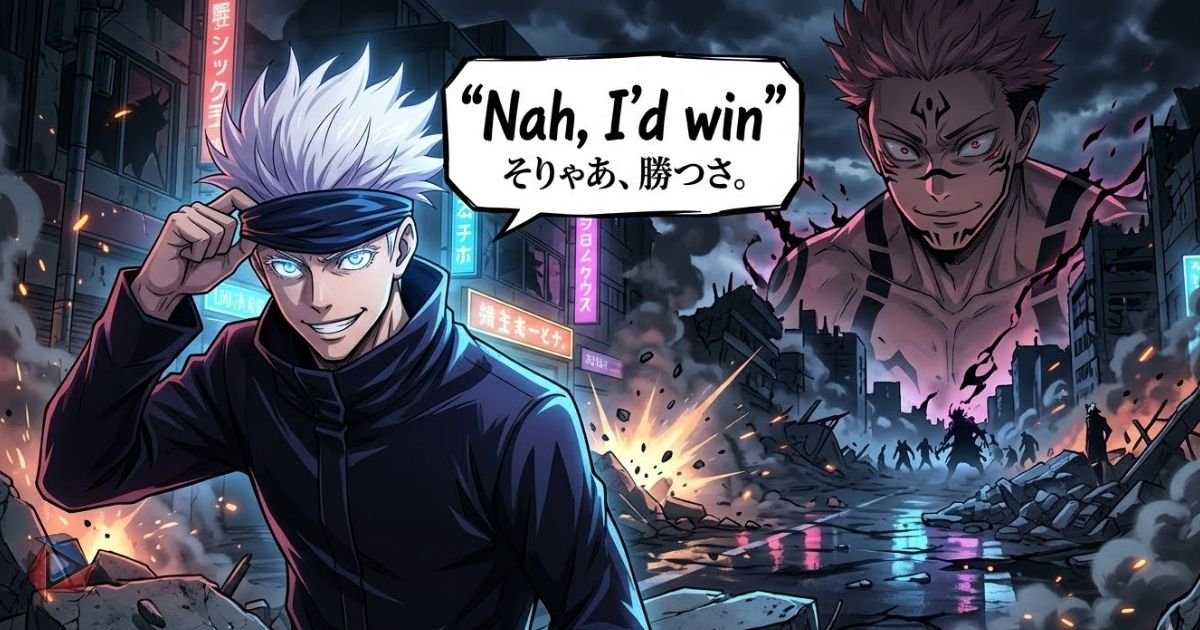
The “Nah I’d Win” meme is one of the most powerful examples of modern internet culture, originating from Jujutsu Kaisen and centered on Satoru Gojo. What began as a confident declaration in a manga panel quickly evolved into a global symbol of overconfidence, irony, and inevitable failure. Fueled by translation debates, fandom creativity, and Gojo’s shocking defeat, the phrase transformed into a universal meme used across anime, gaming, and mainstream digital culture.
The Origin of “Nah I’d Win” in Jujutsu Kaisen
The phrase “Nah I’d Win” originates from the globally popular manga and anime series Jujutsu Kaisen, created by Gege Akutami. It is spoken by the character Satoru Gojo, widely recognized as the strongest sorcerer in the story.
This line appears in Chapter 221 of the manga, shortly after Gojo is released from the Prison Realm, where he had been sealed for over three years in real-world time. The moment was highly anticipated, as fans had waited patiently to see their favorite character return to the battlefield.
What makes this line even more significant is that it is a direct callback to Chapter 3, where Gojo confidently assures Yuji Itadori that he could defeat a fully powered Ryomen Sukuna. This long-term storytelling payoff created a powerful emotional reaction within the fanbase.
The Narrative Power Behind the Line
At first glance, “Nah I’d Win” may seem like a simple boast. However, its narrative weight is deeply rooted in character development and storytelling structure.
Gojo’s confidence is not unfounded. Throughout the series, he is portrayed as nearly invincible, possessing abilities like the Six Eyes and Infinity, which make him almost untouchable. His statement reflects not arrogance alone, but a lifetime of dominance in battle.
The brilliance lies in how this line bridges two distant points in the story. A 218-chapter gap separates the original setup and its callback. This type of long-term narrative payoff is rare and highly effective, creating anticipation and emotional investment.
Because of this, the moment was not just dialogue. It was a culmination of years of storytelling, expectations, and character mythology.
The 1,189-Day Hype Factor
One of the most important elements behind the success of the “Nah I’d Win” meme is timing. Before Chapter 221, Gojo had been absent from the story for 1,189 real-world days.
This absence created an intense level of anticipation. Fans were eager to see how he would return, what he would say, and how he would confront Sukuna. When he finally appeared, every word carried massive weight.
His first major line being “Nah I’d Win” turned the panel into an instant focal point. It became more than just a quote—it became a moment of release for years of built-up excitement.
This level of anticipation is a key reason why the meme spread so quickly. The fandom was already emotionally charged, and the line gave them something iconic to latch onto.
Linguistic Depth: The Pronoun Shift
A fascinating layer of meaning comes from the original Japanese dialogue. In the manga, Gojo uses the pronoun “Ore” (俺) instead of his usual “Boku” (僕).
This subtle linguistic shift carries significant implications. “Boku” is softer and more polite, often used when Gojo interacts with his students. In contrast, “Ore” is rougher, more assertive, and typically used in confrontational or dominant situations.
By switching pronouns, Gojo signals a transformation. He is no longer the playful teacher. He becomes a serious, battle-ready executioner.
This detail adds depth to the line, reinforcing that “Nah I’d Win” is not casual confidence—it is a declaration of dominance.
The Translation Controversy That Changed Everything
The spread of the “Nah I’d Win” meme was heavily influenced by translation issues. When the official English version was first released by VIZ Media, the line was translated simply as “No.”
This decision sparked immediate backlash. Fans criticized the translation for stripping away the confidence, tone, and callback significance of the original line. It felt flat and disconnected from the character’s personality.
Meanwhile, fan translation group TCB Scans had already released their version, translating the line as “I will win.” This version resonated more strongly with fans due to its assertive tone.
The backlash was so intense that VIZ Media made a rare move. Within approximately 48 hours, they updated the official translation to “Nah I’d Win.”
This rapid correction is considered one of the fastest localization fixes in manga history. Ironically, the controversy helped amplify the meme’s visibility, turning it into a global talking point.
The Meme Template: How “Nah I’d Win” Works
The success of “Nah I’d Win” lies in its simplicity. It follows a clear and highly adaptable structure that makes it easy to replicate across different contexts.
The format typically involves a character or person facing an impossible situation. Instead of acknowledging the difficulty, they confidently declare, “Nah I’d Win.” The humor comes from the expectation that failure is inevitable.
This structure transforms the phrase into a universal expression of humorous overconfidence. It can be applied to exams, sports, gaming, work situations, or even daily life struggles.
Because of its flexibility, the meme quickly spread beyond anime communities and became part of broader internet culture.
The Turning Point: Gojo’s Defeat and Irony
The defining moment that elevated “Nah I’d Win” from a popular quote to a legendary meme came later in the story. In Chapter 236, Gojo faces Ryomen Sukuna in a highly anticipated battle.
Despite his overwhelming confidence, Gojo is ultimately defeated and killed. The manner of his death—being cut in half—was both shocking and controversial.
This outcome completely recontextualized the line. What was once a symbol of strength became the ultimate example of ironic failure.
The contrast between his bold claim and his fate created a perfect meme formula. It captured the essence of overconfidence leading to downfall, a theme that resonates universally.
The Birth of “Go/jo” and Visual Irony
Following Gojo’s defeat, the internet took the meme to another level by modifying his name. Fans began writing it as “Go/jo”, visually referencing the way he was split in half.
This small but powerful change demonstrates how deeply the meme penetrated internet culture. It was no longer limited to images or dialogue—it influenced how people wrote and perceived the character.
This form of visual irony added another layer to the meme. It reinforced the connection between the phrase “Nah I’d Win” and the consequences that followed.
The transformation of a character’s name into a joke highlights the creative and often ruthless nature of online communities.
The Rise of Lobotomy Kaisen
The meme’s evolution did not stop at simple edits. During a scheduled manga break following Chapter 221, fans had time to experiment and expand on the concept.
This period gave rise to what is now known as “Lobotomy Kaisen”, a surreal and chaotic subculture within the fandom. Fans created exaggerated, distorted, and absurd versions of the original panel.
The lack of new content forced the community to entertain itself, leading to a flood of creative output. The “Nah I’d Win” panel became the central template for this movement.
This phase was crucial in solidifying the meme’s identity. It transformed from a single joke into a cultural phenomenon driven by collective creativity.
Early Meme Variations and the Role of Jogo
One of the earliest and most influential variations of the meme involved Jogo, a character known for consistently losing fights.
Fans replaced Gojo’s face with Jogo while keeping the same confident expression and dialogue. This created a powerful contrast, as Jogo’s track record made his claim of victory inherently ridiculous.
This version helped establish the meme’s core function: mocking characters or situations that are clearly doomed.
By applying the template to weaker characters, fans demonstrated its versatility. It could be used not just to celebrate confidence, but to highlight its absurdity.
Cross-Fandom Expansion and Viral Spread
The simplicity of “Nah I’d Win” allowed it to break out of its original context and spread across multiple fandoms. Within weeks, the meme appeared in communities dedicated to other major series.
Characters from franchises like Chainsaw Man, Dragon Ball, One Piece, and Bleach were edited into the template.
This cross-fandom adoption is a key indicator of a meme’s strength. It shows that the concept is not tied to a single story, but can be understood and appreciated universally.
As the meme spread, it gained new meanings and interpretations. Each community adapted it to fit their own characters and narratives, further expanding its reach.
Corporate Adoption and Mainstream Recognition
As the “Nah I’d Win” meme continued to dominate online spaces, it eventually caught the attention of major brands. Companies began adopting the format across platforms like Twitter/X, using it to create humorous and relatable content.
Brands such as Duolingo and Xbox used the template to engage audiences. Instead of anime characters, they replaced Gojo’s face with mascots or brand imagery, applying the phrase to everyday business struggles or playful rivalries.
This shift marked a significant transition. The meme was no longer confined to anime communities. It became part of mainstream digital marketing, proving that a single manga panel could evolve into a globally recognized communication tool.
The “JJK Tax” and Streetwear Explosion
One of the most surprising outcomes of the meme’s popularity was its impact on fashion and merchandise. Independent designers and streetwear brands quickly realized that the “Nah I’d Win” silhouette had massive commercial appeal.
This phenomenon became known as the “JJK Tax.” The idea was simple: if a product featured the iconic pose and phrase, it was almost guaranteed to sell. From gym wear to graphic T-shirts, the design became a staple in fan-driven fashion.
The appeal lies in its simplicity. The silhouette is instantly recognizable, while the phrase carries cultural weight. Together, they create a product that resonates with both anime fans and general internet users.
This demonstrates how memes can evolve into economic drivers, influencing industries far beyond their original context.
Real-World Impact and Fan Reactions
The emotional connection fans had with Satoru Gojo extended beyond the digital world. After his defeat, fans expressed their grief in tangible ways.
Reports described real-world memorials appearing in locations like Japan and Chile. These included flowers, candles, and printed panels featuring the “Nah I’d Win” line. The reaction blurred the line between fiction and reality, showing how deeply audiences connected with the character.
This level of engagement highlights the emotional power of storytelling. A fictional moment became meaningful enough to inspire real-world rituals, something rarely seen outside of major cultural icons.
Celebrity Influence and Spoiler Culture
The meme’s reach expanded even further when mainstream celebrities began referencing it. One notable example includes Usher, who shared content incorporating imagery from Jujutsu Kaisen.
While this helped boost visibility, it also created a unique problem. Casual viewers who had not followed the story were suddenly exposed to major spoilers through unrelated social media content.
This phenomenon illustrates how viral content can break containment, spreading beyond its intended audience and affecting wider media consumption.
Gaming Culture and Digital Recognition
The influence of “Nah I’d Win” extended into gaming as well. Major developers began acknowledging the meme through in-game references and achievements.
For instance, HoYoverse incorporated an achievement titled “Nah, I’d Win” in Genshin Impact. This move demonstrates how deeply the meme penetrated global entertainment.
Gaming communities embraced the phrase as a shorthand for risky strategies or overconfident gameplay. Players would often declare “Nah I’d Win” before attempting difficult challenges, fully aware of the likely outcome.
This crossover into gaming reinforces the meme’s universal applicability.
The Psychology Behind the Meme’s Success
At its core, the “Nah I’d Win” meme taps into a fundamental human trait: hubris. It reflects the tendency to overestimate one’s abilities, even when facing overwhelming odds.
In literature, hubris often leads to downfall. In this case, Satoru Gojo embodies that concept perfectly. His confidence is justified by his strength, yet it ultimately fails against Ryomen Sukuna.
The internet transformed this tragic narrative into comedy. By repeating the phrase in everyday situations, users engage in self-aware humor. They acknowledge their likely failure while pretending to be confident.
This duality—confidence mixed with irony—is what makes the meme so effective and relatable.
“Nah I’d Win” as Modern Internet Slang
Over time, “Nah I’d Win” detached from its original context and became a widely used phrase in everyday conversation. People now use it in situations unrelated to anime.
Students might say it before an exam they have not studied for. Employees might joke about it before a challenging task. Gamers use it before attempting difficult levels.
In each case, the meaning remains consistent: confidence in the face of likely failure.
This transformation into slang is a key milestone. It shows that the meme has moved beyond fandom culture and entered the broader language of the internet.
The Role of Online Communities in Viral Growth
The rapid spread of “Nah I’d Win” would not have been possible without online communities. Platforms like Reddit and TikTok played a crucial role in amplifying the meme.
Communities such as r/Jujutsufolk became central hubs for content creation. Users shared edits, variations, and interpretations, contributing to the meme’s evolution.
The collaborative nature of these platforms allowed the meme to grow organically. Each user added their own twist, creating a constantly evolving ecosystem of content.
This highlights the importance of community-driven creativity in shaping modern internet culture.
Irony Mining and Meme Evolution
Internet historians often describe “Nah I’d Win” as a perfect example of irony mining. This concept refers to taking a serious moment and transforming it into a humorous or absurd one.
In this case, a dramatic and emotional scene from Jujutsu Kaisen was stripped of its original context. The line was then repurposed into a comedic tool.
This process reflects a broader trend in online culture. Users continuously reinterpret and remix content, creating new meanings and uses.
The meme’s evolution demonstrates how context can be reshaped, turning tragedy into humor and seriousness into entertainment.
Related Meme Ecosystem and Variations
The success of “Nah I’d Win” paved the way for a broader ecosystem of related memes within the fandom. Other lines and moments from the series were similarly adapted.
Examples include phrases like “Stand proud, you’re strong” and “Are you the strongest because you’re Gojo, or…”. These lines followed a similar pattern of being detached from their original meaning and reused in humorous contexts.
This interconnected network of memes shows how one idea can spark an entire cultural movement. Each variation builds on the original, expanding its influence.
Together, they form a shared language within the community, reinforcing the identity of fans and their creative output.
Long-Term Cultural Legacy
The legacy of “Nah I’d Win” extends far beyond its origins. It stands as one of the most influential anime memes of all time.
Its impact can be seen in multiple areas:
- storytelling and narrative analysis
- translation debates and localization practices
- fandom creativity and community engagement
- marketing and merchandise trends
- mainstream digital communication
Few memes achieve this level of reach and longevity. The combination of strong narrative context, emotional resonance, and adaptability ensured its success.
Even years after its creation, the phrase continues to be used, shared, and reinterpreted across platforms.
READ ALSO: What Is Drakes Meat Full Story Behind the 2024 Viral Trend
Final Thoughts
The journey of “Nah I’d Win” from a single manga panel to a global phenomenon is a testament to the power of storytelling and community.
What began as a confident declaration by Satoru Gojo became a symbol of irony, humor, and shared experience. Its ability to capture a universal feeling—overconfidence in the face of failure—made it instantly relatable.
Through translation debates, fan creativity, and cultural adoption, the meme evolved into something far greater than its source material.
Today, “Nah I’d Win” is not just a line. It is a cultural statement, a joke, and a reflection of how modern audiences interact with media.
Blog
The Graffitifun model: how a 20-year venture turned street art into a major UK experience market

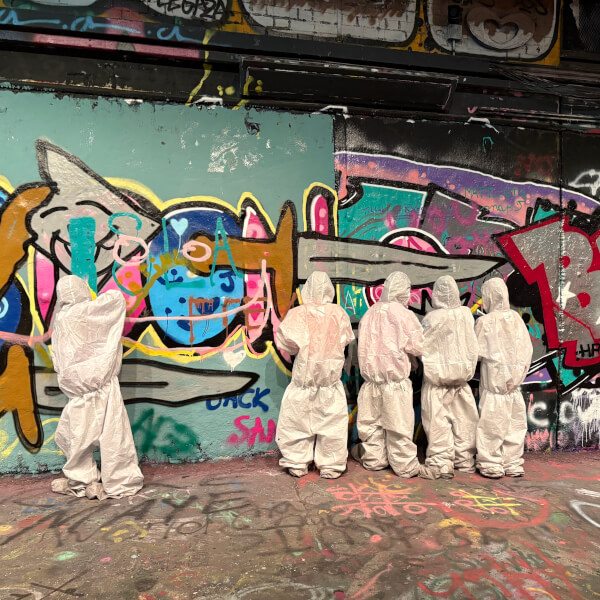
The European experience economy has seen a marked pivot toward authentic, hands-on cultural activities. Leading this transformation is Graffitifun, an enterprise founded in 2005 that spent two decades transforming underground spray-can culture into a highly structured corporate and educational service.
By building a specialized workshop framework and backing it with an international roster of practitioners, the organization has catalyzed the regional growth of urban art masterclasses across Western Europe, London, and the wider United Kingdom.
Engineering a standardized urban art curriculum
When Graffitifun launched 20 years ago, street art lacked an accessible, scalable educational framework. To address this gap, the founders developed a proprietary workshop methodology that balanced creative spontaneity with operational precision.
Instead of unguided painting sessions, Graffitifun built a curriculum centered around three distinct pillars:
- Foundational theory: Direct instruction on spray-art history, typography, color theory, and spatial composition.
- Controlled delivery technology: Utilizing specialized low-pressure cans and fine-line nozzles, allowing complete beginners to master line thickness, gradients, and shading without paint splatters or fumes.
- Operational reliability: Implementing strict safety protocols, protective equipment, and guaranteed artist coverage for large-scale institutional bookings.
This structured approach reframed street art as a legitimate visual discipline, making it viable for corporate retreats, municipal youth programs, and academic institutions.
Scaling operations: 42 core artists and a 250-strong global network
Executing consistent live workshops across multiple international borders requires significant operational depth. Graffitifun solved this logistics challenge by establishing a dual-tiered artist network.
The core of the business is driven by a permanent team of 42 senior artists and workshop leaders who oversee curriculum development and direct major corporate events. Supporting this core is an extended international network of over 250 verified street art professionals worldwide in the Graffitifunworld graffiti company.
Because every instructor is an active practitioner within the street art scene, participants gain direct access to authentic techniques, industry background, and expert guidance.
Expanding across London and the UK market
With its two-decade operational foundation established in continental Europe, Graffitifun has rapidly scaled its presence across key commercial and cultural hubs in the United Kingdom, and graffiti events with a heavy operational focus on London.
In the UK, the company operates across two main sectors:
- Corporate performance and team cohesion: Designing large-scale collaborative mural sessions where corporate teams translate company identity, logos, or values into visual art. The hands-on medium removes office hierarchies and drives cross-functional communication.
- Educational and youth programs: Delivering tailored modules for primary and secondary schools, providing students with a safe, guided introduction to street art history, stencil application, and freehand control.
From corporate headquarters in London to educational institutions across the UK, Graffitifun’s proprietary model continues to prove that street art, when delivered with professional precision, serves as a powerful medium for creative collaboration.


ADHD can affect concentration, organisation, time management, and daily life at any age. If you believe you have symptoms, an ADHD assessment NHS pathway is the first step towards receiving an accurate diagnosis and appropriate support.
For many people, waiting for an assessment can feel overwhelming. Fortunately, eligible patients in England may have access to the NHS Right to Choose pathway, allowing them to select an approved provider for assessment and treatment through their GP referral.
What Is an ADHD Assessment NHS?
An NHS assessment for ADHD is a detailed physical, behavioural and developmental evaluation conducted by a trained professional to identify if a child or young person has ADHD.
The assessment aims to gain an understanding of:
- Your current symptoms
- Childhood behavioural history
- Daily functioning
- Mental health
- Educational and employment challenges
- Family and medical history
Rather than relying on a single questionnaire, clinicians gather detailed information before making a diagnosis.
Who Can Request an ADHD Assessment NHS?
If adults and children have persistent symptoms that impact their daily life, they can discuss this with their GP, who could refer them for an assessment.
Common symptoms include:
- Difficulty concentrating
- Poor organisation
- Forgetfulness
- Restlessness
- Impulsivity
- Difficulty completing tasks
- Poor time management
If your GP believes an assessment is appropriate, they can refer you to an NHS ADHD service or an approved provider through the Right to Choose pathway in England.
Understanding the NHS Right to Choose Pathway
The NHS Right to Choose pathway is one choice that may be available to eligible patients. Patients registered at a GP in England may be able to ask for a referral to an NHS-funded provider rather than to their local ADHD service, where they might be eligible. This choice may allow NHS patients more choice in accessing an ADHD assessment.
Services like ADHD Right to Choose facilitate the referral process and support patients from referral to treatment. The service has a streamlined referral process, a dedicated patient support service, electronic prescribing, ongoing treatment management, and no shared care needs for GP practices, making the entire process easier for the patient and GP practices.
What Happens During an ADHD Assessment?
Each assessment is unique, but most are done in a structured manner.
The clinician may:
- Review completed questionnaires
- Discuss childhood experiences
- Explore current symptoms
- Assess work, education and relationships
- Consider mental health history
- Rule out other possible conditions
The assessment usually involves an in-depth clinical interview rather than a simple checklist.
Preparing for Your ADHD Assessment NHS
Being prepared can make the most of your appointment.
It can help to include useful information such as:
- School reports if available
- Previous medical records
- Notes about your symptoms
- Examples of difficulties at work or home
- Information from family members who knew you during childhood
Many providers also require patients to fill out questionnaires prior to the appointment to gain insight into patients’ experiences.
What Happens After the Diagnosis?
After your ADHD assessment NHS, the clinician will be able to discuss the results with you.
If your child has been diagnosed with ADHD, they may be prescribed:
- Medication
- Behavioural strategies
- Lifestyle advice
- Regular follow-up appointments
- Medication titration where appropriate
- Ongoing clinical reviews
If ADHD is not diagnosed, your clinician might suggest additional tests or other conditions that can mimic symptoms of ADHD.
Benefits of Choosing an Approved Right to Choose Provider
Many patients explore the Right to Choose pathway because local waiting lists can be lengthy.
Approved providers often focus on creating a smoother referral experience by offering:
- Clear communication
- Guided onboarding
- Specialist ADHD clinicians
- Secure electronic prescribing
- Dedicated patient support
- Structured treatment pathways
For example, ADHD Right to Choose, delivered through Harrow Health, supports patients from GP referral to assessment, diagnosis, and ongoing treatment where appropriate. It also manages prescribing and annual reviews, helping reduce the workload for GP practices.
Common Questions About ADHD Assessment NHS
Many people worry about the assessment process before attending.
Some frequently asked questions include:
Is the assessment difficult?
No. It is simply a detailed conversation about your experiences and symptoms.
Can adults receive an ADHD diagnosis?
Yes. Many adults are diagnosed after recognising long-standing symptoms that were never identified during childhood.
Can I choose where I am assessed?
Eligible patients in England may request an NHS-funded provider through the Right to Choose pathway, although referrals must be made by a GP.
Will I receive treatment after diagnosis?
If ADHD is diagnosed, your clinician will discuss the most appropriate treatment options for your circumstances.
Why Early ADHD Assessment Matters
Many aspects of life can be impacted by undiagnosed ADHD, such as:
- Employment
- Education
- Relationships
- Confidence
- Emotional wellbeing
- Financial organisation
An accurate diagnosis can help people understand their issues and access the right treatment and practical support.
Choosing the Right ADHD Assessment Pathway
Starting an ADHD assessment NHS can feel like a significant step, but understanding your options makes the process much easier.
If you are registered with a GP in England and your GP agrees that an assessment is appropriate, you may be able to access the NHS Right to Choose pathway and select an approved provider. Services such as ADHD Right to Choose simplify referrals, provide dedicated patient support, and continue care through diagnosis and treatment where clinically appropriate.
Speaking with your GP is the first step towards obtaining a professional assessment and receiving the support needed to manage ADHD confidently.
Blog
What Role Do Shippers Play When Unbalanced or Improperly Loaded Cargo Causes a Rollover in West Virginia?

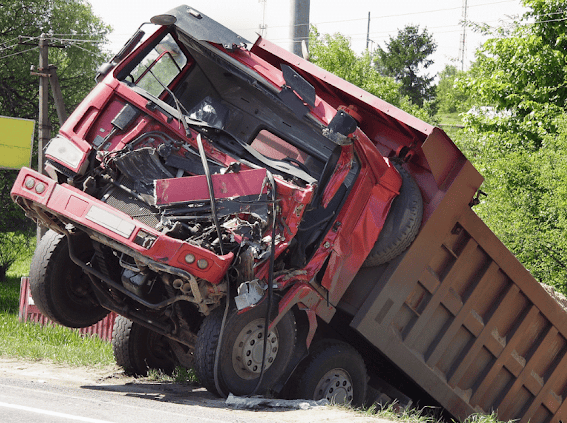
When an 80,000-pound tractor-trailer overturns on a highway, the devastation is often immediate and life-altering. In West Virginia, a state defined by steep mountain grades, sharp curves, and treacherous coal-hauling routes like I-77, I-64, or U.S. Route 19, cargo-related rollover accidents carry a exceptionally high risk of severe injury or death.
While public attention immediately targets the truck driver or the motor carrier, commercial truck accident lawyers in West Virginia recognize that the root cause of a catastrophic rollover often lies further up the supply chain.
Shippers—the entities responsible for manufacturing, packing, staging, and loading freight—play a central role in ensuring cargo is distributed, balanced, and secured safely. When a shipper cuts corners, misrepresents cargo weight, or improperly loads a trailer, they create a moving hazard that can easily tip over on West Virginia’s demanding topography.
What are the Physics of Cargo Instability on Mountainous Roads in WV?
Understanding why shipper negligence is so dangerous requires examining the physical dynamics of a heavy commercial vehicle.
A tractor-trailer’s center of gravity is naturally high; when freight is incorrectly arranged inside or atop a trailer, that center of gravity elevates or shifts off-center, making the vehicle hyper-sensitive to steering adjustments, wind, and banking angles.
- Top-Heavy Weight Distribution: When heavy freight is stacked high rather than distributed evenly across the trailer floor, the truck’s rollover threshold drops drastically. Taking a tight curve at normal highway speeds can create centrifugal forces strong enough to lift the vehicle’s tires off the asphalt.
- Asymmetrical Side-to-Side Loading: If cargo is loaded heavily on the left or right side, the uneven load puts asymmetric stress on the truck’s suspension, tires, and braking systems. On banked turns, such as those navigating West Virginia’s Appalachian mountains, this imbalance frequently pulls the trailer over.
- Inadequate Cargo Securement: Freight that is improperly tied down, blocked, or braced can shift mid-transit. Known as “dynamic load shift,” the sudden movement of thousands of pounds of freight inside a box trailer or on a flatbed creates momentum that overrides the driver’s steering control, throwing the truck off balance instantly.
- Liquid Surge in Tankers: Liquid bulk shipments that are improperly loaded—such as “sloshing” caused by partially filled compartments without adequate baffles—exert kinetic force against the tanker walls during braking or cornering, easily causing a rollover.
The Legal and Regulatory Frame Work Governing Shippers
Shippers are not passive players in interstate commerce; they are strictly governed by federal regulations and state tort law.
Federal Motor Carrier Safety Regulations (FMCSRs)
The Federal Motor Carrier Safety Administration (FMCSA) sets out comprehensive rules under 49 CFR Part 393 regarding cargo securement. These regulations outline specific standards for tie-downs, working load limits, blocking, bracing, and weight distribution designed to prevent shifting or falling cargo. While drivers are required to inspect their loads at designated intervals under FMCSR § 392.9, shippers who take on the duty of loading, securing, or sealing a trailer have a direct legal obligation to adhere to these safety standards.
The Savage Rule and Its Exceptions
In commercial transportation law, a legal doctrine known as the Savage Rule (Savage v. Lyons) often dictates liability between carriers and shippers. Generally, the rule states that a carrier (the driver or trucking company) is primarily liable for damage or accidents caused by improper loading if the improper loading was patent (open and obvious upon reasonable inspection).
However, there are critical exceptions where shippers bear primary liability:
- Latent (Hidden) Defects: If the cargo was loaded and sealed in a container or “pre-loaded” trailer by the shipper before the driver arrived, the driver cannot inspect the interior load distribution without breaking a seal. If an internal weight imbalance or poor bracing causes a rollover, liability falls squarely on the shipper.
- Shipper Assumed Sole Control: When a shipper explicitly instructs the carrier that its own crew will handle 100% of the loading, or when special expertise is required to pack a specific type of industrial machinery or material, the shipper assumes duty of care for that load.
- Misrepresentation of Cargo Weight or Description: Shippers must issue accurate Bills of Lading. Misleading a carrier about cargo weight or failing to disclose hazardous, liquid, or top-heavy characteristics prevents the driver from adjusting their driving or route accordingly.
Common Shipper Failures That Cause Rollovers
Commercial truck crashes caused by unbalanced freight are rarely unavoidable “accidents”; they are usually the direct outcome of systemic operational negligence at the loading dock.
┌───────────────────────────────────────────────────────────┐
│ SHIPPER NEGLIGENCE PATHWAY │
├─────────────────────────┬─────────────────────────────────┤
│ Improper Load Placement │ High center of gravity / Off-center weight │
├─────────────────────────┼─────────────────────────────────┤
│ Defective Securement │ Missing dunnage, straps, or bracing │
├─────────────────────────┼─────────────────────────────────┤
│ Sealed Container Neglect│ Hidden latent load shifts inside trailer│
├─────────────────────────┼─────────────────────────────────┤
│ Fraudulent Weight Logs │ Overloading axles beyond legal limit │
└─────────────────────────┴─────────────────────────────────┘
│
▼
CENTRIFUGAL FORCE / CORNERING
│
▼
CATASTROPHIC ROLLOVER
Specific acts of shipper negligence include:
- Overloading Beyond Gross Axle Weight Rating (GAWR): Packing a trailer beyond its certified weight limit stresses the truck’s tires and brakes. Down steep West Virginia mountain slopes, an overloaded trailer easily overwhelms the truck’s braking capacity, forcing the driver into runaway truck ramps or sharp evasive maneuvers that induce a rollover.
- Failure to Use Proper Dunnage and Friction Materials: Shippers are responsible for utilizing proper dunnage (friction mats, blocking wood, inflatable bags) to fill void spaces in a cargo hold. Omitting these cheap materials to cut costs allows cargo to slide laterally when a truck takes a turn.
- Inadequate Securing Equipment: Using damaged, degraded, or under-rated straps, chains, or winches to tie down heavy machinery, steel coils, or timber leads to mechanical fastener failure under the stress of transit.
- Ignoring Cargo-Specific Loading Guidelines: Different commodities require specialized weight mapping. Heavy bulk materials must sit low over the trailer axles. Loading dense weight toward the rear or concentrated on one side creates dynamic instability.
West Virginia Specific Liability Considerations
Establishing shipper liability in West Virginia requires navigating distinct state statutes and judicial principles that govern personal injury and property damage litigation.
Modified Comparative Negligence (The 51% Bar Rule)
Under West Virginia Code § 55-7-13c, the state follows a modified comparative fault rule. A victim can recover damages as long as their share of fault is 50% or less. When multiple defendants are involved—such as the truck driver, the trucking company, the freight broker, and the shipper—West Virginia juries assign a percentage of fault to each party. Identifying shipper negligence ensures that financial accountability is shared appropriately across all corporate entities rather than resting solely on an under-insured truck driver.
Several Liability Framework
West Virginia law generally utilizes several liability, meaning each defendant is responsible only for paying the percentage of damages assigned to them by the jury (with narrow exceptions for criminal acts or hazardous spills). Because commercial shippers typically carry multi-million dollar liability insurance policies, proving their role in causing a rollover is vital for victims suffering catastrophic injuries—such as traumatic brain injury, spinal cord damage, or severe burns—that require lifelong care.
Preservation of Digital and Physical Evidence
Because evidence at a loading dock can be altered, overwritten, or destroyed quickly after a crash, swift action is vital. Under West Virginia legal precedent, courts take a firm stance against the spoliation of evidence. Crucial items that establish shipper liability include:
- Bills of Lading (BOL) and Freight Manifests: Proves weight claims made by the shipper.
- Loading Dock Surveillance Videos: Shows whether proper blocking, bracing, and loading protocols were followed prior to departure.
- Loading Logs and Weight Scale Tickets: Documents exact weight measurements taken before the vehicle entered public roads.
- Sealing Records: Proves whether the trailer was locked and sealed by the shipper before the driver took possession.
- Electronic Logging Device (ELD) and Black Box Data: Details velocity, braking forces, and lateral acceleration leading up to the rollover.
Uncovering the Paper Trail to Hold Shippers Accountable
Shippers frequently attempt to shield themselves from legal liability by claiming that once a truck leaves their bay, safety rests entirely on the driver’s shoulders. Overcoming this defense requires a detailed forensic reconstruction of the loading process.
Accident reconstruction specialists and cargo safety experts analyze tire skid marks, rollover crush patterns, and cargo scatter fields at the crash site. By matching physical damage with trailer loading diagrams and weight tickets, experts can mathematically demonstrate that a cargo shift occurred prior to the rollover—proving that defective loading, not driver error alone, was the proximate cause of the wreck.
When commercial shippers fail to follow established loading protocols, they unleash catastrophic hazards onto West Virginia roadways. Holding these companies accountable not only delivers justice and necessary financial recovery for crash victims, but it also enforces industry-wide safety compliance that keeps future motorists safe.

Top Preschool Near Me: How the Right Environment Supports Whole-Child Development

Company Setup in Dubai Free Zone: A Practical Roadmap for Entrepreneurs

How Service Schedule Software Helps Dispatchers Manage Busy Field Teams

Who Is Shameera? All You Need To Know About Charli XCX’s Mother
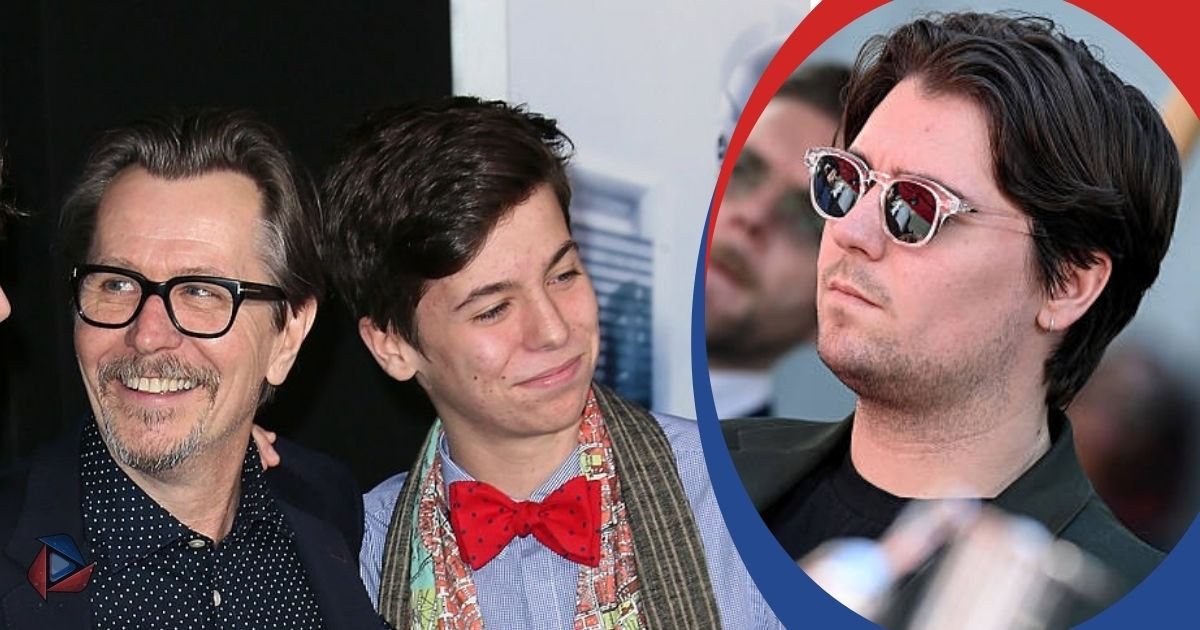
Who Is Gulliver Flynn Oldman? The Untold Story of Sir Gary Oldman’s Son

Meet Rosemary Turner: The Mother of Actor Callum Turner
-
Biographies6 months ago
Who Is Shameera? All You Need To Know About Charli XCX’s Mother
-
Biographies6 months ago
Who Is Gulliver Flynn Oldman? The Untold Story of Sir Gary Oldman’s Son
-
Biographies7 months ago
Meet Rosemary Turner: The Mother of Actor Callum Turner
-
 Biographies6 months ago
Who is Todd McRae? Meet Tate McRae’s Father
-

 Biographies5 months ago
Who is Alexandra James? Inside The Life of Jeremy Clarkson’s Former Partner
-
 Biographies6 months ago
Who Is Daniel Mara? The Untold Story of Kate Mara’s Private Sibling
-
 Celebrity7 months ago
Who Is Peter Hernandez? The Real Story of Bruno Mars’ Father
-
 Biographies6 months ago
Who Is Alvin Martin? All About the Whoopi Goldberg’s First Husband