
Home Improvement
What Is Cobblestone Tile and Why Is It So Popular?


Cobblestone tile is a small-format natural stone paving option used for driveways, pathways, courtyards, pool surrounds, alfresco areas, and outdoor feature spaces. Its popularity comes from three practical strengths: durability, visual texture, and the ability to suit both traditional and modern landscapes.
Unlike large concrete pavers, cobblestone creates a more detailed surface through smaller stone pieces and defined joint lines. This gives outdoor areas a natural, crafted look without relying on heavy decorative finishes.
Many homeowners, builders and landscapers compare the different types of cobblestone tile before choosing a material, as stone type, surface finish, colour, format, and installation method all affect performance and appearance.
What Is Cobblestone Tile?
Cobblestone tile refers to small natural stone pavers or blocks used to form strong outdoor surfaces. Traditional cobblestones were often naturally shaped stones used in roads and laneways. Modern cobblestones are usually cut or shaped into more consistent formats for easier installation and a neater finish.
Common natural stone options include granite, quartzite, Italian porphyry, limestone, and Filetti-style stone formats. Each material has its own colour variations, textures, densities, and visual appearances.
The smaller format makes cobblestone suitable for curved paths, driveway aprons, courtyard borders, garden edges, and detailed paving patterns. It can be laid out in a structured or more organic layout, depending on the design.
Because natural stone varies from piece to piece, the finished surface usually has subtle differences in tone and texture. This helps prevent the paving from looking flat or overly manufactured.
Why Cobblestone Tile Is Used Outdoors
Cobblestone tile is widely used outdoors because it withstands pressure, movement, and weathering when installed correctly. Driveways, pathways, and courtyards need paving that can manage repeated use without quickly looking worn.
Granite cobblestones are often selected for driveways and high-traffic areas because granite is dense and hard-wearing. Quartzite and porphyry options are also valued for strength, texture, and natural colour variation.
The way cobblestone is installed also affects long-term performance. A stable base layer helps distribute weight evenly and reduces movement over time. Proper spacing between stones supports drainage and allows the surface to better handle temperature changes.
Surface texture matters in outdoor paving because smoother finishes can become slippery when wet. Textured, split, or tumbled cobblestones usually provide better grip underfoot, which is why they are commonly used around pools, garden paths, and outdoor entertainment areas.
Natural Texture Adds Detail
The visual appeal of cobblestone tile comes from its texture, size, and natural variation. Large-format paving can create a clean look, but smaller cobblestones add movement and depth across the surface.
This makes cobblestone useful in spaces that need more texture, such as garden paths, entryways, courtyards, outdoor dining areas, and public spaces. The surface can feel rustic, formal, coastal, or contemporary, depending on the stone selected.
A grey or charcoal granite cobblestone can create a strong architectural finish. A warm-toned cobblestone can soften an outdoor space and work well with garden planting, timber, rendered walls, and natural stone features.
Cobblestone also works well as a feature material. It can frame larger pavers, define garden edges, break up plain concrete areas, or create visual contrast between outdoor zones.
Cobblestone Tile Works Across Many Property Styles
Cobblestone tile suits heritage homes, modern builds, garden landscapes, commercial spaces, hospitality settings, and public outdoor areas.
In traditional properties, cobblestone often complements brickwork, sandstone walls, established gardens, and classic outdoor detailing. In modern homes, it can add texture against smooth render, glass, steel, or large-format paving.
For commercial spaces, cobblestone can create a more refined outdoor finish in walkways, courtyards, entry areas, and alfresco zones. Its smaller scale can also make large paved areas feel less plain.
Cobblestone continues to be used in decorative and functional outdoor projects because it suits a wide range of property styles.
Practical Benefits Beyond Appearance
Cobblestone is not chosen for appearance alone. Its practical value is a major reason it remains widely used.
When properly installed over a suitable base, cobblestone paving can support long-term use in areas exposed to foot traffic, outdoor furniture, garden equipment, and vehicles. The small units can also make repairs more manageable, as individual pieces can be lifted and replaced more easily than large slabs.
Maintenance is usually straightforward. Regular sweeping, occasional washing, and suitable sealing can help manage dirt, staining, and moisture absorption, depending on the stone type.
Natural stone density also affects maintenance and durability. Dense stones such as granite absorb less moisture and are generally more resistant to wear. Softer stones may require more regular sealing depending on the environment and level of exposure.
Choosing the Right Cobblestone Tile
The right cobblestone tile depends on where it will be installed and how the area will be used. A driveway requires a higher level of strength than a garden path. A pool surround needs careful attention to texture, heat, drainage, and slip resistance.
Key selection factors include stone density, surface finish, thickness, colour, edge detail, and installation pattern. Drainage and base preparation are also critical because even durable stone can perform poorly if installed over an unsuitable foundation.
In high-traffic areas, dense, textured stones are often preferred. For decorative areas, colour and pattern may guide the decision more strongly. For wet zones, surface grip and water movement should be prioritised.
A well-chosen cobblestone surface should support both the design intent and the practical demands of the space.
Why Cobblestone Tile Continues to Be Popular
Cobblestone tile remains widely used because it offers durability, texture, and long-term design appeal in a single material. It suits driveways, pathways, courtyards, pool surrounds, garden edges, alfresco areas, and commercial outdoor spaces.
Its smaller format creates detail, its natural stone finish adds texture, and its range of materials allows it to be adapted to many design styles.
For outdoor projects that need strength without a plain finish, cobblestone tile remains a practical and visually appealing paving choice.
Home Improvement
Architects in London: What HMO Meaning and Licensing Rules Mean for Your Conversion

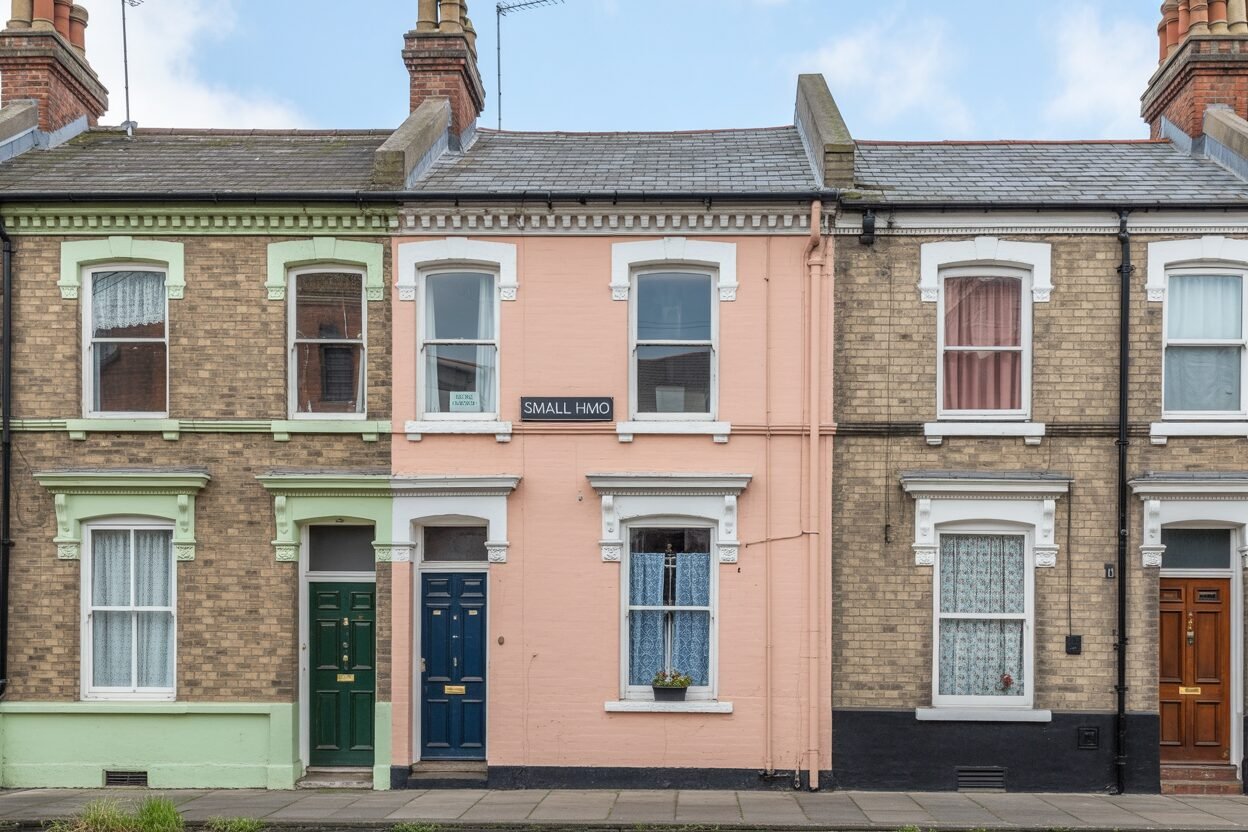
A single wrong assumption about HMO rules can turn a profitable conversion into a stalled project with a council enforcement notice attached. Most of that risk comes down to myths people repeat as fact, often because they read about someone else’s project in a different borough and assumed the same rules applied to theirs.
Working with architects in London who deal with HMO conversions regularly means seeing the same misconceptions come up project after project. Separating what’s actually true from what just sounds true is where most of the risk gets removed before it costs anyone money.
What Does HMO Actually Mean?
A House in Multiple Occupation is a property shared by three or more tenants. If you’re new to the hmo meaning and licensing side of things, it helps to start with the basics before getting into rules. These tenants are not part of the same household, and they share facilities such as a kitchen or bathroom.
Renting rooms to friends who moved in together doesn’t automatically make a property an HMO. It’s the unrelated-household element combined with shared facilities that defines it, not simply having multiple tenants under one roof.
Myth: Permitted Development Always Covers HMO Conversions
This is the most expensive myth in London specifically. Permitted development rights can, in principle, allow a change of use from a single dwelling to a small HMO without a full planning application.
Reality: Article 4 Directions have become common across most London boroughs, and they specifically remove or restrict that right for HMO conversions. Where a borough has one in place, planning permission is required regardless of what permitted development would normally allow. Assuming your project is exempt because a similar one nearby went ahead without permission is a common and costly mistake, since that project may have completed before the Article 4 Direction came into force locally.
Myth: Any HMO Needs the Same License
People often treat HMO licensing as one uniform requirement, which isn’t accurate.
Reality: Mandatory licensing applies when three specific conditions are all met together, the property is occupied by five or more people forming two or more households, the building is at least three storeys, and tenants share some amenities such as a kitchen or bathroom. If any one of those three isn’t met, mandatory licensing doesn’t apply automatically, though some councils run additional local licensing schemes that catch smaller HMOs too. Checking your specific council’s scheme before assuming either way saves a wasted application or an unlicensed property.
What Happens If You Get Licensing Wrong?
Operating an HMO that should be licensed but isn’t is a criminal offence, not just an administrative slip. Landlords can face significant fines, and in some cases prosecution, on top of having to sort the licensing retroactively while a property sits unrentable.
That risk is exactly why checking licensing status before exchange, not after completion, matters more with HMOs than with almost any other property type.
Myth: Fire Safety Just Means Smoke Alarms
Fire safety compliance gets treated as a checkbox item by a lot of first-time HMO landlords, assuming standard domestic alarms are enough.
Reality: Larger HMOs, particularly the central London townhouse layouts with small gardens that are common across the capital, usually need a wired fire alarm system rather than a wireless one, along with fire doors, fire-resistant furniture, and fire extinguishers or blankets at every level. Kitchen extraction has its own requirement too, needing to extract externally at a specific velocity, since filter or recirculation-only systems don’t meet the standard. These details are easy to miss on paper and expensive to fix once building work is underway, which is exactly where getting an architect involved early earns its cost back.
Do You Need Planning Permission, A License, Or Both?
These are two separate approval processes, and people frequently confuse having one for covering the other.
Planning permission relates to the change of use itself, whether the property can legally operate as an HMO under your council’s rules. Licensing relates to ongoing standards once it is operating, covering safety, management, and amenity provision. A property can have full planning permission and still be operating illegally if it should be licensed and isn’t, and the reverse is also true. Both need checking independently for any conversion.
Quick answer: An HMO is a property shared by three or more unrelated tenants with shared facilities. Whether you need planning permission depends on your borough’s Article 4 status, and whether you need a license depends on occupant numbers, storeys, and shared amenities, checked separately against your specific council.
Why Location Inside London Changes Everything
The same HMO conversion can be straightforward in one borough and require a full planning application two streets over, purely because of local Article 4 coverage. This is one of the reasons distance from an architect’s office matters less than their track record with your specific council.
An architect who has taken HMO applications through your borough before will know which conditions planning officers push back on locally, what evidence they expect on fire strategy, and how long the process realistically takes there. That local pattern recognition, more than general HMO knowledge, is often what separates a smooth application from one that gets delayed over avoidable issues.
Should You Convert To An HMO At All?
HMOs generally produce higher rental yields than letting a property as a single unit, since multiple tenants contribute to the total income rather than one household paying a single rent. That’s a large part of why the model has grown across London, alongside genuine demand for more affordable shared accommodation as overall housing costs have risen.
The trade-off is added management responsibility and stricter compliance obligations, which is worth weighing against the yield uplift before committing to a conversion rather than a standard letting.
The One Thing Worth Checking First
Before instructing anyone or making an offer on a property with HMO potential, check whether your target borough currently has an Article 4 Direction covering HMO conversions, and if so, when it came into force relative to the property’s history. This single check, done in the first conversation rather than after an offer’s accepted, resolves most of the planning permission question before any fees are spent, and it’s a step landlords researching independently often skip entirely.
Getting the meaning right, the licensing criteria right, and the local planning status right are three separate checks. Skipping any one of them is usually where HMO projects run into trouble that proper groundwork would have caught early.


A sofa can start to look tired even when it remains perfectly comfortable. The fabric may have faded, the colour may no longer suit the room or the edges may show the effects of daily use. At that point, replacing the sofa may seem like the obvious next step. However, there are actually two more alternatives: fitting a new cover or having the sofa professionally reupholstered. Both can extend the useful life of the furniture, but they solve slightly different problems
Begin with the part of the sofa that has failed
Before comparing prices or fabric samples, inspect the sofa itself. Is the problem limited to the visible upholstery, or has the structure also deteriorated?
A sofa with a stable frame, supportive cushions and proportions that still work in the room may not need full reupholstery at all. In many IKEA models, the outer fabric layer is designed to be removable, which means the issue is often just the visible cover rather than the structure underneath. In that case, replacing or updating the cover is enough to refresh the look without rebuilding the sofa. Reupholstery only becomes relevant when the fabric is fixed to the frame or when the internal padding and construction also need repair.
Reupholstery becomes more relevant when the work must go deeper. The existing fabric may be fixed to the frame, the padding may need rebuilding or decorative details may need to be recreated. In such cases, the upholsterer is changing part of the sofa’s construction rather than simply replacing a removable outer layer.
However, neither method can correct every issue. A new cover will not repair a damaged frame, while extensive reupholstery may be excessive when the sofa is structurally sound and already designed for removable covers.
When a replacement cover is the practical choice
IKEA sofa covers are particularly relevant when the exact sofa model can be identified and the original upholstery was designed to be removable. Instead of rebuilding the furniture, the cover changes the part that has become worn, dated or difficult to coordinate with the room.
Model identification matters because two sofas with a similar appearance may have different arm shapes, cushion dimensions or layouts. A generic slipcover may gather around the base, shift during use or obscure the sofa’s original lines. The result can look temporary even when the fabric itself is attractive.
The practical appeal of made-to-measure covers for IKEA sofas is that the selection begins with the furniture model rather than a broad estimate of size. This creates a natural middle ground between a loose universal cover and a complete upholstery project.
A replacement cover can also make future changes easier. It allows the owner to choose a colour and texture for the room as it looks now, while retaining a sofa whose dimensions, comfort and position already work.
What reupholstery offers that a cover cannot
Reupholstery gives greater freedom when the sofa does not have a removable, model-specific cover or when its internal condition needs attention. An upholsterer can remove the existing material, assess the padding and rebuild worn areas before applying new fabric.
This option may also suit a piece with unusual construction, sentimental importance or design details that should be preserved. Piping, buttons, shaped arms and fixed panels can be restored or altered as part of the work.
The trade-off is that reupholstery is a more involved process. The sofa may need to leave the home, the work depends on the complexity of the piece and the final result relies heavily on accurate workmanship. It makes the most sense when that deeper level of intervention is genuinely valuable.
For a standard IKEA model with sound cushions and a removable exterior, the additional work may offer little practical benefit. In that situation, IKEA sofa covers address the visible problem more directly.
Compare the two options using the sofa you have
A simple comparison can prevent the decision from becoming purely aesthetic:
- Check the frame and cushions. Structural wear points towards repair or reupholstery.
- Identify the exact model. A supported IKEA model may have a fitted replacement-cover option.
- Define the desired change. A new colour needs less intervention than rebuilt padding or altered detailing.
- Consider disruption. Reupholstery usually requires more time and handling than changing a removable cover.
The most expensive or extensive option is not automatically the better one. The aim is to match the work to the actual condition of the furniture.
Which option suits the sofa you already own?
A replacement cover makes sense when the sofa remains comfortable, structurally reliable and appropriate for the room, but its fabric no longer works. Reupholstery is the stronger option when the furniture requires internal repair, has fixed upholstery or deserves a more substantial restoration.
The decision becomes easier once appearance and construction are considered separately. When only the surface has reached the end of its useful life, changing that surface may be enough. When the problems run deeper, a more complete upholstery project is easier to justify. The sofa itself, rather than the name of the service, should determine how much work is needed.

It depends on which risk you’d rather carry: coordination or control. Those are the two things you trade between the routes, and everything else follows from that choice.
Neither route is inherently better. What matters is matching the route to how much involvement you want, how fixed your brief is, and how much the detailing matters to you. Searching for architects near me is usually where people start, but the procurement question is worth settling before the appointment rather than after.
First Branch: How Fixed Is Your Brief?
This is the question that decides more than budget does.
Under a traditional route, you appoint a designer, develop the scheme, then invite several contractors to price the same complete information. Under design and build, one party takes on both the design and the construction.
The consequence is straightforward. Design and build works best where you know what you’re buying and what you’re delegating. It tends to disappoint where the brief is loose and design discretion transfers before the important decisions have been made.
So:
- Brief still evolving, detailing matters to you → traditional route, or at minimum develop the design further before handing it over
- Brief clear, priorities are cost and programme → design and build becomes a genuine option
- Somewhere in between → develop the design to planning stage, then consider a design and build contractor for delivery
Second Branch: How Much Do You Want to Manage?
Traditional procurement means multiple appointments. A designer, a structural engineer, possibly a party wall surveyor, then a contractor under a separate contract.
That gives you a clear separation between the person who designed it and the person building it, which is useful when something doesn’t match the drawing. It also means the coordination between them is, in practice, partly your problem.
A Design and Build Company consolidates that into one contract and one point of accountability. If structure clashes with services, or a package cannot be built as assumed, that sits with the contractor rather than being argued between two firms.
What you give up is direct control over the detailed design once the contract is signed.
Third Branch: Where Do You Want the Risk to Sit?
Risk doesn’t disappear under either route. It moves.
| Traditional route | Design and build | |
| Design responsibility | Sits with your designer | Transfers to the contractor |
| Coordination between design and build | Largely your interface to manage | Contractor’s responsibility |
| Pricing basis | Competitive tender on identical information | Priced against the contractor’s proposals |
| Cost of changes | Priced against a competitive baseline | Variations are not subject to competition |
| Design control after signing | Retained by you and your designer | Reduced |
| Programme | Design then build, mostly sequential | Design and build can overlap |
| Number of contracts | Several | One |
| Client time required | Higher | Lower |
The row that catches people out is variations. Under design and build, a change you request after contract is priced by the only party able to price it. Under a traditional tender, your baseline came from competition, which gives a reference point for what a change should reasonably cost.
The Claim Worth Being Sceptical About
You’ll see design and build marketed as delivering cost certainty, occasionally as complete cost certainty. Treat that carefully.
A price is only dependable when the scope, specification, exclusions and risk allowances are genuinely clear. Design and build can establish that clarity earlier, because the contractor prices their own proposals. It still requires disciplined design development and transparent cost management to hold.
Where fixed price design and build tends to slip is where the requirements were vaguely drafted at the outset, or where the client keeps changing their mind afterwards. Both push cost up through variations, and neither is a fault of the route itself.
A Caveat the Marketing Pages Rarely Mention
Design and build developed as a procurement route for medium to large commercial, industrial and infrastructure work, where single point responsibility and integrated working carry the most value.
On smaller domestic and light refurbishment projects, simpler procurement arrangements and standard forms of contract can be more proportionate. That doesn’t mean design and build is wrong for a house extension. Plenty of residential practices operate it well, particularly where structural engineering sits in house. It does mean the benefits are less automatic at domestic scale than the language sometimes implies.
What to Check Before Appointing Either
Different routes, different due diligence.
For a traditional appointment:
- ARB registration, since only individuals on that register may use the title architect in the UK
- Which RIBA work stages the fee actually covers
- Whether structural engineering is inside or outside the fee
- Who administers the building contract and inspects on site
For a design and build appointment:
- Professional indemnity insurance covering the design element, not just public liability and contractors’ all risks
- What exactly is fixed in the price, and what is listed as an exclusion or provisional
- How variations will be priced, and against what
- Whether the design team is in house, subcontracted, or your own designer novated across
- Who holds copyright and licence to use the design if the relationship ends
That insurance point deserves particular attention. A contractor taking on design responsibility should carry cover for it, and a surprising number of domestic outfits offering design and build do not.
Two Situations, Two Answers
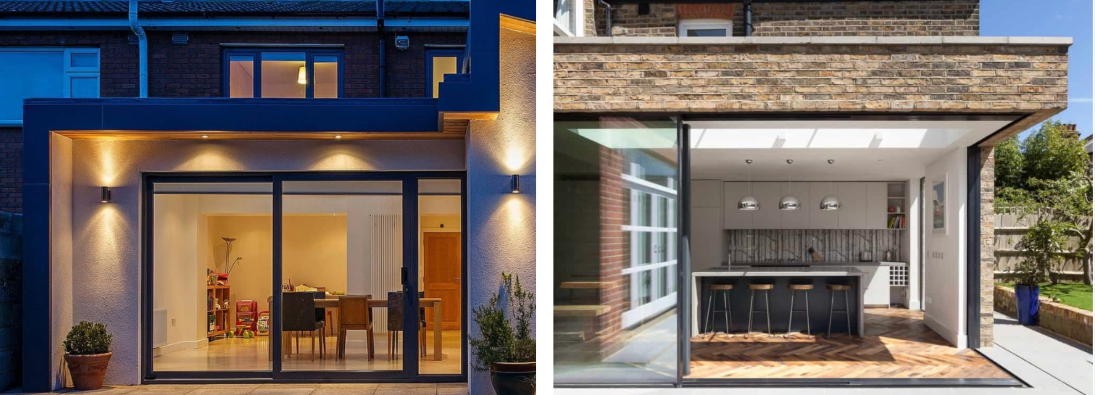
A family extending a period terrace, wanting matched brickwork, specific glazing and a considered relationship between old and new. Traditional route. The detailing is the point of the project, and retaining design control through construction is worth the coordination burden.
A family needing a straightforward rear extension delivered on a fixed date, with a clear brief and no appetite for weekly decisions. Design and build is a reasonable fit, provided the requirements are written properly before signing and the specification is nailed down rather than left to the contractor’s discretion.
Most projects fall between those two, which is why the hybrid is common: develop the design and secure consent independently, then appoint a contractor to deliver it, with or without novating the designer across.
The Novation Question
If you’ve already engaged a designer and then move to design and build, you have to decide what happens to that appointment.
Novation transfers your existing designer’s contract to the contractor, so they continue on the project but now work for the builder. A consultant switch achieves something similar by different means. The alternative is that the contractor uses their own design team from that point.
Novation keeps design continuity, which protects the scheme you fought for at planning. What it changes is who the designer answers to, and that shift matters if a dispute over quality arises later.
Settle that before signing anything, because retrofitting the arrangement afterward is considerably harder than agreeing it upfront.

A Newcomer’s Guide to Living and Driving in Aldershot

What to Wear in Australia: Essentials Hoodies, T-Shirts, Shorts and Tracksuits

Streetwear Culture 2026: Why Hellstar and Better With Age Are Dominating the US Scene

Who Is Shameera? All You Need To Know About Charli XCX’s Mother

Who Is Gulliver Flynn Oldman? The Untold Story of Sir Gary Oldman’s Son

Meet Rosemary Turner: The Mother of Actor Callum Turner
-
Biographies7 months ago
Who Is Shameera? All You Need To Know About Charli XCX’s Mother
-
Biographies6 months ago
Who Is Gulliver Flynn Oldman? The Untold Story of Sir Gary Oldman’s Son
-
Biographies7 months ago
Meet Rosemary Turner: The Mother of Actor Callum Turner
-

 Biographies5 months ago
Who is Alexandra James? Inside The Life of Jeremy Clarkson’s Former Partner
-
 Biographies7 months ago
Who is Todd McRae? Meet Tate McRae’s Father
-
 Biographies6 months ago
Who Is Daniel Mara? The Untold Story of Kate Mara’s Private Sibling
-
 Celebrity7 months ago
Who Is Peter Hernandez? The Real Story of Bruno Mars’ Father
-
 Biographies7 months ago
Who Is Alvin Martin? All About the Whoopi Goldberg’s First Husband