
Pet & Animals
Probiotics for Dogs: How They Support Digestive Health and Help with Diarrhea


As pet owners, we all want our dogs to live happy, healthy lives. While nutrition, exercise, and regular veterinary care are essential, gut health is often overlooked. A healthy digestive system plays a critical role in your dog’s overall well-being, affecting everything from nutrient absorption to immune function. This is where probiotics for dogs can make a significant difference.
Whether your dog experiences occasional stomach upset or recurring digestive issues, probiotics may help restore balance and support long-term gut health. In particular, many pet owners turn to probiotics for dogs for diarrhea as a natural way to help manage digestive disturbances.
What Are Probiotics for Dogs?
Probiotics are beneficial live microorganisms that help maintain a healthy balance of bacteria in the digestive tract. Just like humans, dogs have billions of bacteria living in their gut. These microorganisms aid digestion, support immune health, and help prevent harmful bacteria from taking over.
When this balance is disrupted due to stress, illness, dietary changes, antibiotics, or other factors, dogs may experience digestive issues such as diarrhea, gas, bloating, or constipation. Probiotics help replenish beneficial bacteria and restore gut balance.
Why Gut Health Matters for Dogs
A healthy gut does much more than digest food. Approximately 70% of a dog’s immune system is associated with the gastrointestinal tract. This means that maintaining gut health can contribute to:
- Improved digestion
- Better nutrient absorption
- Stronger immune function
- Reduced digestive upset
- Healthier skin and coat
- Enhanced overall well-being
By supporting the gut microbiome, probiotics for dogs can help maintain these essential functions.
Common Causes of Digestive Problems in Dogs
Many factors can disrupt your dog’s digestive system, including:
Sudden Dietary Changes
Switching dog food too quickly can upset the balance of bacteria in the gut.
Antibiotic Use
While antibiotics help eliminate harmful bacteria, they often destroy beneficial bacteria as well.
Stress and Anxiety
Travel, boarding, moving homes, or introducing new pets can lead to digestive disturbances.
Food Sensitivities
Certain ingredients may trigger digestive discomfort or diarrhea in sensitive dogs.
Infections and Illness
Bacterial infections, parasites, and gastrointestinal diseases can affect gut health.
In these situations, probiotics may help restore healthy bacterial balance.
How Probiotics Help Dogs with Diarrhea
One of the most common reasons pet owners seek out probiotics for dogs for diarrhea is their ability to support digestive recovery.
Diarrhea often occurs when harmful bacteria outnumber beneficial bacteria in the gut. Probiotics work by:
- Reintroducing beneficial bacteria
- Supporting healthy digestion
- Reducing inflammation in the digestive tract
- Strengthening the gut barrier
- Helping restore normal stool consistency
Research has shown that probiotics can be beneficial for dogs experiencing acute diarrhea, antibiotic-associated diarrhea, and stress-related digestive issues.
While probiotics are not a replacement for veterinary treatment in severe cases, they can be a valuable part of a digestive health plan.
Signs Your Dog May Benefit from Probiotics
Your dog may benefit from probiotic supplementation if they experience:
- Frequent diarrhea
- Loose stools
- Excessive gas
- Bloating
- Digestive discomfort
- Irregular bowel movements
- Recovery after antibiotic treatment
- Sensitive stomach issues
Even healthy dogs may benefit from probiotics as part of their daily wellness routine.
Choosing the Right Probiotics for Dogs
Not all probiotic products are created equal. When selecting probiotics for dogs, consider the following factors:
Dog-Specific Strains
Look for probiotic strains that have been studied specifically for canine digestive health.
Adequate CFU Count
CFU (Colony Forming Units) indicates the number of live beneficial bacteria in a product.
Quality and Stability
Choose products that are manufactured to ensure probiotic viability through shelf life.
Additional Digestive Support
Some products combine probiotics with prebiotics, digestive enzymes, or other gut-supporting ingredients.
Can Probiotics Be Used Daily?
Yes. Many veterinarians recommend daily probiotic supplementation for dogs, especially those with sensitive stomachs or recurring digestive issues.
Consistent use can help:
- Maintain gut microbiome balance
- Support healthy digestion
- Promote immune function
- Reduce the likelihood of digestive disturbances
However, it’s always best to consult your veterinarian before introducing any new supplement into your dog’s routine.
Additional Ways to Support Your Dog’s Digestive Health
In addition to probiotics, you can help maintain your dog’s digestive wellness by:
- Feeding a high-quality, balanced diet
- Introducing dietary changes gradually
- Providing plenty of fresh water
- Minimizing stress whenever possible
- Scheduling regular veterinary checkups
- Avoiding unnecessary antibiotic use
A comprehensive approach often delivers the best results for long-term digestive health.
When to See a Veterinarian
Although probiotics for dogs for diarrhea can provide digestive support, certain symptoms require immediate veterinary attention, including:
- Persistent diarrhea lasting more than 48 hours
- Blood in the stool
- Severe vomiting
- Lethargy
- Dehydration
- Loss of appetite
- Significant weight loss
These symptoms may indicate an underlying condition that requires professional medical care.
Final Thoughts
A healthy gut is the foundation of your dog’s overall wellness. From supporting digestion to strengthening immune health, probiotics for dogs offer numerous benefits. They can be particularly helpful as probiotics for dogs for diarrhea, helping restore bacterial balance and support digestive recovery.
By choosing a high-quality probiotic and maintaining healthy lifestyle habits, you can help your dog enjoy better digestive health and a happier, more comfortable life.


Every dog owner knows that guilt. You’re packing your suitcase, your pup is watching you with those big eyes, and you’re already dreading the goodbye. Leaving your dog behind is never easy—but where your dog stays while you’re away makes all the difference.
At Boston Dog Butlers, we believe your dog deserves more than just a place to wait. They deserve an experience. Our pet boarding service is built around one simple idea: your dog should feel loved, safe, and genuinely happy—even when you’re not around.
What Makes Professional Pet Boarding Worth It?
A lot of pet owners still rely on friends, family, or neighbors to watch their dogs when life gets busy. And while those arrangements come from a good place, they don’t always come with the structure, safety, or expertise your dog truly needs.
Professional pet boarding brings consistency. Dogs thrive on routine—regular feeding times, daily exercise, and predictable schedules all contribute to a calmer, happier dog. When your pup is in the hands of trained professionals, that routine doesn’t break just because you’re out of town.
At Boston Dog Butlers, our team is experienced in dog behavior and genuinely passionate about animal care. We don’t just supervise dogs—we engage with them, comfort them, and give them the attention they’d expect at home.
A Safe, Stimulating Environment Your Dog Will Love
Safety is the foundation of everything we do. Our facilities are designed with dogs in mind—secure, clean, and thoughtfully set up to reduce stress and encourage play.
But we go beyond the basics. Dogs staying with Boston Dog Butlers enjoy:
- Supervised group play sessions that allow socialization at a comfortable pace
- Dedicated rest areas so dogs can recharge between activities
- Personalized attention tailored to each dog’s temperament and needs
- Regular check-ins so you always know how your pup is doing
Whether your dog is a social butterfly or a little more on the shy side, our team adjusts the experience to suit their personality. No two dogs are the same, and we don’t treat them that way.
How Boston Dog Butlers Puts Your Dog First
What sets Boston Dog Butlers apart isn’t just the facilities—it’s the people. Our team genuinely loves dogs. That’s not a tagline; it’s the reason they show up every day ready to give every pup in their care the best possible experience.
We maintain low dog-to-staff ratios so that every dog gets meaningful attention throughout the day. Meals are served on schedule, medications are administered as needed, and playtime is never cut short.
We also keep communication open with pet owners. You won’t be left wondering how your dog is doing. Regular updates, photos, and check-ins are part of the experience—because we know peace of mind matters just as much to you as comfort matters to your dog.
The Emotional Benefits of Choosing the Right Boarding Service
Dogs are emotionally intelligent animals. They pick up on stress, changes in environment, and the absence of their owners. A poorly managed boarding experience can leave a dog anxious, withdrawn, or even acting out after returning home.
The right environment does the opposite. When dogs are cared for with warmth and consistency, they adapt well. Many dogs who board regularly with Boston Dog Butlers actually get excited on drop-off days—because they associate the experience with fun, affection, and great company.
This emotional wellbeing carries over when they come home. A dog who was genuinely happy during your absence tends to settle back into home life without the separation anxiety or clinginess that can follow a stressful stay elsewhere.
What to Expect When You Book With Boston Dog Butlers
Booking with us is simple, and we make the onboarding process smooth for both you and your dog.
Before your dog’s first stay, we take the time to learn about them—their habits, preferences, quirks, and any special requirements. This helps us hit the ground running so your dog feels comfortable from day one.
Here’s a quick look at what the process looks like:
- Initial consultation — Tell us about your dog so we can match them with the right environment
- Meet and greet — Let your dog explore our space and meet the team before their first overnight stay
- Flexible booking — Whether you need a one-night stay or a two-week arrangement, we work around your schedule
- Ongoing communication — We keep you updated throughout your dog’s stay so you can travel with complete confidence
Your Dog Deserves the Best While You’re Away
Life doesn’t stop for anyone—not even for dog owners. Business trips, vacations, family events, and emergencies all happen. And when they do, having a trusted, professional team ready to step in is invaluable.
Pet boarding at a facility that combines expert care, a safe environment, and genuine affection ensures your dog not only survives your absence but actually thrives during it—coming home happier, well-rested, and ready to shower you with all the tail wags you’ve been missing.
At Boston Dog Butlers, that’s exactly what we deliver. Our boarding service isn’t just a solution for when you’re away—it’s an experience your dog will genuinely enjoy. Because they deserve nothing less.
Ready to give your dog a stay they’ll love? Contact Boston Dog Butlers today and book your first boarding experience.

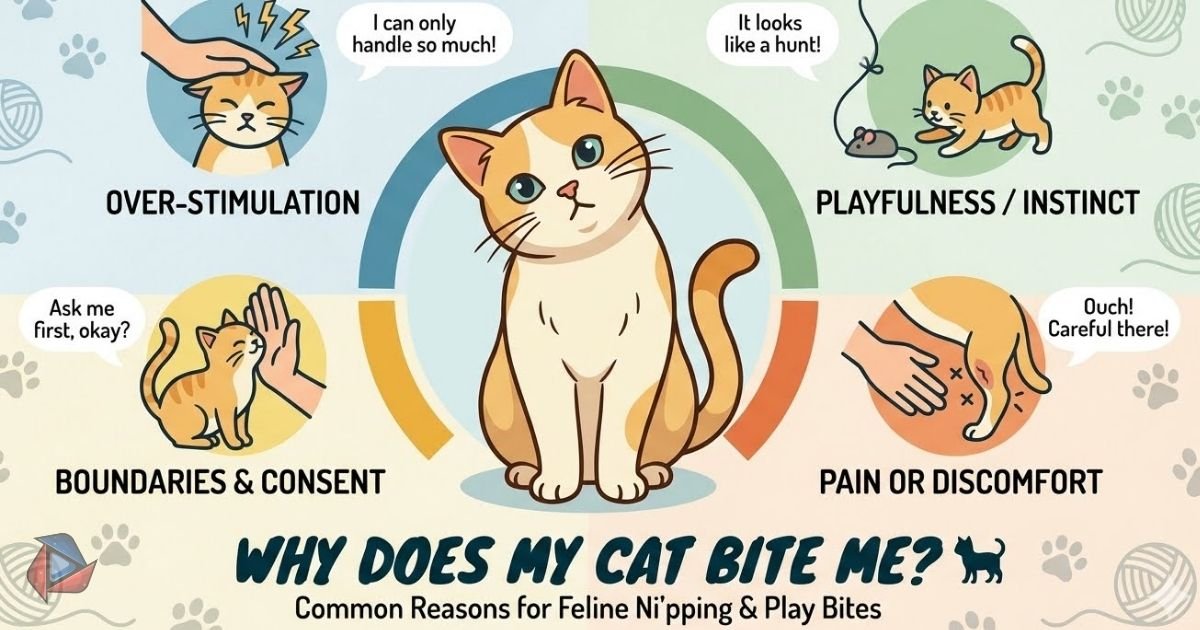
If you’ve ever wondered why does my cat bite me, you’re not alone. Cat biting is a complex mix of instinct, communication, sensory overload, and sometimes pain. From playful nips to sudden aggressive reactions, every bite carries meaning. Understanding the neurological triggers, behavioral signals, and environmental factors behind this behavior helps you build a safer, stronger bond with your pet while preventing future bites effectively.
What Does It Mean When a Cat Bites You?
When asking why does my cat bite me, the first thing to understand is that biting is not random. Cats use their teeth as a primary non-verbal communication tool. Unlike humans, they cannot express discomfort or boundaries verbally, so biting becomes their direct message.
A bite can mean “stop,” “I’m overwhelmed,” “I’m in pain,” or even “I trust you.” The context matters greatly. A gentle nibble during a calm moment is very different from a sudden aggressive bite during petting. Each scenario reflects a different internal state within the cat.
Cats are highly sensitive creatures. Their behavior is shaped by instinct, early development, and daily environment. When those factors align in a certain way, biting becomes their fastest and most effective response.
The Science Behind Cat Biting Behavior
To fully answer why does my cat bite me, we need to look at the science behind it. A cat’s skin contains up to three times more sensory receptors than human skin. This means what feels like a gentle stroke to you can become overwhelming for them.
Their nervous system also processes repeated stimulation differently. Through a process known as temporal summation, small sensations build over time until they cross a threshold. Once that happens, the cat reacts instantly, often with a bite.
Additionally, certain areas such as the whiskers, jaw, and tail base are connected to dense nerve pathways. Overstimulation in these zones can trigger sudden defensive reactions. The bite acts as a neurological “circuit breaker” to stop the sensation immediately.
Overstimulation and Petting-Induced Aggression
One of the most common answers to why does my cat bite me is overstimulation. Cats often enjoy petting at first, but their tolerance is limited. On average, many cats reach their limit within 90 to 120 seconds of continuous contact.
At the beginning, petting releases positive sensations. However, repetitive motion in the same area causes irritation. This transition from pleasure to discomfort happens quickly, often without obvious warning.
Cats usually give subtle signals before biting. These include tail flicking, ear flattening, skin twitching, or freezing briefly. When these signals are ignored, the bite becomes the final message.
The Role of Instinct and Hunting Behavior
Another key factor in understanding why does my cat bite me is instinct. Cats are natural predators, and their behavior follows a hardwired sequence known as the predatory motor pattern.
This pattern includes stalking, pouncing, and biting. When you move your hands or feet, especially quickly, your cat may interpret them as prey. This is why many cats attack ankles or fingers during play.
Even indoor cats retain these instincts. Without proper outlets like toys or interactive play, they may redirect their hunting energy toward humans. In these cases, the bite is not aggression but a misdirected hunting response.
The “Love Bite” and Social Grooming Behavior
Not all bites are negative. Sometimes when people ask why does my cat bite me, the answer is surprisingly positive. Cats engage in a behavior called allogrooming, where bonded cats groom each other and may finish with gentle nibbles.
These soft, painless bites are often referred to as love bites. They occur during calm, affectionate moments and are usually accompanied by purring or relaxed body language.
This behavior mimics social bonding rituals seen in cat groups. It is a sign that your cat feels safe, comfortable, and connected to you. However, it’s important to distinguish these from overstimulation bites, which are more sudden and forceful.
Pain and Medical Conditions as Hidden Causes
A critical but often overlooked reason behind why does my cat bite me is pain. Cats are experts at hiding discomfort, so biting may be the first visible sign of a problem.
Conditions such as arthritis, dental disease, or nerve disorders can make certain areas extremely sensitive. Touching these areas, even gently, can trigger a defensive bite.
There are also specific conditions like Feline Orofacial Pain Syndrome (FOPS) and Feline Hyperesthesia Syndrome (FHS). These disorders involve abnormal nerve activity, causing sudden pain or irritation that leads to aggressive reactions.
If biting appears suddenly or is linked to specific touch points, it is important to consider a medical evaluation.
Redirected Aggression and Environmental Stress
If you’re still wondering why does my cat bite me, the answer may lie in their environment. Cats can experience redirected aggression, where they react to something they cannot reach.
For example, seeing another animal outside the window can trigger a surge of adrenaline and cortisol. If the cat cannot act on that stimulus, the energy builds up internally.
When you approach during this heightened state, your cat may misinterpret your presence as a threat. The result is a sudden, intense bite. This state can last for hours or even days after the initial trigger.
Environmental stressors such as loud noise, frequent movement, or unfamiliar scents can also increase the likelihood of biting.
Early Socialization and Bite Inhibition
Early life experiences play a major role in shaping behavior. Another important answer to why does my cat bite me involves bite inhibition, which kittens learn during their first weeks of life.
When kittens play with their littermates, they learn how hard they can bite without causing harm. If they bite too hard, the other kitten stops playing, teaching them to adjust.
Kittens separated from their litter too early, usually before eight weeks, may miss this learning phase. As adults, they may not understand how to control the pressure of their bite.
This leads to stronger, less controlled biting behavior, especially during play.
Why Cats Bite During Belly Rubs and Sensitive Touch
Many owners are confused when their cat rolls over and then bites during a belly rub. Understanding why does my cat bite me in this situation requires recognizing the vulnerable belly paradox.
When a cat exposes its belly, it is showing trust, not inviting touch. The belly protects vital organs, and touching it triggers a primitive defensive reflex.
The cat may grab your hand with its front legs, kick with its hind legs, and bite. This behavior is instinctive and not a sign of betrayal.
Similarly, areas like the tail base and lower back are highly sensitive. Touching these zones can quickly shift from pleasant to overwhelming, resulting in a bite.
Learned Behavior and Attention-Seeking Biting
Cats are intelligent and learn from outcomes. A common explanation for why does my cat bite me is learned behavior. If a cat bites and immediately gets a response, the behavior is reinforced.
For example, if a bite makes you stop trimming nails or puts your attention on the cat, they learn that biting is effective. Over time, this becomes a habitual communication strategy.
Some cats also use biting as an attention-seeking tool. If a quick nip is the only way to get you to look away from your phone or laptop, they will repeat it.
This type of biting is not aggressive but goal-oriented behavior shaped by experience.
Warning Signs That Your Cat Is About to Bite
Understanding the warning signs is essential when addressing why does my cat bite me. Cats rarely bite without signaling first, but these signals are often subtle.
Common signs include tail flicking, ears flattening, skin rippling, and sudden body tension. A brief freeze or change in posture can also indicate rising discomfort.
Recognizing these cues allows you to stop interaction before the bite occurs. Ignoring them forces the cat to escalate its response.
Learning to read these signals improves communication and reduces biting incidents significantly.
How to Stop and Prevent Cat Biting
Now that you understand why does my cat bite me, the next step is prevention. The key is to respect your cat’s boundaries and provide appropriate outlets for their energy.
Avoid using your hands as toys. Instead, use interactive tools like wand toys to channel their hunting instincts safely. Keep petting sessions short and focus on areas cats prefer, such as the head, chin, and cheeks.
Watch for early warning signs and stop before your cat becomes overstimulated. If biting occurs, remain calm and withdraw attention rather than reacting strongly.
Never punish your cat, as this increases fear and can worsen aggression. Instead, focus on positive reinforcement, environmental enrichment, and consistency.
If biting is severe or sudden, consult a veterinarian to rule out underlying medical issues.
Advanced Behavioral Techniques to Reduce Cat Biting
To fully solve the issue of why does my cat bite me, it is important to go beyond basic prevention and apply structured behavioral techniques. One of the most effective modern methods is the petting consent approach. Instead of initiating contact, allow your cat to approach and signal readiness.
Hold your hand still and let your cat rub against it first. This action activates their scent glands and communicates approval. Pet briefly, then pause. If your cat leans in again, continue. If they withdraw or freeze, stop immediately. This simple method prevents overstimulation and reinforces trust.
Consistency is essential. Cats thrive on predictable interactions. By respecting their limits and letting them control engagement, you reduce the need for biting as a communication tool.
The Role of Environment in Triggering Bites
When exploring why does my cat bite me, many owners overlook environmental factors. A cat’s surroundings play a huge role in shaping behavior. Loud noises, sudden movements, and chaotic spaces can raise a cat’s baseline stress level.
High stress keeps the nervous system in a hyper-alert state, making even minor interactions feel threatening. In this condition, a cat is far more likely to respond with a defensive bite.
Environmental enrichment is key to solving this. Provide vertical spaces, quiet resting areas, and interactive toys. These elements reduce anxiety and give your cat healthy ways to release energy.
Even small changes, like reducing loud sounds or maintaining a consistent routine, can significantly lower biting behavior over time.
Understanding Redirected Aggression in Detail
A deeper understanding of redirected aggression helps answer why does my cat bite me in seemingly random situations. This type of aggression occurs when a cat is stimulated by something it cannot reach, such as another animal outside a window.
The cat’s body floods with stress hormones like cortisol and adrenaline, preparing it for action. However, because it cannot engage with the original trigger, that energy remains trapped.
If you approach during this period, your cat may redirect its aggression toward you. The bite can appear sudden and intense, but it is actually a continuation of the earlier stimulus.
This state can last longer than most owners expect. Even hours after the trigger disappears, your cat may still be sensitive and reactive. Giving your cat space during these times is critical.
The Neurological “Circuit Breaker” Response
A fascinating explanation behind why does my cat bite me lies in feline neurology. Cats have a highly reactive nervous system designed for survival. When sensory input becomes overwhelming, the brain triggers a rapid defensive response.
This is often described as a “circuit breaker” mechanism. The bite serves as an immediate way to stop whatever is causing discomfort. It is not a calculated decision but an involuntary reaction.
Unlike humans, cats have less capacity to process prolonged discomfort calmly. Once the threshold is crossed, the response is quick and decisive. Understanding this helps owners realize that many bites are not intentional aggression but automatic protective responses.
The Impact of Scent and Chemical Signals
Another overlooked factor in why does my cat bite me is scent. Cats rely heavily on smell to understand their environment and maintain a sense of safety. Their world is structured around a shared colony scent.
When you introduce strong smells such as perfume, lotion, or even the scent of another animal, it disrupts this balance. Your cat may react by biting or nibbling to remove or mask the unfamiliar scent.
This behavior is sometimes called scent correction. It is not aggression but an attempt to restore familiarity. In some cases, the bite may be gentle, while in others, it may escalate if the scent is particularly strong or stressful.
Maintaining a consistent scent environment helps reduce this trigger.
When Cat Biting Becomes a Serious Problem
While many cases are manageable, understanding why does my cat bite me also means recognizing when the behavior becomes serious. Frequent, intense, or unpredictable biting may indicate deeper issues.
If your cat shows signs such as skin rippling, erratic running, tail chasing, or sudden vocalization, it could be linked to neurological conditions like Feline Hyperesthesia Syndrome. Similarly, biting combined with chewing or pawing at the mouth may suggest dental pain or disorders like Feline Orofacial Pain Syndrome.
Chronic aggression can also damage the bond between cat and owner, leading to fear or avoidance. In severe cases, it may result in rehoming or surrender.
Early intervention is crucial. Identifying the root cause allows for more effective treatment and prevents escalation.
Common Myths About Cat Biting
Many misconceptions exist around why does my cat bite me, and these myths often make the problem worse. One of the most common is the belief that biting means a cat is “mean” or untrustworthy.
In reality, biting is usually a response to stress, overstimulation, or unmet needs. Labeling a cat as aggressive ignores the underlying cause and prevents proper solutions.
Another myth is that all bites are playful or harmless. While some are gentle, others may signal discomfort or pain. Ignoring these differences can lead to repeated incidents.
There is also a tendency to treat biting as a funny or cute behavior, especially online. This perception can delay necessary behavioral adjustments and increase risk over time.
Building a Stronger Bond Without Biting
Solving the question of why does my cat bite me ultimately leads to improving your relationship with your pet. Cats respond best to respect, patience, and understanding.
Focus on creating positive interactions. Engage in regular play sessions using toys that mimic prey movement. This satisfies their hunting instinct and reduces the likelihood of attacking hands or feet.
Pay attention to your cat’s body language and adapt your behavior accordingly. When your cat feels heard and understood, the need for biting decreases significantly.
Trust builds gradually. By consistently responding to your cat’s signals, you create a safe environment where communication does not need to escalate into biting.
READ ALSO: German Shepherd Puppies Guide: Temperament, Price, and Daily Care Tips
Final Thoughts
If you’ve been asking why does my cat bite me, the answer is not simple but it is clear. Biting is a natural behavior driven by instinct, sensory sensitivity, emotional state, and physical health.
Rather than viewing it as a problem alone, it should be seen as a form of communication. Each bite carries a message, whether it is a request to stop, a sign of discomfort, or an expression of energy.
By understanding the causes and responding appropriately, you can reduce biting and strengthen your bond. With the right approach, most cats can learn safer ways to interact, leading to a more peaceful and rewarding companionship.

German Shepherd Puppies are known for their intelligence, loyalty, and strong working ability. They are one of the most popular dog breeds in the world because they learn fast and form deep bonds with their owners. These puppies are active and need proper training, socialization, and care from an early age. With the right guidance, they grow into confident and reliable dogs. However, they also need time, effort, and a responsible owner who understands their energy, health needs, and daily routine.
The Story of German Shepherd Puppies and How the Breed Began
The story of German Shepherds begins in Germany in the late 1800s. At that time, people wanted a perfect working dog. Shepherds needed dogs that could guide sheep, protect them, and follow commands quickly. Different areas had different types of dogs, but there was no single standard breed.
A man named Max von Stephanitz changed everything. He believed that dogs should be bred for work, not just looks. In 1899, he found a dog named Hektor Linksrhein at a dog show. He was impressed by the dog’s strength, intelligence, and loyalty. He bought the dog, renamed him Horand von Grafrath, and made him the first official German Shepherd.
Max von Stephanitz also created a club called the Verein für Deutsche Schäferhunde. This group helped set rules for breeding and training. Horand became the base of the entire breed. Almost every German Shepherd today can be linked back to him. Early breeding also included dogs like Hektor von Schwaben, Beowulf, and Pilot to fix strong traits.
At one point, another group called the Phylax Society tried to create breed standards in 1891. But they failed because people could not agree on whether dogs should be bred for work or beauty. Max von Stephanitz focused only on working ability, and that is why the breed became so successful.
Temperament, Instincts, and What Makes Them Special
From the moment they are born, German Shepherd Puppies are full of life. They are curious, alert, and always watching what is happening around them. As they grow, their intelligence becomes very clear. They learn commands quickly and love to stay busy.
But here is something many new owners do not expect. These puppies go through a “land shark” phase. Their teeth are sharp, and they love to bite and chew everything. Shoes, furniture, even your hands can become targets if you are not careful. This is not bad behavior. It is natural, but it must be managed with proper toys and training.
Another important thing is their energy level. These puppies are not lazy at all. They need at least two hours of physical and mental activity every day as they grow. If they do not get enough exercise, they can become loud, destructive, or even aggressive. This is why they are best for active owners who can give them time.
They also form very strong bonds with their owners. Many people call them “Velcro dogs” because they follow one person everywhere. Have you ever noticed a dog tilting its head while you talk? German Shepherds do this to better understand sounds and emotions. It helps them connect with humans in a very special way.
The Appearance, Coat Types, Colors, and Genetic Varieties
German Shepherd Puppies grow into strong and athletic dogs. Even as puppies, you can see their powerful body shape and alert posture. They have a confident look that makes them stand out from other breeds.
One of the biggest things to know is their coat. They have a thick double coat. This means they shed a lot. You will need to brush them regularly, sometimes every day, especially during heavy shedding seasons. If you do not, hair will be everywhere in your home.
There are two main coat types. The stock coat is short and more common. It is easier to manage but still sheds a lot. The long stock coat has longer, softer hair. It looks beautiful, but it needs more care. Without daily brushing, it can get tangled and painful for the dog.
Color also plays a role in popularity. The most common colors are black and tan and sable. Some people love solid black German Shepherds because they are rare and look striking. White German Shepherds also exist, but they are often not accepted in traditional dog shows. These differences can even affect the price of a puppy.
The Early Life Stages of German Shepherd Puppies from Birth to Adolescence
Raising German Shepherd Puppies is all about understanding their growth stages. Each stage brings new behavior and new challenges. If you understand these stages, everything becomes easier.
From 0 to 8 weeks, puppies stay with their mother. This is where they learn basic social skills. From 8 to 12 weeks, they enter a very important phase called the fear stage. During this time, they are sensitive to new experiences. A bad experience can stay with them for life, so everything should be positive and calm.
This is also the best time for socialization. A simple method called the 7-7-7 rule works well. Let your puppy experience different surfaces, objects, places, and people. This helps build confidence. For example, walking on grass, tiles, or sand can make them more adaptable.
Between 4 to 6 months, puppies start teething. Their gums hurt, so they chew more than ever. Giving them safe chew toys or even frozen items can help. If you ignore this phase, your furniture might suffer.
From 6 to 14 months, they enter adolescence. This is when things get tricky. Your puppy may suddenly stop listening, even if they knew commands before. They test boundaries and become more independent.
Health, Vaccination, and Genetic Screening Every German Shepherd Puppies Owner Must Know
Now that you understand how these puppies grow, the next big step is their health. German Shepherd Puppies are strong, but they can face serious health problems if not cared for properly. This is why early medical care is not optional. It is a must.
Vaccination is the first thing to focus on. Puppies need their full vaccine schedule, including 5-in-1 shots and rabies vaccines. Diseases like parvovirus are very dangerous and can spread quickly. This is why you should never take your puppy to public parks before all vaccines are complete. A simple mistake here can lead to big problems.
Health testing is also very important. Good breeders check the parents for issues like hip dysplasia and elbow dysplasia. These problems can affect how your dog walks and moves later in life. Some breeders also test for a disease called degenerative myelopathy. It affects the spine and can cause weakness over time.
You might wonder, how do you know if a breeder is doing the right tests? They usually show certificates from trusted groups. These include OFA and PennHIP for joint health. There are also DNA tests done by labs like the University of Missouri Canine Genetics Lab. Always ask for proof. A healthy start means a better life for your puppy.
Buying, Breeder Verification, and Price Differences
Buying a puppy sounds exciting, but it needs careful thinking. The price of German Shepherd Puppies can be very different depending on where you buy from. Some puppies are cheap, while others are very expensive. But price alone does not tell the full story.
Low-cost puppies often come from backyard breeders. These puppies may not have health checks or proper care. They may look fine at first, but problems can show later. On the other hand, registered breeders invest time and money into health testing and proper breeding. This is why their puppies cost more.
There are also working-line puppies, especially from DDR or Czech bloodlines. These are known for strong build, high energy, and serious working ability. They often cost more because they come from tested parents with strong genetics. If you are looking for a family pet, you may not need the most expensive option.
Always verify the breeder. In Pakistan, groups like GSDCP and KCP help maintain records. In the US, AKC is widely known. Globally, SV and WUSV are important for the breed. These groups help ensure that the puppy you are buying comes from a proper line. It is always better to spend wisely than to regret later.
The Real Cost of Raising German Shepherd Puppies in the First Year and Beyond
Many people think buying the puppy is the biggest cost. But in reality, raising the puppy costs even more. German Shepherd Puppies grow fast, and their needs grow with them. Everything from food to care becomes bigger and more expensive.
In the first year, you will need many basic items. A strong crate is important for safety and training. Grooming tools are needed because of heavy shedding. You will also need a leash, collar, and training gear. These are not luxury items. They are basic needs for daily life.
Food is another major cost. These puppies need high-quality food made for large breeds. This helps their bones grow properly. Cheap food can cause growth problems. You will also spend money on vet visits, vaccines, and regular checkups. Monthly costs can include medicine for fleas, ticks, and heartworms.
Do not forget toys. These puppies chew a lot, especially during teething. Regular toys will not last long. You will need strong, durable toys. Many owners also choose pet insurance to handle unexpected medical bills. It may feel like a lot, but it helps in the long run.
Famous German Shepherd Puppies Bloodlines, Hero Dogs, and Pop Culture Legacy
German Shepherds are not just working dogs. They are also famous all over the world. Their story goes beyond homes and farms. They have played big roles in movies, police work, and even history.
One of the most famous dogs was Rin Tin Tin. He became a movie star in the 1920s and made the breed popular in many countries. Before him, Strongheart also appeared in films and helped people see how smart these dogs are. These early stars made German Shepherds loved worldwide.
Another important dog was Buddy. She became the first guide dog for blind people. This showed the world that dogs can help humans live better lives. In modern times, dogs like Cairo have worked with military teams. Cairo was part of a major mission that made global news.
There are also many stories from police work. Dogs like Inspector Rex became famous on TV. Real-life dogs like Kántor helped solve crimes. These stories show how useful and brave the breed can be. From movies to real life, German Shepherds have proven their value again and again.
The breed also has a complex past. During wartime, German Shepherds were used in military roles. Some were linked to difficult moments in history, including Nazi Germany. Even leaders like Adolf Hitler owned German Shepherds. These parts of history remind us that dogs reflect how humans use them.
Final Thoughts
By now, you can see that raising German Shepherd Puppies is a big journey. It starts with their strong history and continues with daily care, training, and responsibility. These puppies are smart, loyal, and full of energy, but they also need time, patience, and proper guidance.
If you are ready to give them love, structure, and care, they can become one of the best companions you will ever have. But if you are not ready for the effort, it is better to think again. This is not just a pet. It is a long-term commitment.
In today’s world, with better breeding, better health care, and more awareness, raising a German Shepherd is easier than before. But the basics are still the same. Good training, proper food, and strong bonding make all the difference.
FAQs
What is the average price of German Shepherd Puppies?
The price of German Shepherd Puppies can vary a lot. It depends on the breeder, bloodline, and health checks. Some puppies cost a few hundred dollars, while high-quality or working-line puppies can cost several thousand dollars.
Are German Shepherd Puppies good for beginners?
They can be good for beginners, but only if the owner is ready to learn. These puppies need training, time, and daily exercise. Without proper care, they can become difficult to manage.
How much exercise do German Shepherd Puppies need?
German Shepherd Puppies need regular activity. As they grow, they require at least 1 to 2 hours of exercise daily. This includes walks, playtime, and mental training.
Do German Shepherd Puppies shed a lot?
Yes, they shed heavily because of their double coat. Regular brushing is needed to control hair and keep their coat healthy, especially during shedding seasons.
When should I start training my German Shepherd Puppies?
Training should start as early as possible. Basic training and socialization can begin at 8 weeks. Early training helps them grow into well-behaved and confident dogs.

A Newcomer’s Guide to Living and Driving in Aldershot

What to Wear in Australia: Essentials Hoodies, T-Shirts, Shorts and Tracksuits

Streetwear Culture 2026: Why Hellstar and Better With Age Are Dominating the US Scene

Who Is Shameera? All You Need To Know About Charli XCX’s Mother

Who Is Gulliver Flynn Oldman? The Untold Story of Sir Gary Oldman’s Son

Meet Rosemary Turner: The Mother of Actor Callum Turner
-
Biographies7 months ago
Who Is Shameera? All You Need To Know About Charli XCX’s Mother
-
Biographies6 months ago
Who Is Gulliver Flynn Oldman? The Untold Story of Sir Gary Oldman’s Son
-
Biographies7 months ago
Meet Rosemary Turner: The Mother of Actor Callum Turner
-

 Biographies5 months ago
Who is Alexandra James? Inside The Life of Jeremy Clarkson’s Former Partner
-
 Biographies7 months ago
Who is Todd McRae? Meet Tate McRae’s Father
-
 Biographies6 months ago
Who Is Daniel Mara? The Untold Story of Kate Mara’s Private Sibling
-
 Celebrity7 months ago
Who Is Peter Hernandez? The Real Story of Bruno Mars’ Father
-
 Biographies7 months ago
Who Is Alvin Martin? All About the Whoopi Goldberg’s First Husband