
Blog
Lamps4u: The Complete Guide to Sustainable Lighting, Recycling Innovation, and Smart Energy Solutions

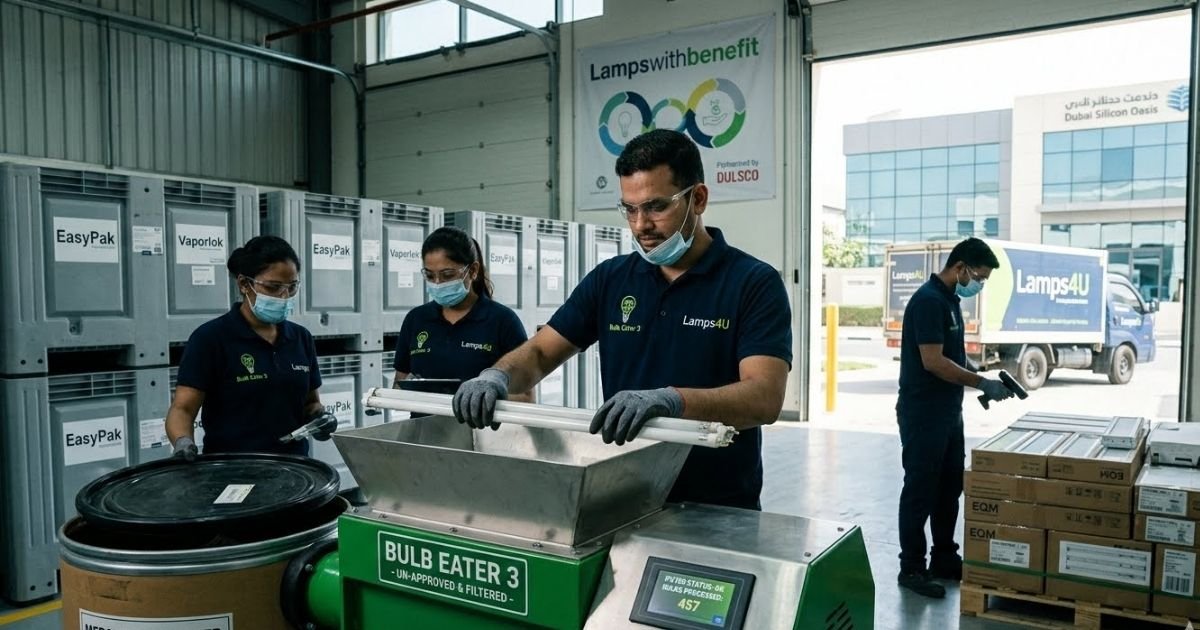
In today’s rapidly evolving world, businesses are under increasing pressure to adopt sustainable practices while maintaining efficiency and cost control. Lamps4u has emerged as a forward-thinking solution provider that bridges the gap between energy-efficient lighting and responsible waste management. Unlike traditional lighting suppliers, this company operates with a broader vision that combines advanced LED technology, environmental compliance, and safe disposal systems.
The growing demand for eco-friendly infrastructure across commercial and industrial sectors has pushed organizations to rethink how they manage lighting systems. Lamps4u addresses this need by offering a comprehensive approach that not only reduces energy consumption but also handles hazardous waste responsibly. This dual-purpose strategy has positioned the company as a valuable partner for organizations aiming to meet modern sustainability standards.
The Origin and Foundational Vision
The foundation of Lamps4u traces back to a clear environmental challenge in the United Arab Emirates. At the time of its creation, there was a noticeable lack of proper infrastructure for disposing of mercury-containing compact fluorescent lamps. Recognizing the environmental risks associated with improper disposal, the company was established with a mission to create a closed-loop lighting system.
The concept was inspired by practical industry experience and shaped into a business model that focuses on both supply and disposal. This vision gave rise to a “cradle-to-cradle” system, where lighting products are managed throughout their entire lifecycle. From installation to end-of-life recycling, the company ensures that no harmful materials enter landfills.
Headquarters and Strategic Location Advantage
Operating from Dubai Silicon Oasis, Lamps4u benefits from a highly advanced technological and logistical environment. This location offers modern infrastructure, efficient transportation systems, and access to a wide network of industrial clients. The free-zone status of the area also supports smooth business operations and international collaboration.
The strategic positioning allows the company to handle both product distribution and recycling logistics effectively. It also enhances its ability to serve clients across the Gulf Cooperation Council and the broader Middle East region. This geographical advantage plays a key role in maintaining operational efficiency and scalability.
Understanding the Cradle-to-Cradle Model
One of the defining aspects of Lamps4u is its commitment to a cradle-to-cradle approach. This concept ensures that every product introduced into the market is eventually collected, processed, and recycled in a responsible manner. Instead of allowing used lighting components to become waste, the company redirects them into reusable material streams.
This system reduces environmental impact while also supporting circular economy principles. By managing both ends of the product lifecycle, the company helps organizations achieve sustainability goals without relying on multiple vendors. The result is a seamless integration of energy efficiency and waste management.
Energy-Efficient LED Solutions and Compliance
A significant portion of the company’s offerings focuses on high-performance LED lighting systems. These products are designed to deliver strong illumination while consuming significantly less power compared to traditional lighting solutions. In many cases, businesses can achieve up to an eighty percent reduction in energy usage after switching to modern LED fixtures.
Compliance is another critical aspect of these solutions. The lighting systems meet strict regulatory standards, making them suitable for government projects and large-scale commercial developments. This ensures that clients can confidently adopt these systems without worrying about regulatory challenges.
The Role of Advanced Recycling Technology
Recycling technology is at the core of Lamps4u’s operations. The company utilizes specialized machinery to process used lighting products safely and efficiently. This technology allows businesses to manage hazardous waste directly at their facilities, eliminating the need for risky transportation of intact bulbs.
The integration of advanced systems ensures that harmful substances such as mercury are contained during the recycling process. This not only protects the environment but also enhances workplace safety. By combining innovation with practicality, the company provides a reliable solution for handling complex waste challenges.
Bulb Eater Technology and Its Capabilities
One of the most notable innovations used by Lamps4u is the Bulb Eater system. This machine is designed to crush fluorescent lamps quickly while capturing hazardous vapors. It can process standard tubes in less than a second, making it highly efficient for large-scale operations.
The system includes a multi-stage filtration mechanism that prevents the release of harmful particles. Activated carbon filters trap mercury vapor, ensuring that the air remains safe for workers. This technology allows organizations to handle large volumes of waste without compromising safety or compliance.
Logistics and Waste Management Efficiency
Efficient logistics play a vital role in the company’s success. Lamps4u provides specialized storage containers that allow businesses to safely collect used bulbs before processing. These containers are designed to prevent leakage and maintain a controlled environment for hazardous materials.
Once the waste is processed, it is transported through a structured logistics network. This system ensures that all materials are handled according to safety regulations and environmental standards. By streamlining the entire process, the company reduces operational complexity for its clients.
Cost Savings and Operational Benefits
One of the key advantages of working with Lamps4u is the potential for significant cost savings. By reducing the volume of waste through on-site processing, businesses can lower storage and transportation expenses. This also minimizes the need for manual handling, saving both time and labor.
Additionally, the transition to energy-efficient lighting reduces electricity bills over time. When combined with reduced waste management costs, the overall financial benefits become substantial. This makes the company’s solutions not only environmentally responsible but also economically attractive.
Environmental Impact and Sustainability Goals
Sustainability is a central theme in the operations of Lamps4u. The company actively works to reduce landfill waste by ensuring that all processed materials are recycled or repurposed. Components such as glass, aluminum, and plastic are separated and redirected into manufacturing processes.
This zero-landfill approach aligns with global environmental goals and supports corporate sustainability initiatives. Organizations that partner with the company can improve their environmental performance while meeting regulatory requirements. This contributes to a cleaner and more sustainable future.
Partnerships and Industry Collaboration
Collaboration with industry partners strengthens the overall impact of Lamps4u. The company works with established waste management organizations to ensure that all materials are processed efficiently. These partnerships enable a complete recycling loop, from collection to final reuse.
By leveraging external expertise, the company enhances its service capabilities and maintains high standards of quality. This collaborative approach ensures that clients receive comprehensive solutions that address every aspect of lighting and waste management.
Corporate Clients and Market Segments
The primary focus of Lamps4u is on business-to-business clients. This includes corporate facilities, industrial complexes, educational institutions, and government entities. These organizations often deal with large volumes of lighting waste and require reliable solutions for compliance and sustainability.
The company’s services are particularly valuable for large-scale operations that need efficient and scalable systems. By addressing the specific needs of these clients, Lamps4u has built a strong reputation in the commercial sector.
Energy Audits and Smart Planning
Beyond lighting and recycling, Lamps4u also offers energy audit services. These audits analyze existing lighting systems and identify opportunities for improvement. By mapping energy consumption and illumination levels, the company provides tailored recommendations for upgrades.
This data-driven approach helps organizations make informed decisions about their infrastructure. It also ensures that new systems are optimized for both performance and efficiency. As a result, clients can achieve better outcomes with minimal disruption.
Safety Standards and Worker Protection
Safety is a critical concern when dealing with hazardous materials. Lamps4u addresses this by implementing advanced filtration systems and strict operational protocols. These measures protect workers from exposure to harmful substances during the recycling process.
The use of sealed containers and controlled processing environments further enhances safety. This comprehensive approach ensures that all activities are conducted in a secure and compliant manner.
Advantages of Choosing Lamps4u
Choosing Lamps4u provides several clear benefits for businesses. The company offers a complete lifecycle solution that combines lighting supply with waste management. This eliminates the need for multiple service providers and simplifies operations.
The focus on compliance ensures that clients meet all regulatory requirements without additional effort. At the same time, the emphasis on efficiency and cost savings makes the solutions highly practical for long-term use.
Limitations and Considerations
While Lamps4u offers many advantages, there are certain limitations to consider. The company primarily serves large-scale commercial clients, which means it may not be suitable for individual consumers or small businesses. The initial investment in specialized equipment can also be significant for smaller operations.
Additionally, the company’s logistics network is mainly concentrated in the Gulf region. This may limit its accessibility for organizations located outside this area. However, for businesses within its operational range, the benefits often outweigh these challenges.
Industry Trends Supporting Growth
The rise of sustainable practices in construction and infrastructure development has created a strong demand for solutions like Lamps4u. Governments and organizations are increasingly focusing on energy efficiency and responsible waste management. This trend is expected to continue, driving further growth in the sector.
The shift toward smart buildings and green certifications also supports the adoption of advanced lighting systems. As regulations become stricter, companies that provide integrated solutions will play an essential role in shaping the future of the industry.
Future Outlook and Innovation Potential
Looking ahead, Lamps4u is well-positioned to expand its influence in the sustainability sector. The integration of smart technology and data analytics could further enhance its offerings. This includes automated monitoring systems and improved efficiency tracking.
As environmental awareness continues to grow, the demand for comprehensive solutions will increase. By staying focused on innovation and sustainability, the company can maintain its competitive edge and continue to deliver value to its clients.
Conclusion
Lamps4u represents a modern approach to lighting and environmental responsibility. By combining energy-efficient products with advanced recycling systems, the company addresses two critical challenges faced by businesses today. Its cradle-to-cradle model ensures that lighting solutions remain sustainable from start to finish.
The emphasis on safety, compliance, and efficiency makes it a reliable partner for organizations seeking to improve their operations. While certain limitations exist, the overall value offered by Lamps4u is significant. As industries continue to prioritize sustainability, solutions like these will become increasingly essential in shaping a cleaner and more efficient future.


Engineering drawings carry a lot of information in a small space. Dimensions, tolerances, materials and surface finishes usually get careful attention. Tucked into the notes, often in one short line, is the coating callout. It might reference an aerospace standard, a vehicle manufacturer’s internal specification or a military document with a long string of letters and numbers.
That single line can decide whether a part survives years of heat, friction and corrosion or fails early in service. For manufacturers, buyers and project managers, understanding what a coating specification means, and what it demands from a supplier, is one of the simplest ways to reduce risk on a project.
What A Coating Specification Actually Defines
A coating specification is a written standard that sets out exactly how a coating must perform and, often, how it must be applied. Depending on the document, it may cover:
Thickness, including minimum and maximum limits.
Adhesion, or how firmly the coating bonds to the surface.
Corrosion resistance, often tested under set conditions.
Lubrication and wear performance for moving parts.
Process controls, such as surface preparation and curing.
Testing and inspection methods that prove compliance.
Instead of a vague note like “apply a durable coating,” a specification gives everyone the same measurable target. The designer, the buyer, the coating applicator and the quality inspector all work from one shared definition of success.
Different Industries, Different Priorities
Specifications are written for the conditions a part will face, so they vary widely by sector.
Aerospace standards focus on precise thickness, adhesion and corrosion resistance in extreme environments. Aircraft, space and defense components face rapid temperature changes, vibration and long service lives, and safety margins are tight.
Automotive specifications are usually set by vehicle manufacturers themselves. They emphasize corrosion resistance, durability and consistent performance across high-volume production, where a small defect repeated across thousands of parts becomes a costly problem.
Industrial specifications tend to center on wear resistance, corrosion protection and lubrication. They give manufacturers consistent benchmarks for testing, process control and material compatibility across many types of equipment.
Military specifications set rigorous, standardized requirements for defense applications. Their goal is uniformity, so parts made by different suppliers in different places behave the same way and work together reliably.
A coating that is perfectly acceptable under one industry’s standard may not satisfy another’s. That is why the exact callout on the drawing matters so much.
Small Details That Cause Big Problems
Many coating issues trace back not to poor workmanship but to misread or incomplete specifications. A few details deserve close attention.
Revision letters. Specifications are updated over time, and each revision is marked with a letter or suffix. A drawing that calls for a particular revision may require different testing or materials than an older version. Confirming which revision applies avoids disputes at inspection.
Types and classes. Many standards are divided into types or classes that describe different formulations or performance levels. “Type I” and “Type II” under the same specification can be meaningfully different products. Leaving the type off a drawing invites guesswork.
Superseded documents. Some older specifications have been replaced by newer performance-based versions. Legacy drawings may still reference the old document, so it is worth checking how the original and replacement relate before production starts.
Conflicting notes. Occasionally a drawing lists a coating thickness that does not match the referenced specification. Catching that conflict during quoting is far cheaper than discovering it after parts are rejected.
Asking The Right Questions Before Production
Before releasing a coated part for production, it helps to work through a short checklist with the supplier:
Do you have access to the specified coating?
Have you applied this exact specification before?
Which revision, type and class will you work to?
How will thickness and adhesion be measured?
What documentation will accompany each batch?
Can you support prototypes as well as full volumes?
Clear answers to these questions set expectations on both sides. They also reveal early whether a supplier truly understands the requirement or is simply hoping to match it.
When A Specification Is Not On The List
Not every project uses a widely known standard. Some parts carry customer-specific requirements, older internal documents or unusual combinations of performance needs. In those cases, an experienced coating applicator can review the requirements, explain which materials and processes are likely to meet them and flag any risks. Specialists such as Orion Industries typically keep a list of the specifications they apply most often and will discuss requirements that fall outside it.
That conversation is valuable even when a specification looks routine. Engineers who design parts are not always coating experts, and applicators often spot practical issues, such as masking needs, cure temperatures or tolerance stack-ups, that are easy to miss on paper.
Why Getting It Right Pays Off
Precise coating specifications protect more than individual parts. They reduce rejected batches, rework and delays. They make it easier to switch or add suppliers without changing performance. They support audits and certification, since documented compliance is far easier to prove than informal agreements. Over the life of a product, they help prevent field failures, warranty claims and the reputational damage that follows.
For businesses buying coated components, a little extra time spent reviewing that one line on the drawing can save weeks of trouble later.
One Line, Lasting Consequences
A coating callout may look like a minor note at the edge of a drawing, but it carries the expectations of an entire industry. Understanding what the specification requires, confirming the right revision and type, and choosing an applicator with relevant experience turns that line into a reliable promise. When everyone works from the same clear standard, parts perform as designed, and projects stay on schedule.

Epoxy flooring is chosen for its strength. Warehouses, hospitals, schools, labs, commercial kitchens and showrooms rely on it because it stands up to chemicals, heavy loads and constant cleaning once a building is in use. That reputation can lead to a costly assumption on site: that a floor built for decades of hard use can take a few months of construction traffic without any help.
It often can’t. Epoxy is tough, but it’s not scratch-proof, stain-proof or impact-proof, especially soon after installation. A dragged pallet, a dropped tool or a leaking piece of equipment can mark a seamless coating in seconds. Fixing that damage is rarely as simple as patching one spot, and the cost tends to arrive just as a project is trying to close out.
Why Epoxy Repairs Are So Disruptive
Many floor finishes can be repaired piece by piece. A damaged tile can be swapped and a section of carpet replaced. Epoxy is different. It’s usually applied as a continuous coating, so a gouge or stain in the middle of a floor can be difficult to blend in. Spot repairs may show visible differences in color or sheen, especially on glossy or decorative finishes.
When the damage is serious, the fix can mean grinding down an area, reapplying coats and waiting for each layer to cure. That work shuts down the space, sends other trades elsewhere and can delay occupancy. On a commercial or industrial project where the floor is a major line item, an avoidable repair can eat into margins quickly.
Every Epoxy Floor Faces Different Risks
Epoxy isn’t one product. Systems vary in thickness, texture, finish and chemistry, and they’re installed in very different environments. That variety is why protection can’t be one size fits all.
Common risks on site include:
Heavy equipment, such as forklifts, scissor lifts and loaded carts.
Impact, from dropped tools, fixtures and materials.
Scratches and abrasion, from grit carried in on boots and wheels.
Spills, including paint, solvents, oils and other chemicals.
Weather exposure, in buildings that aren’t yet fully enclosed.
A school corridor mostly sees foot traffic and occasional carts. A warehouse slab may carry forklifts and pallets for weeks before handover. A manufacturing facility may face chemical exposure during equipment installation. Each setting calls for a different approach.
Planning Protection Before Work Begins
The most effective protection plans start before the epoxy is even installed. Coordinating the floor schedule with the rest of the project helps answer the key questions early:
Which trades will work on the floor after it’s finished?
What equipment will cross it, and how heavy is it?
Will chemicals or liquids be used nearby?
How long must the floor stay protected?
Who will install, inspect and remove protection?
Timing matters too. Epoxy needs time to cure before it can handle traffic or be covered. Placing protection on a floor too early can mark the surface or interfere with curing. Following the coating manufacturer’s guidance on cure times, and confirming the floor is ready before covering it, avoids creating the very damage you’re trying to prevent.
Clear responsibility is just as important. Protection that belongs to no one tends to get moved, torn or left incomplete. Assigning one team to own it keeps coverage consistent.
Matching Protection To The Job
Good floor protection for builders working with epoxy usually falls into three broad categories, each suited to different conditions.
Rigid protection boards offer the strongest defense against impact and heavy loads. They spread weight from equipment, resist dropped tools and suit areas where forklifts and lifts will travel. Lightweight versions are easier to handle and install, and options with fire-retardant properties add a margin of safety on busy sites. Some boards are designed to hold up even when exposed to the elements, which helps on projects that aren’t fully weathertight.
Bonded protective layers adhere directly to the floor surface. They create a continuous barrier against spills, abrasion and fine debris, making them useful for large commercial areas with steady trade traffic. Because they stay firmly in place, they’re less likely to shift and expose the floor underneath.
Breathable loose-lay mats guard against scratches, staining and everyday wear while allowing moisture to escape. That breathability matters on newer installations, since trapped moisture under a cover can cause problems. Loose-lay options are also easy to move as work zones change.
Many sites combine these. A bonded layer or breathable mat protects the surface, while rigid boards on top handle heavy traffic routes. Because site conditions affect performance, it’s worth reviewing the specific epoxy system, the expected loads and the project timeline with a protection supplier before making a final choice.
Keeping Coverage Intact
Installing protection is only the first step. Regular site walks should check for lifted edges, shifted boards and torn sections. Small gaps let grit and liquid reach the floor, and those are often the spots that end up on the punch list.
Spills deserve quick attention even when the floor is covered. Cleaning them up promptly prevents liquids from seeping under protection or degrading it.
Removal should be timed with care. Taking protection up before the final trades and cleaning crews finish leaves the floor exposed during one of the busiest stages of the job. Keeping it in place until the end, then inspecting the floor as coverings come off, gives the clearest record of its condition at handover.
The Business Case For Protection
For contractors, temporary floor protection is a small, predictable cost set against a large and unpredictable one. Repairing epoxy can mean extra labor, materials, downtime and disputes over which trade caused the damage. Building protection into the bid from the start avoids those surprises and protects margins.
For owners, it means a floor that performs as specified from the first day of operation. An epoxy floor is expected to last many years. Starting that life free of construction damage protects both its appearance and its long-term value.
A Durable Floor Deserves A Careful Start
Epoxy floors are built to handle years of hard use, but they need help getting through construction. Understanding the specific risks on site, matching protection to traffic and conditions, and keeping coverage in place until the last trade leaves all add up to a cleaner handover. The result is a floor that looks and performs exactly as intended on day one.


A smm panel is an online platform where businesses and individuals can purchase social media services such as followers, likes, views, subscribers and other engagement metrics. Unlike scheduling tools that help businesses publish content, SMM panels focus on ordering specific services for social media accounts and posts. For small businesses in the UK, understanding this distinction is important before deciding whether a panel belongs in their marketing budget.
OZSM is one example of an SMM provider serving individual users, agencies and resellers since 2021. Its platform brings different social media services into a single ordering system. Customers generally provide a public profile link, content URL or username rather than their social media password. However, the usefulness of any purchased service depends on its characteristics, the business objective and the rules of the social network involved.
What Services Do SMM Panels Offer?
Most SMM panels organise their services by social network and engagement type. A business selects a category, reviews the available options and submits the information required for an order. Different services measure different activities, so understanding what is being purchased matters more than simply choosing a larger quantity.
OZSM lists services covering Instagram, TikTok, YouTube, Facebook, Twitter (X), Telegram, Spotify, Twitch, Kick, Discord, LinkedIn, Threads and SoundCloud. Its categories include followers, likes, views, members, subscribers and watch time.
For a UK business owner, these categories have different practical meanings:
- Followers and subscribers: Services associated with account or channel audience counts.
- Likes and reactions: Engagement metrics attached to individual posts or other supported content.
- Video views and watch time: Services related to video consumption metrics, which should not be confused with meaningful audience retention.
- Group and channel members: Services associated with community platforms such as Telegram and Discord.
- Platform-specific services: Options designed around the measurement systems used by individual social networks.
These metrics are not interchangeable. A higher view count does not establish that viewers are potential customers, while a larger follower count does not necessarily indicate an interested local audience.
How Does the Ordering Process Work?
The basic ordering workflow is relatively straightforward, although the available settings depend on the service. OZSM uses an account-based dashboard where users can add funds, select services and submit orders.
- Identify the objective. Decide which platform and metric are relevant to the business, and check whether the proposed activity complies with that platform’s rules.
- Review the service description. Examine the quantity requirements, available features and any conditions attached to the service.
- Enter the required information. Supply the relevant public link or username and the requested order details.
- Monitor the order. Use the dashboard to review its status and examine any available support, refill or cancellation options.
Submitting a public URL is different from sharing account credentials. A provider should not need the password to a business’s Instagram, TikTok or YouTube account for an ordinary link-based order. Businesses should also avoid sharing login verification codes or administrator access unnecessarily.
Paying for Services From the UK
Currency deserves particular attention when a British business purchases digital services from an online provider. Even if the marketing budget is maintained in pounds sterling, the platform’s displayed or settlement currency may differ.
OZSM lists several payment methods, including bank cards, PayPal, Binance Pay and cryptocurrency payments. The availability and conditions of individual methods should be checked before funding an account.
For a UK business paying in a foreign currency, the final amount charged in GBP can depend on the exchange rate and any fees applied by the bank or payment provider. A payment intermediary may also use its own conversion process.
Before making a payment, business owners should check:
- The currency used for the account balance and service charges.
- Whether conversion takes place at checkout or through the payment provider.
- Any foreign transaction fees or additional processing charges.
- The conditions attached to account deposits and unused funds.
- Whether suitable transaction records are available for business bookkeeping.
Cryptocurrency payments introduce additional considerations, including network charges and exchange-rate movements. Businesses unfamiliar with these payment systems may prefer to examine conventional payment options first.
OZSM’s published terms state that deposited account balances are non-refundable and describe limited circumstances in which unused amounts from orders may be returned to the account balance. Reviewing these conditions before adding funds helps prevent misunderstandings.
Using Panels Alongside Organic Marketing
For a small business, purchased social media metrics and organic audience development serve different purposes. Organic marketing involves creating useful content, responding to customers, building relationships and attracting people who have a genuine interest in the business.
Consider an independent bakery in Manchester. Its social media strategy might include photographs of freshly baked products, short preparation videos, seasonal announcements and responses to customer questions. Local partnerships and location-relevant content could help the bakery reach people who might actually visit.
An SMM service might change a visible metric associated with certain content, but it cannot establish whether nearby residents are interested in the bakery or intend to purchase anything. That distinction should shape how the business evaluates the service.
Rather than treating follower counts as the primary measure of marketing performance, the bakery could monitor website visits, directions requests, customer enquiries and orders attributed to its social activity.
The same reasoning applies to hair salons, independent retailers, tradespeople and professional service firms across the UK. A smaller audience containing potential customers may be more commercially useful than a much larger audience with no connection to the business.
What Risks Should Business Owners Consider?
Social media platforms have their own policies governing artificial engagement and account activity. Meta, for example, has publicly described enforcement action against services involving fake followers and likes. Depending on the platform and activity, artificially generated engagement can result in removed metrics, account restrictions or other enforcement measures.
Business owners should therefore check the rules of the relevant social network before ordering. The existence of a service in a panel catalogue does not mean that the social network approves its use.
There is also a reputational consideration. If a company presents purchased engagement as evidence of genuine customer enthusiasm, it risks misleading its audience. Accurate reporting becomes especially important when social media performance is shared with business partners, clients or prospective customers.
Another practical issue is measurement quality. Purchased activity can distort engagement rates and make it harder to understand how authentic audiences respond to content. Keeping paid activity separate from organic performance reporting helps preserve useful marketing information.
Features That Matter to Agencies and Growing Teams
Although many small businesses only need occasional manual orders, agencies and resellers may require tools for managing larger workflows.
OZSM offers mass ordering and drip-feed functionality. Mass ordering helps users submit multiple orders through a panel workflow, while drip-feed allows supported orders to be distributed across configured intervals rather than submitted as a single delivery request.
Refill functionality is available for eligible services, subject to the conditions stated in their descriptions. A refill option should not be interpreted as proof that engagement will remain unchanged or that a social platform will accept the activity.
For businesses using automated systems, OZSM also documents an application programming interface (API). Its available actions include retrieving service lists, adding orders, checking order status, requesting refills, submitting cancellation requests and checking account balances.
These features may reduce administrative work for agencies handling multiple projects. However, automation does not remove the need for quality checks, client authorisation or compliance with social media platform policies.
Questions to Ask Before Placing an Order
A sensible purchasing decision starts with examining the service rather than assuming every provider or engagement category works in the same way.
- What exactly is being delivered? Check whether the service concerns followers, views, reactions or another defined metric.
- What are the relevant platform rules? Determine whether the activity creates a risk of violating social network policies.
- What information is required? Confirm whether the order only needs a public link or username and avoid unnecessary credential sharing.
- Which refund and refill conditions apply? Understand what happens if an order is incomplete, interrupted or no longer required.
- How is the payment processed? Check the displayed currency, available payment method and treatment of unused account funds.
- What support is available? Look for a clear process for raising questions about orders or billing.
- How will success be evaluated? Decide whether the purchased metric has any meaningful relationship to the business’s wider marketing objectives.
These questions are particularly useful for first-time buyers who may be unfamiliar with the terminology used by SMM providers.
When Is an SMM Panel the Wrong Choice?
A panel is unlikely to solve problems caused by unclear positioning, weak content, poor customer service or a lack of demand. Businesses seeking genuine product feedback, qualified enquiries or local customers should prioritise methods designed to attract and engage interested audiences.
Those methods may include regular organic publishing, community engagement, partnerships, customer-generated content and advertising through official social media platforms.
For UK small businesses considering OZSM or the wider SMM panel category, the key decision is whether a particular service has a legitimate and measurable role within the marketing plan. Understanding the payment conditions, platform rules and limitations of purchased metrics makes that decision considerably more informed.

Why a Change of Environment Can Support Addiction Recovery

Reading Coating Specifications On Engineering Drawings

Keeping Epoxy Floors Pristine Until Handover

Who Is Shameera? All You Need To Know About Charli XCX’s Mother

Who Is Gulliver Flynn Oldman? The Untold Story of Sir Gary Oldman’s Son

AI Video for Social Media: How Small Brands Keep Up Without Burning Out
-
Biographies9 months ago
Who Is Shameera? All You Need To Know About Charli XCX’s Mother
-
Biographies9 months ago
Who Is Gulliver Flynn Oldman? The Untold Story of Sir Gary Oldman’s Son
-
 Blog5 months ago
AI Video for Social Media: How Small Brands Keep Up Without Burning Out
-
 Biographies10 months ago
Meet Rosemary Turner: The Mother of Actor Callum Turner
-

 Biographies8 months ago
Who is Alexandra James? Inside The Life of Jeremy Clarkson’s Former Partner
-
 Biographies9 months ago
Who is Todd McRae? Meet Tate McRae’s Father
-
 Biographies9 months ago
Who Is Daniel Mara? The Untold Story of Kate Mara’s Private Sibling
-
 Celebrity10 months ago
Who Is Peter Hernandez? The Real Story of Bruno Mars’ Father