
Life Style
High-Tech Style: The Rising Popularity of Carbon Fibre Watch Boxes

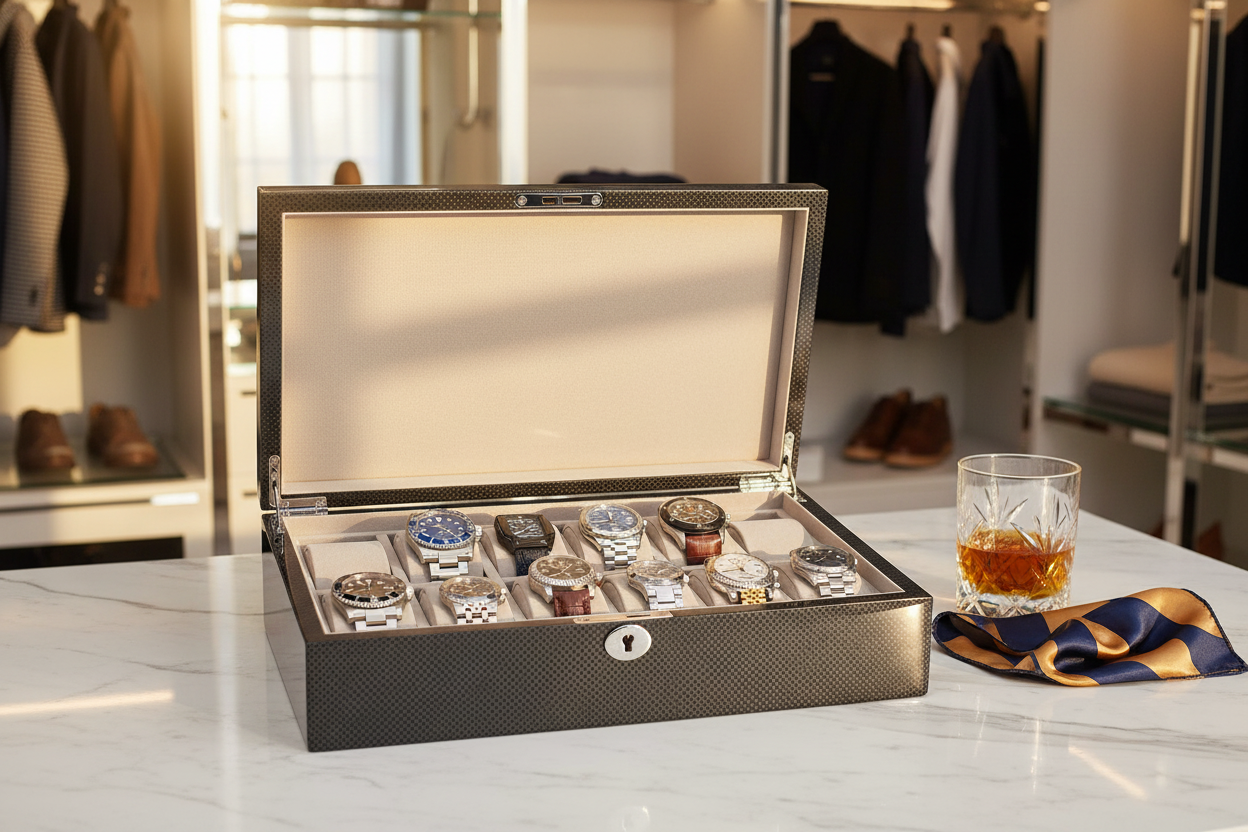
If you have spent any amount of time collecting watches, you know that the hobby is about much more than just telling the time. It is about the stories behind the movements, the weight of the metal on your wrist, and the way the light hits a polished bezel. But as any seasoned collector will tell you, once your collection grows past three or four pieces, you face a new challenge: where do you put them?
For a long time, the standard answer was a heavy wooden box. While leather and wood are classic choices, there is a new material taking over the desks and dressing tables of modern collectors. Carbon fibre has moved from the world of high-performance racing cars and aerospace engineering directly into our homes.
In this guide, we are going to look at why carbon fibre watch boxes are becoming the go-to choice for people who want to protect their timepieces with a bit of modern flair.
What Exactly is Carbon Fibre?
Before we look at the boxes themselves, it helps to understand what the fuss is about. Carbon fibre is a material made of thin, strong crystalline filaments of carbon. These fibres are twisted together like yarn and then woven into a fabric. When combined with a plastic resin and heated, it becomes incredibly light but stronger than steel.
In the watch world, we see this material used in the cases of high-end sports watches from brands like Richard Mille or Hublot. It makes sense, then, that collectors would want a storage solution that matches the tech-forward nature of their watches.
The Aesthetic Appeal: Why It Looks So Good
One of the biggest reasons for the surge in popularity is simply the way it looks. Traditional wood can sometimes feel a bit “old world.” While a mahogany box looks great in a library filled with old books, it might feel out of place in a modern apartment or a contemporary office.
Carbon fibre has a distinct “weave” pattern that creates a 3D effect when the light hits it. It looks deep, textured, and sophisticated. When you place a modern carbon fibre watch storage case on a glass shelf, it instantly gives off an aura of precision and speed. It is a look that suggests you appreciate modern engineering just as much as traditional horology.
Durability That Lasts a Lifetime
When you are buying a home for watches that cost thousands of pounds, you want something sturdy. One of the main benefits of this material is its resistance to the elements.
- Scratch Resistance: Unlike soft leather which can scuff or polished wood which can chip, carbon fibre is remarkably tough. It maintains its “new” look for much longer, even if you move it around frequently.
- Moisture Protection: Wood is organic, meaning it can warp or hold onto moisture if the humidity in your room changes. Carbon fibre is synthetic and inert; it doesn’t care about the weather. This provides a stable environment for your watches.
- Lightweight Strength: Even a large box designed for twelve watches remains easy to handle. You get the protection of a heavy safe without the actual weight.
Inside the Box: It’s What’s on the Interior That Counts
A watch box is only as good as its cushions. When looking at high-tech boxes, you will notice that the interiors are usually designed with the same attention to detail as the exterior.
Most quality carbon fibre options use a soft microfibre or a “vegan leather” lining. This ensures that the steel, gold, or titanium of your watch never touches a hard surface. The cushions need to be firm enough to hold the watch in place but soft enough to compress for those with smaller wrist sizes.
If you have a collection that ranges from chunky divers to slim dress watches, finding a carbon fibre finish watch box organiser with wide enough compartments is essential. You don’t want the crowns of your watches rubbing against each other. The modern layout of these boxes usually accounts for the larger case sizes we see in the market today, often providing 50mm or more of clearance per slot.
Matching the Box to Your Collection
Does every watch belong in a carbon fibre box? That depends on your personal taste, but certain styles definitely “pop” more against the dark, textured background.
- Steel Sports Watches: The silver tones of a Rolex Submariner or an Omega Speedmaster look incredible against the black weave of carbon fibre. It brings out the industrial, tool-watch nature of the pieces.
- Complications: If you own watches with “open heart” dials or skeletonised movements, the high-tech look of the box complements the visible gears and springs.
- Rubber Straps: Watches on integrated rubber straps (like an Audemars Piguet Royal Oak Offshore) feel right at home in a contemporary storage solution.
Practical Advice for New Collectors
If you are just starting to look for better storage, here are a few things to keep in mind:
1. Think About Future Growth
It is a common mistake to buy a box that fits exactly what you have now. If you have three watches, don’t buy a three-piece box. Buy a six-piece box. The “empty-slot syndrome” is a real thing, and it gives you a goal to work towards. Plus, it’s cheaper to buy one larger box now than two smaller ones later.
2. Check the Clearance
Make sure there is enough space between the top of the watch crystal and the glass lid. Some sports watches are quite tall. You want to be able to close the lid without the fear of the glass touching your watch.
3. The “Wobble” Test
A good box should feel solid. The hinges should stay open on their own and not slam shut. When the lid is closed, it should feel airtight and secure.
The Maintenance of Carbon Fibre
Another reason collectors love this material is how easy it is to keep clean. A wooden box often requires specific oils or waxes to keep the finish from dulling. A leather box can dry out and crack if not conditioned.
For a carbon fibre box, all you really need is a damp microfibre cloth. Because the surface is usually finished with a high-gloss or matte clear coat (similar to the paint on a car), a quick wipe removes fingerprints and dust in seconds. It is low-maintenance luxury at its best.
Why the “High-Tech” Trend is Staying
We live in a world where our cars are electric, our phones are made of aerospace-grade titanium, and our houses are “smart.” It feels natural that our hobbies should reflect this evolution.
The move toward carbon fibre isn’t just a “phase.” It represents a shift in what collectors value. While we still love the hand-made charm of a mechanical movement, we also appreciate materials that are built to survive the 21st century.
Summary of Benefits
To wrap things up, let’s look at why you might choose this over traditional materials:
- Modernity: It updates the look of your room instantly.
- Protection: It is incredibly hard to damage.
- Versatility: It looks good with almost any type of watch, from quartz to high-end mechanicals.
- Ease of Use: Lightweight and easy to clean.
Choosing a watch box is a personal journey. It is the final step in the ritual of wearing a watch—taking it off at the end of the day and placing it somewhere safe. Whether you are a fan of the racing heritage that carbon fibre represents or you just like the way the light dances off the weave, there is no denying that these boxes offer a fantastic blend of style and substance.
If you want your collection to look as fast and modern as it feels on your wrist, making the switch to a high-tech storage solution might be the best decision you make this year. Your watches spend more time in the box than they do on your arm—make sure they have a nice place to stay.


Fashion is rarely one-size-fits-all, and nowhere is that more evident than in the world of custom apparel. Whether you are dressing for a sun-soaked holiday, a casual weekend, or a branded team event, the right custom t-shirt can anchor your entire wardrobe. Today, more people are turning to personalised clothing not just as a novelty, but as a genuine expression of identity, culture, and lifestyle. The custom t-shirt industry has evolved dramatically, offering everything from bold graphic prints to minimalist designs that work across seasons and settings.
Why Custom T-Shirts Have Become a Wardrobe Staple
The humble t-shirt has always been a canvas for self-expression. From band merchandise in the 1970s to political slogans in the 1990s, printed tees have long carried cultural weight. What has changed in recent years is the accessibility of customisation. Advances in digital printing, screen printing, and embroidery technology mean that individuals, small businesses, and large organisations alike can produce high-quality custom garments without needing to order in the thousands. This democratisation of design has made the custom t-shirt one of the most versatile and sought-after items in modern fashion.
Beyond personal style, custom t-shirts serve a wide range of practical purposes. Sports teams use them to build unity and identity. Businesses use them as walking advertisements. Event organisers use them to create memorable experiences. Families use them for reunions and celebrations. In each case, the garment does more than cover the body — it communicates something meaningful about the wearer and the group they belong to.
The Influence of Travel and Climate on Custom Apparel Choices
One of the most interesting drivers of custom t-shirt demand is travel. When people visit warm-weather destinations or relocate to sunnier climates, their clothing choices shift significantly. Lightweight fabrics, breathable cuts, and vibrant prints become priorities. This is particularly relevant for destinations like Australia, where the climate demands a wardrobe built around comfort and versatility. Understanding what to wear in Australia reveals just how central the t-shirt is to everyday dressing in warm, active environments — and why so many travellers and residents seek out custom options that reflect both local culture and personal taste.
The connection between climate and custom apparel extends beyond practicality. Warm-weather fashion tends to embrace colour, pattern, and personality in ways that colder climates often suppress. A custom t-shirt designed for a beach holiday or an outdoor festival carries a different energy than one made for a corporate event — and the best custom apparel providers understand how to translate that energy into a finished product.
Tropical Prints and the Rise of Statement Tees
Few trends illustrate the expressive power of custom apparel better than the resurgence of tropical and Hawaiian-inspired prints. Once considered purely novelty items, bold floral and island-themed designs have made a significant comeback in mainstream fashion. According to a detailed look at the evolution of Hawaiian shirts in contemporary style, these prints have transcended their kitsch origins to become genuine fashion statements embraced by designers, celebrities, and everyday wearers alike. The same creative energy that drives Hawaiian shirt culture is now being channelled into custom t-shirt design, with individuals commissioning bespoke tropical prints that reflect their personal aesthetic.
This trend speaks to a broader shift in how people think about clothing. Rather than buying off-the-rack items that approximate their vision, more consumers are investing in pieces that are exactly what they want — in terms of colour, pattern, fit, and message. Custom t-shirts are uniquely positioned to meet this demand because they offer complete creative control without the complexity or cost of bespoke tailoring.
Designing a Custom T-Shirt That Stands Out
Creating a custom t-shirt that genuinely stands out requires more than uploading a logo or slogan. The most effective designs consider the relationship between artwork and garment — how the colours of the print interact with the fabric colour, how the placement of the design affects visual balance, and how the overall aesthetic aligns with the intended purpose of the shirt. Typography, illustration style, and print technique all play a role in determining whether a custom tee looks polished and intentional or rushed and generic.
For those without a background in graphic design, working with an experienced custom apparel provider is invaluable. The best providers offer design support alongside production, helping clients refine their ideas into print-ready artwork that translates beautifully onto fabric. This collaborative approach is what separates truly memorable custom t-shirts from forgettable ones.
Fast Turnaround Without Compromising Quality
One of the most common frustrations with custom apparel is the gap between what is promised and what is delivered — both in terms of quality and timing. Many providers offer attractive prices but struggle to meet deadlines or maintain consistent print quality across large orders. For businesses, event organisers, and individuals with firm timelines, this unreliability can be a serious problem. Fast Shirt Factory addresses this challenge directly by combining rapid production capabilities with a commitment to quality that does not waver under pressure. Their streamlined process ensures that custom t-shirts are produced efficiently and delivered on time, making them a trusted choice for customers who cannot afford to compromise on either speed or finish.
What to Look for in a Custom T-Shirt Provider
Choosing the right custom apparel partner involves evaluating several key factors. Print quality is paramount — the design should be crisp, vibrant, and durable enough to withstand repeated washing without fading or cracking. Fabric quality matters equally, as the best print in the world will not compensate for a shirt that feels uncomfortable or loses its shape after a few wears. Turnaround time, minimum order quantities, and customer service responsiveness are also critical considerations, particularly for time-sensitive projects.
Transparency is another important marker of a reliable provider. Clear pricing, honest timelines, and straightforward communication about what is and is not possible within a given budget all contribute to a positive customer experience. Providers who invest in these qualities tend to build long-term relationships with their clients rather than relying on one-off transactions.
Custom T-Shirts as a Long-Term Investment
It is worth reframing how we think about custom apparel. Rather than viewing a custom t-shirt as a disposable or purely functional item, consider it an investment in identity and communication. A well-designed, well-made custom tee can serve as a brand ambassador, a conversation starter, a team-building tool, or simply a piece of clothing that brings genuine joy to the person wearing it. When produced with care and intention, custom t-shirts have a longevity — both physical and cultural — that mass-produced garments rarely achieve.
Conclusion
The custom t-shirt sits at the intersection of fashion, identity, and practicality. Whether inspired by tropical travel aesthetics, team spirit, brand promotion, or pure creative expression, a thoughtfully designed custom tee has the power to communicate something genuine about the person or organisation behind it. As the industry continues to evolve — with faster production, better printing technology, and greater design accessibility — the barrier to creating truly exceptional custom apparel has never been lower. The key is choosing the right partner, one who understands that speed and quality are not opposites but complementary goals in the pursuit of great custom clothing.

Hair loss around the front of the scalp can be particularly noticeable. Even when the crown and back of the head still have plenty of hair, thinning around the hairline or temples can change the way your hairstyle looks and make certain styles more difficult to achieve.
For women dealing with this type of hair loss, a hairline topper can be a practical way to add coverage and fullness exactly where it is needed. Unlike a traditional topper designed to cover a larger area of the scalp, a hairline topper focuses primarily on the front of the head and can blend with your existing hair.
But is a hairline topper right for everyone? Not necessarily. The best option depends on where your hair is thinning, how much coverage you need, and how much natural hair you have available for blending.
What Is a Hairline Topper?
A hairline topper is a smaller type of hair topper designed specifically for areas such as the front hairline, temples, and sides of the forehead.
Because it covers a more limited area, the back and crown of your head remain uncovered. Your own hair can then be blended with the topper to create a fuller-looking hairline while maintaining a natural appearance.
Some hairline toppers use a halo-wire attachment instead of traditional clips. The thin wire sits around the head and helps hold the piece in place without requiring clips, glue, or combs. This can be particularly useful for people who want a lightweight attachment method or prefer to avoid placing tension directly on fragile hair around the hairline.
Who Can Benefit From a Hairline Topper?
1. Hair Loss Concentrated Around the Hairline
If most of your hair is still relatively full but the front hairline has become thinner, a small topper may provide the coverage you need without covering the rest of your head.
This can be helpful for women experiencing a receding hairline or reduced density around the forehead and temples. Instead of using a larger hairpiece to cover areas that do not need additional coverage, a hairline topper targets the area where you want more fullness.
2. Thinning at the Temples
Hair loss around the temples can be difficult to disguise, especially when wearing your hair away from your face.
A properly fitted hairline topper can add density to these areas and help create a more balanced transition between the front of the topper and your natural hair. For localized thinning, this type of targeted coverage may be more convenient than wearing a full wig.
3. Frontal Hair Loss Associated With FFA
Frontal Fibrosing Alopecia (FFA) commonly affects the frontal hairline and can also involve the temples. When hair loss is mainly concentrated in these areas while the rest of the scalp still has good coverage, a hairline topper may be worth considering.
For anyone experiencing ongoing or changing hair loss, however, product choice should be based on the current condition of the hair and scalp rather than the diagnosis alone.
4. Naturally Fine Hair at the Front
Not every thinning hairline is related to a specific hair-loss condition. Some women simply have less density around the front of their scalp due to genetics, aging, hormonal changes, or years of styling.
If you still have enough hair around the crown and back, a smaller topper can add the appearance of fullness without requiring full-head coverage.
When Should You Consider a Larger Topper Instead?
A hairline topper is designed for targeted coverage, so it may not be the best solution when hair loss extends significantly beyond the front of the head.
Hair Loss Across the Crown or Top of the Scalp
If thinning has progressed beyond the hairline and into the crown, a larger-base hair topper may provide better coverage.
The goal is to make sure the base of the topper covers the areas that actually need additional density. Choosing a piece that is too small can leave visible areas of thinning uncovered and make blending more difficult.
Widespread or Diffuse Hair Loss
For women experiencing thinning across a larger portion of the scalp, a small frontal piece may not provide enough coverage.
In this situation, consider a larger hair topper designed to cover more of the top of the head. If hair loss becomes more extensive and there is not enough natural hair available for blending or attachment, a wig may be a more suitable option.
What About Very Short Hair?
Your existing hair also matters.
Hair toppers generally work best when there is enough natural hair around the covered area to help with blending and styling. If the hair around your sides or front is extremely short, creating a seamless transition may be more challenging.
That does not automatically mean a topper is impossible. It simply means you may need to consider the attachment method, base design, and amount of coverage more carefully.
How to Choose the Right Hair Topper for Your Hair Loss
Once you know where your hair is thinning, the next step is choosing a topper that matches your coverage needs.
Consider these factors:
Coverage area: Measure the area where you need additional density rather than choosing a topper based only on appearance.
Base size: A larger base provides more coverage, while a smaller base can be lighter and more targeted.
Attachment method: Clips work well for many users, while a halo-wire or other attachment option may be preferable for those who want less tension around the hairline.
Hair color and texture: The closer the topper matches your natural hair, the easier it will be to blend.
Hair type: Human hair toppers offer more flexibility for styling and can be a good option when you want the piece to behave similarly to your own hair.
Hairline Topper vs. Full Wig: Which One Do You Need?
The simplest way to think about the difference is coverage.
If your main concern is a thinning hairline or temples while you still have sufficient hair throughout the rest of your head, a hairline topper may be enough.
If thinning extends across a larger area, a larger hair topper may make more sense. And when hair loss affects most or all of the scalp, a full wig can provide the comprehensive coverage that a small topper cannot.
There is no single solution that works for every stage of hair loss. Your ideal choice can change as your hair density and coverage needs change.
Final Thoughts
Hairline toppers can be a useful option for women who want targeted coverage around the front of the scalp without covering the entire head. They can add fullness to areas such as the hairline and temples while allowing your natural hair to remain visible elsewhere.
The key is to choose based on where your hair loss is located and how much coverage you actually need. A smaller topper can be a great fit for localized frontal thinning, while more extensive hair loss may call for a larger topper or a wig.
If you are unsure which option is right for you, consulting a professional can help you compare different base sizes, attachment methods, and hair types before making a decision.


Aldershot is a Hampshire town where residential neighbourhoods, military heritage, local shopping, railway connections and major roads sit within a compact urban area. New residents often find that understanding the town layout makes both daily travel and driving easier.
For newcomers, the main practical considerations are road layout, parking, public transport, town-centre access, local traffic restrictions and connections to surrounding towns. Aldershot also sits within Rushmoor Borough, alongside Farnborough and North Camp, creating several useful travel links across the area.
What Is It Like to Live in Aldershot?
Living in Aldershot provides access to local shops, schools, transport connections, parks and residential neighbourhoods within a relatively compact town. The town forms part of Rushmoor Borough and has direct connections with Farnborough and nearby Hampshire communities.
Aldershot has a strong military identity linked to the British Army, while the modern town includes residential developments, retail areas, community facilities and regeneration projects. Rushmoor Borough Council is also developing the town centre through projects that include new homes, retail space, public areas and student accommodation.
The town centre contains key facilities around High Street, Wellington Street, Union Street and Victoria Road. These areas also have pedestrianised sections, so newcomers benefit from checking vehicle access restrictions before driving directly into the central shopping area.
How Easy Is It to Drive Around Aldershot?
Driving around Aldershot is generally straightforward on local roads, but town-centre restrictions, roundabouts, parking controls and changing traffic conditions require attention.
Several roads connect Aldershot with surrounding areas. Important local routes include:
- A325, which provides connections through Aldershot and towards Farnborough.
- A323, which links Aldershot with surrounding Hampshire routes.
- Wellington Avenue, which connects the town centre with surrounding roads.
- Victoria Road, which provides access around the central area.
- High Street, where pedestrianisation affects vehicle access.
Rushmoor Borough Council identifies multiple roundabouts across Aldershot, including the NAAFI, Ordnance, Wellington and Willems roundabouts. These junctions form important points in the local road network and often demand the most attention from less experienced drivers.
Drivers unfamiliar with Aldershot benefit from checking their route before travelling, particularly when a journey passes through the town centre. Building confidence on these specific junctions takes local practice, which is why learning to drive in Aldershot with an instructor who knows the NAAFI and Wellington roundabouts prepares new drivers for real local conditions before their test.
What Are the Main Driving Considerations in Aldershot?
The main driving considerations in Aldershot are speed limits, pedestrian areas, parking restrictions, roundabouts and traffic management. Hampshire County Council manages speed limits and traffic-calming schemes across Rushmoor, while Rushmoor Borough Council manages its own car parks.
Speed awareness is particularly relevant on residential roads. Rushmoor uses speed indicator devices to display vehicle speeds and encourage compliance with posted limits. In early 2026, monitoring on several 30 mph roads recorded average speeds ranging from 23.5 mph to 28.5 mph, depending on location.
New drivers also encounter different road environments within a short distance. A journey can move from residential streets to busier routes, roundabouts and town-centre traffic.
Where Can You Park in Aldershot?
Aldershot has council-managed car parks and controlled on-street parking areas across the town. Rushmoor Borough Council manages its car parks, while Hampshire County Council manages on-street parking, residents’ parking and other highway-related parking controls.
Council-listed car parks include:
- Birchett Road Car Park
- High Street Multi-Storey Car Park
- Princes Gardens Car Park
- Cross Street Car Park
- Union Street East Car Park
- Union Street West Car Park
- Westmead Car Park
- Parsons Barracks Car Park
Birchett Road Car Park provides 76 spaces, including 3 disabled spaces and 1 motorcycle bay. Princes Gardens Car Park provides 71 spaces, including 4 disabled spaces. Parking charges and maximum stays vary by location, so drivers can check the signs and current council information before leaving their vehicle.
Parking rules also prohibit stopping in marked restricted areas, disabled bays without the appropriate entitlement, yellow lines and other areas that create an obstruction.
What Is Driving Like Around Aldershot Town Centre?
Driving in Aldershot town centre requires particular attention because much of the centre is pedestrianised. Vehicle access is controlled through automatic bollards at several points, including Union Street, Wellington Street/High Street and Wellington Street/Victoria Road.
This arrangement affects delivery vehicles, private motorists and drivers unfamiliar with the central road layout. Some vehicle access requires advance arrangements with town-centre management.
For newcomers, the practical approach is simple: identify a suitable car park first, then walk to the pedestrianised shopping areas rather than assuming every central street permits normal vehicle access.
Can You Live in Aldershot Without Driving?
Yes, Aldershot can support car-free travel because the town has railway, bus, taxi, walking and cycling connections. Aldershot railway station is on Station Road and is managed by South Western Railway. The station provides step-free access to all platforms, lifts, cycle storage and a 207-space car park.
The railway station also connects with bus and taxi services. This gives residents alternatives for commuting, shopping and longer journeys.
A car remains useful for journeys involving outer residential areas, larger shopping trips, work locations outside the town or travel across Hampshire. However, the availability of public transport means car ownership is not the only transport option.
What Should New Drivers Know About Aldershot?
New drivers in Aldershot benefit from learning the local road hierarchy before tackling the busiest routes. Start by understanding residential streets, then practise larger junctions, roundabouts, town-centre approaches and multi-lane roads.
Useful local driving habits include:
- Check signs before entering restricted or pedestrianised areas.
- Observe speed limits on residential and main roads.
- Plan parking before entering the town centre.
- Watch pedestrians and cyclists around central streets.
- Approach roundabouts carefully and select the correct lane early.
- Check roadworks because traffic management can change local routes. Rushmoor Borough Council publishes information about current and planned roadworks across Aldershot and Farnborough.
These habits help newcomers understand Aldershot as a connected urban road network rather than a collection of individual streets.
Final Thoughts
Aldershot combines residential areas, a pedestrianised town centre, railway transport, local bus and taxi connections, controlled parking and several important road routes. Understanding the town layout, parking system and traffic restrictions makes living and driving in Aldershot more predictable.
For newcomers, the most useful starting points are Aldershot town centre, Aldershot railway station, A325, A323, Wellington Avenue and the main council car parks. Learning these connections first creates a practical foundation for travelling confidently around the town and the wider Rushmoor area.

Portable Protection: Discover the Best Shade Tarps for Camping

The Only Number That Matters: How to Compare Research Peptide Prices in the UK

Building Confidence Through Reputation Awareness

Who Is Shameera? All You Need To Know About Charli XCX’s Mother

Who Is Gulliver Flynn Oldman? The Untold Story of Sir Gary Oldman’s Son

Meet Rosemary Turner: The Mother of Actor Callum Turner
-
Biographies8 months ago
Who Is Shameera? All You Need To Know About Charli XCX’s Mother
-
Biographies8 months ago
Who Is Gulliver Flynn Oldman? The Untold Story of Sir Gary Oldman’s Son
-
Biographies9 months ago
Meet Rosemary Turner: The Mother of Actor Callum Turner
-

 Biographies7 months ago
Who is Alexandra James? Inside The Life of Jeremy Clarkson’s Former Partner
-
 Biographies9 months ago
Who is Todd McRae? Meet Tate McRae’s Father
-
 Biographies8 months ago
Who Is Daniel Mara? The Untold Story of Kate Mara’s Private Sibling
-
 Celebrity9 months ago
Who Is Peter Hernandez? The Real Story of Bruno Mars’ Father
-
 Biographies9 months ago
Who Was Adrian Mayers? The Untold Life of A$AP Rocky’s Late Father