
Ai & Tool
Turning AI Logo Generator Concepts Into a Simple Brand Guideline


Choosing a logo concept feels like the end of a design project, but it is really the point at which other people begin using the result. A teammate will place it in a presentation, a contractor will add it to a web page, and a partner may need it for a joint announcement. If each person makes small independent adjustments, the identity drifts quickly. A short brand guideline turns an AI Logo Generator concept into a set of choices others can repeat. It does not need to be a large manual. It needs to explain which version is approved, where it works, and what to do when the usual layout does not fit. An AI Logo Creator can support exploration, but the guideline should record decisions made by the team.
Select a Master Version
Begin with the concept that survived review in realistic settings, not simply the most polished preview. Identify its essential features: the relationship between name and symbol, the basic proportions, the lettering character, and the main color relationship. Ask what could change without breaking recognition and what must stay fixed. An AI Logo Generator may offer several close variants; choose one as the master rather than presenting all of them as equally approved. A reader should be able to identify the correct version at a glance.
Save the master against a plain background and a representative dark background. Check that thin strokes remain visible and small spaces do not close up at normal sizes. If a version fails, do not quietly adjust it in each new application. Return to the source concept and make a deliberate refinement. The AI Logo Generator output is an exploration artifact until the proportions and usage rules have been settled. Your guideline should make that distinction clear. Label earlier AI Logo Generator variants as drafts so they are not reused by accident.
Record what makes the mark recognizable
Write one short sentence for each defining feature. For example, the icon always sits to the left of the name in the primary horizontal version; the accent color appears in one shape only; or the lettering keeps a specific spacing rhythm. These are observations a colleague can use, not abstract words such as bold or modern. Add a small approved image beside the sentences. If you cannot explain why two AI Logo Generator variants belong to the same family, they may not be ready to appear together in public materials.
Define Only the Variants You Need
Most small teams need fewer logo versions than they expect. A practical starter set might include a primary horizontal version, a compact version for square spaces, and a one-color version for constrained production. Each must have a clear use case. Do not add a fresh icon, slogan lockup, or decorative treatment merely because an AI Logo Generator supplied an appealing example. More options create more decisions for people who were not part of the original review.
For every approved variant, show a real placement and the minimum size at which the name remains readable. Specify whether the compact version may stand alone or needs the brand name nearby. If a one-color version is needed, check that its shapes remain distinct without relying on gradients or subtle color changes. An AI Logo Generator can help propose alternatives, but the team should inspect the actual result at its intended size before calling it approved. A guideline that says only “use the best-looking version” offers no guidance at all. Name the approved AI Logo Generator variant directly under each example.
Show the common mistakes
Include a few concise “avoid” examples: stretching the mark, changing the lettering, placing it over a busy image, or recoloring one element independently. Choose mistakes that people are likely to make in your own workflow. There is no need to fill a page with every imaginable misuse. If an AI Logo Generator concept relies on careful spacing, show one example where cramped placement harms it. A visual comparison will be easier to follow than a long warning paragraph.
Give Users a Small Decision Path
A useful guideline answers the questions that arise during a deadline. Start with the primary version. If it does not fit, try the approved compact version. If color reproduction is unreliable, use the one-color version. If neither works, ask the owner of the identity before making a new mark. This simple decision path protects the design without requiring every teammate to become a designer. It also prevents an AI Logo Generator session from becoming the default answer to every layout problem.
Name where the approved assets live and use filenames that distinguish format, color, and background. Include a preview so someone can confirm they selected the intended file. If the source is still a flat image, do not label it as an editable vector file. Request the needed production format through the appropriate workflow before sending it to a printer or developer. The guideline should describe assets that actually exist. An AI Logo Generator concept can be a strong starting point while still requiring careful production preparation. State which AI Logo Generator files are approved for everyday use.
Assign one person to answer exceptions and keep a small change log. When a new touchpoint appears, test whether the existing versions cover it before adding another variant. If the team updates a color or refines the mark, replace the approved examples in one place and archive obsolete files. Otherwise, old attachments will continue circulating. A short, current guide is more useful than a comprehensive file nobody trusts.
Keep the Guide Connected to the Brand
Finish with a brief explanation of the identity choice: the audience it serves, the impression it should create, and the feature that makes it recognizable. This connects technical rules to the decision behind them. It helps a future teammate judge whether a proposed application supports the brand or merely follows the measurements. When the team revisits an AI Logo Generator concept, it can compare the new direction with the same intent rather than starting from taste alone. That keeps later AI Logo Generator exploration connected to the original decision.
The broader AI Logo Creator workflow may continue as the business grows, but approved uses should remain easy to find. A starter guideline can fit on a few pages if it shows the master mark, necessary variants, everyday placements, and a clear path for exceptions. Its value lies in turning one promising AI Logo Generator result into an identity that different people can use with the same care.


Instagram Stories have been around for years, yet plenty of people still aren’t sure how they work. Who sees that you’ve viewed a story? How long does one really last? Can you look at a story without an account? These are common questions, and the answers are useful whether you scroll casually, run a small business, or manage a brand.
Here’s a clear guide to the basics, plus a few practical tips.
The basics: what a story is and how long it lasts
A story is a photo or short video that shows up at the top of the app rather than in the main feed. It disappears from the profile after 24 hours. The exception is a Highlight, which is a story the owner chooses to pin to their profile so it stays visible until they remove it.
The account owner can also save old stories to a private archive, which only they can see. So a story vanishing from public view doesn’t always mean it’s gone for good.
Who can see your views
When you open someone’s story while logged in, your username is added to their viewer list. The owner can see exactly who watched, and in what order. That’s fine when you want to be noticed. It’s less fun when you’re just checking something out.
Common reasons people would rather not appear on that list:
- Researching a competitor. A shop owner looking at a rival’s promotions may not want to tip them off.
- Checking a potential hire or business contact. Professional curiosity is normal, and a viewer-list entry can feel awkward.
- Avoiding an awkward social moment. Maybe you’ve drifted apart from an old friend and don’t want it to look like you’re keeping tabs.
- Doing your job. Journalists, marketers and social media managers regularly review public stories as part of their work.
Public versus private accounts
This is the part people often miss. Instagram profiles are either public or private.
A private account’s stories can only be seen by approved followers. No tool, app or trick should change that, and any service claiming to show private stories should be treated with suspicion.
A public account’s stories can be viewed by anyone who reaches the profile. That is the only kind of content an anonymous viewer can legitimately show you.
Using an anonymous viewer
If you want to watch public stories without logging in, an instagram story viewer is one route. Here’s how the Recently-Followed version works, according to its own page:
- Type or paste a public Instagram username.
- The stories and highlights for that profile load in your browser.
- You can play, pause and skip through them, much like in the app.
- Stories can be downloaded before they expire.
The service says it doesn’t need a login, doesn’t require an app, works on phones, tablets and desktops, and is free to use. It also states clearly that it only works for public profiles.
As with any third-party site, it’s sensible to read the privacy policy and terms before you use it, and to treat marketing claims as claims. Never enter your Instagram password into any website that isn’t Instagram itself.
A few honest limits
It only covers public accounts. If the profile is private, you won’t see anything.
Stories still belong to their creators. Being able to view or download something doesn’t give you the right to repost it. Photos, music and video are protected by copyright, and reposting someone’s story without permission can cause real trouble, especially for a business.
Be thoughtful about why you’re looking. Checking a brand’s public promotions is one thing. Repeatedly watching a former partner’s stories is another. If you notice you’re doing the second, it’s probably worth stepping back.
Tips if you post stories yourself
Since you now know how viewing works from the other side, here are some habits worth adopting:
- Assume anyone could see it. If your account is public, treat every story as a public post, even if you only expect friends to watch.
- Use Close Friends for personal content. This feature lets you share a story with a chosen list instead of everyone.
- Review your viewer list occasionally. It’s a quick way to spot odd accounts or see which content gets attention.
- Think before you tag or show locations. A tagged shop is harmless. A tagged home address is not.
- Switch to private if you want control. Making your account private is the simplest way to decide who watches.
The bottom line
Stories are built to feel casual, but they leave a small trail, and they can be seen by more people than you might expect. Understanding the difference between public and private, and between logged-in and anonymous viewing, helps you use the platform with your eyes open. If you’re on the watching end, stick to public content and respect the people who made it. If you’re on the posting end, share as if the whole world might see, and tighten your settings if that thought makes you uncomfortable.

Two AI tools can produce equally polished answers and still work very differently once they are connected to a business system. The biggest difference is often not the model itself, but what the tool can access, which permissions apply and whether it understands the context around the data. That is why embedded AI and a separate bolt-on tool can look similar in a demo but behave very differently in real use.
Access matters more than a fluent answer
Embedded AI starts inside the application where data, user identity and permissions already exist. This does not mean the AI can see everything. It means access can follow the rules the platform already uses.
A bolt-on tool starts outside that boundary. To answer a request, it needs a way to receive the right data. It also needs to know who is asking, what that person is allowed to see and which version of the record is current.
This is easy to miss in a demo. A prompt and response can show how well a model communicates, but they do not show how the tool gets its context or how well that context stays connected to the source system.
Context is more than the contents of a record. It also includes the relationship between fields, the user’s role and the state of the process. When that context stays inside the application, less has to be reconstructed before the AI can respond.
The practical difference is therefore about access. A strong model without reliable context still has to bridge the gap between itself and the system that owns the record. Firms weighing the two approaches often start with an independent AI readiness review that maps where their data, identities and permissions actually live.
Where a bolt-on tool adds extra steps
The break can start with something simple: another sign-in, copied information or a file moved into a separate window. Each step takes data away from the place where its original context is already known.
Permissions are another challenge. A people platform may show different information to a manager, employee, specialist or administrator. A separate tool has to reproduce those distinctions correctly if it is going to work with the same records.
The return path matters too. A tool may produce useful text, but that output is still separate if there is no controlled way to bring it back into the system. The user may then have to copy, check and re-enter information.
Keeping the connection current also matters. Roles change, records are updated and access rules move with them. A separate layer has to stay aligned with those changes, otherwise older context can be used for a current request.
That does not make a bolt-on approach wrong. It can suit a self-contained task when the necessary context can be provided safely. The limitation appears when the tool depends on information, permissions and relationships that live in the platform.
How is embedded AI delivered across a platform?
Embedded AI does not have to sit in one place or appear as one separate feature. A platform can make AI available across different parts of the user experience while keeping those capabilities connected through shared data, identity, permissions and business context.
In SAP SuccessFactors, for instance, the SuccessFactors AI capabilities form part of a connected, suite-wide AI approach, with capabilities embedded across relevant areas of the platform rather than operating as a separate layer.
Why does this distinction matter? The visible interface tells only part of the story. An AI capability may appear in different parts of a platform, but it can still work with the same underlying context and controls. The user does not have to rebuild that context each time the capability is used.
Seen this way, the difference between embedded and bolt-on AI is structural. Embedded AI works within the environment that already holds the data, permissions and process context. A separate tool needs a bridge into that environment and a reliable way to keep the connection current.
Model quality still matters, but it is only one part of the experience. What determines whether AI feels genuinely integrated is how well it remains connected to the systems and context around the work.

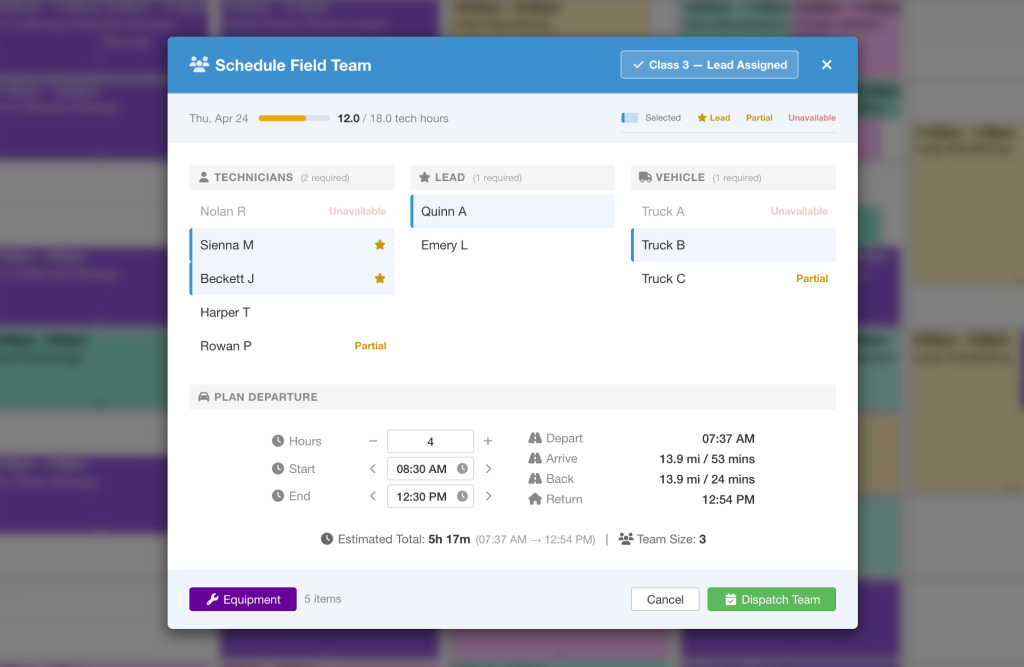
Dispatchers operate at the center of a busy field service environment. They must coordinate technicians, assign new jobs, handle cancellations, respond to urgent requests, and keep existing appointments moving throughout the day. When dozens of activities happen simultaneously, managing everything manually can quickly become overwhelming.
Using service schedule software can give dispatch teams a more organized way to coordinate daily workloads. Instead of relying on scattered calendars, spreadsheets, calls, and handwritten notes, planners can work with clearer scheduling information and make informed decisions when conditions change.
For organizations managing active field teams, stronger scheduling processes can reduce administrative pressure, improve technician utilization, and create more predictable service delivery.
Dispatching Is More Than Filling a Calendar
At first glance, dispatching may appear to be a straightforward process of assigning available technicians to open jobs. In practice, every assignment involves multiple considerations.
A dispatcher may need to evaluate technician availability, location, skills, workload, travel requirements, job urgency, and customer expectations before making a decision.
Service schedule software can help planners bring these considerations into a more structured workflow.
Every Assignment Affects Another
Scheduling decisions rarely exist in isolation.
Assigning a technician to an urgent morning job could affect several appointments later in the day. Adding a distant assignment might also increase travel and make the technician’s remaining schedule unrealistic.
Dispatchers therefore need to understand the broader impact of each decision rather than simply looking for an empty appointment slot.
Create a Clear View of Technician Workloads
One of the biggest challenges in dispatching is understanding who actually has capacity.
A technician may appear available during a certain period, but location and upcoming commitments could make another assignment impractical.
Service schedule software can provide greater visibility into existing workloads, helping dispatchers evaluate capacity more effectively.
Avoid Overloading Individual Technicians
Uneven workload distribution can create unnecessary delays.
Some employees may receive demanding schedules while others have unused capacity. Overloaded technicians face greater pressure and are more likely to fall behind as the day progresses.
By viewing schedules collectively, planners can distribute work more thoughtfully and create practical working days.
React Faster When the Unexpected Happens
Even carefully prepared schedules change.
A customer may cancel shortly before an appointment. A technician could become unavailable. A job may take considerably longer than anticipated, or an urgent request may suddenly require immediate attention.
Service schedule software can help dispatchers reorganize work with better awareness of the remaining schedule.
Turn Cancellations Into Opportunities
A cancellation does not always have to result in wasted technician time.
If dispatchers can quickly identify another suitable assignment, they may be able to fill the newly available capacity.
The replacement job still needs to make practical sense based on location, technician skills, priority, and later commitments.
Greater scheduling visibility makes these decisions easier to evaluate.
Improve Technician-to-Job Matching
Availability is only one factor when selecting a technician.
Field assignments can require different technical abilities, experience levels, or qualifications. Assigning an employee without considering job requirements can create delays and potentially result in another visit.
Service schedule software can support a more informed approach to assignment planning.
Send Technicians Where They Can Add the Most Value
An effective schedule considers whether the employee is capable of handling the work efficiently.
When technician skills align with assignment requirements, employees can arrive with greater confidence and preparation.
Better matching can also help dispatchers avoid unnecessary reassignment and additional coordination after work has already begun.
Make Travel Part of Scheduling Decisions
Travel represents a significant portion of the working day for many field teams.
If dispatchers focus only on appointment times, technicians may receive schedules that require unnecessary movement between distant locations.
Service schedule software can help planners consider geography when organizing workloads.
Build Logical Sequences of Work
Consider two technicians working in neighboring areas. Giving each technician assignments close to their existing route may make more sense than sending both across the wider service territory.
Logical sequencing can reduce avoidable travel and create additional productive time.
However, planners should balance location with job priority, employee skills, and customer commitments rather than optimizing travel alone.
Reduce Routine Communication With Field Teams
Dispatchers often spend substantial time communicating schedule information.
When plans are managed manually, technicians may need repeated calls or messages to confirm addresses, appointment changes, or upcoming assignments.
Service schedule software can support clearer access to current scheduling information.
Keep Everyone Working From Updated Details
Schedule changes become difficult when different employees have different versions of the plan.
A centralized approach reduces the risk of outdated information continuing to circulate.
Technicians can follow revised assignments more confidently, while dispatchers can spend less time repeating routine instructions and more time handling situations that genuinely require attention.
Improve Appointment Reliability
A dispatcher influences the customer experience even without directly speaking to the customer.
Overloaded schedules, excessive travel, or unsuitable technician assignments can all result in delays that customers eventually experience.
Service schedule software helps planners create schedules based on more realistic operational conditions.
Avoid Making Unachievable Commitments
Trying to fit too many jobs into a working day can appear productive initially. However, once technicians begin falling behind, customers experience the consequences.
A realistic schedule accounts for job duration, travel, existing workloads, and reasonable flexibility.
This creates a better foundation for meeting appointment expectations consistently.
Give Managers Better Operational Insight
Scheduling activity can reveal important information about field performance.
Managers may want to understand where workloads are highest, how technician capacity is being used, which jobs regularly take longer than expected, or where travel consumes excessive time.
Service schedule software can help organize scheduling information so recurring patterns become easier to identify.
Improve Future Planning With Actual Experience
Daily field activity provides valuable lessons.
If a particular territory repeatedly causes scheduling difficulties, future assignments can be organized differently. If certain jobs consistently require longer appointment windows, planners can adjust their assumptions.
Using real operational patterns can gradually improve scheduling accuracy.
Support Dispatchers as Operations Grow
Scheduling becomes increasingly complex as field teams expand.
A dispatcher managing a small workforce may be able to remember individual availability and customer requirements. That becomes much harder when the organization handles significantly more technicians and daily assignments.
Service schedule software provides structure that can support increased operational volume.
Scale Without Multiplying Administrative Complexity
Growth should not require dispatchers to spend proportionally more time on every scheduling activity.
Standardized processes and clearer information can help teams manage additional appointments without creating unnecessary administrative work.
This allows organizations to increase service capacity while maintaining greater control over day-to-day operations.
Conclusion
Dispatchers have a direct influence on technician productivity, customer reliability, and overall field efficiency. Yet their work becomes increasingly difficult when schedules are managed through fragmented information and manual processes.
Service schedule software can provide the structure needed to organize workloads, evaluate technician capacity, respond to unexpected changes, reduce unnecessary travel, and improve assignment decisions.
More importantly, effective scheduling gives dispatchers a clearer view of the entire working day. Rather than constantly reacting to individual problems, they can consider how each decision affects technicians, customers, and upcoming commitments.
For busy field teams, that greater visibility can transform scheduling from a daily administrative challenge into a more controlled and efficient operational process.

Stock, sales and margin on one page: how independent UK retailers are using Power BI

Verstopfte Toilette frei bekommen with Simple and Effective Methods

Turning AI Logo Generator Concepts Into a Simple Brand Guideline

Who Is Shameera? All You Need To Know About Charli XCX’s Mother

Who Is Gulliver Flynn Oldman? The Untold Story of Sir Gary Oldman’s Son

Meet Rosemary Turner: The Mother of Actor Callum Turner
-
Biographies8 months ago
Who Is Shameera? All You Need To Know About Charli XCX’s Mother
-
Biographies7 months ago
Who Is Gulliver Flynn Oldman? The Untold Story of Sir Gary Oldman’s Son
-
Biographies8 months ago
Meet Rosemary Turner: The Mother of Actor Callum Turner
-

 Biographies6 months ago
Who is Alexandra James? Inside The Life of Jeremy Clarkson’s Former Partner
-
 Biographies8 months ago
Who is Todd McRae? Meet Tate McRae’s Father
-
 Biographies7 months ago
Who Is Daniel Mara? The Untold Story of Kate Mara’s Private Sibling
-
 Celebrity8 months ago
Who Is Peter Hernandez? The Real Story of Bruno Mars’ Father
-
 Biographies8 months ago
Who Was Adrian Mayers? The Untold Life of A$AP Rocky’s Late Father