
Business
How to Source European Bricks for UK Building Projects


European clay bricks give UK architects access to colours, textures and formats that domestic kilns do not always produce. Danish, Belgian, Dutch and German manufacturers fire a wide range of facing bricks, from long linear formats to hand-thrown blends, and many have built strong reputations on award-winning UK schemes.
Importing them adds steps that a standard UK order never involves. Specifiers need to confirm compliance with British standards, buyers need to plan around freight and production slots, and contractors need a reliable route for samples, top-ups and after-sales support. Getting each stage right keeps the facade on budget and on programme.
How to Source European Bricks Step by Step
Here’s how to take an imported brick from first sample to final delivery on site:
1. Define the Look Before Contacting Suppliers
Start with a clear brief for colour, texture, format and bond. European ranges are broad, and a vague request tends to produce a long list of samples that slows the design team down. Pin down the face size, the mortar colour you have in mind and the finish you want across the elevation.
Texture is often the deciding factor. A smooth wirecut face reads very differently from pinhole bricks, where small surface perforations catch the light and add depth to a large wall. Agreeing these details early gives every supplier a firm target to match.
2. Match the Clay Type to the Colour You Need
A brick’s colour comes largely from its raw clay and the way it is fired. Iron-rich clays tend to fire to reds and browns, while the lime-rich clays found across parts of Belgium, the Netherlands and Denmark fire to paler yellow and cream tones.
If the design calls for a golden buff brick, focus your search on producers working with those lighter clays. Ask each manufacturer for photos of completed buildings and a sample panel, since a single loose brick rarely shows how colour shifts across a full elevation.
3. Benchmark Samples Against Familiar UK Bricks

Planning officers and clients often judge new brickwork against bricks they already know. Where a scheme sits beside existing buildings, the approved palette may reference a domestic product, and any imported option has to sit within that range.
A common reference point is the Ibstock Alnwick Blend, a UK facing brick many design teams already recognise. Lay European samples beside a benchmark like this in the same light and the same mortar. It makes tone, texture and size differences easy to judge before materials go in for planning approval.
4. Check Standards and Compliance Paperwork
Clay bricks sold in Great Britain should be made to BS EN 771-1 and supplied with a Declaration of Performance. Confirm the product carries the conformity marking accepted at the time of purchase, and that its declared values suit the exposure of your site.
Pay close attention to these declared values, especially on exposed elevations, parapets and chimneys:
- Frost resistance: look for an F2 rating where brickwork faces severe exposure.
- Active soluble salts: an S2 category lowers the risk of sulfate attack on mortar.
- Water absorption: this affects mortar choice and how the wall weathers over time.
- Dimensional tolerance: tighter tolerances give cleaner joints on linear formats.
Review these figures with your architect or engineer, because responsibility for the final specification sits with the appointed designers and contractor under the Building Safety Act 2022.
5. Build Lead Times Into the Programme

Imported bricks travel further, and production slots at popular European kilns are often booked well ahead. Allow time for manufacturing, freight, customs clearance and delivery to site, and agree call-off dates in writing with your supplier.
Order the full quantity from a single production run where possible. Clay varies between batches, and topping up from a later firing can leave a visible band in the brickwork. A small surplus held in storage costs far less than rebuilding a mismatched elevation.
6. Work With a UK Stockist That Imports Direct
Buying through an established UK importer removes a lot of the risk. A good stockist handles shipping, customs and paperwork, keeps samples ready for quick comparison and can arrange sample panels on site.
Local support also counts after delivery. If a pallet arrives damaged or the order falls short, a UK partner can resolve it far faster than a manufacturer overseas. Ask about storage, return terms and technical help before you place the order.
Bringing European Brick to Your Next UK Project
Sourcing European bricks starts with a clear design brief and ends with a well-planned delivery. Define the colour, texture and format first, then match the clay type to the tone you want. Benchmark every sample against familiar UK bricks so planners and clients can judge it with confidence.
Check the Declaration of Performance and declared values against the exposure of your site, and lock in production slots early to protect the programme. Ordering the full quantity from a single batch keeps the brickwork consistent. A trusted UK importer ties each stage together and keeps the facade looking right from the first course to the last.


Macroeconomic Drivers and Line Efficiency Trends in Modern Packaging
The global Food and Beverage (F&B) industry in 2026 operates under intense macroeconomic pressure. Chronic labor shortages across manufacturing hubs, volatile raw material prices, and accelerating consumer demand for packaged goods have forced plant managers to re-evaluate traditional packaging line workflows. Achieving high Overall Equipment Effectiveness (OEE) is no longer merely an operational objective; it is essential to protecting profit margins and meeting stringent output quotas.
Addressing Bottlenecks in Legacy Filling and Sealing Operations
Legacy packaging lines heavily reliant on manual handling or semi-automated mechanical drives create severe operational friction. Common failure points include:
- Throughput Speed Limits: Fixed mechanical linkages prevent dynamic speed adjustments during high-volume production runs.
- Volumetric Inconsistency: Manual and mechanical dosing mechanisms suffer from thermal expansion and wear, leading to product giveaway or under-filling.
- Sealing Integrity Risks: Inconsistent seam formation in manual or semi-automated sealing exposes sensitive F&B products to atmospheric oxygen, accelerating spoil rates and causing premature degradation.
Integration of Smart Servomotors and Automated Controls
Modern facilities are eliminating these mechanical bottlenecks by deploying integrated, multi-axis servomotor control systems managed by central programmable logic controllers (PLC systems). Independent servo-driven stations enable microsecond-level synchronization across the line, drastically reducing mechanical wear and mechanical vibration.
As consumer demand for eco-friendly and efficiently sealed canned products surges, leading packaging line manufacturers such as Levapack are providing customized automated canning and seam sealing solutions that help medium to large-scale producers significantly streamline their production lines.
By replacing rigid mechanical line shafts with adaptive digital drive controls, beverage and food processors achieve faster line balancing, automated recipe changeovers, and negligible container jam rates.
Technical Standards & Precision Engineering in Can Packaging
Packaging diverse F&B formulations—ranging from carbonated beverages and liquid sauces to hygroscopic powders and solid snacks—demands advanced mechanical engineering to safeguard product freshness and extend shelf life.
Vacuum Seaming and Atmospheric Nitrogen Gas Flushing
Preserving nutritional value and extending shelf life without artificial preservatives depends heavily on modified atmosphere packaging. Modern automated seamers integrate high-vacuum evacuation chambers alongside automated nitrogen gas flushing () manifolds.
This multi-stage process removes ambient air and reduces internal headspace oxygen below 0.5%. Lowering residual oxygen prevents lipid oxidation, preserves flavor profiles, and prevents package collapse during shipping across variable altitudes.
Modular Line Configurations: From Cleaning to Labeling
Modern packaging architectures utilize modular rotary and linear motion configurations that connect all stages of the packaging workflow into a seamless unit.
| Key Performance Metric | Traditional Mechanical Lines | Smart Servo-Driven Automated Lines |
| Throughput Speed (CPM) | Low-to-Moderate (40–80 cpm) | High-Speed (150–350+ cpm) |
| Sealing Defect Rate (%) | Higher (1.0% – 2.5%) | Minimal (< 0.05% via servo monitoring) |
| Changeover Downtime | Manual Tooling (2–4 hours) | Automated Recipes (< 15 minutes) |
| Maintenance & Downtime | Frequent reactive maintenance | Predictive diagnostics & low mechanical wear |
These modular systems connect linear container sterilization units with high-speed rotary seamers, checkweighers, and vision-guided labeling stations to minimize physical contact and maximize hygiene.
Safety, Quality Standards, and Equipment Reliability
Maintaining high-speed throughput must be balanced with strict food safety regulations and international equipment engineering standards.
Regulatory Compliance and Quality Management
Global food manufacturing demands complete traceability and verifiable quality systems. Facilities must ensure that automated machinery suppliers adhere to global standards such as the ISO 9001 Quality Management System, which establishes documented process controls, audited component sourcing, and rigorous quality benchmarks across automated assembly setups.
Furthermore, international machinery safety certifications—including CE marking for European compliance and CSA certification for North American electrical safety—verify that high-voltage drive electronics and pneumatic systems meet strict operator safety requirements.
Predictive Maintenance and Torque Safety Controls
Unplanned downtime on high-speed packaging lines can cost manufacturers thousands of dollars per hour. Modern automated seamers feature active torque control and overload sensors that continuously monitor motor feedback. If a jammed can or misaligned lid causes a sudden resistance surge, the system instantly triggers an automated safety stop to protect vital drive mechanisms and reduce material scrap.

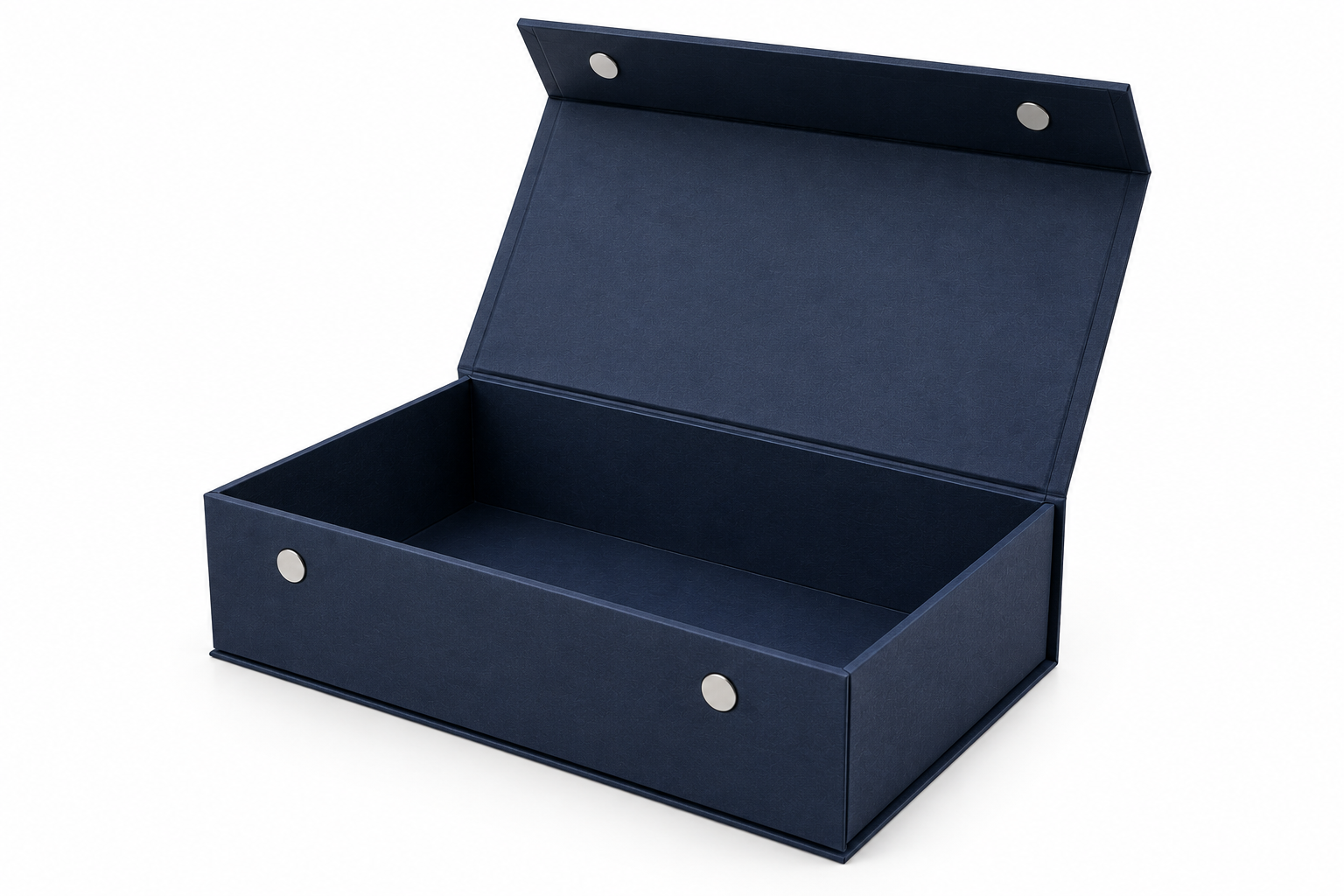
Hunting and researching new ways to increase customer loyalty is a standard practice for brands that want to increase their influence in the market. Spending heavily on marketing to acquire new buyers is one thing but keeping them coming back to your brand is something that is much harder. What if we tell you a way with which you can increase your repeat purchase rate by 35%?. And that too simply by upgrading your packaging style? Custom magnetic rigid boxes are one of the most powerful proven solutions. That can transform a standard unboxing experience into something that is highly memorable and feel-worthy.
Your customers will come back eagerly for more. Since they will remember the premium feel that they felt when they held your products in their hands. Let us tell you exactly how custom magnetic boxes can drive this incredible retention rate.
The Psychology of the Unboxing Experience
The review of your customers about your brand and its products begins to form within seconds after they receive or buy something from your site. If they have a flimsy cardboard in hand, it’ll send them a direct message of cheapness. On the other hand luxury magnetic boxes will make them feel high value and prestige the moment they set eyes on them. They simply cannot avoid the dopamine rush that they feel with the smooth slide of your box’s lid. And the satisfying snap of its magnet.
This experience triggers a deeply positive emotional attachment with your product. As a consequence if your customers feel good, they will associate that happiness and joy directly with your brand. Magnetic closure packaging instantly uplifts the value of whatever it holds inside of it. The buyers feel that they have something truly special in hand and this can surely make them excited to make a repurchase.
Durability Encourages Reusability
What happens to standard cardboard boxes is that they get thrown away immediately after unboxing. People tend to retain strong beautiful packaging since they feel that they can use it for a different purpose later on.
Magnetic packaging boxes are flawless when it comes to the shipping process. Their strong construction protects the product that is inside of them perfectly. After the customer takes out the product, it is very rare that they trash the box. Instead they use it to store other items or important keepsakes. This simple action can turn your packaging into a long-lasting piece of home decor.
Your brand name comes into the picture every time the customer opens or reuses the box. Printed magnetic closure boxes keep your logo and your branding visibly present in their homes for months or even years. This constant yet subtle reminder of your brand’s existence can drive repeat sales organically.
Customization Amplifies Brand Identity
You simply have to take out generic packaging from your options if you want to make your brand stand out on the shelf and in the customer’s mind. You can design custom magnetic boxes to mirror your brand identity in a perfect way. The choice of colors, the interior lining, and the exact placement of your logo, create a unified brand experience. Your buyers will definitely notice the careful attention to detail and they will trust your brand even more deeply. Customer trust directly translates into a higher repeat purchase rate.
Igniting Social Sharing and Word of Mouth
Social media is all about the exciting experiences that people want to share and make others know about. If you look closely, a simple box rarely makes its way onto social media platforms. On the other hand, luxury magnetized boxes almost beg to be filmed. Their buyers record the whole experience that they have with the box. Including the satisfying snap of the magnet, and post unboxing videos for their followers.
This organically generated content acts as free but highly effective advertising for your brand. Every person who watches such types of videos wants to have the same experience. As a result they visit the store and buy the same product. This way your existing customers become your best marketers. Magnetic closure packaging directly fuels this viral and most profitable marketing loop.
How Exactly Does This Drive a 35% Increase?
This thought concerns many people: how a simple Changing the switch can change the buying behavior so drastically. Here is a breakdown of how custom magnetic closure boxes manage to deliver these impressive numbers.
- Enhanced assumed value : Customers begin to feel that they got more for their money when they hold a magnetic box in their hand. This higher value justifies premium price points.
- Memorable interaction: The magnetic snap tends to stick to memory, which builds up sensory marketing. Sensory marketing is known to make stronger emotional connections than visual marketing alone.
- Home retention: If you manage to create boxes that are reusable, you will make your brand visible indefinitely. In the modern market out of sight means out of mind. Reusable boxes protect your brand from becoming invisible.
- Gift-ready beautification : Customers love it when they get packaging that is beautiful enough to be given out as a gift. This initiates repeat purchases because the packaging makes gifting a little easier.
The power of premium packaging is not something that you can afford to ignore anymore. The upgrade of your packaging strategy can solve your retention problems in the most efficient way. If you invest in luxury rigid boxes, you create an unboxing experience that your customers will actively crave. This positivity guarantees that they will choose your brand over and over again. Start designing your magnetic boxes today and watch your repeat purchase rate climb.
.
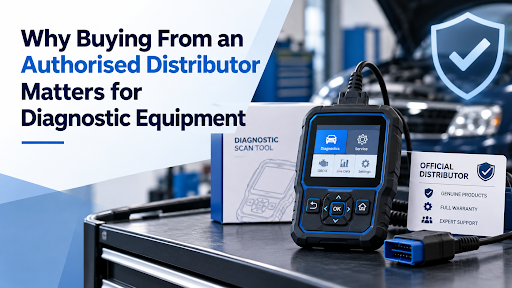
A very cheap diagnostic scanner can look genuine and work normally at first, yet problems may appear later if the unit is counterfeit, grey-market stock, or unsupported in the region where it was sold. Software updates, warranty support, and manufacturer assistance are the areas where those differences often become obvious.
That is why a low price and positive seller reviews are not enough on their own. For diagnostic equipment, buyers also need to know who supplied the unit, whether the manufacturer recognises the seller, and whether updates and warranty support will remain available.
Diagnostic Tools Are an Easy Target for the Grey Market
Handheld scanners are small, valuable, and even have a recognizable brand name, making them the kind of product that is likely to be the target of unofficial stock, clones, and outright counterfeits. Some of it is genuine product diverted from markets where it was never meant to be sold. Some of it is a convincing-looking copy with a knock-off circuit board inside a case that’s near identical to the real thing.
This is not only a theoretical risk. The UK’s Intellectual Property Office reports that 17% of consumers have purchased a counterfeit product without realising at some point. More than two-thirds of counterfeit purchasers overall reported negative consequences, including financial loss, product failure, scams, data-security risks and, in safety-critical categories, physical harm. Electricals were one of the product categories covered by the research.
A diagnostic scanner is also a poor place to take unnecessary risk. If it fails halfway through a job, the cost can extend beyond the purchase price to lost workshop time, delayed repairs, and a vehicle left waiting for diagnosis. Counterfeit or unsupported units may also appear normal initially, making the problem harder to spot at the point of purchase.
The gap between “looks fine” and “is fully supported” is the key risk. A scanner may power on, read basic codes and still lack reliable update access, regional support, or full licensed coverage for the functions a workshop actually needs.
What “Authorised” Actually Means Underneath the Badge
The words “genuine” or “official” in an online listing are not, by themselves, proof that the seller has an authorised relationship with the manufacturer. An authorised distributor is a company recognised by the manufacturer and typically operates under agreed sales, support, and warranty arrangements.
Genuine Firmware and Vehicle Coverage
Counterfeit and clone units frequently run outdated or altered firmware, which means the vehicle coverage advertised on the box doesn’t necessarily match what the unit can actually do once you’re using it on a real car.
A Warranty That Actually Holds Up
A warranty is only as good as the company standing behind it. Buy through an unofficial reseller and the “12-month warranty” in the listing may not be recognised by the manufacturer at all, leaving you with nobody to claim against once the seller disappears or simply stops responding.
Software Updates That Keep Working
Unauthorised, counterfeit, or diverted units may not qualify for the same manufacturer-backed software updates or technical support as authorised stock. For a diagnostic tool, losing update access can reduce compatibility with newer vehicles and functions over time.
Someone Accountable When Something Goes Wrong
An authorised distributor has a reputation and an ongoing relationship with the manufacturer to protect, which means a genuine, findable business you can actually contact if something’s wrong, rather than a listing that quietly disappears the week your warranty claim would have kicked in.
Why You Can’t Just Rely on Your Consumer Rights Here
UK consumer law can provide remedies when goods are faulty or not as described, including repair, replacement or refund in appropriate circumstances. However, enforcing those rights can be more difficult when the seller is overseas, disappears, or cannot be contacted.
That practical gap matters. A card chargeback may sometimes recover money, but it does not restore workshop time or complete a delayed job. Trading Standards can act against counterfeit goods, but that is not the same as having a reachable UK supplier that can provide product support from the outset.
Spotting the Difference Before You Buy
A few checks take less time than reading the product description twice, and they’re worth doing before you buy rather than after something’s gone wrong, whichever iCarsoft diagnostic scanner range you’re considering:
- Check the manufacturer’s website or contact its support team to confirm whether the seller is authorised in your country.
- Be wary of a price that sits well below every other listing for the same model. Genuine stock has a fairly consistent floor price across legitimate sellers.
- Look for a proper business behind the listing: a real company name, a UK address, and existing reviews that go back further than a few weeks.
- Ask directly whether the warranty is honoured by the manufacturer or only by the seller. A legitimate distributor will answer this clearly and immediately.
- If the manufacturer offers serial-number or registration verification, use it before relying on the seller’s claims. An authorised seller should also be willing to clarify how product registration and warranty validation work.
What This Looks Like in Practice
In the UK, Albionshire presents itself as the authorised iCarsoft UK dealer and provides UK-based warranty and support information for iCarsoft products. iCarsoft’s own website also features Albionshire as a UK diagnostic-tool supplier in its media-review section. It is still sensible to confirm the exact warranty and compatibility for the model you are buying. The same logic applies whether you’re after an entry-level model like the iCarsoft CR MAX or something further up the range.
The Real Cost of a Cheaper Listing
None of this means every bargain is a trap, or that authorised sellers never discount. It means the discount itself isn’t the thing worth chasing. A tool that’s 40% cheaper but stops updating in six months, or one with a warranty nobody will honour, ends up costing considerably more than the difference in price once you account for the downtime, the replacement, or the job you couldn’t finish because the scanner let you down halfway through it.
Buying from an authorised distributor isn’t about brand loyalty. It’s a straightforward way of making sure the tool in your hand does what the box says it does, for as long as you actually need it to.
The useful calculation is therefore not just the headline saving. Compare the purchase price with update eligibility, warranty support, compatibility, and the cost of downtime if the tool fails when you need it. A cheaper scanner that has to be replaced can quickly erase the original saving.

How to Source European Bricks for UK Building Projects

How Automation is Reshaping the Global Food & Beverage Packaging Industry in 2026

How Cosmetic Items Enhance the Dota 2 Gaming Experience

Who Is Shameera? All You Need To Know About Charli XCX’s Mother

Who Is Gulliver Flynn Oldman? The Untold Story of Sir Gary Oldman’s Son

Meet Rosemary Turner: The Mother of Actor Callum Turner
-
Biographies8 months ago
Who Is Shameera? All You Need To Know About Charli XCX’s Mother
-
Biographies7 months ago
Who Is Gulliver Flynn Oldman? The Untold Story of Sir Gary Oldman’s Son
-
Biographies8 months ago
Meet Rosemary Turner: The Mother of Actor Callum Turner
-

 Biographies6 months ago
Who is Alexandra James? Inside The Life of Jeremy Clarkson’s Former Partner
-
 Biographies8 months ago
Who is Todd McRae? Meet Tate McRae’s Father
-
 Biographies7 months ago
Who Is Daniel Mara? The Untold Story of Kate Mara’s Private Sibling
-
 Celebrity8 months ago
Who Is Peter Hernandez? The Real Story of Bruno Mars’ Father
-
 Biographies8 months ago
Who Was Adrian Mayers? The Untold Life of A$AP Rocky’s Late Father