
Technology
Cooling Tower Construction: Materials, Methods, and Timelines

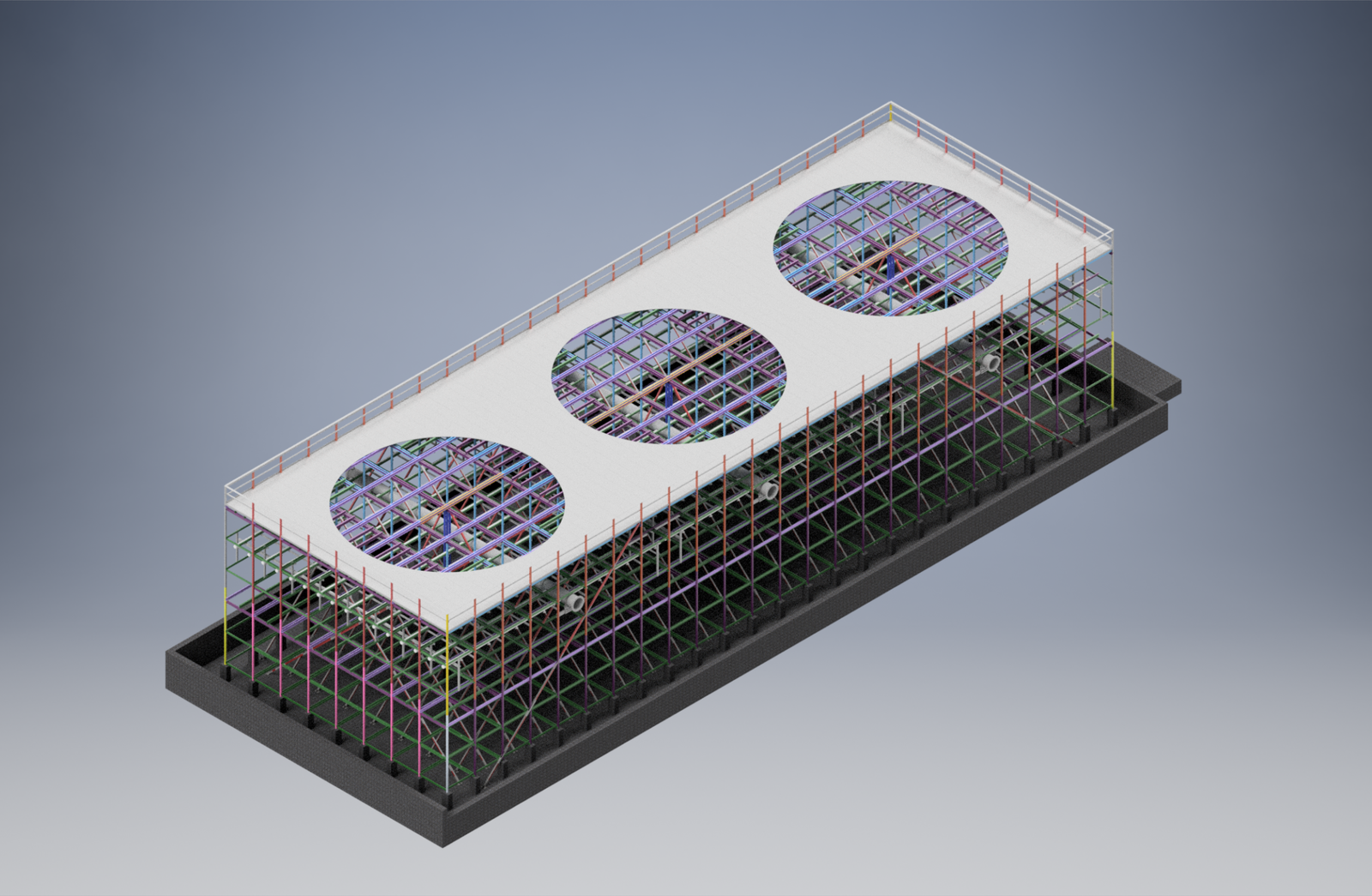
Cooling towers remove waste heat from process water in power plants, refineries, chemical plants, and manufacturing facilities. When a tower underperforms, the effects spread fast: process temperatures rise, chillers work harder, and production can slow down.
Many of the problems plant teams deal with years later start during construction. The materials chosen, the structural design, and the build method all affect how well the tower performs, how often it needs repairs, and how easy those repairs are to carry out.
This guide covers the main materials, construction methods, and project phases involved in cooling tower construction. It also explains how early decisions influence long-term maintenance and repair.
Table of Contents
- Why Cooling Tower Construction Matters
- What Is Cooling Tower Construction?
- Key Components and What They Do
- Common Materials Used in Cooling Tower Construction
- FRP Cooling Tower Construction
- Why Fiberglass Reinforced Plastic Is Popular
- Concrete Cooling Tower Build
- Advantages of Concrete Cooling Towers
- Additional Construction Materials
- Structural Design Fundamentals
- Factory-Assembled vs. Field-Erected Construction
- The Construction Timeline, Phase by Phase
- Planning and Design
- Procurement
- Site Work and Installation
- Testing and Commissioning
- How Construction Decisions Affect Cooling Tower Repair Later
- Common Repair Items
- Building Repairability From Day One
- Repair, Retrofit, or Rebuild?
- Final Thoughts
- Frequently Asked Questions
- Is FRP or Concrete Better for a Cooling Tower?
- How Long Does Cooling Tower Construction Take?
- What Are the Most Common Cooling Tower Repairs?
- When Should a Cooling Tower Be Replaced Instead of Repaired?
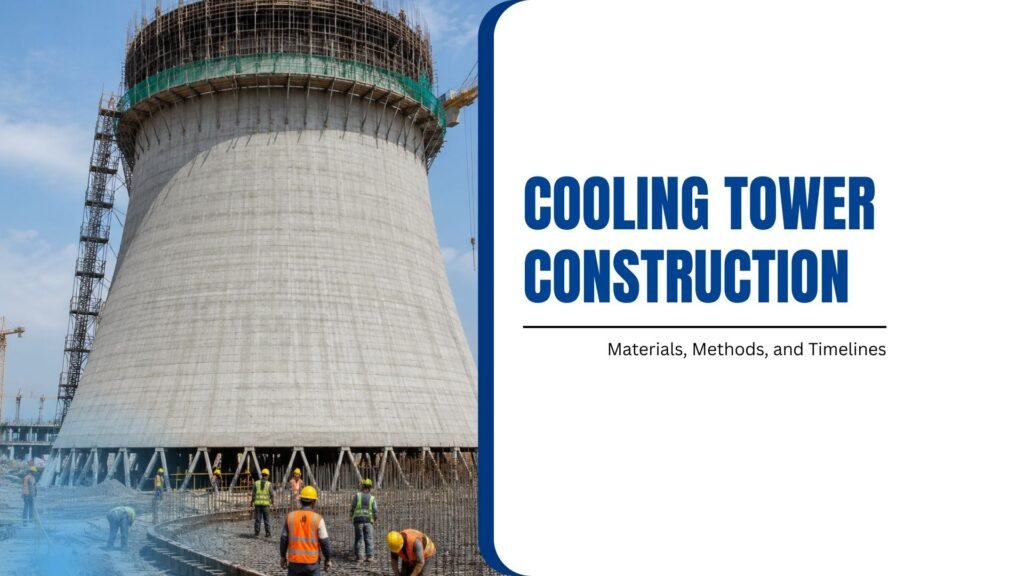
Why Cooling Tower Construction Matters
Cooling tower construction sits at the core of many industrial infrastructure projects. Power plants, factories, and large industrial systems rely on these structures to remove heat and keep operations stable.
Construction quality affects far more than the first day of operation. A well-built tower runs efficiently, lasts longer, and needs fewer repairs. A poorly built one drains budgets through downtime and constant maintenance.
What Is Cooling Tower Construction?
New cooling tower construction is the process of designing and building a structure that transfers waste heat from process water into the air. The goal is to achieve reliable cooling at the lowest possible operating cost.
Several factors shape how complex a project becomes. Site conditions, climate, and capacity all play a role.
Before any build begins, engineers weigh a few critical objectives. These choices guide every later decision.
The main project objectives include:
- Thermal performance: Confirm the tower meets the required cooling capacity for peak loads.
- Structural integrity: Design the frame to handle wind, water, and seismic forces safely.
- Maintenance access: Plan walkways and clearances so crews can service equipment easily.
- Cost control: Balance upfront spending against decades of operating expenses.
Key Components and What They Do
It helps to understand the main components before comparing materials and methods, because each one has its own wear patterns and repair needs.
- Structural frame: Supports the fill, distribution system, fan deck, and mechanical equipment.
- Fill media: Increases the contact area between water and air. Film fill is efficient but more sensitive to fouling, while splash fill tolerates dirtier water.
- Water distribution system: Headers, laterals, and nozzles (or open hot-water basins) spread warm water evenly over the fill.
- Fans and drive train: Motors, gearboxes or belt drives, and fans move air through the tower in mechanical-draft designs.
- Drift eliminators and louvers: Drift eliminators capture water droplets before they leave the tower. Louvers keep water in and reduce sunlight reaching the basin.
- Cold water basin: Collects the cooled water. It is often concrete in field-erected towers and FRP or steel in packaged units.
Common Materials Used in Cooling Tower Construction
Material choice drives cost, lifespan, and maintenance needs. The right material depends on tower size, water chemistry, and operating environment.
FRP Cooling Tower Construction
Why Fiberglass Reinforced Plastic Is Popular
FRP cooling tower construction has grown fast across many industries. Fiberglass reinforced plastic resists harsh conditions that destroy weaker materials.
Plant managers often pick FRP for practical, long-term reasons. The benefits show up in daily operation and repair budgets.
Key advantages of FRP towers include:
- Lightweight design: Lower structural load reduces foundation and support costs.
- Corrosion resistance: Handles chemicals and moisture without rusting or rotting.
- Lower maintenance: Needs fewer repairs than steel or wood.
- Long service life: Performs well for decades under normal conditions.
Concrete Cooling Tower Build
Advantages of Concrete Cooling Towers
A concrete cooling tower build suits the largest and most demanding sites. Concrete handles heavy loads and extreme conditions that other materials cannot.
These towers cost more upfront but reward owners over time. Their strength makes them a long-term asset.
Concrete still needs attention. Cracking, spalling, and reinforcement corrosion can develop over time, especially if water chemistry is poorly controlled. Proper concrete mix design, adequate cover over the reinforcement, and suitable coatings reduce these risks from the start.
Additional Construction Materials
Some projects need a mix of materials to balance cost and performance. The right blend depends on water quality and budget.
Other common materials include:
- Galvanized steel: Affordable framework with decent corrosion protection.
- Stainless steel: Stronger corrosion resistance for harsh water chemistry.
- Hybrid systems: Combine materials to match specific site needs.
- Selection factors: Match material to water treatment, climate, and lifespan goals.
Structural Design Fundamentals
Cooling tower structural design must account for several loads acting together:
- Dead loads: The weight of the structure, fill, distribution system, and mechanical equipment.
- Operating loads: The weight of water in the basin and distribution system and on the fill. Fill that becomes scaled or fouled can get significantly heavier than its clean design weight, so the load assumptions need a margin.
- Wind loads: Towers are tall and lightly enclosed, so wind is often a governing load.
- Seismic loads: These depend on the site’s location and the applicable building code.
- Dynamic loads: Fans and drives introduce vibration that the fan deck and supports must handle without fatigue.
Foundations are designed around soil conditions confirmed by a geotechnical investigation. Settlement under a basin can crack concrete and misalign equipment, which is an expensive fault to correct after the tower is in service.
Factory-Assembled vs. Field-Erected Construction
Most projects use one of two construction methods.
Factory-assembled towers are built largely in a factory and shipped as one or more modules. Site work is mostly limited to setting the units, connecting piping and power, and commissioning. They suit small to medium loads and tight schedules.
Field-erected towers are built on site from components. This allows much larger capacities and custom layouts, which is why power generation, petrochemical, and heavy industrial sites often use them.
| Factor | Factory-Assembled | Field-Erected | Best For | Typical Timeline |
| Project size | Small to medium | Large | Match to capacity | Faster vs. longer |
| Customization | Limited | High | Unique site needs | Field-erected |
| Upfront cost | Lower | Higher | Budget-driven jobs | Factory-assembled |
| Installation speed | Fast | Slower | Tight schedules | Factory-assembled |
| Capacity range | Moderate | Very high | Heavy industry | Field-erected |
The Construction Timeline, Phase by Phase
Actual durations depend on tower size, method, and location. Factory-assembled units can often be installed within days to weeks once foundations and piping are ready. Large field-erected towers are usually planned in months. Most projects move through the same four phases.
Planning and Design
This phase includes defining the heat load and design conditions, surveying the site, running a geotechnical investigation, choosing materials, and completing the structural and thermal design. Permits and approvals are also secured here. Changes made in this phase are cheap compared with changes made later.
Procurement
Fans, gearboxes, motors, fill, and structural materials can have long lead times. Ordering early and matching deliveries to the construction sequence prevents crews from standing idle.
Site Work and Installation
The work runs from foundation and basin construction to structural erection, then installation of fill, distribution, drift eliminators, and the mechanical equipment. Several trades work on site at once in this phase, so coordination and safety planning matter.
Testing and Commissioning
Before handover, the tower is inspected, the mechanical equipment is run in, and water treatment is started. Thermal performance is verified against the design. Many owners specify acceptance testing to the Cooling Technology Institute’s ATC-105 code, and some require towers with thermal performance certified under CTI STD-201.
How Construction Decisions Affect Cooling Tower Repair Later
Every tower eventually needs repair work. How often that happens, how much it costs, and how much downtime it causes depend heavily on decisions made during construction.
Common Repair Items
Over the life of a tower, the most frequent repairs involve:
- Fill: Replacement after fouling, scaling, or physical damage
- Distribution system: Clogged or broken nozzles and damaged laterals
- Drift eliminators: Sagging, damaged, or poorly sealed sections that increase drift loss
- Drivetrain: Gearbox, bearing, and belt wear, along with fan blade damage
- Basin: Leaks, cracked concrete, and coating failure
- Structure: Corroded steel, deteriorated wood in older towers, and loose or failed connections
Building Repairability From Day One
Several construction choices make future repairs easier:
- Corrosion-resistant materials in the areas that stay wet reduce structural repair needs.
- Adequate access means crews can reach the fan deck, distribution system, and basin without extensive scaffolding.
- Modular fill and drift eliminators allow damaged sections to be replaced without dismantling large areas.
- Multi-cell layouts let one cell be isolated for repair while the others stay in service.
- Good documentation, including as-built drawings and material records, speeds up diagnosis and part replacement years later.
When a problem does develop, a qualified team that understands both the original construction and the operating conditions can identify the root cause instead of just treating symptoms. Owners often bring in a specialist in cooling tower repair at this stage to inspect the structure, assess the remaining service life, and recommend a scope of work.
Repair, Retrofit, or Rebuild?
When a tower is aging, owners usually face three options:
- Targeted repair: Fix specific components while the structure remains sound.
- Retrofit: Upgrade fill, drift eliminators, fans, or drives to recover or increase capacity, often within the existing structure.
- Rebuild or replace: This becomes the better option when structural deterioration is widespread or when the required capacity has outgrown the existing tower.
The right choice depends on the condition of the structure, the site’s current and future cooling needs, and how much downtime the plant can accept.
Final Thoughts
Good cooling tower construction depends on three things: materials suited to the water and the environment, a construction method that fits the capacity and schedule, and structural design that accounts for real operating loads.
Owners who also plan for maintainability during construction spend less on repairs and lose less production to unplanned outages over the life of the tower.
Frequently Asked Questions
Is FRP or concrete better for a cooling tower?
It depends on the application. FRP is widely used for structures and casings because it resists corrosion and is lightweight. Concrete is common for basins and very large towers where heavy loads and long service life are priorities. Many towers combine both.
How long does cooling tower construction take?
Factory-assembled towers can usually be installed quickly once foundations and piping are ready. Field-erected towers take considerably longer because of on-site assembly, and the schedule depends on size, site conditions, material lead times, and approvals.
What are the most common cooling tower repairs?
The most common repairs are fill replacement, nozzle and distribution repairs, drift eliminator replacement, gearbox and fan work, basin leak repair, and repair of corroded or damaged structural members.
When should a cooling tower be replaced instead of repaired?
Replacement is usually worth considering when structural deterioration is widespread, when repair costs keep rising year after year, or when the tower can no longer meet the plant’s cooling load.


One chatbot in our test backed up a claim with a Nature DOI that doesn’t exist. Another was asked for 300 words and handed back 474. A third stretched an 800-word brief to about 1,090.
Those three were Gemini, Perplexity and ChatGPT, and each of them is very good at something else. That’s the awkward part of choosing a chatbot right now. ChatGPT has passed 1 billion weekly users (OpenAI, 2026) and Gemini has passed 1 billion monthly users (Google, 2026), yet neither one won our scorecard. No chatbot won all three rounds, either.
How We Scored Six Chatbots on the Same Nine Prompts
In November 2026, Phrasly ran ChatGPT, Claude, Gemini, Microsoft Copilot, Perplexity and our own Neo through nine identical prompts. Every prompt got a fresh chat, with no memory or custom instructions.
What each round measured
- Reasoning: the right answer, sound working, and sensible checks.
- Writing: following the brief, staying accurate, and matching the tone.
- Search: citation accuracy, freshness, and how well sources were combined.
Each prompt was worth 15 points, which makes 45 per round and 135 overall.
What could skew the results
We aren’t neutral here, because Phrasly makes Neo. The plans didn’t match either. Claude ran Opus 5.5 on a paid plan and Neo ran on a paid team plan, while ChatGPT and Perplexity ran free, with ChatGPT logged out. Gemini and Copilot used work accounts, and Gemini fell back from 3.6 Thinking to 3.6 Flash after hitting a usage cap. Each prompt was scored on one run, so treat a gap of a point or two as a tie.
The Results, From First Place to Sixth
Claude: 131 of 135, and the Clear Winner on Writing
Claude took a perfect 45 in writing and was the only chatbot to follow all six rules in our style guide prompt. The catch is that those scores came from paid Opus 5.5, and free users get Sonnet 5.5 and Haiku 5.5. Free Claude still held up in a separate 1,500-word article test, landing at 1,471 words. Free ChatGPT ran to about 2,050 on the same brief.
Microsoft Copilot: 126, the Steadiest All-Rounder
Copilot never led a round and never collapsed in one. All three of its links we opened supported the claims attached to them. Keep in mind that we tested Microsoft 365 Copilot Chat on a work account, so the consumer app may behave differently.
Phrasly Neo: 124, Strong on Search, Weaker on Editing
Neo tied Perplexity for the best search score at 43, then lost ground in writing with 38. One miss was serious: its humanizer rewrite turned “previous quarter” into “earlier this quarter,” which changed the facts. If you want an AI chatbot like ChatGPT with a humanizer and AI detector inside the chat, Neo is free on every plan with daily limits. Web search, which it used for that top search score, needs a paid plan.
ChatGPT: 118, Capable but Loose With a Brief
Free ChatGPT got every reasoning answer right, though one reply cut off midway. Length was its weak spot. It wrote 345 words against a 300-word target and missed one of the five constraints on that prompt. We didn’t test Plus or Pro, so this verdict covers the free, logged-out version only.
Gemini: 118, Sharp Reasoning, Shaky Sourcing
Gemini tied Claude for the top reasoning score at 44. Then search dragged it down to 34, the lowest in that round. It gave the fewest citations, six, and produced the only invented fact in the entire search round.
Perplexity: 115, a Researcher Rather Than a Writer
Perplexity offered 30 citations with no invented facts and tied for first in search. Writing was another story. Its score of 30 was the lowest by five points, and that 474-word explainer met only three of five constraints. Use it to find things out, then draft somewhere else.
Grok, Meta AI and DeepSeek: Popular, but Not Scored
These three weren’t part of this round, so we won’t hand them numbers they didn’t earn. Published reviews still give a fair picture of where each one fits.
Grok draws on live posts from X, which suits fast-moving topics, although those posts aren’t fact-checked (Lindy, 2026). Meta AI is built into WhatsApp, Instagram, Messenger, and Facebook, so many people already have it. DeepSeek stays free with no paid consumer plan listed, but it falls under Chinese data law, which matters if you handle anything sensitive.
What Each Chatbot Costs in November 2026
| Chatbot | Best fit | Free plan | First paid plan (US, monthly) |
| ChatGPT | Everyday general use | Yes, with limits | Go, $8 |
| Claude | Long-form writing | Yes, Sonnet 5.5 and Haiku 5.5 | Pro, $20 |
| Gemini | Reasoning and Google users | Yes, mainly Flash-Lite | AI Plus, $4.99 |
| Copilot | Microsoft 365 users | Yes | Microsoft 365 Personal, $9.99 |
| Perplexity | Cited research | Yes, limited Pro Searches | Pro, $20 |
| Phrasly Neo | Natural drafts, humanizer in chat | Yes, daily limits | Unlimited, $10.99 billed annually |
| Grok | Live X trends | Yes, limited | Plus, $8 |
| Meta AI | Chat inside social apps | Yes, some caps | Meta One Core, $7.99 |
| DeepSeek | Free reasoning | Yes | None listed |
Prices come from AI/ML API (November 11, 2026), Krater’s price index (November 13, 2026) and Phrasly’s pricing page. Check your local checkout before you subscribe.
Why Another Test Could Crown a Different Winner
Our ranking is one snapshot, and other testers have reached different results. In AI/ML API’s November 2026 free-plan test, Claude scored just 2 of 8 on a PDF and sales data task because every page number it gave was one too low. Gemini and ChatGPT both scored 8 of 8, although an upload limit kept ChatGPT from seeing the chart. On research, Claude and Gemini scored 5 of 5, while ChatGPT scored 4.
Blind voting shifts the order again. On Arena’s text leaderboard of November 6, 2026, built on about 9.1 million votes, Google’s Gemini 4 Carbon ranked first, Meta’s Muse Wonder third and Claude Opus 5.5 fourth. That’s a newer Gemini than the 3.6 models we used, which shows how much the exact model and plan can change an outcome.
So run your own check before paying. Take three real tasks from your week, paste the same prompts into two chatbots, and count how long each answer takes to fix. Whatever you pick, plan for that edit. Our guide on how to reduce editing time without losing your brand voice covers what to protect when AI touches a draft.
Choose the Chatbot Whose Mistakes You Can Catch
Every chatbot here slipped somewhere. Claude topped our test and still misread page numbers in someone else’s. Gemini reasoned beautifully and then cited a source that wasn’t there. Even Neo, which we built, changed a fact while polishing a sentence.
That’s why the best question isn’t which chatbot is smartest. Ask which one fails in ways you’ll notice. Writers can spot a flat paragraph faster than a bad citation, so a strong drafting tool makes sense for them. Researchers need links they can open and verify. Start with the free plan that suits your work, test it on something real, and pay only once it has saved you time.


An Instagram giveaway can help you connect with your audience. But when you collect entrants’ details, you need to ensure you don’t misuse their data.
The safest starting point is simple: ask only for what you need, explain how you will use it, and keep unrelated marketing optional.
Even a small giveaway can involve usernames, email addresses, shipping details, and information shared through direct messages. So, plan how you will handle those details before posting the prize announcement, rather than trying to fix privacy gaps after entries arrive.
Keep Your Instagram Giveaway Entry Rules Simple
Choose an entry method for your giveaway that requires little personal information and lets you check entries fairly. A comment may be enough initially, while a shipping address usually belongs later, once you have selected a winner.
Avoid asking every entrant for a phone number, birth date, or home address unless you have a specific, defensible need. Even eligibility checks should use the least intrusive approach available.
Unclear instructions and unreliable checks undermined an Instagram prize draw. For your giveaway, straightforward rules make entries easier to verify without requesting extra evidence from participants.
You should also check Instagram’s community guidelines before you take your first steps.
Get Legal Help Before Collecting Entrant Data
Bring in legal support while you are still able to change things like the entry form, rules, and privacy wording. A review before launch gives you time to address problems without disrupting an active giveaway.
And seeing as different regions have different legalities, make sure you consult a specialist lawyer in the area where you will be running the giveaway.
For instance, if your giveaway is happening in the UK, consider hiring a data privacy lawyer in London. They can assist with regulatory compliance.
They can also help with things like data breach and incident response, policies and procedures gaps, risks, and updates, and third-party privacy agreements.
Give your lawyer practical materials to review, such as:
- Your entry form and giveaway rules
- Your planned marketing permissions
- Your vendors and deletion schedule
Separate Giveaway Entry From Marketing Permission
Keep prize administration separate from newsletter subscriptions and future promotional messages. Someone entering to win a product has not necessarily agreed to receive ongoing advertising.
Where consent is required for marketing, use a separate, unticked option and record what the person agreed to. Ask your adviser to confirm the lawful basis for administration and the separate rules governing your intended marketing channels.
Explain Your Data Practices Before Entry
Put a short, readable explanation beside the entry instructions or entry form, with access to the fuller privacy notice. Entrants should not have to submit their information before discovering what happens to it.
Explain who runs the giveaway, what information you collect, why you need it, and who receives it. Include the relevant lawful basis, retention information, and a contact route for privacy questions and rights requests.
Keep the wording specific to the promotion. If you will use an external fulfillment company to send the prize, explain that arrangement rather than hiding it behind a broad reference to “trusted partners.”
Limit Access to Entrant Information
Give access only to people who need the information to run the giveaway. A colleague scheduling Instagram posts may not need the spreadsheet containing the winner’s address.
Use access-controlled storage rather than passing entrant lists around through personal email accounts. Remove access when a team member’s role in the promotion ends.
Before using a giveaway platform or shipping provider, check what information it receives, what it does with that information, and how deletion works.
Have the appropriate agreements reviewed, particularly where a provider handles personal data on your behalf or transfers it internationally.
Contact Winners Without Exposing Private Details
Contact the selected winner privately and request only the information needed to verify eligibility and deliver the prize. Never ask them to post an address, phone number, or identification document in public comments.
Plan any winner announcement before launch and explain the relevant publicity arrangements in your rules and privacy information. Avoid treating permission to enter as unlimited permission to publish someone’s identity or reuse their photographs.
If publicity obligations apply, get advice on balancing those requirements with privacy rights. Keep the public announcement separate from the private details needed for delivery.
Delete Giveaway Data on a Planned Schedule
Set retention periods before entries start arriving, rather than keeping everything indefinitely. Different records may need different schedules, depending on prize delivery, complaints, and applicable obligations.
Once those purposes end, delete unnecessary entrant exports, duplicate spreadsheets, and delivery details. Include vendors in that process, and check that your deletion instructions cover their copies.
Keep any properly obtained marketing records separate from the giveaway administration file. An entry list should not quietly become a permanent prospect database.
Making Your Next Instagram Giveaway Privacy Ready
A well-run Instagram giveaway combines simple entry rules, clear explanations, limited access, and a realistic deletion plan. Separate marketing choices and proportionate legal support help keep the promotion focused on the prize rather than unnecessary data collection.
Was this post helpful? If so, explore some of our other informative articles!

A familiar video can feel very different when an animated character takes over the main performance. A solemn knight joining a casual dance or a tiny robot delivering an exaggerated reaction creates an immediate contrast between subject and action. With genjutsu ai, creators can explore that contrast by combining reference footage with character images. The most interesting version gives the replacement a personality and a situation that make the familiar movement newly entertaining.
Build the Joke Around the Character
Start by naming the trait that makes your subject distinctive. A theatrical villain may overreact to a minor inconvenience. A disciplined robot may celebrate an ordinary task with surprising enthusiasm. A shy character may struggle with an overly confident entrance.
The reference should give that trait something to do. Choose movement that supports the personality or creates a deliberate contradiction viewers can understand.
Use an original character or visual assets you have permission to adapt. You can describe a broad character type without relying on a recognizable copyrighted figure. The creative value comes from the relationship between personality and performance, not simply a familiar name.
How to Recast a Trend with an Animated Character
Step 1: Find a Performance That Reads Clearly
Choose a recognizable action such as an entrance, dance, celebration, or reaction. Watch the full sequence and identify the exact moment that makes it work.
Look for visibility and manageable interactions. A character with a large helmet or short arms may present different visual challenges from the original performer. If the joke does not require complex contact with props, simpler footage can give you an easier first test.
Use source footage you have permission to adapt. Keep a record of the reference so it can be reviewed before publication.
Step 2: Prepare a Consistent Character Design
Select images that agree on the face, outfit, colors, and proportions. Mixing early concept art with a later design can introduce conflicting details.
Identify the features viewers should recognize throughout the movement. For a knight, that might be a broad helmet and blue cape. For a robot, it could be a square face and bright antenna.
Make those features visible in the references. A dramatic image that hides the face may express mood, but it may provide less useful information for a reaction-focused clip.
Step 3: Describe the Replacement Without Overloading the Scene
Upload your reference footage and character images, then identify the performer to replace in the prompt. Describe the central action and the design details that matter.
For example: replace the main dancer with the original knight character in the reference images, following the original dance and camera framing. Keep the blue cape and helmet recognizable.
This instruction describes the intended outcome, not a guaranteed result. Keep extra transformations limited until you have reviewed whether the character and movement work together.
Step 4: Watch the Timing Before Inspecting Frames
Review at normal speed. Does the new subject make the performance unexpected? Does the pause, turn, or reaction still happen clearly? Can you identify the character during the main moment?
Then inspect continuity. Check the face, accessories, costume, and proportions through changes in pose. Look closely at any contact with the ground, furniture, or another object.
If the action is suitable but the design changes, revise the visual inputs. If the character looks recognizable but the movement communicates the wrong attitude, choose a different performance rather than endlessly expanding the prompt.
Step 5: Add a Situation That Completes the Contrast
A short caption can connect the dramatic character to an ordinary problem. The knight celebrates finishing the laundry. The villain reacts to a cancelled appointment. The robot discovers a typo in its carefully prepared plan.
Choose a setup that the movement can communicate without a lengthy explanation. If the caption and action disagree, the viewer has to solve the scene rather than enjoy it.
Example Case: A Knight Celebrates Finishing the Chores
Imagine a fictional illustrator whose original knight is serious about every assignment, including household tasks. They want to adapt a celebratory dance format into a character-led joke. This is an illustrative scenario, not a reported result.
The illustrator selects footage with a readable celebration and uploads consistent knight images. The contrast is intentional: armor and a cape turn an ordinary victory dance into an exaggerated response to a small achievement.
They would review whether the helmet remains stable, whether the cape becomes confusing during the turn, and whether the main gesture still reads at normal speed. If the outfit obscures the joke, a slower or more open performance could be a better foundation.
A caption such as “Quest complete: folded the fitted sheet” gives the celebration a specific meaning. The creator could later explore the same personality in other suitable formats without repeating the exact joke.
Turn a Surprise into a Recurring Character Idea
Create a short list of everyday situations that fit the character before choosing more references. The knight might approach shopping, laundry, and making tea as important quests. This gives you several possible captions while keeping one personality. Match each situation to an available action instead of forcing every joke into the same dance or reaction.
Save the approved references and personality notes with the draft. Future adaptations should feel like the same character encountering new situations. That connection can make the account easier to understand than a collection of unrelated animated substitutions.
Unexpected casting becomes more useful when it reveals a recognizable personality. To explore an original animated subject within a familiar video format, genjutsu ai provides a reference-based starting point for combining a known action with a new character-led joke.

We Tested Every Popular AI Chatbot Like ChatGPT. Here’s How They Compare

How to Run an Instagram Giveaway Without Misusing Data

“Should I Order Medium or Large?” What Latex Sizing Advice Should Explain

Who Is Shameera? All You Need To Know About Charli XCX’s Mother

Who Is Gulliver Flynn Oldman? The Untold Story of Sir Gary Oldman’s Son

Meet Rosemary Turner: The Mother of Actor Callum Turner
-
Biographies9 months ago
Who Is Shameera? All You Need To Know About Charli XCX’s Mother
-
Biographies9 months ago
Who Is Gulliver Flynn Oldman? The Untold Story of Sir Gary Oldman’s Son
-
Biographies10 months ago
Meet Rosemary Turner: The Mother of Actor Callum Turner
-

 Biographies7 months ago
Who is Alexandra James? Inside The Life of Jeremy Clarkson’s Former Partner
-

 Blog5 months ago
AI Video for Social Media: How Small Brands Keep Up Without Burning Out
-
 Biographies9 months ago
Who is Todd McRae? Meet Tate McRae’s Father
-
 Biographies9 months ago
Who Is Daniel Mara? The Untold Story of Kate Mara’s Private Sibling
-
 Celebrity10 months ago
Who Is Peter Hernandez? The Real Story of Bruno Mars’ Father