
Blog
Is Your Achy Knee a Better Forecaster Than the Weatherman?


Have you ever noticed your knee starting to ache just before a rainstorm rolls in? You’re not alone. For generations, people have claimed they can predict changes in the weather based on aches and pains in their joints.
While a sore knee might not replace your local weather forecast, there is some scientific reasoning behind why certain weather conditions can make joint discomfort more noticeable. Understanding the connection between weather and knee pain can help you recognize patterns, manage discomfort, and stay comfortable throughout the year.
Why Your Knee Might React to Changing Weather
If your knee seems to know when a storm is approaching, changes in barometric pressure could be part of the explanation. Barometric pressure is the weight of the atmosphere pressing against the Earth’s surface. It naturally fluctuates as weather systems move through an area.
When atmospheric pressure drops ahead of a storm, some researchers believe tissues surrounding the joints may expand slightly. This could place additional pressure on sensitive areas, making existing discomfort more noticeable. People with arthritis or a history of knee injuries may be particularly likely to notice these changes.
Wearing supportive products from brands like Copper Fit may also help you feel more comfortable as you go about your daily activities, especially when changing weather makes your knees feel less cooperative.
Temperature can play a role, too. Colder conditions may cause muscles and surrounding tissues to feel tighter, potentially contributing to stiffness and reduced flexibility. While weather doesn’t necessarily cause joint problems, it may influence how existing symptoms feel.
Does Science Support Weather-Related Knee Pain?
The relationship between weather and joint discomfort has been studied for years, although the findings aren’t entirely consistent. Some research suggests that people with osteoarthritis experience changes in pain levels alongside fluctuations in temperature, humidity, and atmospheric pressure.
However, not everyone experiences the same effects. Some individuals report increased discomfort before rainy weather, while others notice symptoms during particularly cold or humid days. Still others don’t recognize any connection between their joint health and the forecast.
One reason the relationship can be difficult to measure is that pain is highly individual. Factors such as activity levels, inflammation, previous injuries, sleep quality, and overall health can influence how someone’s knee feels on a given day.
While your achy knee might offer a clue about changing weather, it isn’t a scientifically reliable forecasting tool.
Why Can Cold Weather Make Knee Discomfort More Noticeable?
Winter often brings a noticeable change in how people experience joint stiffness. Lower temperatures can make muscles feel less flexible, while spending more time indoors may reduce opportunities for regular movement.
When you’re less active, the muscles supporting your knees may become weaker over time. This can place additional demands on the joint during everyday activities, including climbing stairs, walking, or standing for extended periods.
Cold weather can also make people less inclined to exercise, creating a cycle in which reduced movement contributes to stiffness. Maintaining a consistent winter activity routine is one way to help support comfortable movement throughout the colder months.
Gentle stretching, walking, and low-impact activities such as swimming can help keep your joints moving without placing excessive stress on your knees.
Simple Ways To Support Your Knees in Any Weather
Although you can’t control atmospheric pressure or prevent a cold front from arriving, you can take practical steps to support your knees.
Staying active is a good starting point. Strengthening the muscles around your knees, particularly your quadriceps and hamstrings, can provide better joint support. Choose activities that match your fitness level, and increase intensity gradually.
Keeping your body warm may also help when temperatures drop. Comfortable clothing, warm showers, and gentle movement can make it easier to manage feelings of stiffness.
Maintaining a healthy weight is another important consideration. Carrying excess weight can increase the load placed on your knee joints, potentially contributing to discomfort over time.
Finally, pay attention to your body’s signals. If certain activities or weather conditions consistently seem to aggravate your symptoms, keeping a simple journal can help you identify patterns and discuss them with a healthcare professional.
When Should You See a Doctor About Knee Pain?
Occasional stiffness or mild discomfort doesn’t always indicate a serious problem. However, persistent or worsening knee pain deserves attention, particularly if it interferes with your daily activities.
Seek medical advice if your knee frequently swells, feels unstable, locks, or becomes difficult to bend or straighten. Sudden severe pain, significant swelling, an inability to bear weight, or a visibly deformed knee may require prompt medical evaluation.
A healthcare professional can help determine whether your discomfort is related to arthritis, an old injury, inflammation, or another underlying issue. Getting an accurate diagnosis can also help you find an appropriate treatment and management plan.
Keep Checking the Forecast
An achy knee might occasionally seem more perceptive than your local meteorologist, especially when a storm is approaching. Changes in temperature and atmospheric pressure may influence joint discomfort, although the connection varies from person to person.
Rather than relying on your knee to predict tomorrow’s rain, use those occasional aches as a reminder to pay attention to your joint health. Staying active, supporting your muscles, and recognizing persistent symptoms can help you maintain comfortable movement regardless of what the weather has in store.

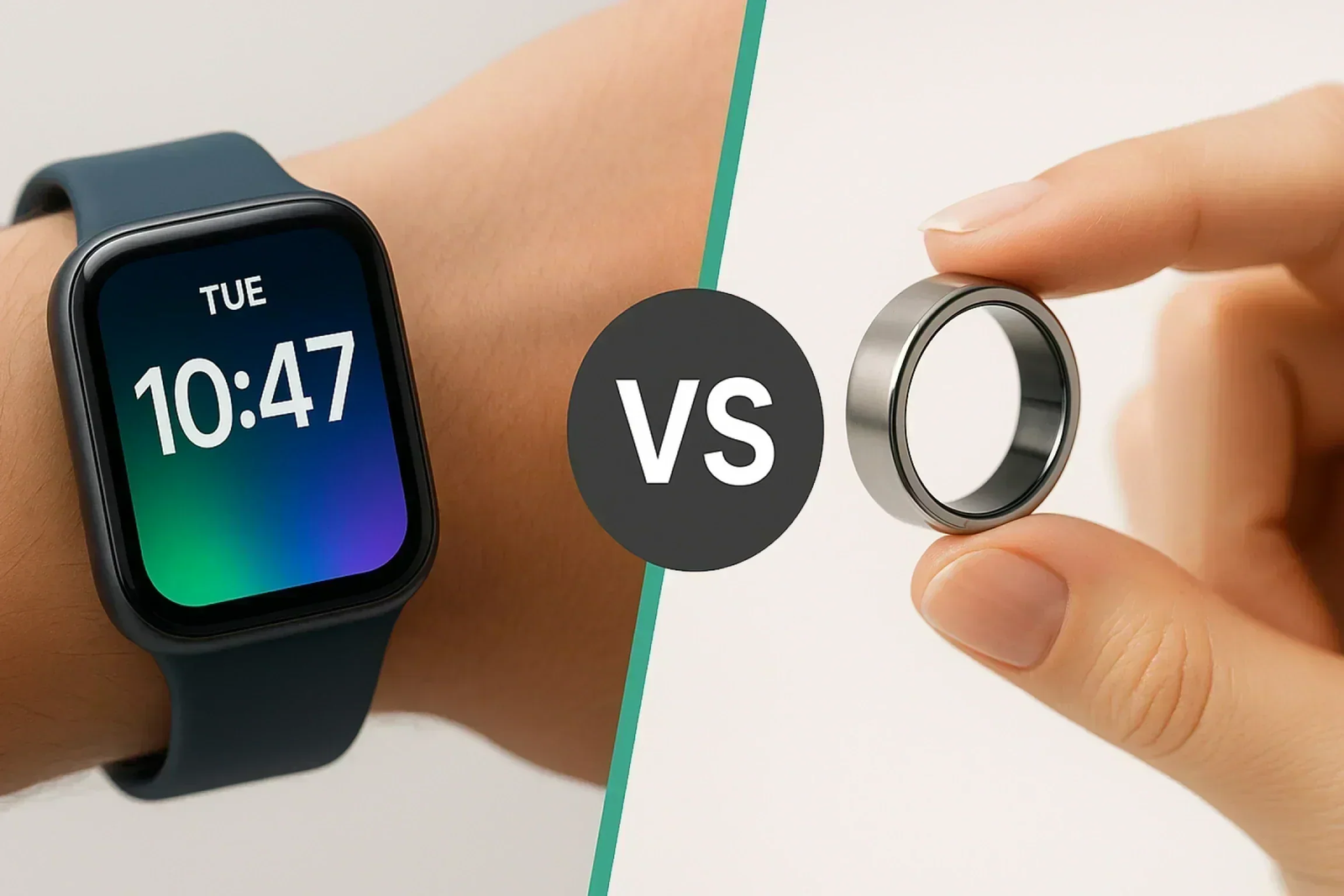
Wearable technology has made it easier to monitor daily activity, sleep, and different aspects of personal wellness. Smartwatches have been popular for years, offering fitness tracking, smartphone notifications, and convenient access to apps. However, smart rings have introduced another option for people who prefer smaller devices with a more discreet design.
When comparing a smart watch vs smart ring, the biggest difference is how each device fits into everyday life. A smartwatch offers a screen, notifications, and multiple interactive features, while a smart ring focuses more on background health and activity tracking.
Both devices can be useful, but choosing between them depends on personal preferences, daily routines, and the features that matter most.
For people considering a smart ring, finding the best smart ring means looking beyond appearance. Battery life, comfort, tracking features, app experience, and subscription costs all deserve attention.
This guide compares both wearable devices and explores what to consider before making a purchase.
What Is a Smartwatch?
A smartwatch is a wearable electronic device designed to provide smartphone-related functions and activity tracking directly from the wrist.
Most modern smartwatches include a digital display, sensors, wireless connectivity, and a companion mobile application. Depending on the model, users can access features such as:
- Heart rate monitoring
- Daily step counting
- Workout and exercise tracking
- Sleep monitoring
- Smartphone notifications
- Calls and messages
- Music controls
- GPS-based activity tracking
- Third-party applications
One of the biggest advantages of a smartwatch is its interactive display. Users can check information, respond to supported notifications, and access different functions without taking out their phones.
However, smartwatches are generally larger than smart rings. Their battery life also varies considerably depending on the model, display settings, and feature usage.
What Is a Smart Ring?
A smart ring is a compact wearable device that contains sensors designed to monitor selected health and activity measurements.
It is worn around a finger and usually connects to a smartphone application through Bluetooth. Unlike a smartwatch, most smart rings do not include a screen.
Depending on the model, a smart ring may track:
- Heart rate
- Heart rate variability (HRV)
- Blood oxygen levels
- Skin temperature trends
- Respiratory rate
- Sleep duration and estimated sleep stages
- Daily steps
- Estimated calorie expenditure
- General activity and wellness patterns
The information is collected in the background and displayed through a companion application.
Smart rings are particularly appealing to people who prefer discreet technology and want to monitor everyday wellness without wearing another screen.
Smart Watch vs Smart Ring: Main Differences
Although both devices belong to the wearable technology category, their features and everyday experiences are different.
| Feature | Smartwatch | Smart Ring |
| Design | Larger wrist-worn device | Small finger-worn device |
| Display | Usually includes a screen | Usually screen-free |
| Health tracking | Available on most modern models | Available on many models |
| Activity tracking | Often includes dedicated workout modes | Usually focuses on daily activity and wellness |
| Notifications | Supports calls, messages, and alerts on many models | Generally limited |
| GPS | Available on selected models | Usually relies on connected phone or other data |
| Sleep tracking | Available on many models | Often designed for overnight wear |
| Battery life | Varies by model and usage | Often several days |
| Smartphone interaction | Directly through the watch | Primarily through the mobile app |
| Subscription costs | Depend on brand and services | Depend on brand and services |
The table shows that neither device is automatically better. A smartwatch is generally more suitable for interactive features, while a smart ring is designed around compactness and background tracking.
Advantages of a Smartwatch
Smartwatches remain popular because they combine several functions in one wrist-worn device.
1. Convenient Smartphone Notifications
One of the main benefits of a smartwatch is the ability to receive notifications directly on the wrist.
Depending on the model and connected phone, users can check incoming calls, messages, calendar reminders, and application notifications.
This can be useful for people who frequently need to stay connected while working, exercising, or travelling.
2. Workout and Sports Features
Many smartwatches offer dedicated workout modes for activities such as running, cycling, swimming, and strength training.
Some models also include built-in GPS, allowing users to record outdoor routes without carrying a smartphone.
For people who want detailed workout information, these features can make a smartwatch a practical choice.
3. Interactive Display
A smartwatch provides information through its screen, making it easy to view measurements and interact with different applications.
Users can check the time, review activity summaries, control music, and access supported apps.
This is an important advantage for people who enjoy having technology available directly on their wrist.
4. Multiple Everyday Functions
Depending on the device, smartwatches can also support contactless payments, navigation, voice assistants, alarms, and other useful functions.
These additional features make them more than fitness trackers.
However, the number of functions can also mean more notifications and screen interactions throughout the day.
Advantages of a Smart Ring
Smart rings offer a different approach to wearable technology. Instead of focusing on screen-based interaction, they are designed to collect information in a smaller format.
1. Compact and Discreet Design
A smart ring is considerably smaller than most smartwatches.
It looks similar to traditional jewelry and does not have a large screen attached to the wrist. This makes it appealing to people who prefer a simple appearance.
2. Convenient Overnight Tracking
Sleep monitoring is an important feature of many smart rings.
Because they are generally lightweight and designed for continuous wear, smart rings can be convenient for collecting overnight measurements.
Depending on the model, these measurements may include sleep duration, estimated sleep stages, heart rate, and other wellness-related information.
3. Longer Battery Life on Some Models
Many smart rings offer several days of battery life on a single charge.
This can reduce charging interruptions and make continuous tracking more convenient.
However, battery performance varies between devices and depends on features, settings, and usage.
4. Less Screen Distraction
Most smart rings do not display notifications or messages directly.
This can be an advantage for people who want to monitor activity and wellness without receiving constant digital interruptions.
Users can review their information when they open the companion application.
5. Subscription-Free Options
Some smart ring brands provide access to core tracking features without mandatory monthly membership fees.
This can make long-term ownership more predictable.
However, subscription policies differ between manufacturers, so buyers should check which features are included before purchasing.
Which Is Better for Sleep Tracking?
Sleep tracking is one area where smart rings can be particularly appealing.
Many people prefer not to wear a larger device on their wrist while sleeping. A lightweight ring may feel less noticeable during the night.
Depending on the model, a smart ring can monitor:
- Total sleep duration
- Estimated sleep stages
- Overnight heart rate
- Heart rate variability
- Blood oxygen levels
- Respiratory rate
- Skin temperature trends
A smartwatch can also provide sleep information, but comfort and battery life may influence whether someone wants to wear it overnight.
For people whose main priority is understanding sleep patterns, a smart ring may be a convenient alternative.
Neither device should be treated as a medical sleep assessment tool. Wearable sleep measurements are estimates and cannot replace professional testing.
Which Is Better for Fitness and Exercise?
The answer depends on the type of activity being tracked.
A smartwatch may be more useful for people who regularly participate in structured workouts. Dedicated exercise modes, GPS features, and real-time workout information can provide a more interactive experience.
A smart ring is generally better suited to everyday movement and background wellness monitoring.
For example, someone who wants to review daily steps, heart rate trends, and sleep patterns may find a smart ring sufficient.
People who need detailed sports metrics should compare the specific tracking capabilities of each device before deciding.
Best Smart Ring: Features to Look For
If a smart ring seems more suitable for your lifestyle, the next step is choosing the right model.
The best smart ring should offer a combination of comfort, useful tracking features, dependable battery performance, and a good companion application.
1. Health and Activity Tracking
Start by checking which measurements the ring supports.
Common features include heart rate, HRV, sleep tracking, daily steps, and blood oxygen monitoring.
Some advanced models also provide additional wellness insights, such as skin temperature trends and respiratory information.
Choose a device that supports the measurements you actually want to review.
2. Comfortable Fit
A smart ring needs to fit properly because it is designed to be worn for extended periods.
Consider the weight, thickness, materials, and available sizes.
A dedicated sizing kit can help you find the right fit. Do not assume that the size of a traditional jewelry ring will match a smart ring’s sizing system.
3. Battery Life
Battery life can make a significant difference in the everyday experience.
A ring that lasts several days between charges may be more convenient for people who want consistent overnight tracking.
Check whether additional features, such as vibration alerts or frequent measurements, affect the advertised battery life.
4. Smartphone Compatibility
Before purchasing, confirm that the ring works with your smartphone.
Some smart rings support both iOS and Android but require specific operating system versions.
Also consider whether the companion application offers clear reports, useful summaries, and access to historical measurements.
5. Subscription Requirements
Subscription costs are another important consideration.
Some brands charge recurring fees for advanced reports or certain app features. Others provide their core tracking experience without a mandatory subscription.
Compare the total cost of ownership rather than focusing only on the initial purchase price.
RingConn Gen 3: A Smart Ring Worth Considering
For people searching for the best smart ring, RingConn Gen 3 is an option worth exploring.
It combines a compact design with sleep tracking, activity monitoring, and additional health-related insights. Unlike a smartwatch, it does not include a screen for notifications and applications. Its main purpose is to collect information and present it through the RingConn smartphone app.
Comprehensive Health and Activity Tracking
RingConn Gen 3 supports monitoring of several measurements, including:
- Heart rate
- Heart rate variability (HRV)
- Blood oxygen (SpO₂)
- Respiratory rate
- Skin temperature
- Stress-related trends
- Daily steps
- Estimated calories
- Overnight breathing patterns
- Overnight vascular load trends
During sleep, the ring provides Sleep Breathing Insights, offering information about overnight breathing patterns as part of its general wellness tracking experience.
This information can help users understand their everyday wellness patterns and review changes over time. It is intended for general wellness awareness and should not be considered a medical diagnosis or a substitute for professional assessment.
Sleep Breathing Insights
Sleep-related features are an important part of the RingConn Gen 3 experience.
The ring provides Sleep Breathing Insights, which can help users review their overnight breathing patterns. These features are intended for general wellness awareness and are not designed to diagnose sleep apnea or replace professional medical testing.
Vascular Health Insights
RingConn Gen 3 also includes vascular health insights.
The feature uses nighttime vascular load patterns, optional manual blood pressure inputs, and lifestyle information to present trends related to vascular health.
It does not directly measure blood pressure or provide a medical diagnosis. Anyone who needs a blood pressure reading should use an appropriate blood pressure monitor.
Smart Vibration Alerts
Unlike many earlier smart ring designs, RingConn Gen 3 includes a built-in vibration feedback motor.
It supports selected alerts and reminders, including certain health-related changes, sedentary reminders, and low-battery notifications.
The vibration feature does not provide general phone message notifications or work as a standard wake-up alarm.
Battery Life and Design
Battery life is one of the important differences to consider when comparing a smart ring with a smartwatch.
RingConn Gen 3 offers up to 14 days of advertised battery life, depending on usage.
Its published specifications include:
- Approximately 10–12 days with vibration enabled
- Approximately 11–14 days with vibration disabled
- Weight of approximately 2.5–3.5 grams
- Minimum thickness of approximately 2.3 mm
- Titanium alloy construction
- Medical-grade epoxy and PVD coating
- IP68 and 10ATM water-resistance specifications
- Universal wireless charging case
Actual battery performance depends on settings, ring size, and usage.
No Mandatory Subscription
One of RingConn Gen 3’s notable advantages is that it does not require a mandatory subscription for its core tracking features.
This can make it attractive to people who want access to everyday wellness information without another recurring membership payment.
For buyers comparing smart rings, this is worth considering alongside the device’s features, battery life, and initial cost.
Explore RingConn Gen 3
RingConn Gen 3 may suit people who prefer a screen-free wearable with extended battery life and a range of wellness tracking features.
You can explore its available sizes, finishes, specifications, and features on the official product page:
Explore RingConn Gen 3
Smart Ring vs Smartwatch: Which One Should You Choose?
The right device depends on what you expect from wearable technology.
| Your Main Priority | More Suitable Option |
| Phone notifications and calls | Smartwatch |
| GPS-based outdoor workouts | Smartwatch with GPS |
| Interactive apps and display | Smartwatch |
| Discreet everyday design | Smart ring |
| Overnight comfort | Smart ring may suit you better |
| Background wellness tracking | Smart ring |
| Detailed workout controls | Smartwatch |
| Fewer screen distractions | Smart ring |
A smartwatch is generally the better choice for people who want a digital assistant on their wrist.
A smart ring is often more suitable for people who want convenient tracking without the extra screen and notifications.
Some people may even choose to use both devices if their features complement each other.
Frequently Asked Questions
1. What is the main difference between a smart watch and a smart ring?
A smartwatch is a wrist-worn device with a display, notifications, and interactive features. A smart ring is a smaller, usually screen-free wearable focused on background health and activity tracking.
2. Which is better, a smart ring or smartwatch?
Neither is better for everyone. A smartwatch is more suitable for notifications, apps, GPS, and interactive workout features. A smart ring may be preferable for discreet design, overnight wear, and everyday wellness tracking.
3. What is the best smart ring in 2026?
The best smart ring depends on your priorities, including comfort, battery life, tracking features, and subscription costs. RingConn Gen 3 is worth considering because it offers sleep tracking, activity monitoring, vascular health insights, and no mandatory subscription for its core features.
4. Can a smart ring replace a smartwatch?
A smart ring can replace some smartwatch functions, such as selected activity and health tracking. However, it generally cannot replace a smartwatch’s screen, interactive apps, calls, notifications, and GPS-based features.
5. Is RingConn Gen 3 better than a smartwatch for sleep tracking?
RingConn Gen 3 is designed for continuous wear and offers sleep tracking in a compact format. Whether it is better depends on personal comfort and the specific smartwatch being compared.
6. Does RingConn Gen 3 require a subscription?
No. RingConn Gen 3 does not require a mandatory subscription to access its core features. Users should review current product terms for details about any optional services.
7. How long does RingConn Gen 3 battery last?
RingConn advertises up to 14 days of battery life. Its published estimates are approximately 10–12 days with vibration enabled and 11–14 days with vibration disabled. Actual battery performance varies with usage and settings.
8. Can a smart ring measure blood pressure?
Some smart rings provide wellness insights based on patterns and other inputs, but these should not be confused with direct blood pressure measurements. RingConn Gen 3 provides vascular health insights rather than individual blood pressure readings.
Final Thoughts
The comparison between a smart watch vs smart ring comes down to how people prefer to use wearable technology.
Smartwatches offer interactive displays, notifications, apps, and dedicated workout features. Smart rings provide a smaller alternative focused on discreet activity and wellness tracking.
For people who value comfort, overnight tracking, and fewer screen distractions, a smart ring may be the more suitable choice.
When searching for the best smart ring, compare its tracking features, battery life, sizing options, smartphone compatibility, and subscription requirements. RingConn Gen 3 is one option worth exploring because it combines a lightweight design, extended battery life, and several wellness features without requiring a mandatory subscription for its core experience.
Ultimately, the right wearable is the one that supports your routine and provides information you can actually use.

Some research peptides are studied mainly on their own. Others are almost always mentioned as a pair. CJC-1295 and Ipamorelin are one of the best-known pairings in growth-hormone-axis research, and the reason comes down to the fact that they act on two different receptors in the same system.
The Growth-Hormone Axis in Brief
Growth hormone is released by the pituitary gland in pulses. Two main signals push that release up. The first is growth-hormone-releasing hormone (GHRH), produced by the hypothalamus. The second is ghrelin, which acts through the growth hormone secretagogue receptor (GHS-R). A third signal, somatostatin, pushes release down.
What Is CJC-1295?
CJC-1295 is a synthetic analogue of GHRH. The version most often studied in combination work is CJC-1295 without DAC, sometimes called modified GRF (1-29). It is based on the first 29 amino acids of GHRH, with substitutions that make it more resistant to enzyme breakdown than the natural hormone. The “with DAC” version adds a drug affinity complex that greatly extends its half-life, which makes it behave quite differently in research models.
What Is Ipamorelin?
Ipamorelin is a synthetic pentapeptide that acts on the ghrelin receptor (GHS-R). It is often described as a selective secretagogue, because early studies found it stimulated growth hormone release with less effect on other hormones, such as cortisol and prolactin, than older compounds in the same class.
Why Study Them Together?
Because CJC-1295 acts on the GHRH receptor and Ipamorelin acts on the ghrelin receptor, they reach the same outcome through two separate routes. Researchers are interested in whether activating both pathways at once produces a different pattern of growth hormone release than either one alone, and in how that pattern compares with the body’s natural pulses.
The pairing is also compared with Tesamorelin, another GHRH analogue with a longer clinical research history, and with Sermorelin, an earlier GHRH fragment.
Combined Vials vs Separate Vials
CJC-1295 and Ipamorelin are available as separate vials or as a single blended vial. A blend is convenient and keeps the ratio fixed, while separate vials give more flexibility for studies that vary each compound independently. Whichever format is used, the label should state the exact amount of each peptide in the vial.
Sourcing for Research
As with any blend, testing matters even more than usual. A good certificate of analysis should confirm the identity and amount of both peptides, not just overall purity. This CJC-1295 and Ipamorelin UK research guide covers storage and what to check, and Revial Labs supplies a CJC-1295 (no DAC) and Ipamorelin 10mg blend from UK stock.
The Bottom Line
CJC-1295 and Ipamorelin are studied together because they work through two different receptors in the same hormonal system. That makes the pair a useful model for understanding how the growth-hormone axis is regulated, as long as the material used is well characterised.
All compounds discussed are supplied for in vitro laboratory research only. They are not licensed medicines in the UK, and nothing here is medical advice.


Engineering drawings carry a lot of information in a small space. Dimensions, tolerances, materials and surface finishes usually get careful attention. Tucked into the notes, often in one short line, is the coating callout. It might reference an aerospace standard, a vehicle manufacturer’s internal specification or a military document with a long string of letters and numbers.
That single line can decide whether a part survives years of heat, friction and corrosion or fails early in service. For manufacturers, buyers and project managers, understanding what a coating specification means, and what it demands from a supplier, is one of the simplest ways to reduce risk on a project.
What A Coating Specification Actually Defines
A coating specification is a written standard that sets out exactly how a coating must perform and, often, how it must be applied. Depending on the document, it may cover:
Thickness, including minimum and maximum limits.
Adhesion, or how firmly the coating bonds to the surface.
Corrosion resistance, often tested under set conditions.
Lubrication and wear performance for moving parts.
Process controls, such as surface preparation and curing.
Testing and inspection methods that prove compliance.
Instead of a vague note like “apply a durable coating,” a specification gives everyone the same measurable target. The designer, the buyer, the coating applicator and the quality inspector all work from one shared definition of success.
Different Industries, Different Priorities
Specifications are written for the conditions a part will face, so they vary widely by sector.
Aerospace standards focus on precise thickness, adhesion and corrosion resistance in extreme environments. Aircraft, space and defense components face rapid temperature changes, vibration and long service lives, and safety margins are tight.
Automotive specifications are usually set by vehicle manufacturers themselves. They emphasize corrosion resistance, durability and consistent performance across high-volume production, where a small defect repeated across thousands of parts becomes a costly problem.
Industrial specifications tend to center on wear resistance, corrosion protection and lubrication. They give manufacturers consistent benchmarks for testing, process control and material compatibility across many types of equipment.
Military specifications set rigorous, standardized requirements for defense applications. Their goal is uniformity, so parts made by different suppliers in different places behave the same way and work together reliably.
A coating that is perfectly acceptable under one industry’s standard may not satisfy another’s. That is why the exact callout on the drawing matters so much.
Small Details That Cause Big Problems
Many coating issues trace back not to poor workmanship but to misread or incomplete specifications. A few details deserve close attention.
Revision letters. Specifications are updated over time, and each revision is marked with a letter or suffix. A drawing that calls for a particular revision may require different testing or materials than an older version. Confirming which revision applies avoids disputes at inspection.
Types and classes. Many standards are divided into types or classes that describe different formulations or performance levels. “Type I” and “Type II” under the same specification can be meaningfully different products. Leaving the type off a drawing invites guesswork.
Superseded documents. Some older specifications have been replaced by newer performance-based versions. Legacy drawings may still reference the old document, so it is worth checking how the original and replacement relate before production starts.
Conflicting notes. Occasionally a drawing lists a coating thickness that does not match the referenced specification. Catching that conflict during quoting is far cheaper than discovering it after parts are rejected.
Asking The Right Questions Before Production
Before releasing a coated part for production, it helps to work through a short checklist with the supplier:
Do you have access to the specified coating?
Have you applied this exact specification before?
Which revision, type and class will you work to?
How will thickness and adhesion be measured?
What documentation will accompany each batch?
Can you support prototypes as well as full volumes?
Clear answers to these questions set expectations on both sides. They also reveal early whether a supplier truly understands the requirement or is simply hoping to match it.
When A Specification Is Not On The List
Not every project uses a widely known standard. Some parts carry customer-specific requirements, older internal documents or unusual combinations of performance needs. In those cases, an experienced coating applicator can review the requirements, explain which materials and processes are likely to meet them and flag any risks. Specialists such as Orion Industries typically keep a list of the specifications they apply most often and will discuss requirements that fall outside it.
That conversation is valuable even when a specification looks routine. Engineers who design parts are not always coating experts, and applicators often spot practical issues, such as masking needs, cure temperatures or tolerance stack-ups, that are easy to miss on paper.
Why Getting It Right Pays Off
Precise coating specifications protect more than individual parts. They reduce rejected batches, rework and delays. They make it easier to switch or add suppliers without changing performance. They support audits and certification, since documented compliance is far easier to prove than informal agreements. Over the life of a product, they help prevent field failures, warranty claims and the reputational damage that follows.
For businesses buying coated components, a little extra time spent reviewing that one line on the drawing can save weeks of trouble later.
One Line, Lasting Consequences
A coating callout may look like a minor note at the edge of a drawing, but it carries the expectations of an entire industry. Understanding what the specification requires, confirming the right revision and type, and choosing an applicator with relevant experience turns that line into a reliable promise. When everyone works from the same clear standard, parts perform as designed, and projects stay on schedule.

Is Your Achy Knee a Better Forecaster Than the Weatherman?

Smart Watch vs Smart Ring: How to Choose the Best Smart Ring in 2026

RUNT, SIMIT and SENA SOFIA PLUS: The Complete Guide for Colombia

Who Is Shameera? All You Need To Know About Charli XCX’s Mother

Who Is Gulliver Flynn Oldman? The Untold Story of Sir Gary Oldman’s Son

AI Video for Social Media: How Small Brands Keep Up Without Burning Out
-
Biographies9 months ago
Who Is Shameera? All You Need To Know About Charli XCX’s Mother
-
Biographies9 months ago
Who Is Gulliver Flynn Oldman? The Untold Story of Sir Gary Oldman’s Son
-
 Blog5 months ago
AI Video for Social Media: How Small Brands Keep Up Without Burning Out
-
 Biographies10 months ago
Meet Rosemary Turner: The Mother of Actor Callum Turner
-

 Biographies8 months ago
Who is Alexandra James? Inside The Life of Jeremy Clarkson’s Former Partner
-
 Biographies9 months ago
Who is Todd McRae? Meet Tate McRae’s Father
-
 Biographies9 months ago
Who Is Daniel Mara? The Untold Story of Kate Mara’s Private Sibling
-
 Celebrity10 months ago
Who Is Peter Hernandez? The Real Story of Bruno Mars’ Father