
Business
Can You Use a Card Machine with Your Existing POS System?


Upgrading your card machine shouldn’t mean ripping out a POS system that’s working fine. A lot of British business owners still worry it will. Can the setup you’ve got handle a new payment terminal, or is some compatibility snag going to turn a quick swap into an expensive overhaul?
Usually not. Most modern POS systems are built to be fairly flexible. If you know what helps two systems get along, and what tends to trip them up, you’ll save time and money. Probably some frustration too.
Understanding POS Systems and Card Machines
POS stands for point of sale. A POS system is the software and hardware that rings up your sales, tracks your stock, and holds your customer data. The card machine is a separate thing. It’s the physical terminal that actually takes the payment, whether that’s chip and PIN, contactless, or a mobile wallet such as Apple Pay or Google Pay.
Card machines come in about three types. Countertop terminals live at the till and don’t go anywhere. Portable terminals connect over Wi-Fi or Bluetooth, so you can carry them a few steps. Mobile card readers are for businesses that barely have a counter to begin with, like market stalls or delivery services.
What most owners want to know comes down to one thing. If I connect a new card machine to my existing POS, will they talk to each other, and will everything still work? Honestly, it depends. A few technical factors decide it.
Compatibility Factors to Consider
Go through these before you pair anything up.
Hardware compatibility first, since it’s the most obvious. Certain POS systems want specific connector types or their own proprietary docking stations. Others aren’t fussy and will take a much broader range of terminals. Check your POS provider’s hardware specs before buying. A mismatch here is the expensive kind of mistake.
Software integration matters just as much, though you can’t see it. Lots of POS systems run on open APIs, so third-party card machines can hook in without much trouble. Some are closed ecosystems that only accept hardware they’ve signed off on. Zeller, for example, has its own POS system but also integrates with a wide range of existing POS platforms. That gives businesses more freedom to mix hardware and software the way they want.
Network and connectivity tend to get ignored until something breaks. Your card machine needs a stable Wi-Fi, Bluetooth, or mobile data connection to push transactions through quickly. On a network that keeps dropping out, even a fully compatible machine will have a hard time.
Then there are payment processor requirements, and the certifications that go with them. Each card machine has to be certified for particular payment processors, and some POS providers only support a short approved list. It’s worth confirming before you commit to new hardware. Finding out afterwards is much less fun.
Best Practices for POS and Card Machine Integration
Everything’s compatible, then. Keeping it that way mostly comes down to a few habits.
Updates, for one. They matter more than a lot of owners realise. Outdated firmware on the POS or the card machine can cause failed payments, slow processing, or security holes.
Don’t leave security compliance for later, either. Any card machine that handles customer payment data has to meet PCI DSS standards. Your POS integration has to support that without opening up gaps in data protection.
Staff training is the one people skip. Yet even a flawless integration won’t do much good if your team can’t process a refund, split a payment, or fix a common error while there’s a queue out the door.
Also keep an eye on transaction performance. Slow processing, failed payments, downtime you didn’t expect. If you spot these early, you can sort them out before customers or revenue take the hit.
Making the Right Choice for Your Business
There’s no guarantee your POS system and card machine will be compatible. It’s rarely a dead end, though. Check the hardware specs, the software integration options, how reliable your network is, and which processors are certified, all up front. That way you’ll dodge most of the unnecessary disruption.
If you’re looking at new options, visit myzeller.com as a prime example to see how its POS system and card machines work on their own, and alongside the setup you already have.

A good rental operation should do more than keep the lights on. It should protect income, cut down on preventable mistakes, and give owners records they can actually trust. If you’ve ever juggled late rent, a leaking sink, a lease renewal, three tenant texts, and a tax document request in the same morning, you already know the pressure.
That’s where a well-built rental property management system earns its keep. Paired with reliable property management software, smart, effective rental management habits, and practical rental property management tools, it helps owners stay organized without burying everyone in extra admin work.
Dallas adds its own layer of complexity. The rental market includes single-family homes, townhomes, small multifamily buildings, and investor portfolios scattered across very different neighborhoods. Owners often need quick vendor coordination, clean communication, and a solid grasp of local rental expectations.
Digital tools are no longer a “nice bonus,” either. Tenant-facing technology matters because 83% of tenants using digital tools with their rental property say they are satisfied or extremely satisfied with them.
With that local lens in mind, let’s walk through what a strong system should include.
Core Features Defining an Effective Rental Property Management System
The best systems make everyday work feel less scattered. They also give owners better information before decisions have to be made in a rush. Whether owners manage properties independently or work with companies like Specialized 247 Property Management, the underlying requirements remain similar: accurate records, timely maintenance, organized lease management, and clear communication with tenants.
Tenant and Lease Management
Tenant screening, lease documents, move-in tasks, renewal dates, and notices should not live in five different places. A centralized lease record keeps the history clean and makes it easier to answer questions when something comes up.
A tenant portal helps, too. Renters can send messages, upload paperwork, and check account details without calling or emailing every time. That is better service for them, and frankly, a big time-saver for you.
Rent Collection and Payment Tracking
Rent collection should be simple for tenants and easy to track for managers. A strong system supports ACH, cards, and other common payment options. It should also send reminders, track late payments, and show current balances without anyone opening a calculator.
Of course, software does not replace good service. It supports it. When payment records are consistent, your team can respond faster and avoid those awkward “Wait, did you already pay?” moments.
Maintenance and Work Orders
Maintenance is where weak systems get exposed fast. Requests need timestamps, photos, vendor notes, approvals, and status updates. Without those details, everyone ends up asking the same question: “Who has the latest update?”
A reliable rental property management system also helps identify recurring repair issues. If the same HVAC unit keeps showing up in work orders, that information matters. It can guide better planning and help protect the property over time.
Now let’s look at the tools that make the system useful day to day.
Must-Have Rental Property Management Tools for Modern Landlords
Good tools fit the way people actually work. If tenants, vendors, owners, or staff find the software confusing, they will avoid using it. Simple as that.
Mobile Access That Works in the Field
Property work does not happen only at a desk. Managers need to check work orders, approve invoices, review tenant notes, and answer messages while they are out at inspections, showings, or maintenance visits.
Owners benefit from mobile access as well. A good dashboard should show rent status, open repairs, and basic performance details without making you dig through endless menus.
AI Support With Human Review
AI can be useful when it handles the right tasks. It can help draft tenant messages, flag missing documents, or notice patterns in maintenance requests. But it should assist trained people, not replace them.
Rental property decisions are different. They need context, documentation, judgment, and often a human conversation.
The U.S. Property Management Software Market size was valued at USD 1,536.4 million in 2023 and is expected to register a compound annual growth rate (CAGR) of 7.7% from 2024 to 2030.
Cloud Access and Data Controls
Cloud access lets approved users see updated records without emailing spreadsheets back and forth. That alone can prevent a lot of confusion.
Role-based permissions are just as important. Owners, tenants, vendors, managers, and accounting staff should not all see the same information. Security should include strong password standards, permission controls, activity logs, and backup procedures. Before signing with any provider, ask how your data is stored and protected.
Once the tools are in place, the next question is how to use them well.
Best Practices for Maximizing Your Rental Property Management System
Software works best when it matches the portfolio. A few single-family rentals do not need the exact same setup as a large multifamily property.
Match Workflows to Property Type
Single-family rentals often need inspection reminders, HOA notes, and owner-specific reporting. Multifamily properties may require vacancy tracking by unit, shared maintenance scheduling, and stronger leasing pipelines.
Commercial or mixed-use properties can bring different lease terms, billing rules, and maintenance expectations. Trying to force every property into one generic workflow usually creates more problems than it solves.
Connect the Wider Tech Stack
Your accounting software, CRM, listing tools, inspection apps, and smart-home systems should connect where possible. Integrations reduce duplicate entry and make reports more dependable.
Use this quick comparison when reviewing options:
| Need | Basic Tool | Stronger System |
| Rent tracking | Manual ledger | Online payments with account history |
| Repairs | Email threads | Work orders with photos and updates |
| Reporting | Monthly spreadsheet | Owner portal with current statements |
| Growth | One-user setup | Role access for team members |
When the daily habits are solid, weak platforms become easier to spot.
Red Flags to Avoid When Choosing Property Management Software
A huge feature list can look impressive in a sales demo. Still, the real test is whether the system works smoothly during ordinary tasks.
Clunky Screens and Poor Adoption
If users cannot find what they need, mistakes go up. Slow screens, confusing menus, and poor mobile performance create friction every single day.
Ask for a live demo using real examples. Have them show rent posting, a repair request, a lease renewal, and an owner statement. You’ll learn a lot in ten minutes.
Weak Support and Pricing Gaps
Support matters most when something breaks. Before you commit, find out whether help is available by phone, email, chat, or ticket. Also ask about response times.
Pricing should be just as clear. Watch for hidden add-ons tied to users, units, portals, setup, training, or integrations. Nobody likes surprise fees, especially after the contract is signed.
Avoiding the wrong tools is important. So is understanding where the industry is going.
Innovative Trends Shaping the Future of Rental Property Management
New technology should be judged by results, not buzzwords. If it improves service, records, and asset care, it is worth a look. If it only sounds flashy, keep moving.
Smart Home Integration
Smart locks, leak sensors, thermostats, and entry logs can reduce coordination headaches. They are especially useful for showings, emergency access, and maintenance visits.
That said, clear policies matter. Tenant consent, privacy, and data handling should be reviewed before smart devices become part of the rental process.
Predictive Data and AI Recommendations
AI can flag lease expirations, rent trends, repair patterns, and possible vacancy risks. That gives managers more time to act before small issues become expensive.
The point is not to let software make every decision. The point is to give experienced property professionals better information, earlier.
With those trends in mind, choosing the right fit becomes much easier.
Choosing the Best Rental Property Software for Your Business
The best rental property software for one owner may be completely wrong for another. The right choice depends on property type, unit count, reporting needs, and how involved you want the management team to be.
Compare Tools With a Clear Checklist
Start with the basics: rent collection, maintenance tracking, lease management, accounting, mobile access, data controls, and support. Then look closely at how each feature works in real life.
Also ask about migration help. Moving leases, balances, tenant records, and vendor files takes planning. A rushed transition can create a mess.
Consider Local Management Needs
For Dallas owners, local knowledge matters. Make sure the platform or provider supports vendor coordination, inspection procedures, leasing activity, and timely owner communication.
Specialized Property Management Dallas, for example, presents technology as part of a broader service model that includes owner portals, tenant support, maintenance coordination, and compliance-focused processes.
Before we wrap up, here are a few common questions owners often ask.
Final Thoughts on Effective Rental Property Management
A strong rental property management system gives you cleaner records, faster answers, better maintenance tracking, and more consistent tenant service. The right property management software should make people more effective, not hide them behind screens.
Look for practical tools, transparent pricing, secure access, and workflows that match your properties. Ask direct questions. Test the system with real scenarios. And remember, a well-protected rental asset is not built on guesswork. It is built through steady process, clear communication, and smart follow-through.
Common Questions About Rental Property Management Systems
What are the five P’s of property management?
The five P’s are often described as people, property, price, promotion, and process. Together, they cover tenant relations, asset care, rent strategy, marketing, and repeatable systems that keep rental operations steady.
Can you give me some examples of PMS software?
Common examples include AppFolio, Buildium, Propertyware, Rent Manager, and Yardi Breeze. Each serves different portfolio sizes and needs, so owners should compare pricing, support, integrations, accounting tools, and ease of use before choosing.
What should landlords prioritize when switching systems?
Prioritize clean data migration, rent collection setup, tenant communication, maintenance tracking, and owner reporting. A phased rollout usually works better than changing everything at once, especially when tenants and vendors need new instructions.

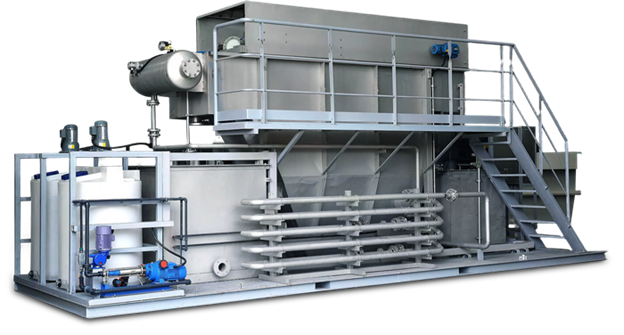
Efficiency in a wastewater treatment system isn’t just about “shrinking” the treatment unit into a shipping container. Efficient system operation occurs when each treatment stage has a well-defined purpose, upstream processes safeguard downstream equipment, controls are responsive to the operating conditions, and the final treatment level is commensurate with the desired effluent quality.
The practical concept of containerized wastewater treatment systems is one of these. Rather than focus on the benefits of the container, the more effective design is to consider the container as an engineered platform to coordinate biological, physical-chemical, membrane, pumping, dosing and control functions.
QILEE uses this method for industrial wastewater, municipal sewage, decentralized treatment and water-reuse projects. The containerized configurations of the wastewater treatment process can include biological treatment, dissolved air flotation (DAF), chemical dosing, membrane bioreactor technology, filtration, nanofiltration (NF), reverse osmosis (RO), and other supporting equipment depending on wastewater characteristics.
This does not mean that there is one standard process for each site. Efficiency is achieved by only using the treatment functions needed by the wastewater.
Why QILEE Containerized Wastewater Treatment Systems Can Operate Efficiently
To make a containerized plant efficient, process design, equipment placement and controls should be considered as an integrated system and not as individual parts of the system.
In wastewater projects, this is important because each phase is dependent on the previous phase. If solids are not removed properly, the fouling of membranes may be greater. Chemical dosing, which is not stable, can have a negative effect on separation performance. Biological loading may be incorrect and impact the quality of water in the downstream environment. For these interactions, it is possible to think about them in advance in an integrated design.
Process Selection Starts With the Wastewater, Not the Equipment
Industrial wastes generate various treatment issues. Food-processing wastewater may contain significant amounts of biodegradable organic matter, while metal finishing wastewater may need specific removal of metals. Oily wastewater requires a different pretreatment from municipal sewage, and high-ammonia wastewater may require a special removal stage.
Therefore, the first step to efficient wastewater management is wastewater characterization. The treatment train may be affected by flow rate, pH, suspended solids, COD, ammonia nitrogen, oil, salt, metals, and the required standard of discharge or reuse.
Below is a helpful chart of the impact of common processes.
| Process | Primary Role | Efficiency Contribution |
| Combining DAF and chemical dosing | Removes suspended solids, oils, flocs or specific contaminants | Reduces the load on downstream processes |
| The water quality treatment process is biological treatment using the AO/A²O process. | Helps remove biodegradable pollutants and treat nutrients | Applies organic and nutrient loads in a biological manner |
| MBR / TMBR | Combined biotechnological treatment and membrane separation | Effective solid/liquid separation in small volume |
| Multimedia filtration | Removes suspended material from water. | Safeguards smaller downstream processes |
| NF | Selective membrane separation | Enhances more complex treatment as required to achieve greater separation |
| RO | Removes dissolved salts and other dissolved contaminants. | Aids in achieving higher levels of re-use or purified-water goals |
Pretreatment Protects the Processes That Follow
Long-term operating efficiency can often be won or lost in pretreatment. Excessive solids, oils or chemically removable contaminants are better managed prior to becoming a downstream burden by membranes and biological systems.
As part of its integrated product range, QILEE offers containerized physical-chemical configurations for combining chemical dosing, coagulation-flocculation, DAF, lamella clarification, neutralization, sedimentation, multimedia filtration, activated carbon filtration or chemical oxidation, depending on the application.
Oily or emulsified wastewater may require separation before biological or membrane treatment and heavy-metal wastewater may require chemical precipitation. The intent is to avoid usage of downstream processes to do work that can be done more effectively in a pretreatment process.
ALT text: QILEE containerized wastewater pretreatment system with chemical dosing, DAF, filtration, piping, and control equipment
MBR Integration Saves Space Without Eliminating Process Control
Membrane bioreactor technology can be useful in applications that demand both biological treatment and good solid-liquid separation in a small area.
An MBR system separates treated water from suspended biomass with the help of membranes while also breaking down biodegradable pollutants in the biological treatment process. This eliminates the need to rely on a traditional secondary clarifier for final separation of biomass.
The efficiency gain is hence not just a finer filtration but functional integration. Compact plant layouts and effluent separation are supported by MBR; however, much like other processes, membrane performance is dependent on suitable upstream conditions, aeration, cleaning, hydraulic loading, and maintenance.
Automated Controls Reduce Unnecessary Manual Intervention
Wastewater is not always steady-state. Normal operating conditions may include changes in flow, pollutant concentrations, tank levels, pressure, and chemical demand.
Integrated controls enable pumps, dosing systems, valves, alarms, and monitoring instruments to be switched on by the same control logic. Intelligent pump valves and smart control functions are available for QILEE’s containerized systems, with an integrated system range that also offers automated dosing systems and packaged control panels.
Automation does not render a wastewater system maintenance-free. There is still work to be done by operators for inspection, alarm response, cleaning, and treatment performance verification. Value is consistency: routine actions can be coordinated automatically, and abnormal conditions are easier to detect.
Compact Layout Can Improve Operation and Maintenance
A crowded container is not an efficient container. There should be sufficient space available to inspect, service the membrane, maintain pumps, calibrate instruments, and replace wear items.
Effective containerization of equipment, therefore, goes beyond the simple objective of maximizing equipment density. This will be affected when pipes are routed, valves can be accessed, drainage and ventilation can be done, the operator can move around, and clearances for services are considered.
Pre-integrating primary equipment also minimizes the number of interfaces that have to be put together on site. Much of the process coordination between the internal team has been completed, though there is remaining work in the following stages: foundations, external piping, and utility connections, and commissioning.
Treatment Depth Should Match the Final Water-Quality Target
One common way to increase energy use and operating expenses is to over-treat the water. The other problem, inadequate treatment, can lead to compliance or reuse problems.
Biological treatment and solid-liquid separation can be justified in a discharge application, and extra filtration, NF, or RO may be justified in a reuse project. If the water is highly dominated by ammonia nitrogen, a targeted deamination process may be necessary instead of the application of additional general filtration processes.
That is why the required effluent quality should be determined early. It helps to decide if advanced membrane treatment is required and avoid the inclusion of the equipment without putting a measurable treatment service.
Conclusion
The most efficient containerized wastewater treatment systems are not simply the most compact. Pretreatment eliminates pollutants, which will complicate subsequent treatment processes; biological processes treat biodegradable components; membranes offer controlled separation when necessary; and automatic controls coordinate normal operation.
QILEE can incorporate these capabilities into a containerized treatment package as dictated by the characteristics of the influent, required treatment capacity, site conditions and final water quality goals for industrial and decentralized projects.
This is how to judge a containerized plant: What is it doing, what is it protecting, and is it needed for the target effluent quality? Once the answers to those questions are obvious, the concept of compact design is no longer a stretch for space but rather a useful method to construct a cohesive treatment system.
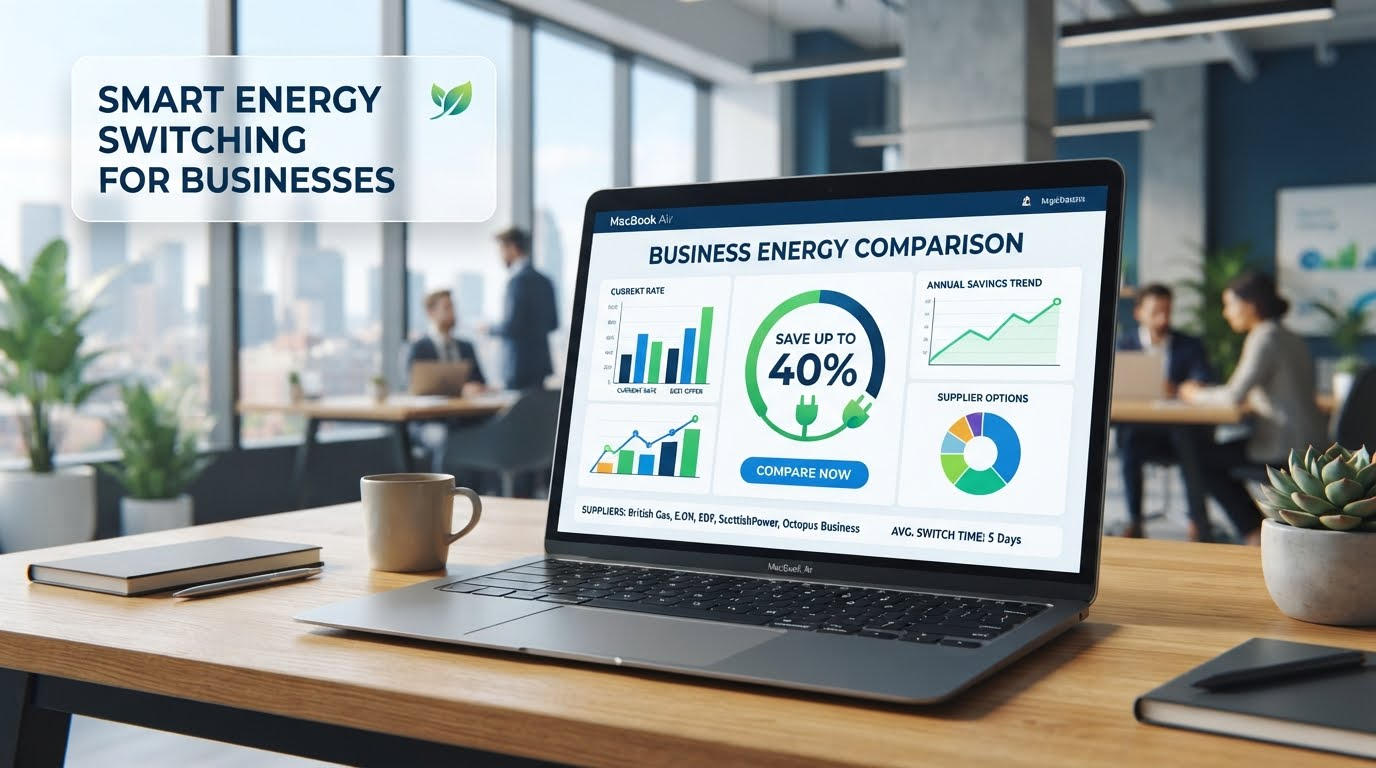
Energy has moved from the back of the ledger to the front of the boardroom. The price shocks of recent years turned what used to be a predictable overhead into one of the most unpredictable costs a business faces. For owners and finance teams trying to plan ahead, the swings have been punishing. The good news is that the same volatility that makes energy frightening also creates opportunities for businesses that approach it strategically rather than passively.
Understanding Why Business Energy Is Different
The first thing to grasp is that business energy is a different animal from the gas and electricity bill at home. There is no price cap shielding businesses from high rates. Contracts are fixed-term and cannot be exited early without penalty in most cases. And crucially, if you do nothing when a contract ends, you are not simply rolled onto a reasonable default. You are moved onto out-of-contract rates, which suppliers set high precisely because they can.
This structure rewards the organised and punishes the passive. A business that tracks its contract dates, shops the market, and times its decisions can pay dramatically less than an identical business next door that lets everything renew on autopilot.
The Case for Comparing the Whole Market
The single most effective action most businesses can take is to compare across the entire market rather than accepting a renewal offer from their current supplier. Your existing supplier has no incentive to offer you their best price at renewal, because they are betting you will not check. When you do check, by looking at what every supplier would charge for your specific consumption, the picture often changes completely.
The potential is significant. Businesses that compare properly can save up to 35% on business energy compared with the rates they would have drifted onto by doing nothing. That is not a marketing fantasy, it is the simple arithmetic of a competitive market where suppliers price aggressively to win new contracts and charge far more to retain customers who do not ask questions.
The reason the gap is so wide comes down to customer inertia. Suppliers know that most businesses will not switch, so they load their margins onto renewal and default rates. The businesses that break this pattern capture the difference.
Timing Is Everything
Energy pricing follows the wholesale market, which moves daily. This creates a timing dimension that businesses can use to their advantage. You do not have to wait until your contract ends to arrange the next one. Suppliers will let you agree a forward contract months in advance, sometimes up to a year ahead. If wholesale prices are low when you look, locking in a long fixed term protects you from future rises. If prices are high, a shorter term keeps you free to switch again when the market cools.
The practical takeaway is to treat your contract end date as a planning milestone, not a surprise. Set a reminder several months before it expires and begin comparing early. Businesses that leave it to the last minute forfeit their negotiating position and risk sliding onto expensive deemed rates in the gap between contracts.
Fixed or Flexible?
A common question is whether to choose a fixed or a variable contract. A fixed contract locks your unit rate for the term, giving you certainty and making budgeting straightforward. You know exactly what you will pay regardless of what the market does. A variable contract moves with wholesale prices, which can save money when prices fall but exposes you when they rise.
For most small and medium businesses, the certainty of a fixed contract is worth more than the gamble of a variable one, particularly in a volatile market where a sharp rise could blow a hole in the budget. Larger businesses with the expertise to manage risk sometimes prefer flexible arrangements that let them buy energy in tranches, but that is a specialist strategy rather than a default choice.
Reducing Consumption Alongside Cost
Securing a better rate is the biggest single lever, but it works best alongside efforts to use less. The combination of a lower rate and lower consumption compounds into a much smaller bill. Practical measures include upgrading to LED lighting, fitting timers and sensors so nothing runs when the premises are empty, servicing heating and cooling systems so they operate efficiently, and improving insulation to reduce the energy wasted on heating and cooling the building.
Smart meters add a layer of visibility that makes all of this easier. By showing exactly when and where energy is used, they help identify waste that would otherwise go unnoticed, such as equipment left on overnight or a heating system running longer than the building is occupied.
Avoiding the Common Pitfalls
Several mistakes crop up again and again. The first is auto-renewal, where a contract rolls over onto worse terms simply because nobody acted. The second is accepting the first renewal quote without comparing alternatives, which almost always means overpaying. The third is forgetting to note the contract end date, which leads to the dreaded gap on deemed rates. The fourth is choosing a contract based on the headline unit rate alone, without checking the standing charge, which can make a seemingly cheap deal expensive in practice.
Reading the full terms, including standing charges, exit fees, and the exact end date, prevents nasty surprises and ensures the deal that looks best really is best.
Frequently Asked Questions
Is there a price cap on business energy?
No. The price cap applies only to domestic energy. Businesses are fully exposed to market rates, which is why comparing and timing your contract matters so much more.
Why can businesses save so much by comparing?
Because suppliers price renewals and default rates high, relying on customers not to check. When you compare the whole market, you capture the gap between those inflated rates and the competitive prices suppliers offer to win new business.
Should I choose a fixed or variable contract?
Most small and medium businesses benefit from the certainty of a fixed contract, especially in a volatile market. Variable contracts can pay off when prices fall but carry real risk when they rise.
How early should I arrange my next contract?
Start three to six months before your current one ends. Suppliers allow forward contracts, so starting early gives you the widest choice and the best chance to time the market favourably.
What happens if I do nothing when my contract ends?
You are moved onto out-of-contract or deemed rates, which are among the most expensive available. Doing nothing is the single costliest choice you can make.
Energy costs will keep moving, but your exposure to them is within your control. Compare the whole market, time your contract wisely, choose the right type of deal, and pair it with sensible efficiency measures, and you can turn one of your most volatile overheads into one of your most managed.

aWhat Does an Effective Rental Property Management System Look Like

New 40V Cordless Power Tools Arrive: What a Single Battery Platform Means for Your Next Project

How the Right Footwear Can Support Healthy, Active Ageing

Who Is Shameera? All You Need To Know About Charli XCX’s Mother

Who Is Gulliver Flynn Oldman? The Untold Story of Sir Gary Oldman’s Son

Meet Rosemary Turner: The Mother of Actor Callum Turner
-
Biographies9 months ago
Who Is Shameera? All You Need To Know About Charli XCX’s Mother
-
Biographies8 months ago
Who Is Gulliver Flynn Oldman? The Untold Story of Sir Gary Oldman’s Son
-
Biographies9 months ago
Meet Rosemary Turner: The Mother of Actor Callum Turner
-

 Biographies7 months ago
Who is Alexandra James? Inside The Life of Jeremy Clarkson’s Former Partner
-
 Biographies9 months ago
Who is Todd McRae? Meet Tate McRae’s Father
-
 Biographies8 months ago
Who Is Daniel Mara? The Untold Story of Kate Mara’s Private Sibling
-
 Celebrity9 months ago
Who Is Peter Hernandez? The Real Story of Bruno Mars’ Father
-
 Biographies9 months ago
Who Was Adrian Mayers? The Untold Life of A$AP Rocky’s Late Father