
Business
AP Offshore vs Royal Oak: What’s the Difference?


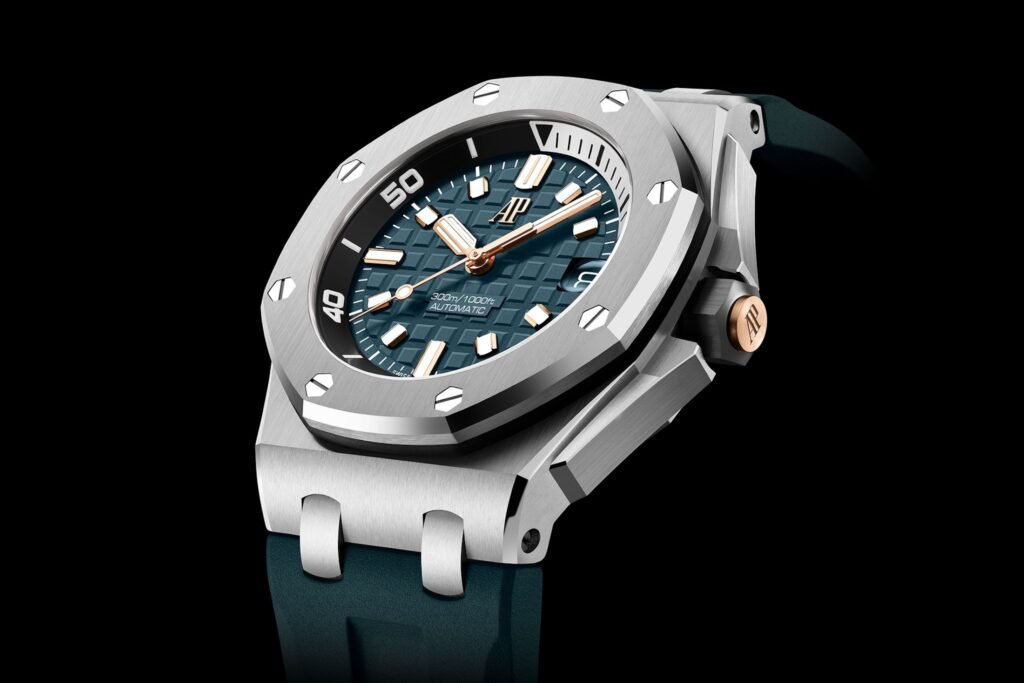
The Audemars Piguet Royal Oak and Royal Oak Offshore share the same unmistakable octagonal design language, but they offer very different wearing experiences. The Royal Oak is generally slimmer, more refined and closely connected to the original 1972 luxury sports-watch concept. The Royal Oak Offshore, introduced in 1993, takes that design in a larger, more muscular and sport-focused direction.
For most buyers, the decision comes down to presence and versatility. Choose the Royal Oak if you want an elegant integrated-bracelet watch that can move easily between casual and formal settings. Choose the Royal Oak Offshore if you prefer a bigger case, stronger wrist presence, chronograph-focused styling and a more contemporary sports-watch character.
AP Offshore vs Royal Oak at a Glance
| Feature | Royal Oak | Royal Oak Offshore |
| First introduced | 1972 | 1993 |
| Original designer | Gérald Genta | Emmanuel Gueit |
| Overall style | Refined luxury sports watch | Bold performance-oriented sports watch |
| Case presence | Slimmer and more restrained | Larger and more muscular |
| Dial style | Clean, architectural | Busier and more aggressive |
| Signature pattern | Tapisserie / Grande Tapisserie | Often Méga Tapisserie |
| Bracelet/strap | Famous integrated bracelet | Frequently rubber strap; bracelet options also exist |
| Chronographs | Available | Central to the collection |
| Best for | Versatility, heritage, understated luxury | Strong wrist presence and sporty styling |
Royal Oak and Royal Oak Offshore Are Not the Same Watch
The Offshore is part of the wider Royal Oak family, but it should not be treated simply as a larger version of the Royal Oak.
The original Royal Oak appeared in 1972. Designed by Gérald Genta, it challenged traditional ideas of luxury watchmaking by using hand-finished stainless steel, an exposed octagonal bezel, visible screws, an integrated bracelet and a patterned dial. Audemars Piguet describes the model as a watch that helped redefine the codes of Haute Horlogerie.
More than two decades later, Audemars Piguet introduced the Royal Oak Offshore in 1993. Designer Emmanuel Gueit retained the Royal Oak DNA but exaggerated almost every visual element. Its oversized proportions, exposed rubber gasket and powerful appearance earned the original model the nickname “The Beast.”
That difference in philosophy is still visible today.
Design: Refined Royal Oak or Aggressive Offshore?
Put the two watches next to each other and the family resemblance is obvious.
Both use the familiar octagonal bezel and exposed screws. Both retain the geometric case architecture that makes an Audemars Piguet recognizable from across a room.
The difference is in how those features are presented.
A) Royal Oak
- The Royal Oak emphasizes proportion and finishing. Its case, bezel and bracelet flow together as one design, with alternating brushed and polished surfaces creating much of the visual interest.
- Models such as the current 41 mm Royal Oak Selfwinding maintain the clean proportions and integrated construction associated with the collection.
- It feels luxurious without needing excessive thickness or visual complexity.
B) Royal Oak Offshore
- The AP Offshore deliberately pushes the design further.
- Its cases typically have more volume, while elements such as the crown guards, pushers, rubber components, oversized numerals and chronograph subdials create a much more technical appearance.
- Audemars Piguet continues to describe the Offshore as the bold and robust side of the Royal Oak family.
- If the standard Royal Oak looks architectural, the Offshore looks engineered.

Size and Wrist Presence
Size is one of the biggest practical differences in the AP Offshore vs Royal Oak comparison.
The Royal Oak collection spans several dimensions, including compact models and larger 41 mm references. A 41 mm Royal Oak can still have significant wrist presence because the integrated bracelet and case shape make it wear differently from a conventional round watch.
The Offshore has historically been associated with larger dimensions. That remains an important part of its personality, although the modern collection is more diverse than many buyers realize.
For example, Audemars Piguet introduced new 37 mm Royal Oak Offshore Selfwinding Chronographs for 2026, showing that an Offshore no longer automatically means an extremely large case.
Even so, comparable Offshore models generally feel more substantial because of their thicker construction and more prominent case details.
Choose by Wrist, Not Just Case Diameter
Case diameter alone does not tell you how an AP will wear.
Consider:
- Case thickness
- Lug-to-lug feel
- Integrated bracelet geometry
- Strap flexibility
- Wrist circumference
- Weight
- How much wrist coverage you prefer
Someone comfortable with a 41 mm conventional watch may find a 41 mm Royal Oak considerably more noticeable.
Trying the watch on is particularly valuable before choosing between these two collections.

Dial Differences
The dial is another easy way to distinguish the Royal Oak from the Offshore.
The Royal Oak is known for its textured Tapisserie dials, including the famous Grande Tapisserie pattern found on contemporary references. Audemars Piguet continues to use this pattern on models such as the 41 mm Royal Oak Selfwinding.
Its layout is usually relatively restrained, particularly on time-and-date versions.
The Royal Oak Offshore often uses a larger-scale Méga Tapisserie treatment combined with oversized Arabic numerals, bold hands and chronograph counters. Current Offshore models continue this more expressive design language.
This produces two very different impressions:
- Royal Oak: texture becomes part of the finishing.
- Offshore: texture becomes part of the visual statement.
Bracelet vs Rubber Strap
The integrated bracelet is one of the strongest reasons collectors are attracted to the Royal Oak.
Rather than looking like a separate component attached to a watch case, the Royal Oak bracelet appears to continue directly from the case. Its finishing and articulation are fundamental parts of the design.
The Offshore takes a more flexible approach.
Rubber straps have become strongly associated with the collection and reinforce its sportier identity. Current Offshore releases continue to use interchangeable rubber straps, while other references have appeared with bracelets and different strap materials.
For buyers deciding between them:
- Integrated bracelet: Royal Oak has the stronger visual identity.
- Rubber strap: Offshore feels more natural and casual.
- Sportier wardrobe: Offshore usually integrates more easily.
- Smart or formal clothing: Royal Oak is generally easier to pair.
Movement and Complications
There is no simple winner here because both collections contain everything from relatively straightforward automatic watches to highly complicated Haute Horlogerie pieces.
The standard Royal Oak range includes selfwinding models, chronographs, perpetual calendars, flying tourbillons and other high complications. The contemporary collection even includes Grande Complication references.
The Offshore is particularly closely associated with the chronograph.
Its larger case architecture naturally suits multiple subdials, pushers and sport-oriented displays. In 2026, Audemars Piguet introduced the Calibre 6401 in new 37 mm Offshore chronographs. The integrated automatic column-wheel chronograph uses a patented vertical clutch and offers a 55-hour power reserve.
The important point is therefore not that one collection has “better” movements.
Instead, choose the specific reference according to the complication you actually want.
Which AP Is More Comfortable?
For most wrists, the Royal Oak has the advantage when all-day comfort is the priority.
Its comparatively restrained proportions and integrated construction make it suitable for situations where a thick sports watch may become intrusive.
The Offshore intentionally provides more physical presence. Buyers who enjoy feeling a substantial mechanical watch on the wrist may actually prefer this.
Comfort therefore depends on preference rather than specifications alone.
If you regularly wear fitted shirt cuffs or formal clothing, the Royal Oak is normally easier to accommodate.
If you usually wear polos, T-shirts, casual tailoring or sportswear, the Offshore’s additional thickness is less likely to be an issue.
Which Looks More Luxurious?
Both are high-end Audemars Piguet watches, but they communicate luxury differently.
The Royal Oak’s luxury comes primarily from:
- Case and bracelet finishing
- Precise proportions
- Dial texture
- Integrated construction
- Historical significance
The Offshore communicates it through:
- Larger dimensions
- More complicated visual layouts
- Contrasting materials
- Bold case architecture
- Stronger wrist presence
The Royal Oak can therefore appear more understated, even though it remains immediately recognizable to watch enthusiasts.
The Offshore rarely tries to disappear.
Which Is More Versatile?
The Royal Oak wins for overall versatility.
A steel Royal Oak can work with jeans, business clothing, evening wear or relatively formal outfits without appearing completely out of place.
The Offshore occupies a more specific aesthetic territory. It excels as a casual luxury sports watch but can feel oversized with traditional formal clothing.
That does not make the Offshore less desirable. It simply means that its design makes a stronger statement.
If you plan to own only one Audemars Piguet, the Royal Oak is usually the easier watch to use across different situations.
Which Has More Heritage?
The Royal Oak has the stronger historical claim.
Its 1972 launch came first, and the model became one of the defining designs of modern luxury sports watches. Audemars Piguet credits Gérald Genta’s design with challenging traditional watchmaking conventions through its stainless-steel construction, integrated bracelet and distinctive octagonal form.
The Offshore nevertheless has substantial history of its own.
Launched in 1993, it has now existed for more than three decades and played an important role in the rise of oversized luxury sports watches. Its association with “The Beast” and its distinctly 1990s design philosophy give it an identity independent of the original Royal Oak.
Collectors interested primarily in the origin of the design will probably favor the Royal Oak.
Collectors interested in the evolution of that design may find the Offshore more interesting.
Royal Oak Offshore vs Royal Oak for Collectors
Neither collection is automatically the better collectible.
Reference, production period, condition, material, dial, originality, documentation and rarity can matter far more than whether “Royal Oak” or “Offshore” appears on the model name.
The Royal Oak tends to appeal to collectors who prioritize:
- Iconic design history
- Integrated bracelets
- Classic proportions
- Fine finishing
- Long-term versatility
The Offshore attracts collectors interested in:
- Larger statement watches
- Chronographs
- Unusual materials
- Limited editions
- Distinctive color combinations
- Sport-oriented AP designs
Vintage and discontinued references can also behave very differently from current-production watches, so individual references should always be evaluated separately.
AP Offshore vs Royal Oak: Which Should You Buy?
Choose the Royal Oak if you want the purest expression of Audemars Piguet’s iconic sports-watch design.
It is especially suitable if you value an integrated bracelet, thinner proportions, versatility and the strongest connection to the original 1972 Royal Oak.
Choose the Royal Oak Offshore if you want more visual impact.
Its larger construction, prominent chronograph design, rubber straps and stronger use of contrasting materials make it particularly appealing to buyers who want their AP to feel unmistakably sporty.
Best for Different Buyers
Choose Royal Oak for:
- Everyday luxury
- Business and smart-casual wear
- Integrated-bracelet design
- Classic AP styling
- More restrained proportions
Choose Royal Oak Offshore for:
- Bigger wrist presence
- Casual and sports-focused outfits
- Chronograph enthusiasts
- Rubber straps
- More aggressive AP styling
Final Verdict
The difference between the Royal Oak and Royal Oak Offshore is less about quality and more about personality.
The Royal Oak is the cleaner, more refined and historically significant choice. Its integrated design has remained remarkably recognizable since the original watch appeared in 1972.
The Royal Oak Offshore is the louder and sportier interpretation. Since 1993, it has taken the fundamental Royal Oak shape and amplified it with stronger proportions, chronograph layouts and more adventurous materials.
For maximum versatility, the Royal Oak is difficult to beat. For maximum wrist presence, the Offshore has the advantage.
The right AP is ultimately the one whose proportions, design and character make the most sense on your wrist.
Frequently Asked Questions
1.Is the Royal Oak Offshore bigger than the Royal Oak?
Generally, yes. The Offshore has traditionally used thicker and more substantial cases, although the collection now includes smaller options such as 37 mm chronographs. The exact comparison depends on the references being considered.
2.Is the Royal Oak Offshore a Royal Oak?
Yes. The Royal Oak Offshore belongs to the wider Royal Oak family but was developed as a bolder interpretation of the original design. It was launched in 1993, 21 years after the original Royal Oak.
3.Who designed the Royal Oak Offshore?
The Royal Oak Offshore was created by Emmanuel Gueit. The original Royal Oak was designed by Gérald Genta.
4.Is the Royal Oak or Offshore better for everyday wear?
The Royal Oak is generally easier to wear every day because of its slimmer and more versatile design. The Offshore can still be an everyday watch for buyers who prefer larger, sportier pieces.
5.Which is more formal, Royal Oak or Royal Oak Offshore?
The Royal Oak is generally the more formal of the two. Its cleaner dial, integrated bracelet and slimmer proportions allow it to work more naturally with smart and business clothing, while the Offshore has a stronger casual and sporting character.
6.Is the Royal Oak Offshore only available as a chronograph?
No. Chronographs are strongly associated with the Offshore, but the family has included other configurations, including the Royal Oak Offshore Diver. The available references vary over time.
Business
Securing Smart Infrastructure: Why Advanced Surge Protection is Vital for Industrial and Commercial Facilities


The Growing Electrical Vulnerability of Automated Industrial Environments
Transient Voltages and the Hidden Threat to Smart Factory Networks
Modern automated factories rely on deeply integrated digital ecosystems. Programmable Logic Controllers (PLCs), industrial computers, and Variable Frequency Drives (VFDs) control complex robotics and precision assembly lines. According to power quality research published by the IEEE, these high-density smart factory networks face continuous exposure to transient electrical disturbances.
Localized grid switching, heavy machinery cycling, and indirect lightning strikes generate high-frequency micro-surges. Unlike catastrophic high-voltage spikes that immediately trip circuit breakers, low-amplitude transient voltages degrade delicate semiconductor junctions incrementally over time. Facility engineers often face erratic equipment glitches and unexplainable downtime without realizing that cumulative electrical stress is eroding their core automation hardware from within.
Transitioning from Reactive Repairs to Proactive Facility Resilience
In contemporary smart manufacturing, unplanned operational downtime translates directly to immense financial losses. Traditional electrical design historically treated surge suppression as an optional insurance policy or a secondary compliance checkbox. Today, complex commercial and industrial real estate demands a fundamental shift toward proactive electrical resilience.
Integrating robust surge protection architecture transforms facility maintenance from a reactive firefighting cycle into a predictive uptime strategy. Safeguarding delicate microprocessors protects high-value capital assets, preserves product quality consistency, and prevents the safety hazards associated with sudden electrical failures.
Core Engineering Architecture of Industrial Surge Protective Devices (SPDs)
The Mechanics of Metal Oxide Varistors (MOVs) and Thermal Safety
Designing robust commercial and industrial electrical systems requires selecting surge protection components built with superior thermal stability and rapid clamping responses. Advanced hardware configurations, such as the specialized DIN-rail modules provided by LSP, integrate high-capacity Metal Oxide Varistors (MOVs) engineered with optimized thermal tripping mechanisms to handle extreme electrical impulses safely.
At the microscopic semiconductor level, an MOV acts as a voltage-dependent resistor with highly non-linear characteristics. Under normal operating voltages, its electrical resistance remains exceptionally high, maintaining an open-circuit state. When a transient overvoltage spike breaches the specific clamping threshold, the MOV’s resistance drops precipitously within nanoseconds. This instantaneous reaction shunts harmful surge currents away from sensitive downstream electronics and safely directs them into the earth grounding system.
Arc Extinguishing and Thermal Disconnection Mechanisms
Repeated high-energy clamping events eventually drive an aging MOV toward its end-of-life state. As component degradation progresses, continuous leakage currents generate intense internal thermal energy, risking catastrophic thermal runaway and potential electrical fires.
Modern industrial SPDs incorporate advanced thermal disconnect switches designed to physically sever degraded MOV elements from live power circuits before failure occurs. Furthermore, these safety housings utilize specialized arc-extinguishing chambers. When a disconnect triggers, any resulting electrical arc is rapidly elongated, cooled, and extinguished, ensuring absolute safety for switchboard enclosures and on-site operational personnel.
Multi-Tiered Protection Zoning: Implementing Type 1, 2, and 3 SPDs
A single surge protection device installed at the main utility entrance is insufficient to shield complex facilities from all electrical threats. Comprehensive lightning and surge mitigation requires a multi-tiered zoning strategy (Lightning Protection Zones – LPZ) that progressively attenuates residual surge energy as power travels deeper into the building.
Main Service Entrance vs. Sub-Distribution Safeguards
- Type 1 / Class I Protection: Installed at the main distribution board (MDB) or primary service entrance utility room. It acts as the primary defense against high-energy impulse currents originating from external factors, featuring massive discharge capacities up to
or higher per mode.
- Type 2 / Class II Protection: Deployed across sub-distribution panels and motor control centers (MCC). It mitigates residual energy passing through Type 1 devices while handling internal switching surges generated by heavy machinery and HVAC compressors.
- Type 3 / Class III Protection: Positioned immediately adjacent to sensitive endpoint machinery, PLC racks, and sensor inputs. It provides fine-scale localized clamping to protect microprocessors operating at low operating voltages.
Key Takeaways
| Area | Key Takeaway | Impact/Data |
| Hardware Risk | Micro-surges incrementally degrade semiconductors | Causes erratic glitches and costly downtime |
| Safety Tech | Deploy MOVs with thermal disconnects | Prevents thermal runaway and electrical fires |
| Architecture | Implement 3-tier LPZ zoning | Blocks 100kA+ external; secures sensitive PLCs |
| Compliance | Mandate IEC 61643 or IEEE certification | Ensures multi-impulse stress endurance |
Compliance Standards and Regulatory Benchmarks for Electrical Safety
Navigating IEC and International Testing Frameworks
To ensure long-term compliance and reliability across commercial power networks, facility operators must verify that all protective installations adhere to internationally recognized codes. According to the testing guidelines specified under IEC 61643 by the International Electrotechnical Commission, low-voltage surge protective devices undergo rigorous evaluation to measure nominal discharge currents, maximum discharge currents, and maximum continuous operating voltages.
Similarly, standards frameworks established by organizations like IEEE validate waveform endurance and transient suppression performance under simulated field conditions. Compliance with these testing benchmarks guarantees that installed SPDs will withstand multi-impulse stress testing without experiencing structural fire hazards or dielectric breakdown. By demanding certified hardware, engineering teams protect their smart infrastructure from unpredictable electrical disturbances while ensuring total regulatory compliance.
Business
The Shift to Flexible Packaging in FMCG: Balancing High-Barrier Protection with Supply Chain Sustainability

The Logistics and Lifecycle Evolution: Moving Away from Rigid Formats
Tare Weight Discrepancies and Inbound Freight Optimization
Fast-moving consumer goods (FMCG) brand owners face mounting operational pressure to reconcile stringent shelf-life demands with corporate carbon-neutrality mandates. For decades, rigid packaging—principally soda-lime glass containers, tinplate steel cans, and heavy high-density polyethylene (HDPE) bottles—served as the default medium for food and personal care preservation. However, the physical reality of rigid container transportation imposes severe economic and environmental burdens.
The structural tare weight of rigid formats often constitutes up to 50% to 70% of the gross shipped payload, drastically degrading freight efficiency. In contrast, engineered multi-layer flexible pouches typically account for less than 3% to 5% of the total product weight. According to comprehensive lifecycle benchmarking assessments compiled by the Flexible Packaging Association, replacing rigid vessels with flexible pouches reduces truckload requirements by up to 85% for un-filled packaging and lowers total lifecycle energy consumption by over 70%.
Inbound supply chain dynamics benefit substantially from this geometric advantage:
- Truckload Inbound Density: A single standard trailer transports roughly 200,000 to 250,000 flat, unfilled flexible stand-up pouches, compared to fewer than 20,000 rigid glass or metal containers of identical internal volume.
- Warehouse Footprint Compression: Palletized unfilled pouches reduce storage floor space requirements by approximately 80%, liberating ambient square footage for active manufacturing.
- Fuel Burn and Scope 3 Reductions: Slashing shipping weight directly diminishes freight-related diesel consumption, helping brand owners achieve verifiable Scope 3 greenhouse gas reductions under greenhouse gas accounting frameworks.
Dynamic SKU Proliferation in Modern Retail
Contemporary retail ecosystems no longer reward static, monolithic high-volume inventory cycles. Consumer fragmentation, direct-to-consumer (D2C) brand channels, and rapid seasonal iterations have forced brands toward aggressive SKU proliferation.
Traditional gravure or flexographic cylinder printing carries prohibitive cylinder prepress tooling costs and extended setup lead times. When brand owners order tens of thousands of units per SKU to satisfy conventional minimum order quantities (MOQs), they accumulate severe balance-sheet inventory liabilities.
Digital printing architectures, particularly electrophotographic platforms like HP Indigo, have bridged this operational gap:
- Plate-Free Agility: Digital continuous-web presses print directly from vector graphics files, eliminating cylinder tooling amortization and shortening launch cycles from months to days.
- Variable Data Printing (VDP): Batch codes, serialized traceability markers, and promotional geographic variations can be mapped onto continuous film webs in a single run.
- Inventory Write-Off Elimination: Production runs match true demand forecasts, preventing the destruction of obsolete, pre-printed rigid stock.
Material Science of Flexible Formats: Engineering Multi-Layer Barrier Integrity
Core Barrier Layers: Polymer Substrates, Metallization, and Sealants
Achieving optimal shelf-life stability without the bulk of rigid containers requires precise calibration of polymer laminate structures, specifically balancing oxygen transmission rates (OTR) and water vapor transmission rates (WVTR). Technical specifications from specialized converters, such as the barrier pouch solutions engineered by custom flexible packaging manufacturer Baishen Pack, highlight how laminating food-grade polyethylene (PE) with high-density metallized films or functional kraft substrates can deliver hermetic containment for volatile organics like coffee and dietary supplements while cutting overall tare packaging weight by more than 60%.
Modern multi-layer laminates operate as engineered composite matrices where each discrete polymer ply executes a distinct barrier or mechanical task:
- Print Carrier and Outer Shield: Biaxially oriented polyethylene terephthalate (BOPET) or oriented polyamide (BOPA/Nylon) serves as the scuff-resistant external face, providing dimensional tensile stability, puncture resistance, and print definition.
- Intermediate Barrier Substrates: Pure aluminum foil (AL) provides near-zero gas permeability, while vacuum-deposited metallized PET (VMPET) or co-extruded ethylene vinyl alcohol (EVOH) delivers high barrier performance with greater mechanical flex-crack resistance.
- Inner Sealant Layer: Cast or blown linear low-density polyethylene (LLDPE) or cast polypropylene (CPP) acts as the low-melting-point internal contact ply, delivering hot-tack adhesion, food safety compliance, and chemical inertness against active formula ingredients.
Hermetic Sealing Technologies and Burst Pressure Resistance
A multi-layer barrier film is functionally useless if the seams rupture under hydrostatic shock or pneumatic transport stress. Hermetic sealing relies on precisely matching heat energy, mechanical dwell time, and compressive bar pressure to achieve cohesive polymer chain entanglement across the interior sealant layers.
For high-stress vertical form-fill-seal (VFFS) and premade pouch applications, sealing parameters are engineered against strict standard protocols (such as ASTM F88 for seal strength and ASTM F1140 for internal burst pressure):
- Hot-Tack Performance: The molten inner PE interface must withstand internal gravitational dropping forces immediately after heat bar retraction while the polymer crystallizes.
- Stress-Dispersing Gusset Profiles: Bottom-gusset (Doyen or K-Seal) designs distribute hydrostatic fluid weight evenly across base weld lines to prevent corner fractures during palletized drops.
- Hermetic Fitment Integration: Ultrasonic welding anchors rigid injection-molded PE spouts and resealable press-to-close zippers into film webs without generating micro-pinholes or localized thermal burn-through.
Application Matrix: Tailoring Pouch Architecture to Specific Product Verticals
Dry Goods & Functional Nutrition (Stand-Up & Mylar Pouches)
Dry functional foods, nutraceutical powders, and whole-bean coffee are susceptible to lipid peroxidation and moisture uptake. Moisture causes hygroscopic amino acids and plant extracts to agglomerate, while oxygen exposure degrades delicate aromatic terpenes and polyphenolic antioxidants.
Stand-up pouches and thick metallized Mylar laminates (typically PET / VMPET / PE or Kraft Paper / AL / PE) establish an impenetrable barrier environment:
- One-Way Degassing Valves: Integrated degassing valves allow carbon dioxide outgassing from roasted coffee beans while preventing atmospheric oxygen ingress.
- Opaque Light Deflection: Metallized layers block ultraviolet and visible light radiation, halting photochemical degradation of fat-soluble vitamins and bioactive botanicals.
- Reclosable Press-to-Close Systems: Heavy-duty acoustic zip closures preserve the modified atmosphere packaging (MAP) environment throughout repeated consumer usages.
High-Stress Formulations: Retort Pouches vs. Spout Liquids
Moving liquid beverages, acidic sauces, and moist pet food into flexible architecture requires engineering barriers that withstand thermodynamic thermal processing and hydraulic impact forces.
- Thermal Retort Stabilization: Cast polypropylene (CPP) sealants withstand extreme autoclaving temperatures without delamination, plasticizer migration, or weld seam degradation.
- Hydraulic Shock Absorption: Unlike glass, which shatters under mechanical drop shocks, flexible spout pouches deform elastically, dissipating kinetic energy across the pouch walls.
- Aseptic Fitment Filling: Pre-sterilized spout fitments enable cleanroom fluid dosing for infant purees and liquid electrolytes, preventing microbial contamination without requiring chemical preservatives.
Key Takeaways
| Area | Key Takeaway | Impact/Data |
| Logistics | Transition from rigid to flexible | Cuts truckloads up to 85% |
| Operations | Adopt digital plate-free printing | Eliminates MOQs & prepress costs |
| Materials | Engineer multi-layer barriers | Blocks OTR/WVTR effectively |
| Compliance | Substitute with mono-material PE/PP | Meets PPWR/EPR recyclability mandates |
Regulatory Pressures and the Circular Economy Horizon
The Transition Toward Mono-Material Recyclability and Reduced Landfill Impact
While barrier versatility is unmatched, the intersection of multi-layer performance and end-of-life disposal remains under heightened scrutiny across international regulatory markets. As detailed in the material lifecycle analysis of multilayered packaging on Wikipedia, combining incompatible polymer fractions with metallic foils requires advanced chemical recycling or mechanical delamination, driving current industrial research toward fully circular, mono-material PE and PP laminates that preserve high-barrier efficacy.
Regulatory directives across the European Union (such as the Packaging and Packaging Waste Regulation – PPWR) and North American extended producer responsibility (EPR) statutes mandate high post-consumer recyclability targets:
- Mono-Material Structure Substitution: Converters are replacing legacy PET/AL/PE triplex films with all-PE architectures (combining machine-direction oriented MDO-PE outer substrates with barrier coatings and LLDPE sealants) that enter existing polyethylene recycling streams.
- High-Barrier Vacuum Coating Alternatives: Ultra-thin vacuum depositions of silicon oxide and aluminum oxide provide high transparency and gas resistance without polluting chemical plastic recovery streams.
- Mass-Balance PCR Integration: Incorporating up to 30% to 50% post-consumer recycled (PCR) resin into secondary structural plies lowers dependency on virgin petroleum feedstocks while satisfying compliance mandates.
By integrating multi-layer material science with closed-loop circular design principles, consumer brands can safeguard delicate formulations while establishing a resilient, low-carbon supply chain.

A startup building its first MVP does not need exactly the same design partner as an enterprise redesigning a platform used by thousands of employees. When comparing the best UI UX design company in India, the right choice depends on your product stage, users, technical environment, timeline, and internal capabilities.
India’s UI/UX market includes specialist studios, enterprise design firms, full-service product companies, and agencies that combine strategy, UX, branding, and development. Current 2026 rankings show that buyers increasingly compare firms based on research, delivery capability, client outcomes, specialization, and end-to-end product expertise.
What Startups Need From a UI UX Design Company
Early-stage companies usually need speed without skipping validation.
Common startup requirements include:
- Product discovery
- MVP definition
- User journeys
- Wireframes
- Interactive prototypes
- Brand direction
- Mobile or web UI
- Developer-ready designs
The agency should help determine what belongs in the first version instead of simply designing every requested feature.
A smaller, validated MVP can provide useful customer feedback before the company invests in a larger build.
What Enterprises Need From UI UX Partners
Enterprise design typically involves more complexity.
Teams may need to account for:
- Multiple user roles
- Legacy systems
- Accessibility
- Security constraints
- Complex workflows
- Large datasets
- Existing design standards
- Multiple business units
An enterprise UX partner must be comfortable working with internal product, engineering, compliance, and business stakeholders.
Current Indian agency comparisons highlight enterprise UX, systems thinking, service design, and research as important capabilities for these projects.
SaaS Companies Need Scalable Product Design
SaaS products change frequently.
Teams add:
- Features
- Integrations
- User roles
- Dashboards
- Subscription options
- Administrative controls
Without a scalable UX framework, each new feature can make the product harder to understand.
A UI/UX company working with SaaS should therefore understand information architecture and design systems, not simply create individual screens.
Mobile Apps Require Different UX Decisions
Mobile interfaces have limited screen space and different user behavior from desktop applications.
Designers need to consider:
- Thumb-friendly interaction
- Navigation depth
- Device permissions
- Loading states
- Push notifications
- Offline behavior
- Accessibility
- Platform conventions
If mobile is central to your product, look for case studies involving actual app launches rather than static interface concepts.
Look for Evidence of User Research
Good UX companies should be able to explain exactly how they gather evidence.
Ask whether they use:
- Interviews
- Surveys
- Analytics
- Usability testing
- User observation
- Journey mapping
Research becomes especially important when internal stakeholders and customers have different assumptions about how a product should work.
Codewave describes its approach as research-led and includes personas, heuristic analysis, prototyping, and usability within its design methodology.
Evaluate Whether They Understand Business Metrics
Design should support a measurable objective.
For a marketplace, that might be transaction completion.
For SaaS, it could be:
- Activation
- Trial conversion
- Retention
- Feature adoption
For enterprise software, success may involve reducing training time or helping employees complete tasks faster.
Ask agencies which metrics they would use to evaluate your project.
Check Their Design-to-Development Handoff
A common problem occurs when attractive designs are handed to developers without enough implementation detail.
Ask whether deliverables include:
- Responsive behavior
- Component specifications
- Interaction states
- Design tokens
- Prototype behavior
- Accessibility guidance
- Developer collaboration
Agencies with engineering teams can often identify technical constraints earlier.
Codewave provides both design and software development services, including web and mobile engineering.
Consider AI UX Experience
Products increasingly include AI-generated answers, recommendations, agents, and workflow automation.
Designing AI interactions introduces new questions.
Users may need to understand:
- What the AI can do
- What information it used
- Whether an action needs approval
- How to correct an incorrect result
- When a human takes over
This makes AI experience design increasingly relevant when evaluating a modern UI/UX partner.
Several 2026 agency comparisons now explicitly reference AI-powered and agentic experience design.
Compare Engagement Models
Different projects need different team structures.
Common models include:
Fixed-Scope Project
Useful when requirements and deliverables are already well defined.
Dedicated Design Team
Better for products requiring continuous design work.
Design and Development Engagement
Useful when one partner will take the product from discovery through production.
Ask what happens when priorities change or new findings emerge from research.
Review Case Studies Carefully
Do not judge case studies only by screenshots.
Look for evidence that the company can explain:
- The original problem
- Research findings
- Design alternatives
- Testing
- Final implementation
- Business impact
Codewave states that it has worked with more than 400 businesses, with clients and projects across multiple industries and company stages.
The relevance of that experience to your project matters more than the total number alone.
Questions Startups Should Ask
Startup teams can ask:
- Can you help define our MVP?
- How quickly can we test concepts?
- How will you validate user demand?
- Can you support development after design?
- Will the design system scale as we grow?
These questions help identify partners suited to rapid product iteration.
Questions Enterprises Should Ask
Enterprise teams should also ask:
- Have you designed complex internal platforms?
- How do you manage multiple stakeholders?
- How do you handle accessibility?
- Can you work with our existing design system?
- How do you collaborate with internal engineering teams?
- Can you support multiple products or business units?
The right partner should adapt its process to the organization’s operating environment.
Choose a UI UX Company That Fits Your Product Stage
There is no universal design agency that is automatically the right choice for every startup, SaaS company, or enterprise.
A strong match depends on whether the firm’s research methods, design process, technical skills, industry experience, and engagement model fit your specific product.
If you are evaluating the best UI UX design company in India, use Codewave’s comparison of leading Indian UI/UX firms as a starting point, then assess each potential partner against your users, product stage, technical requirements, budget, and desired business outcomes.

Decarbonizing British Gas Networks: Upgrading Biomethane via Pressure Swing Adsorption and Advanced Molecular Sieves

Securing Smart Infrastructure: Why Advanced Surge Protection is Vital for Industrial and Commercial Facilities

The Shift to Flexible Packaging in FMCG: Balancing High-Barrier Protection with Supply Chain Sustainability

Who Is Shameera? All You Need To Know About Charli XCX’s Mother

Who Is Gulliver Flynn Oldman? The Untold Story of Sir Gary Oldman’s Son

Meet Rosemary Turner: The Mother of Actor Callum Turner
-
Biographies8 months ago
Who Is Shameera? All You Need To Know About Charli XCX’s Mother
-
Biographies8 months ago
Who Is Gulliver Flynn Oldman? The Untold Story of Sir Gary Oldman’s Son
-
Biographies9 months ago
Meet Rosemary Turner: The Mother of Actor Callum Turner
-

 Biographies6 months ago
Who is Alexandra James? Inside The Life of Jeremy Clarkson’s Former Partner
-
 Biographies8 months ago
Who is Todd McRae? Meet Tate McRae’s Father
-
 Biographies8 months ago
Who Is Daniel Mara? The Untold Story of Kate Mara’s Private Sibling
-
 Celebrity9 months ago
Who Is Peter Hernandez? The Real Story of Bruno Mars’ Father
-
 Biographies8 months ago
Who Was Adrian Mayers? The Untold Life of A$AP Rocky’s Late Father