
Technology
The Role of Automation in Modern Property Management in Dubai


Property management in Dubai is changing and this structural shift moves the buyers, owners, and real estate agents away from the manual brokerage practices to a more tech-driven and institutionalized ecosystem. This is not just a layer of software on the traditional process but it is automation of the whole infrastructure that identifies the efficiency of running a building functions and how much rental return it can generate. These automations are helping landlords to move from reactive fixes to predictive upscaling for tenants to get faster services and smoother payment processing.
The Evolution of the Digital Real Estate Market
The adoption of digital infrastructure in Dubai’s real estate is clearly visible in the numbers which are provided and supported by the government authorities, such as the Dubai Land Department’s PropTech Hub. This sector aims to draw in hundreds of startups and grow the sector immensely under the Real Estate Sector Strategy 2033. The sales volume of AED 431 billion in the first half of 2025 already reflects this momentum and a 25% jump in the current year is another proof.
That kind of transaction volume demands systems that scale without adding headcount, and companies are increasingly running buildings the way airlines run flights: closely monitored, heavily instrumented, and predictable. Faster 5G rollouts have made dense sensor networks in residential towers more practical too, giving residents steadier service and more transparent dealings with owners.
- The region’s PropTech market is projected to hit USD 1,621 million by 2032
- Dubai’s real estate sector is targeting AED 4.5 billion under its 2033 strategy
- H1 2025 sales reached AED 431 billion, up 25% year on year
Intelligent Maintenance and Agentic Operations
AI agents handling maintenance triage and tenant messaging are one of the most visible signs of this shift. Traditional workflows were leaving tenants to wait for long hours, on the contrary, the automation process usually through WhatsApp that assesses urgency and reaches an approved vendor in no time.
Predictive maintenance goes further, using IoT sensors to track HVAC, plumbing, and electrical systems in real time. Spotting patterns that precede a failure can cut emergency breakdowns significantly, which matters in a climate that puts serious strain on building systems, extending asset life and lowering operating costs.
- Response times have dropped from hours to just minutes on many portfolios
- One 140 unit portfolio saved over 25 hours of admin work weekly
- Predictive maintenance can cut emergency breakdowns by 30% to 50%
The Monthly Rent Revolution and Financial Flows
Leasing is being rebuilt around the integration of the UAE Direct Debit System with Ejari. The old model relied on post dated cheques, which meant heavy admin and the “cheque shock” of paying large sums upfront. Automation is shifting rent toward monthly digital payments that match how most residents get paid.
Platforms like Keyper, Rently, and Rewa act as liquidity bridges, paying landlords the full annual rent upfront while letting tenants pay monthly by card. The Etihad Credit Bureau now factors rental payment history into credit scoring, so consistent payments can help tenants qualify for car loans or mortgages later.
- Monthly digital rent payments are replacing post dated cheques
- Keyper, Rently, and Rewa pay landlords upfront while tenants pay monthly
- On time rent payments now feed into AECB credit scores
Compliance and Regulatory Integration
Modern property software increasingly works as one connected system, where an update in one place triggers action elsewhere. A platform that isn’t integrated with Mollak can’t legally collect service charges, and Ejari now connects to DEWA through blockchain, activating utilities automatically once a lease is attested.
This same automation enforces compliance through constant electronic monitoring. The Oqood system oversees off plan transactions, verifying developer milestones and keeping funds in escrow, while automated checks flag contract deviations and potential fraud.
- Mollak integration is mandatory for legally collecting service charges
- Ejari and DEWA process roughly 2,000 contracts daily via blockchain
- Oqood verifies milestones and escrow funds for off plan deals
Yield Dynamics and Asset Valuation
Automated Valuation Models now factor in thousands of data points, from premium views to floor level and metro proximity, replacing slow manual data compilation with fast, data driven pricing. Dubai’s gross rental yields still comfortably beat cities like London.
Predictive analytics also helps investors spot emerging hotspots and time entries better. Gated communities such as Jumeirah Golf Estates, Arabian Ranches, and Tilal Al Ghaf have performed particularly well, with AI-driven demand analysis helping operators balance occupancy against price. Smart home features are becoming standard too, commanding notably higher values than traditional units.
- Dubai’s 6% to 9% yields outperform hubs like London at 3% to 4%
- AI demand analytics are helping set smarter incentives in gated communities
- Smart-enabled homes command 15% to 20% higher market values
Community Lifestyle and Connectivity
Automation shapes daily life too, not just investment returns. Smart systems now manage parking through license plate recognition and adjust lighting based on occupancy, cutting shared carbon footprints. Amenities like gyms and coworking spaces increasingly run on AI scheduling to reduce wait times and improve the resident experience.
Digital platforms are also being used to model city-scale planning, simulating traffic and infrastructure stress before anything gets built, helping new communities get walkability and highway access right from day one. For families, checking documents, invoices, and service updates through an app cuts a lot of daily friction.
- Smart parking and occupancy-based lighting are cutting communal energy use
- AI scheduling is reducing wait times for gym and coworking amenities
- City-scale digital modelling is improving walkability in new communities
Strategic Challenges and Considerations
- Cybersecurity risk is real, with regional data breaches averaging USD 4.45 million
- A digital divide persists, since smaller agencies can struggle to afford the same tools as large developers
- Migrating legacy databases to the cloud remains a hurdle for established firms
- Regulatory requirements shift periodically, so software needs a modular, adaptable architecture
Expert Recommendations
Owners and management firms should start government API integrations early, since approvals can take weeks. Multi-factor authentication is worth prioritising too, since it significantly cuts account breaches. Individual investors should look for digital-ready properties integrated with rent now pay later platforms, since these tend to hold tenants longer and produce steadier cash flow. Firms overall should be upskilling teams away from manual admin and toward advisory and negotiation work.
- Start government API integrations early; approvals can take several weeks
- MFA can reduce account breaches by up to 99.9%
- Digital-ready, RNPL-integrated properties tend to retain tenants better
Closing In!
Automation has moved from a competitive edge to a basic requirement across Dubai’s property sector. The firms and investors adapting fastest are treating data and connected systems as core infrastructure rather than an add-on, and that mindset is what separates steady, well-run portfolios from the rest. This reflects that automation integration into property management is no longer an option but a steady approach to be adopted immediately, which would not just speed up the process but also impact the rental return positively.

A technology explainer often begins with a simple promise: make a complicated idea easier to understand. That idea might involve a software feature, hardware specification, AI workflow, security concept, automation tool, or product update. Short video can make the explanation easier to notice, but only if the message keeps its context.
The problem is that technology claims do not all carry the same weight. A verified screenshot is different from a mock-up. A vendor statement is different from independent testing. A roadmap item is different from a released feature. A generated illustration is different from evidence. If a video flattens those differences, it can make a careful article look more certain than it really is.
Used carefully, Seedance 2.5 on JXP can support this early planning stage by helping editors turn an approved technology brief and eligible visual references into a short draft for review. The draft should remain a planning tool. It should not replace current documentation, verified screenshots, test notes, source links, disclosure checks, or final editorial judgment.
Start With the Claim Type
Before a technology article becomes a video, the team should identify what kind of claim the article is making. Is it explaining a released feature? Summarizing a vendor announcement? Reporting an observed trend? Comparing workflows? Describing an early concept? Offering a practical checklist?
Those claim types need different visual treatment. A released interface can be shown with verified screenshots or screen recordings. A future feature may need a roadmap label. A vendor claim should remain attributed. A general concept can use a simple illustration. A generated scene should not silently make all of them look equally proven.
A short draft is useful because it exposes that problem early. If reviewers cannot tell whether the video is showing evidence, explanation, or speculation, the article needs clearer source language before it needs more visual polish.
Map the Message Before the Visuals
A message map does not need to be complicated. It simply tells the production team what the article is trying to explain, what the reader should remember, and which details need verification before they appear on screen. For example, current official documentation may support product names, settings, release notes, and interface wording. A verified screenshot can support what a screen looked like at the time of capture. Independent testing may support performance claims. A generated visual can support pacing and illustration, but not proof.
That map should be written before the video brief. It can be as simple as a short note next to each important element: what it means, where it comes from, whether it is final text, an attributed claim, a tested result, or an illustration.
This prevents one common failure in technology videos: turning “the company says” into “the product does.” A short clip has less room for nuance, so the source boundaries need to be stronger, not weaker.
Keep Screens and Labels Verifiable
Technology explainers often depend on screens, labels, settings, dashboard cards, buttons, feature names, and version notes. Those details should come from approved source copy, verified screenshots, or current documentation. They should remain editable in the final production.
Generated background text is not reliable enough for interface labels, technical terms, pricing notes, API names, version numbers, or security wording. A wrong label can send readers to a setting that does not exist. A fake dashboard can imply that a product offers data it does not provide. A loose phrase can turn a limitation into a promise.
If users need to learn where to click, what to configure, or what a real screen looks like, the final video should use verified screen recordings or approved screenshots rather than generated UI.
Do Not Let Illustrations Become Evidence
A generated technology scene can make an idea easier to follow. It can show a simplified workflow, a broad system relationship, or a before-and-after communication problem. But it should not become evidence that a product is faster, safer, more reliable, more widely adopted, or easier to use.
If an article reports a performance improvement, the video should preserve the test conditions or attribution. If it discusses security, the video should not invent attack screens, breach scenes, or official warnings. If it explains automation, it should not imply that a tool works without human review unless the article has verified that.
When component relationships, data flows, dependencies, or security boundaries matter, build the final diagram from verified source material. Generated motion may help explore presentation, but it should not determine the system’s structure.
Generated scenes should illustrate the article’s argument, not prove that a technical result occurred.
Use References With One Job Each
Reference material is most useful when each item has a narrow purpose. A layout sketch can guide the order of the clip. An original icon set can show categories. A generic interface wireframe can reserve space for final labels. A simple color palette can keep the draft consistent.
Problems begin when a reference carries extra claims. A private dashboard may expose customer data. A real product screen may include unreleased features. A third-party logo may imply a partnership. A screenshot from one version may be mistaken for the current interface.
For early planning, use fictional examples, generic wireframes, and controlled assets whenever possible. Add verified product visuals only in the final edit, after permissions and accuracy have been checked.
Make the Uncertainty Visible
Technology writing often uses careful language: may, could, early, planned, limited, reported, tested, observed, or according to the company. A short video should not compress those terms into certainty.
If a feature is in beta, say beta. If a claim comes from a vendor, keep the attribution. If a result depends on a specific environment, do not make it look universal. If a concept is illustrative, label it as such when confusion is possible.
This is not about making the video cautious for its own sake. It is about keeping the article honest when the format gets shorter.
Plan One Clear Sequence
A technology explainer does not need a complicated story. One useful structure is: name the reader question, show the key fact or concept, explain the practical meaning, then point back to the full article for limitations and detail.
For example, a software update video might show the user problem, then a verified screen or editor-added label, then the practical change. A hardware explainer might show the broad concept without turning a generated scene into a test result. An AI workflow article might show the review process, not a fantasy of perfect automation.
The draft is useful because it reveals whether the article has a clean order. If essential qualifications cannot fit clearly into the clip, narrow the video’s scope or use a format that can preserve them. Do not remove necessary caveats simply to make the sequence shorter.
Keep Disclosure and Accessibility Practical
Technology videos often travel outside the original article. A clip may be shared in a newsletter, social post, product page, or internal presentation. It should still carry enough context to avoid confusion.
Important text should be readable on a phone. Captions should match the approved script. If color shows status, risk, category, or comparison, use words or symbols too. If narration carries technical terms, review pronunciation and emphasis manually before publication.
Disclose sponsorship, affiliate relationships, gifted access, and vendor-supplied material where relevant. If the clip is shared independently, the necessary disclosure and source attribution should travel with it. If a fictional test scene looks realistic enough to mislead viewers, replace it rather than relying only on a small label.
A practical tech-video workflow can help editors compare pacing, source clarity, and visual emphasis before spending time on final design, captions, thumbnails, or promotion.
Review Against the Original Article
Before publication, compare the draft with the original article. Does the video preserve the main point? Does it keep vendor claims attributed? Are screens, labels, and numbers added from verified copy? Does the visual imply a product result the article did not prove?
The review should also ask whether a video is the right format. Some technical explanations are clearer as a static diagram, checklist, table, code snippet, or short written note. A draft has done its job if it helps the team make that decision before final production.
If a product page, feature status, security note, or source document changes after publication, update or withdraw the video rather than correcting only the article. Short clips can keep circulating without the context of the revised page.
Let the Sources Stay in Charge
Short video can make technology writing easier to understand, but it should not make weak claims look stronger. The original message should lead the process: what is verified, what is attributed, what is illustrative, and what still needs review.
A good draft keeps that structure visible. If it helps the team explain a complex idea without flattening the evidence, the video has done its job.
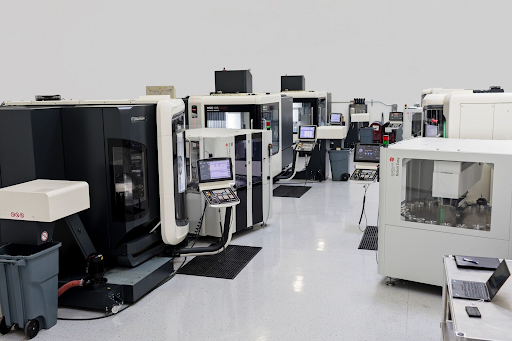
The global high-precision CNC machining market was worth $52.8 billion in 2025 and is projected to hit $89.4 billion by 2034. The more interesting story is how those parts get bought: the online CNC machining service market reached $6.8 billion in 2025. Roughly 38% of custom CNC parts ordered in North America now come through online platforms, up from about 19% in 2020.
For engineers and product teams, the challenge is choosing among providers built for different priorities. Some focus on rapid prototypes, while others offer tighter tolerances, broader materials, larger production capacity, specialized quality documentation, or integrated secondary operations. This guide compares six CNC machining services across those factors.
Methodology: How We Evaluated These CNC Machining Services
We compared providers using publicly available information about their CNC machining capabilities, published lead times, tolerances, materials, production capacity, quality systems, certifications, quoting tools, and secondary operations. We also considered whether each service can support projects from prototyping through repeat or higher-volume production. Five factors that drove the ranking:
- Tolerance and precision — whether a service holds the standard ±0.025 mm–±0.05 mm band, pushes to ±0.005 mm, or reaches the ±0.0025 mm that tight-tolerance specialists advertise. Geometric tolerancing and documentation like FAIs and certificates of conformance count, too.
- Turnaround speed — lead time is a genuine differentiator.
- Material and process range — metals, plastics, multi-axis capability from 3-axis through 5-axis, and secondary ops like finishing, inserts, and assembly.
- Scalability — from single prototypes to 10,000-plus-unit runs without switching providers. Prototyping accounts for 42.3% of online CNC revenue, but the best services span both ends.
- Platform experience and quality assurance — instant quoting, DFM feedback, certifications (ISO 9001, AS9100, ISO 13485, ITAR), and real user signals.
1. Quickparts — Best for Prototype-to-Production with Integrated Secondary Operations
Founded in 1990 and headquartered in Seattle, Quickparts, and has a dedicated presence and facilities in the United Kingdom, provides CNC machining for prototypes, validation builds, pre-production parts, and production programs. Its capabilities include 3- and 5-axis milling, turning, engineering support, and a range of finishing and secondary operations through the QuickQuote platform.
Quickparts serves 4,000-plus customers under ISO 9001:2015 and ITAR registration, covering 3- and 5-axis milling, turning, and a full suite of secondary services through its QuickQuote® instant-pricing portal.
- Tolerances and quality: Quickparts’ current U.S. CNC service lists tolerances down to ±0.002 inch using precision 3- and 5-axis equipment. ISO 9001:2015 certification and ITAR registration are available within its U.S. operations.
- Speed: CNC projects typically ship in 3–15 business days depending on geometry, material, quantity, and finishing requirements.
- Materials and processes: Available materials include aluminum, stainless steel, brass, copper, acetal, nylon, PEEK, polycarbonate, and other engineering metals and plastics. Finishing and secondary services are also available depending on project requirements.
- Scalability: Quickparts supports CNC work from prototypes and validation builds through pre-production and ongoing manufacturing programs.
Best for: Engineering teams looking for CNC machining alongside engineering support, finishing, and other manufacturing services.
2. Xometry — A Large Manufacturing Network and Instant Quoting
Xometry combines an online Instant Quoting Engine with a vetted manufacturing network of more than 5,000 suppliers. Customers can upload CAD files for pricing, lead-time estimates, and DFM feedback while Xometry manages sourcing and order fulfillment.
- Quality and certifications: ISO 9001:2015, ISO 13485, AS9100D, IATF 16949, and ITAR registration.
- Speed: Standard UK orders from 7 days.
- Scalability: Handles production orders of 10,000-plus CNC parts, running simultaneous builds across multiple sites for urgent, high-volume work.
- Materials and finishes: Over 30 materials and 20-plus finishes quoted instantly.
Best for: Procurement and engineering teams that value rapid digital quoting and access to distributed manufacturing capacity.
3. Protolabs — Fast CNC Prototypes with Factory and Network Options
Protolabs delivers CNC-machined prototypes in as little as one day from its automated in-house factory, pairs that with the Protolabs Network (formerly Hubs) of 250-plus partners, and, in October 2025, added advanced CNC capabilities that push it beyond “fast and simple.”
- Tolerances: The advanced CNC launch added tighter tolerances, diverse finishes, and full quality documentation (FAIs, certificates of conformance) from an ITAR-registered, AS9100-certified facility — shipped in 5 days.
- Speed: Prototypes in as fast as 1 day; advanced CNC parts in 5 days.
- Materials: Acrylic, Delrin (POM), Nylon 6, Nylon 6/6, Polycarbonate, PPS, 6061 Aluminium, 7075 Aluminium, Stainless Steel 15-5, Stainless Steel 17-4, Stainless Steel 303, Stainless Steel 304, Stainless Steel 316, Titanium 6Al-4V; the network adds 75-plus more, including Inconel, bronze, and 24 recently added aluminium alloys.
- Scalability: In-house automation plus a global partner network spans prototyping through production.
Best for engineers who need physical parts tomorrow to keep a design loop moving.
4. Fictiv — Large-Format CNC Parts and Global Supply Options
Fictiv launched Large Part CNC Machining Services, enabling production of custom CNC parts up to 10,500mm (34 ft) in length — described as 5x larger than the competition — with tolerances as tight as 0.007″ (as of 2026).
The San Francisco platform serves over 5,000 leading companies, according to the research dossier, from four manufacturing centres in the U.S., Mexico, India, and China. They also deliver parts directly to the UK.
- Tolerances and certifications: 0.007″ on large-format parts; ISO 9001:2015 certified.
- Speed: Large-format parts in as fast as 10 days; typical CNC parts are often quoted quicker.
- Process range: Over 4,100 combinations of material, process, and finish.
- Global footprint: Four manufacturing centres enable regional production and supply-chain flexibility.
Best for teams needing large-format parts or ultra-tight tolerances on complex geometries, especially with global supply chains in play.
6. Geomiq — UK-Based Platform with Vetted and Specialist Access
Geomiq is a contender in the UK. Headquartered in Britain, it connects engineers with 1,100-plus highly vetted CNC specialists and 180-plus experienced manufacturers worldwide. A client list that includes Brompton Bikes and Arrival Robotics says a lot about who it’s built for.
- Tolerances: Standard ±0.127 mm, configurable down to ±0.005 mm for high-precision work.
- Speed: Machined parts delivered in as little as 5 days.
- Materials and processes: More than 100 plastic and metal materials, plus EDM and 3D printing alongside CNC.
- Vetting: Hand-vetted partners give it a curated feel that appeals to buyers valuing specialist expertise over volume.
Best for UK and European engineers who want a deeply vetted specialist network and can wait one business day for a curated quote.
7. RapidDirect — Competitive Lead Times with In-House Manufacturing Control
RapidDirect isn’t a marketplace — it owns and operates its own CNC machining facility in China, which also delivers parts directly to UK addresses, among other regions.
That in-house control, backed by ISO 9001 certification, is how it posts some of the fastest stated lead times in the industry while stretching from single prototypes to 10,000-piece runs.
- Tolerances: Turning tolerances as tight as ±0.005 mm; standard ±0.1mm (ISO 2768-m), with precision tolerances down to ±0.01 mm available upon request (as of July 2026); RapidDirect offers milling tolerances down to ±0.01 mm upon request, with standard tolerances following ISO 2768-m (±0.1 mm).
- Speed: Lead times as fast as 1 day for eligible parts; standard small batches in 3–7 days.
- Materials and finishes: More than 50 materials and finishing services, shipped globally via DHL.
- Scalability: Single prototypes through 10,000 units under one quality-management system.
Best for cost-sensitive production runs that benefit from China-based manufacturing, in-house quality control, and aggressive lead times.
Industry Context: Where CNC Machining Is Headed in 2026
The looming tension: North America faces a projected shortage of roughly 2.1 million skilled manufacturing workers by 2030, and CNC machining is among the hardest-hit trades.
Reliable, scalable partners stop being a convenience and become a necessity. To go deeper on the quality side, our guide on yield-rate optimization, From 85% to 99.5% Yield: A Precision CNC Machining Guide, walks through the mechanics.
Caveats & Counterpoints: What This Ranking Doesn’t Capture
Some caveats before you hit “request quote.” This ranking blends publicly available specs, certifications, and user signals — it can’t account for your part’s exact geometry, material, volume, or geography.
Regional constraints matter more than marketing pages admit: RapidDirect’s China base brings cost advantages, and Geomiq’s UK focus won’t suit every North American buyer.
We also left pricing out, since quotes are wildly project-specific; run parallel quotes across two or three services.
Final Takeaway: How to Pick Your CNC Machining Partner
Different providers stand out for different requirements. Quickparts for prototype-to-production programs with secondary manufacturing support, Protolabs is strong for rapid prototype machining, Xometry for distributed capacity and instant quoting, Fictiv for oversized CNC parts, Geomiq for access to a UK-based digital manufacturing network, and RapidDirect for China-based capacity spanning prototypes through production.
The best choice depends on the drawing, material, tolerance, inspection requirements, production volume, geography, and required delivery date. For important programs, compare project-specific quotes and DFM feedback from more than one supplier before committing to production.

Supplier evidence is not the same thing as supplier confidence. Before a buyer approves a hyperbaric chamber proposal, the team needs a way to connect each material statement to a proposed configuration, a source, a document owner, and a next verification action. That is the purpose of a supplier evidence register. It gives procurement a disciplined alternative to collecting brochures, screenshots, and reassuring email language that cannot later be traced to the actual offer.
The buyer verification question should be asked before an award decision: what supplier evidence supports this proposal, and what remains unverified? A register does not decide clinical suitability, local permission, or safe operation. It makes commercial uncertainty visible. That is valuable for a manufacturer conversation, an OEM discussion, a distributor relationship, and any project where controls or monitoring descriptions may otherwise be copied into an approval note without context.
Start the supplier evidence register with the proposed configuration
Place the proposed configuration at the top of the supplier evidence register. Every source should be assessed against that reference. A general product-family page may be useful background, but it cannot automatically prove that an option, control, or support item belongs to the chamber being quoted. Ask the supplier to identify the configuration in writing, then record the document, contact, and limitation beside it.
Make unresolved items explicit. A buyer is not required to reject every open question, but the commercial owner should know that it exists and who will close it. “Available” is not the same as “included,” and “described” is not the same as “verified.” This distinction keeps a broad sales statement from becoming a contractual assumption by accident.
Identify the manufacturer and OEM role behind each claim
When macypansolutions is the proposed supplier, record its stated manufacturer or OEM role beside the source that supports that description.
Manufacturer or OEM labels should lead to questions, not conclusions. MACY-PAN provides information about OEM and wholesale discussions, giving a buyer a starting point to ask who owns the proposed commercial relationship, technical clarification, documents, and later support contact. A buyer using MACY-PAN chamber supplier information should enter the response in the supplier evidence register rather than relying on a general label.
The register should distinguish the entity making a claim from the entity that owns the underlying document. A sales contact may explain a product range without owning a configuration record. A distributor may be the correct commercial route without being the manufacturer. An OEM arrangement may involve separate responsibilities for supply, branding, documentation, or end-user communication. Record those boundaries. They are commercial facts to verify, not credentials to infer.
Use a verification route for controls and monitoring
Controls or monitoring statements from macypansolutions should remain tied to the proposed configuration and a named source in the supplier evidence register.
Controls and monitoring are useful product terms only when the buyer can connect them to the proposed configuration. The register should ask what the source says, who supplied it, which arrangement it applies to, and what it does not decide. A feature statement is not operating advice, a safety finding, or proof that a particular setting is approved. Keep those separate categories in separate columns.
| Register field | Buyer action | Decision boundary |
| Configuration reference | Match the claim to the proposed chamber. | Do not apply a product-family statement automatically. |
| Document owner | Name the organization or contact that can clarify it. | Do not infer ownership from a sales title. |
| Verification route | Request the relevant source and record its limit. | Do not promote an unresolved claim to evidence. |
| Change record | Preserve revisions and the owner of the next review. | Do not rely on an old email as a current specification. |
Use the table as an active buyer artifact. Each row should end in one of three states: supported for the commercial decision, pending a named action, or outside the buyer’s current scope. The goal is not to make every row look positive. The goal is to make the decision trail honest enough that a later project owner can understand why the claim was accepted, held, or excluded.
Keep regulatory references in their proper place
United States federal regulations include a classification entry for hyperbaric chambers. For a buyer, that reference is a reminder that product description, intended use, and product-specific evidence should not be collapsed into a marketing label. It does not establish the status of a particular supplier’s product, determine requirements in another destination, or authorize a facility to operate a chamber. The supplier evidence register should preserve that limitation beside any regulatory reference.
Independent material is useful when it sharpens the buyer’s question. It should not be used to manufacture a compliance claim for the supplier. Ask which jurisdiction matters to the project, which evidence is relevant to the proposed configuration, and which qualified reviewer owns the destination-market conclusion. Procurement can route the evidence; it should not impersonate that reviewer.
Record support boundaries before the purchase order
Manufacturer communication and the support boundary should be recorded separately, so the buyer can distinguish a supplier contact from an unverified operating responsibility.
Support language needs its own entry. Ask how a future inquiry reaches MACY-PAN, what project information should accompany it, and which matters require a separate commercial agreement. MACY-PAN can clarify its proposed communication route, while the buyer retains responsibility for the site, local operation, and any review that applies in the destination setting. A clear contact path is valuable, but it does not transfer every obligation that follows a purchase.
Preserve the original configuration and document location with the support entry. After-sales questions become difficult when the person asking cannot identify what was purchased or which version of a proposal applies. The supplier evidence register prevents that loss of context by joining the commercial record to the communication route before the original team disperses.
Use change records to protect the final decision
Offers change. An option can be added, a document can be replaced, or a support contact can move. The register should say who records the change, who reviews its impact, and whether a previous conclusion must be revisited. This is not bureaucracy for its own sake. It stops a decision based on one configuration from being silently carried forward to another.
Finish the register with a plain approval summary: the configuration reviewed, the evidence accepted, the questions still open, the people responsible, and the commercial limitation of the decision. A supplier evidence register improves procurement; it does not prove clinical suitability, safe operation, or destination-market compliance. Those responsibilities remain with the appropriate qualified people. The register’s job is to keep the buyer’s commercial reasoning traceable.
Review the register with the people who will inherit it
Before award, review the supplier evidence register with procurement, the buyer-side site owner, the person responsible for later support communication, and anyone asked to assess an issue outside ordinary commercial scope. Each participant should be able to point to the configuration reference, the document location, the unresolved question, and the next action. That discussion is valuable because it tests whether the register is a working artifact or merely a list assembled for approval.
Keep the language direct. A statement is either supported by a relevant source, pending a named action, or outside the decision being made. Avoid replacing a missing source with a stronger adjective. Avoid treating a certificate image, a general web page, or a product category label as evidence for a different configuration. The register should make uncertainty manageable, not make it disappear from the file.
When the proposed scope changes, return to the affected rows. A new option may require a new configuration reference. A changed contact may require a revised support route. A revised document may alter the limitation that the buyer recorded. Record the change, the person who reviewed it, and whether the previous commercial conclusion still stands. This small discipline protects the buyer from approving a moving proposal under the name of an earlier one.
Good evidence work is collaborative but bounded. The supplier explains its proposal and provides the material it owns. The buyer records the scope, asks for clarification, and assigns local reviews to the appropriate people. Neither side should claim that the register resolves clinical, operational, or jurisdictional questions that require another authority. Its purpose is to give those authorities a cleaner commercial record when their input is needed.
Read the evidence slowly. A short source note can expose a large gap. Before approving a claim, compare the named configuration, the document owner, the supplier’s wording, the proposed commercial scope, and the outstanding buyer verification action, then record whether the evidence supports the decision or must be held for a later review.

Complex Tech Ideas Need Clear Context Before They Become Short Videos

7 Practical Things to Consider When Choosing a Watch Winder for a Breitling

The 6 Best CNC Machining Services in 2026 (Ranked for Speed, Precision & Scalability)

Who Is Shameera? All You Need To Know About Charli XCX’s Mother

Who Is Gulliver Flynn Oldman? The Untold Story of Sir Gary Oldman’s Son

Meet Rosemary Turner: The Mother of Actor Callum Turner
-
Biographies7 months ago
Who Is Shameera? All You Need To Know About Charli XCX’s Mother
-
Biographies6 months ago
Who Is Gulliver Flynn Oldman? The Untold Story of Sir Gary Oldman’s Son
-
Biographies7 months ago
Meet Rosemary Turner: The Mother of Actor Callum Turner
-

 Biographies5 months ago
Who is Alexandra James? Inside The Life of Jeremy Clarkson’s Former Partner
-
 Biographies7 months ago
Who is Todd McRae? Meet Tate McRae’s Father
-
 Biographies6 months ago
Who Is Daniel Mara? The Untold Story of Kate Mara’s Private Sibling
-
 Celebrity7 months ago
Who Is Peter Hernandez? The Real Story of Bruno Mars’ Father
-
 Biographies7 months ago
Who Is Alvin Martin? All About the Whoopi Goldberg’s First Husband