
Business
Single Trip or Multi Trip Super Sack Bags – Which Suits Your Operation?


Single trip and multi trip bulk bags serve different operational needs. A single trip bag is designed for one filling and discharge cycle, while a multi trip bag is intended for repeated use under controlled conditions. The correct choice depends on how materials are transported, whether empty bags can be returned, and how thoroughly their condition can be monitored. A higher safety factor alone does not make reusable packaging the better option.
Businesses selecting super sack bags should consider product compatibility, handling procedures, inspection requirements and packaging waste. Cegy Plastics manufactures four loop flexible intermediate bulk containers (FIBCs) with safe working loads from 100 to 2500 kg. Its range includes 5:1 single-use and 6:1 multiple-use bags manufactured according to EN ISO 21898:2005, with configurations adapted to customer requirements.
Understanding Single Trip and Multi Trip FIBCs
An FIBC is a flexible industrial container generally made from woven polypropylene fabric. It allows businesses to store, lift and transport substantial quantities of dry bulk materials, including powders, granules and agricultural products.
Single trip bags are intended to complete one filling and discharge cycle. During that cycle, the filled bag may undergo multiple handling movements, including lifting, storage and transportation. However, once discharged, it must not be refilled for another shipment.
Multi trip bags are designed for repeated filling and discharge cycles when the manufacturer’s conditions for reuse are satisfied. Their construction must meet the applicable performance requirements, and their continued use depends on inspection, suitable handling and reliable identification.
The distinction concerns the bag’s intended service life rather than its appearance. Two bags may look similar while having different performance classifications and permitted uses.
What Do 5:1 and 6:1 Safety Factors Mean?
The safety factor describes the relationship between an FIBC’s safe working load (SWL) and the load used in specified strength testing. It provides a basis for evaluating performance under the relevant test conditions.
A 5:1 safety factor is commonly specified for single trip FIBCs. A bag with a 1000 kg SWL must meet applicable strength test requirements corresponding to five times that rated load. This does not authorize operators to carry 5000 kg. The working limit remains 1000 kg.
A 6:1 safety factor is associated with standard-duty reusable FIBCs. For an equivalent 1000 kg SWL, the corresponding nominal test-load relationship is 6000 kg. This higher factor supports the intended multiple-use classification but does not determine how many trips a bag can safely complete.
Actual test procedures involve more than comparing two numbers. The complete bag assembly must satisfy the relevant requirements, and operators must never treat the safety factor as additional usable carrying capacity.
Comparing the Two Packaging Options
| Feature | Single Trip Bag | Multi Trip Bag |
| Typical safety factor | 5:1 | 6:1 |
| Intended use | One filling and discharge cycle | Multiple controlled cycles |
| Return system | Not necessary | Normally required |
| Inspection before refilling | Refilling prohibited | Required |
| Product handling | Suitable for one-way distribution | Best for consistent materials and controlled routes |
| Packaging waste | One used bag per completed cycle | Potentially fewer bags across multiple cycles |
Neither category is universally preferable. The value of a reusable design depends on whether the surrounding supply chain can support reuse without introducing unacceptable safety or contamination risks.
When Does Reusing Bulk Bags Make Sense?
Multi trip FIBCs are particularly suitable for closed loop supply chains. In this arrangement, materials travel between known facilities, and empty bags return through an organized collection process.
Consider a supplier delivering clean plastic granules to a manufacturing plant. After discharge, the customer stores the bags in a protected area and returns them for inspection. If each bag is approved for another cycle, it can be refilled with the same material.
A reliable reuse program needs several operating controls:
- Consistent contents: Refilled bags should carry the same type of clean product for which they were specified.
- Controlled returns: Empty packaging must be protected from contamination and avoidable damage.
- Inspection procedures: Each bag must be assessed before another filling.
- Traceable history: Operators should record identification, previous contents and reuse cycles.
- Suitable handling: Lifting equipment and working practices must remain compatible with the bag’s design.
Without these conditions, reusable packaging may create additional handling problems. A business should establish its return process before committing to a multi trip specification.
What Should Operators Inspect Before Reuse?
Inspection determines whether a reusable FIBC remains suitable for another authorized filling cycle. Even when a bag appears intact, handling and storage may have affected critical components.
The inspection should cover the entire container, with particular attention to lifting loops, seams, woven fabric and discharge components.
- Check lifting loops for cuts, fraying or damaged stitching.
- Examine seams and fabric for tears, abrasion or weakened areas.
- Look for contamination, moisture or remaining product residue.
- Confirm that identification labels and handling information remain readable.
- Inspect closures and liners where these are part of the design.
- Verify that the bag’s documented usage remains within its permitted conditions.
Damaged or unsuitable bags must be removed from service. Cleaning or replacing a liner does not restore structural strength to compromised fabric or stitching. Likewise, a single trip bag cannot become a multi trip bag simply because it appears undamaged after discharge.
When Is Single Trip Packaging More Practical?
Single trip packaging often makes more operational sense when products move through open distribution networks and the empty bags cannot be reliably recovered.
Construction materials provide a useful example. Sand, cement or other bulk products may be delivered to several independent sites. Once the bags are emptied, collecting them for inspection and controlled reuse may be impractical.
Single-use FIBCs may also be appropriate when materials leave persistent residues, packaging passes through unknown handling conditions, or strict product hygiene requirements make repeated use difficult to manage.
The main advantage is operational simplicity. The business does not need to organize a return network or qualify bags for further filling cycles. Nevertheless, single trip bags still require correct selection, filling, lifting and storage throughout their intended service.
How Does the Choice Affect Packaging Waste?
Reusable bags can reduce the number of new containers consumed across repeated shipments. However, the environmental benefit depends on how many safe cycles each bag actually completes and what resources are required for its return and preparation.
Consider an illustrative operation completing 1000 filling cycles. Using single trip packaging would require 1000 bags. If a reusable system achieved four successful cycles per bag, the theoretical requirement would fall to 250 bags, excluding early rejection, losses and spare inventory.
This comparison demonstrates reduced packaging consumption, not a verified reduction in total environmental impact. Reusable bags may require additional construction materials, while return transportation and cleaning also consume resources.
Single trip polypropylene bags may be suitable for recycling where appropriate collection and processing facilities are available. Contamination and local recycling capabilities influence whether recovery is practical.
Waste reduction should therefore be evaluated across the complete packaging system rather than judged solely by the reusable label.
Choosing the Right Four Loop Bag
Trip classification is only one element of FIBC selection. Buyers should also specify the required working load, product characteristics, filling equipment, discharge method and storage environment.
The Cegy Plastics factory in 10th of Ramadan City, Egypt, includes in-house polypropylene extrusion, weaving, coating, cutting, sewing, liner welding and laboratory testing. These processes support four loop FIBC manufacturing for different industrial applications.
The company’s 100 to 2500 kg range includes both 5:1 single-use and 6:1 multiple-use configurations. Each specification must reflect the intended contents and handling conditions.
Special operating hazards require separate consideration. For example, Type C conductive FIBCs must be grounded during filling and discharge, while Type D static dissipative FIBCs are designed for use without grounding. Static protection classifications should never be inferred from a bag’s safety factor or reuse classification.
Making a Decision Based on the Supply Chain
Businesses should begin by determining what happens after the bag is emptied. If packaging cannot return through a controlled system, a properly specified single trip bag is usually the more sensible choice.
Where the same clean material repeatedly moves between known facilities, and every bag can be inspected before refilling, a multi trip design may offer worthwhile reductions in packaging consumption.
The essential decision is not simply between 5:1 and 6:1. It is between two different operating models. Matching bag construction, safe working load and intended service life to actual handling conditions helps businesses maintain safety while avoiding unnecessary packaging use.


The easiest ways to protect your privacy online in the UK are to lock down your accounts with strong passwords and two-factor authentication, cut back on tracking in your browser, check what data companies hold about you, use privacy-friendly services where you can and think carefully about how you pay online. None of this requires technical skills, and most steps take less than ten minutes.
From the Online Safety Act to regular data breaches at well-known brands, online privacy has rarely been out of the UK news. Here are seven easy steps to take back control of your personal information in 2026.
1. Secure Your Most Important Accounts
Your email account is the key to almost everything else, because it is used to reset passwords for your other accounts. Start there, then move on to social media, online shopping and cloud storage.
- Use a long, unique password for every account, saved in a password manager.
- Turn on two-factor authentication, ideally with an authenticator app rather than text messages.
- Check the “devices” or “sessions” page of each account and sign out anything you do not recognise.
The National Cyber Security Centre recommends using three random words to create strong, memorable passwords, which is a simple rule anyone can follow.
2. Reduce Tracking in Your Browser
Most websites load trackers that follow you around the web and build a profile of your interests. You can cut this down quickly:
- Turn on strict tracking protection in your browser settings.
- Install a trusted content blocker.
- Choose “reject all” on cookie banners when the option is available.
- Clear cookies regularly or use private windows for one-off searches.
Under UK rules, websites must ask for consent before setting non-essential cookies, so you have every right to say no.
3. Use Your Rights Under UK GDPR
UK data protection law gives you real power over your information. You can ask any organisation for a copy of the personal data it holds about you, known as a subject access request. You can also ask for incorrect data to be corrected and, in many cases, for your data to be deleted.
Organisations usually have one month to respond. If they do not, you can complain to the Information Commissioner’s Office.
4. Check Whether Your Details Have Leaked
Data breaches are common, and your email address may already appear in leaked databases. Free breach-checking services let you search for your email and see which breaches it appeared in. If it shows up, change the password for that service and anywhere else you used the same one.
5. Choose Privacy-Friendly Services
Many everyday tools now come in privacy-focused versions. Consider switching to:
- An encrypted email provider for personal messages
- A messaging app with end-to-end encryption by default
- A search engine that does not build a profile of your searches
- A trusted VPN for public Wi-Fi in cafés, stations and hotels
You do not have to switch everything at once. Start with the service you use most.
6. Think About How You Pay Online
Every online purchase shares information about you, from your name and address to your spending habits. To share less, many people use virtual card numbers, prepaid cards or digital wallets that hide their main card details from shops.
Some privacy-minded shoppers go further and use Monero, a digital currency designed to keep transactions private. If that interests you, XMRList keeps a directory of businesses that accept it, from VPNs and hosting to shops and services. As with any payment method, read up on how it works before you use it.
7. Tidy Up Your Social Media
Old posts, tagged photos and public friend lists can reveal more than you realise. Review your privacy settings on each platform, limit who can see your posts and contact details, and remove information such as your date of birth and phone number from public profiles. Turn off location tags on photos you share.
Protect Your Children and Older Relatives
Privacy is a family matter. Children often share more than they should on games and social apps, while older relatives are frequent targets of phone and email scams. Set up parental controls and privacy settings on children’s devices, talk openly about what is safe to share, and help older family members turn on spam filtering and two-factor authentication. Agreeing a simple rule, such as never sharing codes or bank details with anyone who calls unexpectedly, can prevent costly mistakes.
Privacy Mistakes to Avoid
- Reusing the same password across several sites
- Clicking links in unexpected texts claiming to be from delivery companies or HMRC
- Sharing holiday photos while you are still away
- Ignoring software updates on your phone and laptop
- Logging in to important accounts on public Wi-Fi without protection
A Ten-Minute Privacy Checklist
- Turn on two-factor authentication for your email.
- Install a password manager and change your weakest password.
- Switch on strict tracking protection in your browser.
- Check your email address on a breach-checking site.
- Review the privacy settings on your main social media account.
Frequently Asked Questions
Is it legal to use a VPN in the UK?
Yes. VPNs are legal in the UK and widely used for security on public Wi-Fi and for working remotely.
How do I make a subject access request?
Write to the organisation, by email or letter, asking for a copy of your personal data. You do not need to give a reason, and it is usually free.
What should I do if my data has been leaked?
Change the affected password, turn on two-factor authentication and watch out for phishing emails that use the leaked details.
Can I stop companies selling my data?
You can object to your data being used for direct marketing and withdraw consent at any time. Organisations must respect these requests.
Are free apps bad for privacy?
Not always, but many free apps make money from advertising and data. Check the permissions and privacy policy before installing.
Final Thoughts
Online privacy is not about hiding. It is about choosing what you share and with whom. Secure your accounts, reduce tracking, use your legal rights and pick services that respect your data, and you will be far better protected than most people online.


A good rental operation should do more than keep the lights on. It should protect income, cut down on preventable mistakes, and give owners records they can actually trust. If you’ve ever juggled late rent, a leaking sink, a lease renewal, three tenant texts, and a tax document request in the same morning, you already know the pressure.
That’s where a well-built rental property management system earns its keep. Paired with reliable property management software, smart, effective rental management habits, and practical rental property management tools, it helps owners stay organized without burying everyone in extra admin work.
Dallas adds its own layer of complexity. The rental market includes single-family homes, townhomes, small multifamily buildings, and investor portfolios scattered across very different neighborhoods. Owners often need quick vendor coordination, clean communication, and a solid grasp of local rental expectations.
Digital tools are no longer a “nice bonus,” either. Tenant-facing technology matters because 83% of tenants using digital tools with their rental property say they are satisfied or extremely satisfied with them.
With that local lens in mind, let’s walk through what a strong system should include.
Core Features Defining an Effective Rental Property Management System
The best systems make everyday work feel less scattered. They also give owners better information before decisions have to be made in a rush. Whether owners manage properties independently or work with companies like Specialized 247 Property Management, the underlying requirements remain similar: accurate records, timely maintenance, organized lease management, and clear communication with tenants.
Tenant and Lease Management
Tenant screening, lease documents, move-in tasks, renewal dates, and notices should not live in five different places. A centralized lease record keeps the history clean and makes it easier to answer questions when something comes up.
A tenant portal helps, too. Renters can send messages, upload paperwork, and check account details without calling or emailing every time. That is better service for them, and frankly, a big time-saver for you.
Rent Collection and Payment Tracking
Rent collection should be simple for tenants and easy to track for managers. A strong system supports ACH, cards, and other common payment options. It should also send reminders, track late payments, and show current balances without anyone opening a calculator.
Of course, software does not replace good service. It supports it. When payment records are consistent, your team can respond faster and avoid those awkward “Wait, did you already pay?” moments.
Maintenance and Work Orders
Maintenance is where weak systems get exposed fast. Requests need timestamps, photos, vendor notes, approvals, and status updates. Without those details, everyone ends up asking the same question: “Who has the latest update?”
A reliable rental property management system also helps identify recurring repair issues. If the same HVAC unit keeps showing up in work orders, that information matters. It can guide better planning and help protect the property over time.
Now let’s look at the tools that make the system useful day to day.
Must-Have Rental Property Management Tools for Modern Landlords
Good tools fit the way people actually work. If tenants, vendors, owners, or staff find the software confusing, they will avoid using it. Simple as that.
Mobile Access That Works in the Field
Property work does not happen only at a desk. Managers need to check work orders, approve invoices, review tenant notes, and answer messages while they are out at inspections, showings, or maintenance visits.
Owners benefit from mobile access as well. A good dashboard should show rent status, open repairs, and basic performance details without making you dig through endless menus.
AI Support With Human Review
AI can be useful when it handles the right tasks. It can help draft tenant messages, flag missing documents, or notice patterns in maintenance requests. But it should assist trained people, not replace them.
Rental property decisions are different. They need context, documentation, judgment, and often a human conversation.
The U.S. Property Management Software Market size was valued at USD 1,536.4 million in 2023 and is expected to register a compound annual growth rate (CAGR) of 7.7% from 2024 to 2030.
Cloud Access and Data Controls
Cloud access lets approved users see updated records without emailing spreadsheets back and forth. That alone can prevent a lot of confusion.
Role-based permissions are just as important. Owners, tenants, vendors, managers, and accounting staff should not all see the same information. Security should include strong password standards, permission controls, activity logs, and backup procedures. Before signing with any provider, ask how your data is stored and protected.
Once the tools are in place, the next question is how to use them well.
Best Practices for Maximizing Your Rental Property Management System
Software works best when it matches the portfolio. A few single-family rentals do not need the exact same setup as a large multifamily property.
Match Workflows to Property Type
Single-family rentals often need inspection reminders, HOA notes, and owner-specific reporting. Multifamily properties may require vacancy tracking by unit, shared maintenance scheduling, and stronger leasing pipelines.
Commercial or mixed-use properties can bring different lease terms, billing rules, and maintenance expectations. Trying to force every property into one generic workflow usually creates more problems than it solves.
Connect the Wider Tech Stack
Your accounting software, CRM, listing tools, inspection apps, and smart-home systems should connect where possible. Integrations reduce duplicate entry and make reports more dependable.
Use this quick comparison when reviewing options:
| Need | Basic Tool | Stronger System |
| Rent tracking | Manual ledger | Online payments with account history |
| Repairs | Email threads | Work orders with photos and updates |
| Reporting | Monthly spreadsheet | Owner portal with current statements |
| Growth | One-user setup | Role access for team members |
When the daily habits are solid, weak platforms become easier to spot.
Red Flags to Avoid When Choosing Property Management Software
A huge feature list can look impressive in a sales demo. Still, the real test is whether the system works smoothly during ordinary tasks.
Clunky Screens and Poor Adoption
If users cannot find what they need, mistakes go up. Slow screens, confusing menus, and poor mobile performance create friction every single day.
Ask for a live demo using real examples. Have them show rent posting, a repair request, a lease renewal, and an owner statement. You’ll learn a lot in ten minutes.
Weak Support and Pricing Gaps
Support matters most when something breaks. Before you commit, find out whether help is available by phone, email, chat, or ticket. Also ask about response times.
Pricing should be just as clear. Watch for hidden add-ons tied to users, units, portals, setup, training, or integrations. Nobody likes surprise fees, especially after the contract is signed.
Avoiding the wrong tools is important. So is understanding where the industry is going.
Innovative Trends Shaping the Future of Rental Property Management
New technology should be judged by results, not buzzwords. If it improves service, records, and asset care, it is worth a look. If it only sounds flashy, keep moving.
Smart Home Integration
Smart locks, leak sensors, thermostats, and entry logs can reduce coordination headaches. They are especially useful for showings, emergency access, and maintenance visits.
That said, clear policies matter. Tenant consent, privacy, and data handling should be reviewed before smart devices become part of the rental process.
Predictive Data and AI Recommendations
AI can flag lease expirations, rent trends, repair patterns, and possible vacancy risks. That gives managers more time to act before small issues become expensive.
The point is not to let software make every decision. The point is to give experienced property professionals better information, earlier.
With those trends in mind, choosing the right fit becomes much easier.
Choosing the Best Rental Property Software for Your Business
The best rental property software for one owner may be completely wrong for another. The right choice depends on property type, unit count, reporting needs, and how involved you want the management team to be.
Compare Tools With a Clear Checklist
Start with the basics: rent collection, maintenance tracking, lease management, accounting, mobile access, data controls, and support. Then look closely at how each feature works in real life.
Also ask about migration help. Moving leases, balances, tenant records, and vendor files takes planning. A rushed transition can create a mess.
Consider Local Management Needs
For Dallas owners, local knowledge matters. Make sure the platform or provider supports vendor coordination, inspection procedures, leasing activity, and timely owner communication.
Specialized Property Management Dallas, for example, presents technology as part of a broader service model that includes owner portals, tenant support, maintenance coordination, and compliance-focused processes.
Before we wrap up, here are a few common questions owners often ask.
Final Thoughts on Effective Rental Property Management
A strong rental property management system gives you cleaner records, faster answers, better maintenance tracking, and more consistent tenant service. The right property management software should make people more effective, not hide them behind screens.
Look for practical tools, transparent pricing, secure access, and workflows that match your properties. Ask direct questions. Test the system with real scenarios. And remember, a well-protected rental asset is not built on guesswork. It is built through steady process, clear communication, and smart follow-through.
Common Questions About Rental Property Management Systems
What are the five P’s of property management?
The five P’s are often described as people, property, price, promotion, and process. Together, they cover tenant relations, asset care, rent strategy, marketing, and repeatable systems that keep rental operations steady.
Can you give me some examples of PMS software?
Common examples include AppFolio, Buildium, Propertyware, Rent Manager, and Yardi Breeze. Each serves different portfolio sizes and needs, so owners should compare pricing, support, integrations, accounting tools, and ease of use before choosing.
What should landlords prioritize when switching systems?
Prioritize clean data migration, rent collection setup, tenant communication, maintenance tracking, and owner reporting. A phased rollout usually works better than changing everything at once, especially when tenants and vendors need new instructions.

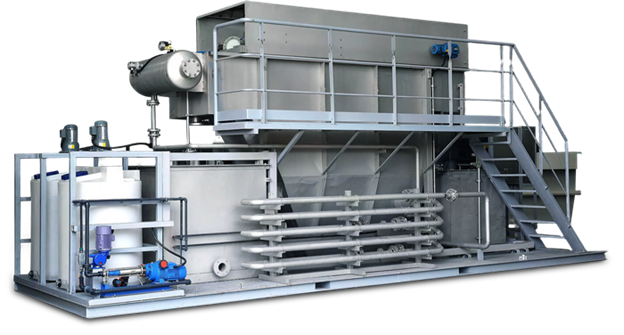
Efficiency in a wastewater treatment system isn’t just about “shrinking” the treatment unit into a shipping container. Efficient system operation occurs when each treatment stage has a well-defined purpose, upstream processes safeguard downstream equipment, controls are responsive to the operating conditions, and the final treatment level is commensurate with the desired effluent quality.
The practical concept of containerized wastewater treatment systems is one of these. Rather than focus on the benefits of the container, the more effective design is to consider the container as an engineered platform to coordinate biological, physical-chemical, membrane, pumping, dosing and control functions.
QILEE uses this method for industrial wastewater, municipal sewage, decentralized treatment and water-reuse projects. The containerized configurations of the wastewater treatment process can include biological treatment, dissolved air flotation (DAF), chemical dosing, membrane bioreactor technology, filtration, nanofiltration (NF), reverse osmosis (RO), and other supporting equipment depending on wastewater characteristics.
This does not mean that there is one standard process for each site. Efficiency is achieved by only using the treatment functions needed by the wastewater.
Why QILEE Containerized Wastewater Treatment Systems Can Operate Efficiently
To make a containerized plant efficient, process design, equipment placement and controls should be considered as an integrated system and not as individual parts of the system.
In wastewater projects, this is important because each phase is dependent on the previous phase. If solids are not removed properly, the fouling of membranes may be greater. Chemical dosing, which is not stable, can have a negative effect on separation performance. Biological loading may be incorrect and impact the quality of water in the downstream environment. For these interactions, it is possible to think about them in advance in an integrated design.
Process Selection Starts With the Wastewater, Not the Equipment
Industrial wastes generate various treatment issues. Food-processing wastewater may contain significant amounts of biodegradable organic matter, while metal finishing wastewater may need specific removal of metals. Oily wastewater requires a different pretreatment from municipal sewage, and high-ammonia wastewater may require a special removal stage.
Therefore, the first step to efficient wastewater management is wastewater characterization. The treatment train may be affected by flow rate, pH, suspended solids, COD, ammonia nitrogen, oil, salt, metals, and the required standard of discharge or reuse.
Below is a helpful chart of the impact of common processes.
| Process | Primary Role | Efficiency Contribution |
| Combining DAF and chemical dosing | Removes suspended solids, oils, flocs or specific contaminants | Reduces the load on downstream processes |
| The water quality treatment process is biological treatment using the AO/A²O process. | Helps remove biodegradable pollutants and treat nutrients | Applies organic and nutrient loads in a biological manner |
| MBR / TMBR | Combined biotechnological treatment and membrane separation | Effective solid/liquid separation in small volume |
| Multimedia filtration | Removes suspended material from water. | Safeguards smaller downstream processes |
| NF | Selective membrane separation | Enhances more complex treatment as required to achieve greater separation |
| RO | Removes dissolved salts and other dissolved contaminants. | Aids in achieving higher levels of re-use or purified-water goals |
Pretreatment Protects the Processes That Follow
Long-term operating efficiency can often be won or lost in pretreatment. Excessive solids, oils or chemically removable contaminants are better managed prior to becoming a downstream burden by membranes and biological systems.
As part of its integrated product range, QILEE offers containerized physical-chemical configurations for combining chemical dosing, coagulation-flocculation, DAF, lamella clarification, neutralization, sedimentation, multimedia filtration, activated carbon filtration or chemical oxidation, depending on the application.
Oily or emulsified wastewater may require separation before biological or membrane treatment and heavy-metal wastewater may require chemical precipitation. The intent is to avoid usage of downstream processes to do work that can be done more effectively in a pretreatment process.
ALT text: QILEE containerized wastewater pretreatment system with chemical dosing, DAF, filtration, piping, and control equipment
MBR Integration Saves Space Without Eliminating Process Control
Membrane bioreactor technology can be useful in applications that demand both biological treatment and good solid-liquid separation in a small area.
An MBR system separates treated water from suspended biomass with the help of membranes while also breaking down biodegradable pollutants in the biological treatment process. This eliminates the need to rely on a traditional secondary clarifier for final separation of biomass.
The efficiency gain is hence not just a finer filtration but functional integration. Compact plant layouts and effluent separation are supported by MBR; however, much like other processes, membrane performance is dependent on suitable upstream conditions, aeration, cleaning, hydraulic loading, and maintenance.
Automated Controls Reduce Unnecessary Manual Intervention
Wastewater is not always steady-state. Normal operating conditions may include changes in flow, pollutant concentrations, tank levels, pressure, and chemical demand.
Integrated controls enable pumps, dosing systems, valves, alarms, and monitoring instruments to be switched on by the same control logic. Intelligent pump valves and smart control functions are available for QILEE’s containerized systems, with an integrated system range that also offers automated dosing systems and packaged control panels.
Automation does not render a wastewater system maintenance-free. There is still work to be done by operators for inspection, alarm response, cleaning, and treatment performance verification. Value is consistency: routine actions can be coordinated automatically, and abnormal conditions are easier to detect.
Compact Layout Can Improve Operation and Maintenance
A crowded container is not an efficient container. There should be sufficient space available to inspect, service the membrane, maintain pumps, calibrate instruments, and replace wear items.
Effective containerization of equipment, therefore, goes beyond the simple objective of maximizing equipment density. This will be affected when pipes are routed, valves can be accessed, drainage and ventilation can be done, the operator can move around, and clearances for services are considered.
Pre-integrating primary equipment also minimizes the number of interfaces that have to be put together on site. Much of the process coordination between the internal team has been completed, though there is remaining work in the following stages: foundations, external piping, and utility connections, and commissioning.
Treatment Depth Should Match the Final Water-Quality Target
One common way to increase energy use and operating expenses is to over-treat the water. The other problem, inadequate treatment, can lead to compliance or reuse problems.
Biological treatment and solid-liquid separation can be justified in a discharge application, and extra filtration, NF, or RO may be justified in a reuse project. If the water is highly dominated by ammonia nitrogen, a targeted deamination process may be necessary instead of the application of additional general filtration processes.
That is why the required effluent quality should be determined early. It helps to decide if advanced membrane treatment is required and avoid the inclusion of the equipment without putting a measurable treatment service.
Conclusion
The most efficient containerized wastewater treatment systems are not simply the most compact. Pretreatment eliminates pollutants, which will complicate subsequent treatment processes; biological processes treat biodegradable components; membranes offer controlled separation when necessary; and automatic controls coordinate normal operation.
QILEE can incorporate these capabilities into a containerized treatment package as dictated by the characteristics of the influent, required treatment capacity, site conditions and final water quality goals for industrial and decentralized projects.
This is how to judge a containerized plant: What is it doing, what is it protecting, and is it needed for the target effluent quality? Once the answers to those questions are obvious, the concept of compact design is no longer a stretch for space but rather a useful method to construct a cohesive treatment system.

Single Trip or Multi Trip Super Sack Bags – Which Suits Your Operation?

The Reshoring Effect: Why US Manufacturers Are Turning to Custom Automation Machinery to Stay Competitive

How to Protect Your Privacy Online in the UK: 7 Easy Steps for 2026

Who Is Shameera? All You Need To Know About Charli XCX’s Mother

Who Is Gulliver Flynn Oldman? The Untold Story of Sir Gary Oldman’s Son

Meet Rosemary Turner: The Mother of Actor Callum Turner
-
Biographies9 months ago
Who Is Shameera? All You Need To Know About Charli XCX’s Mother
-
Biographies8 months ago
Who Is Gulliver Flynn Oldman? The Untold Story of Sir Gary Oldman’s Son
-
Biographies9 months ago
Meet Rosemary Turner: The Mother of Actor Callum Turner
-

 Biographies7 months ago
Who is Alexandra James? Inside The Life of Jeremy Clarkson’s Former Partner
-
 Biographies9 months ago
Who is Todd McRae? Meet Tate McRae’s Father
-
 Biographies8 months ago
Who Is Daniel Mara? The Untold Story of Kate Mara’s Private Sibling
-
 Celebrity9 months ago
Who Is Peter Hernandez? The Real Story of Bruno Mars’ Father
-
 Biographies9 months ago
Who Was Adrian Mayers? The Untold Life of A$AP Rocky’s Late Father