Law
How Should You Deal with Illinois Police After a Car Accident in Kankakee County?


The moments following a car accident in Kankakee County, Illinois, are often a blur of adrenaline, confusion, and flashing blue lights.
Whether the collision occurred on the high-speed corridors of Interstate 57, the bustling intersections of Route 45/52 in Bourbonnais, or a quiet residential street in the City of Kankakee, the arrival of law enforcement marks the beginning of a critical legal process.
For many residents and commuters passing through this key Illinois transit hub, the interaction with a responding officer—whether from the Kankakee County Sheriff’s Office, the Illinois State Police, or a local municipal department—is the most influential factor in how their insurance claim or legal recovery will unfold.
Understanding Which Agency Will Respond
The first step in dealing with the police is understanding who you are dealing with. In Kankakee County, jurisdiction is split among several layers of law enforcement. If your accident occurs on I-57 or major state routes like Illinois Route 17 outside of city limits, you will likely be greeted by a Trooper from the Illinois State Police (ISP) Troop 3. If the crash happens in an unincorporated area or a small village without its own force, the Kankakee County Sheriff’s Office, headquartered at the Justice Way complex, will take the lead.
Within the major population centers, such as the City of Kankakee, Bradley, or Bourbonnais, municipal police departments handle the investigation. Identifying the agency is not just a matter of curiosity; it determines where you will go to obtain your crash report and which specific protocols you must follow. Take note of the patch on the officer’s shoulder or the decals on their squad car as soon as it is safe to do so.
The Immediate Legal Obligation to Report
In Illinois, you are legally required to report a car accident to the police immediately if the crash results in bodily injury, death, or property damage exceeding $1,500 (or $500 if any vehicle involved is uninsured). While many minor “fender benders” might tempt drivers to handle things privately, Kankakee County authorities strongly advise calling 911 for any incident.
If an officer does not arrive at the scene—which can happen during severe winter storms or high-call-volume periods—the burden shifts to the drivers. You have 10 days to file a “Motorist Crash Report” with the Illinois Department of Transportation (IDOT). Failing to do so can lead to the suspension of your driver’s license. In the eyes of the law, the safest path is to ensure a formal record exists from the moment the impact occurs.
Communicating With the Responding Officer
When the officer approaches your vehicle, your primary goals are to remain calm, be respectful, and provide factual information. Law enforcement officers in Kankakee County are trained to look for signs of impairment, aggression, or deception. Start by providing your driver’s license, vehicle registration, and proof of insurance when asked.
When describing the accident, stick strictly to the facts. Use objective language: “I was traveling north at 35 miles per hour,” or “The other car entered the intersection while the light was red.” Avoid speculation. If you aren’t sure how fast the other car was going or exactly when they braked, it is perfectly acceptable—and legally safer—to say, “I don’t know,” or “I didn’t see that specific detail.”
The Danger of Admitting Fault
One of the most common mistakes drivers make at a Kankakee accident scene is apologizing. While it may feel like a natural, polite response, saying “I’m sorry” or “I didn’t see you” can be interpreted by the officer—and later by insurance adjusters—as a formal admission of guilt.
In Illinois, the rule of “modified comparative negligence” applies. This means your ability to recover compensation is tied to your percentage of fault. If the police report attributes more than 50% of the fault to you based on your own statements at the scene, you could be barred from receiving any payment for your injuries or vehicle damage. Let the officer conclude who was at fault based on the physical evidence and witness statements, rather than volunteering to take the blame.
Documenting Injuries and Requesting Medical Aid
When an officer asks if you are injured, be very careful with your response. Adrenaline often masks pain in the immediate aftermath of a collision. Many “hidden” injuries, such as concussions, whiplash, or internal bleeding, do not manifest symptoms for hours or even days.
If you say “I’m fine” to an officer, that statement will be immortalized in the official police report. If you later seek treatment at Riverside Medical Center or St. Mary’s Hospital for pain that emerges the next morning, the insurance company will use the police report to argue that your injuries were not caused by the accident. A better response is: “I’m not sure yet, I’m still shaken up,” or “I need to be evaluated by a doctor.”
The Role of Witnesses in the Police Investigation
If there were bystanders who saw the crash, try to point them out to the officer. Police in Kankakee County are often juggling multiple tasks at a scene, from directing traffic to clearing debris. They may not notice every witness.
Politely tell the officer, “Those people in the silver SUV saw what happened.” Independent witness statements are the “gold standard” for police reports because they lack the bias of the involved drivers. If the witnesses cannot stay until the officer is ready to talk to them, try to get their names and phone numbers yourself and provide that list to the officer before they leave the scene.
Understanding Citations and “At-Fault” Determinations
It is important to remember that a police officer’s primary job at an accident scene is to restore safety and determine if a crime (like DUI) or a traffic violation occurred. They may issue a citation to one of the drivers. If you receive a ticket for “Failure to Reduce Speed” or “Disobeying a Traffic Control Device,” do not argue with the officer at the scene.
A citation is not a final judgment of civil liability. It is a separate legal matter that will be handled in the Kankakee County Courthouse. Accepting the ticket and signing it (if required) is not an admission of guilt; it is simply an acknowledgment of receipt. You can fight the ticket in traffic court later with the help of an attorney.
Gathering Information Before the Police Leave
Before the responding officer departs, ensure you have the “Officer’s Name,” their “Badge Number,” and the “Agency Report Number.” In Kankakee County, you will usually be given a small card or a “Motorist Exchange of Information” form.
This report number is the key to your entire insurance claim. Without it, your insurance agent will have a difficult time tracking down the official investigation. If the officer tells you the report will be ready in a few days, ask where specifically you should go to pick it up—the Kankakee Police station on Harrison Avenue, or the Sheriff’s office on Justice Way.
How to Correct an Error on a Police Report
Sometimes, once you receive the final crash report, you may find inaccuracies. Perhaps the officer noted the wrong street name, or they incorrectly stated you were not wearing a seatbelt. In Kankakee County, you can request an amendment to a police report, but it is rarely easy.
For factual errors (like a misspelled name or wrong date), the department will usually make the change quickly. However, for “subjective” errors—such as the officer’s opinion on who caused the crash—they are unlikely to change the report. In these cases, you or your attorney can submit a “supplemental statement” to be attached to the file, ensuring your version of events is preserved for the record.
Why You Should Avoid Recorded Statements Early On
While you are required to cooperate with the police at the scene, you are not required to give a recorded statement to the other driver’s insurance company—and you should be wary of doing so before you’ve had time to process the event.
Often, insurance adjusters will call you within 24 hours of an accident, citing the police report as their reason for calling. They may sound friendly, but their goal is to get you to say something that contradicts the police report or minimizes your injuries. It is always best to consult with a legal professional before providing any statement that is being recorded for “claim purposes.”
The Importance of the “24-Hour Rule”
In Kankakee County, as in the rest of Illinois, the first 24 hours after an accident are the most critical. This is the window where you should:
- Verify that the police report has been initiated.
- Seek a medical evaluation, even for minor discomfort.
- Notify your own insurance company that a police-investigated accident occurred.
- Safeguard any photos you took at the scene before the cars were moved.
By following these steps and handling the police interaction with calm professionalism, you protect your rights and ensure that the official record of the accident is as accurate and favorable as possible. Whether the road ahead involves a simple insurance settlement or a complex legal battle at the 21st Judicial Circuit Court, a well-handled police interaction is the foundation of a successful recovery.



Slip and fall accidents can happen in an instant, but the consequences often last for months or even years. Whether you slipped on a wet grocery store floor, tripped over uneven pavement, or fell because of poor lighting in a parking lot, the injuries can be severe and financially overwhelming. Medical expenses, lost wages, ongoing rehabilitation, and emotional distress can quickly become significant burdens for victims and their families.
If your accident occurred because a property owner failed to maintain safe conditions, you may have the right to seek compensation under Illinois law. An experienced Elmood Park slip and fall lawyer can investigate your case, gather evidence, negotiate with insurance companies, and fight to recover the financial compensation you deserve. Having knowledgeable legal representation allows you to focus on your recovery while your attorney handles the legal complexities of your claim.
Understanding Slip and Fall Accidents

Slip and fall cases are governed by premises liability law, which requires property owners to maintain reasonably safe conditions for visitors. Businesses, landlords, homeowners, and property managers all have a legal responsibility to identify dangerous conditions and either repair them promptly or warn visitors about potential hazards.
These accidents can happen almost anywhere, including shopping centers, restaurants, apartment complexes, office buildings, hotels, sidewalks, parking lots, and public spaces. While every case is different, many accidents occur because hazards were ignored or left unaddressed for an unreasonable period of time.
A successful claim requires proving that the property owner acted negligently and that this negligence directly caused your injuries.
Common Causes of Slip and Fall Accidents
Many slip and fall accidents are entirely preventable. They often occur because property owners fail to inspect their premises regularly or ignore conditions that pose obvious dangers.
Some of the most common hazards include:
- Wet or slippery floors caused by spills or cleaning.
- Uneven sidewalks, broken stairs, or damaged flooring.
- Poor lighting, loose carpeting, or ice and snow accumulation.
When these hazards are left unattended, serious injuries can occur, especially in high-traffic areas where visitors reasonably expect safe conditions.
Serious Injuries Can Have Lasting Effects
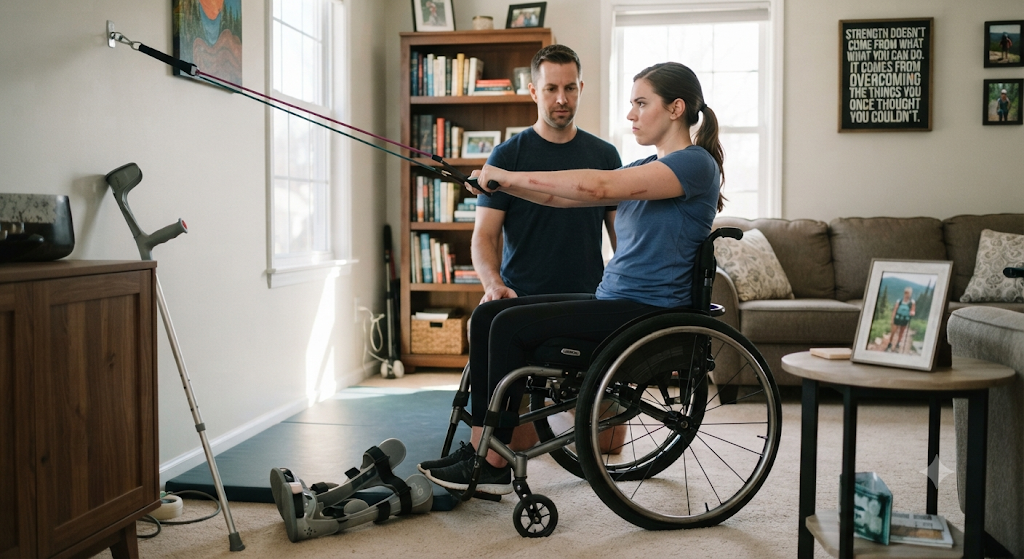
Although many people assume slip and fall accidents only cause minor bruises, the reality is often much different. Victims frequently suffer injuries that require surgery, physical therapy, and long-term medical care.
Broken bones, traumatic brain injuries, spinal cord damage, neck injuries, shoulder injuries, hip fractures, and torn ligaments are among the most common consequences of serious falls. Older adults are especially vulnerable, but people of all ages can experience permanent disabilities after a significant accident.
Some injuries may not become noticeable immediately. Pain, swelling, dizziness, or neurological symptoms can develop hours or even days after the incident. This is why seeking immediate medical attention is essential, even if you initially feel fine.
Who Is Responsible for Your Injuries?
Determining liability is one of the most important aspects of a slip and fall claim. Property owners are not automatically responsible simply because an accident occurred. Instead, it must be shown that they knew—or reasonably should have known—about the dangerous condition and failed to correct it within a reasonable amount of time.
Potentially responsible parties may include commercial property owners, landlords, property management companies, maintenance contractors, or government entities responsible for maintaining public property.
Your attorney will investigate the circumstances surrounding the accident to determine exactly who should be held accountable for your injuries.
Why You Should Hire an Elmwood Park Slip and Fall Lawyer
Insurance companies often attempt to resolve claims quickly by offering settlements that are far below the true value of your case. Without legal representation, many injury victims unknowingly accept compensation that does not fully cover future medical treatment or lost earning capacity.
An experienced Elmwood Park slip and fall lawyer understands how insurance companies operate and works to protect your interests throughout the claims process. Your attorney will collect evidence, interview witnesses, review surveillance footage, consult medical experts, and negotiate aggressively for a fair settlement.
If negotiations fail, your lawyer can file a lawsuit and present your case before a judge or jury.
Building a Strong Personal Injury Claim
Every successful slip and fall claim depends on credible evidence. The stronger your evidence, the more likely you are to recover fair compensation.
Important evidence often includes photographs of the accident scene, surveillance footage, maintenance records, witness statements, medical reports, and documentation showing how the injury has affected your daily life.
Because evidence can disappear quickly, contacting an attorney as soon as possible after your accident is one of the most important decisions you can make.
Compensation You May Be Entitled to Recover
A serious slip and fall accident can create financial hardships that continue long after your initial recovery. Illinois law allows injured victims to pursue compensation for both economic and non-economic damages.
Depending on your circumstances, compensation may include:
- Medical expenses, rehabilitation costs, and future healthcare needs.
- Lost wages, reduced earning capacity, and loss of future income.
- Pain and suffering, emotional distress, and reduced quality of life.
The value of every claim depends on factors such as the severity of the injury, available insurance coverage, medical expenses, and the long-term impact on your health and career.
Illinois Comparative Negligence Rules
Illinois follows a modified comparative negligence system. This means that even if you were partially responsible for your accident, you may still recover compensation, provided your share of fault does not exceed the legal limit.
Insurance companies frequently argue that victims were distracted, failed to notice an obvious hazard, or wore inappropriate footwear. These arguments are often intended to reduce settlement amounts.
An experienced attorney knows how to challenge these allegations by presenting evidence that demonstrates the property owner’s negligence was the primary cause of the accident.
What to Do After a Slip and Fall Accident
The actions you take immediately after your accident can significantly influence the success of your claim. Seeking prompt medical care is essential because medical records establish a direct connection between your injuries and the accident.
You should also report the incident to the property owner or manager, take photographs of the hazard if possible, preserve any physical evidence, and avoid making recorded statements to insurance companies before speaking with an attorney.
Early legal representation helps preserve evidence, protect your rights, and prevent costly mistakes during the claims process.
Choosing the Right Elmwood Park Slip and Fall Lawyer
Selecting the right attorney can make a significant difference in the outcome of your case. Look for a lawyer who has substantial experience handling premises liability claims, a strong history of successful settlements and verdicts, and a commitment to providing personalized attention to every client.
Most reputable personal injury lawyers work on a contingency fee basis, meaning you pay no attorney fees unless they recover compensation on your behalf. This allows injured victims to pursue justice without worrying about upfront legal costs.
Conclusion
A slip and fall accident can leave you facing painful injuries, expensive medical treatment, lost income, and uncertainty about your future. When unsafe property conditions caused your injuries, you should not have to bear those financial burdens alone. Illinois law allows injured victims to seek compensation from negligent property owners, but building a successful claim requires strong evidence, legal knowledge, and effective negotiation skills.
An experienced Elmwood Park slip and fall lawyer can investigate your case, establish liability, negotiate with insurance companies, and pursue the maximum compensation available under the law. By taking prompt legal action, you improve your chances of protecting your rights and securing the financial recovery needed to move forward with confidence.


The first missed payment usually comes with an excuse. Work was slow. The bank messed up. It’ll be there next week, promise. By the third or fourth missed month, you’ve stopped believing the excuses and started doing maths at the kitchen table, trying to work out how to stretch one income across rent, groceries, and your child’s school shoes.
Many parents end up in exactly this spot, and the question is always the same: My ex isn’t paying child support, so what can actually be done about it? More than you might think, as it happens.
A Court Order Isn’t a Polite Request
Let’s clear something up first. Alimony and child support aren’t gentlemen’s agreements between two exes. Once a judge signs that order, it’s the law. Skipping payments isn’t just rude or irresponsible; it’s defying a court, and judges tend to have very little patience for that.
Ask any family law solicitor what the biggest mistake is, and you’ll hear the same answer: waiting. Parents tell themselves things will sort themselves out, and meanwhile, six months of arrears pile up. The people who act early almost always recover faster and recover more. That’s not a legal theory. That’s simply what happens.
The Tools Courts Use to Make People Pay
There’s a whole menu of enforcement options, and some of them have real teeth.
Wage garnishment sits at the top of the list. The court tells your ex’s employer to take support straight out of each wage packet before your ex ever touches it. No chasing anyone down. The money just arrives.
Then there’s contempt of court. If someone has the means to pay and simply refuses, a judge can hold them in contempt, which can mean fines, covering your legal fees, and yes, time behind bars in stubborn cases. It’s remarkable how quickly a chequebook appears once prison enters the conversation.
The authorities can also go after assets. Tax refunds can be intercepted and sent to you instead. Charges can be placed on property. Bank accounts can be frozen.
And don’t forget licences. Courts in many places will suspend a driving licence, a professional licence, or even a passport when child support debt gets bad enough. Try working as a contractor or a nurse without your licence. People notice.
Unpaid Alimony Works a Little Differently
With alimony, you’ll usually need to apply to the court yourself rather than going through an enforcement agency. But the outcome looks similar: garnishment, a money judgment for everything owed, often with interest added on top. Delay costs the payer, not you.
Your Paper Trail Is Your Best Friend
A simple spreadsheet can sometimes win the day in a single hearing. A shoebox of crumpled receipts, on the other hand, can add months of delay while everything gets untangled. Judges love facts. Give them facts.
When the Payer Says They Can’t Afford It
Sometimes the hardship is genuine. People do get made redundant. Medical bills do happen. Fine, but the answer is asking the court to vary the order, not quietly deciding to stop paying. Until a judge changes the figure, the old figure stands, and every missed month becomes debt. Child support arrears are nearly impossible to wipe out. Even bankruptcy won’t touch them.
Don’t Sit on This
Here’s the bottom line. Every month you wait is money your children needed and didn’t get. Enforcement involves deadlines, filings, and procedural traps that catch out people going it alone, and a good family law solicitor knows the shortcuts, which remedy fits your situation, which paperwork moves fastest, and what your local judges expect to see. Let someone who’s done this a hundred times take the weight off your shoulders, so this stops being something you’re fighting alone.

Being named the executor of a will feels like an honour. But here’s the thing: most people say yes without knowing what they’re signing up for. I’ve seen it happen many times. A client agrees to act, then calls me six months later, stressed and confused.
The truth is simple. An executor of a will is legally answerable to every beneficiary named in it. Mistakes can cost you personally. So before you accept the role,talk to experienced probate solicitors and learn where the lines are drawn.
What Does an Executor Actually Do?
Think of yourself as the bridge between the deceased and the people who inherit. Your day-to-day tasks will usually include:
- Registering the death and finding the original will
- Arranging the funeral, if no one else has
- Looking after the deceased’s property
- Telling banks, pension providers, and government bodies
- Valuing the estate and filing inheritance tax forms with HMRC
- Paying any tax owed
- Applying for probate
- Passing assets to beneficiaries exactly as the will says
Note that word: exactly. Your job is to follow the will as written. Not to guess what the deceased “would have wanted.”
The Lines an Executor Must Never Cross
This is where good people get into trouble. The law places a fiduciary duty on you. In plain English, your loyalty belongs to the beneficiaries, not to yourself. So an executor must never:
- Change the terms of the will
- Take money or assets from the estate
- Buy estate property cheaply for themselves
- Sit back and let the estate lose value
- Remove a beneficiary or decide who deserves what
Here’s the part that surprises people most. If your actions cause a beneficiary to lose money, you can be held personally liable. Even doing nothing counts. And claims can be made against you for up to twelve years after the death. That’s a long time to look over your shoulder.
Can the Terms of a Will Ever Be Changed?
Yes, but never by the executor alone. The legal route is called a Deed of Variation. It lets beneficiaries redirect their inheritance, as long as everyone affected agrees. It must also be done within two years of the death.
Here’s a common example. A parent inherits £10,000 but wants it split between their two children. With a Deed of Variation, HMRC treats the will as if it had always said that. This can bring useful tax savings too. But remember, the choice sits with the beneficiaries. Never with you.
What If There’s More Than One Executor?
Co-executors must act together. Each one is also liable for what the others do. So staying in the loop isn’t optional.
What if one executor can’t act, or simply won’t? There are two routes. They can sign a Deed of Renunciation and step away for good. Or probate can be granted with “power reserved,” which lets them step in later if needed. One warning, though. Once you’ve started handling the estate, walking away gets messy. Get legal advice first.
A Few Questions I Hear Constantly
Can an executor also inherit?
Yes, and it’s very common with spouses. The only catch is that they must not have witnessed the will being signed.
Can an executor live in the deceased’s house?
Usually not, unless they already lived there or the will allows it. Otherwise, rent may need to be paid to the estate.
Can an executor sell property?
Yes, if it’s needed to pay debts or taxes, or to share out the estate. Any limits in the will still apply.
Don’t Navigate Probate Alone
Acting as an executor is a serious legal job. Even honest mistakes can land at your door. If you’ve been appointed and feel unsure at any stage, speak up early. Good advice costs far less than fixing a problem later.

From Sketch to Sign-Off: A Step-by-Step UX Prototyping Framework Used by Leading US Design Agencies

How do you choose the right metal for an engagement ring: platinum, gold or rose gold?

The Growing Interest in Peptides for Health and Wellness

Who Is Shameera? All You Need To Know About Charli XCX’s Mother

Who Is Gulliver Flynn Oldman? The Untold Story of Sir Gary Oldman’s Son

Meet Rosemary Turner: The Mother of Actor Callum Turner
-
Biographies8 months ago
Who Is Shameera? All You Need To Know About Charli XCX’s Mother
-
Biographies7 months ago
Who Is Gulliver Flynn Oldman? The Untold Story of Sir Gary Oldman’s Son
-
Biographies8 months ago
Meet Rosemary Turner: The Mother of Actor Callum Turner
-

 Biographies6 months ago
Who is Alexandra James? Inside The Life of Jeremy Clarkson’s Former Partner
-
 Biographies8 months ago
Who is Todd McRae? Meet Tate McRae’s Father
-
 Biographies7 months ago
Who Is Daniel Mara? The Untold Story of Kate Mara’s Private Sibling
-
 Celebrity8 months ago
Who Is Peter Hernandez? The Real Story of Bruno Mars’ Father
-
 Biographies8 months ago
Who Is Alvin Martin? All About the Whoopi Goldberg’s First Husband