Who Is Jimmie Lee Kirkpatrick? Inside the Life of Mike Tyson’s Half Brother

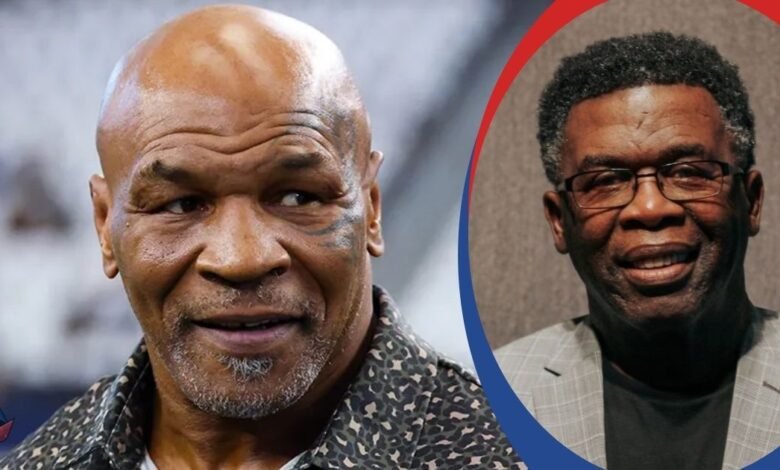
The story of Jimmie Lee Kirkpatrick is one of courage, hope, and deep personal growth. Many people know him as a high school football star from the 1960s. Others know him as an important civil-rights figure who broke racial barriers in Charlotte, North Carolina. Some people even learn about him through the powerful documentary A Binding Truth, which tells the story of his past, his family roots, and his friendship with a former classmate.
But the truth is simple: Jimmie Lee Kirkpatrick is much more than a former athlete. He is a man who used his life to open doors for others. In this article, we will look closely at his early life, the challenges he faced, the choices he made.
Profile Summary: Jimmie Lee Kirkpatrick
| Category | Information |
|---|---|
| Full Name | Jimmie Lee Kirkpatrick |
| Date of Birth | May 1948 |
| Age (2026) | 77 years old |
| Birthplace | Charlotte, North Carolina, USA |
| Height | Approx. 5’11” – 6’0″ |
| Weight (Prime) | Around 190–205 lbs |
| Nationality | American |
| Ethnicity | African American |
| Religion | Christian |
| Parents | Father: Jimmy “Curlee” Kirkpatrick Jr.; Mother: Irma Kirkpatrick |
| Siblings | Two sisters (maternal side); half-brother to Mike Tyson |
| Children | Jimmie Lee “JJ” Kirkpatrick Jr. (musician, performer) |
| Education | Oregon State University (B.S., M.A.); Lewis & Clark College (Admin Certification); Purdue University (football scholarship) |
| Famous For | Integrating Myers Park High football (1965), Shrine Bowl civil-rights case, featured in A Binding Truth |
| Career | Educator, coach, assistant principal (Portland Public Schools); speaker and consultant |
| Current Work | Co-owner of Stirring The Ashes LLC; part-time instructor at Portland Community College |
| Residence | Portland, Oregon |
| Net Worth | Estimated moderate income from 30-year education career and consulting (exact figure not public) |
| Notable Projects | A Binding Truth documentary; book Brothers by Enslavement (in progress) |
Early Life of Jimmie Lee Kirkpatrick
Jimmie Lee Kirkpatrick was born in May 1948 at Good Samaritan Hospital, a Black hospital in Charlotte. His childhood began in Grier Town, a small Black community filled with churches, small businesses, and families who supported each other. Life there was not easy because Charlotte was deeply segregated at the time. But it was also a place of warmth, culture, and strong values.
He was raised mostly by his mother, Irma Kirkpatrick, who worked hard and taught him to stay kind, focused, and brave. His father, Jimmy “Curlee” Kirkpatrick Jr., was not always present, and this shaped much of Jimmie Lee’s early life. He also grew up with two sisters from his mother’s side, which made the home feel busy and loud, but full of love.
Church played a big part in his childhood. He sang in the church choir and spent time around older family members who shared stories about the past. These memories became even more important later in life when he began researching his family roots. For example, he found records from Sharon Presbyterian Church showing that his ancestor, Sam Kirkpatrick, was baptized there in the 1850s as a “servant” — a word used at the time for enslaved people. Small discoveries like this helped Jimmie Lee Kirkpatrick understand more about where he came from.
Second Ward High School to Myers Park High School (1965)
For many years, schools in Charlotte were separated by race. Black students attended one group of schools, and white students attended another. Jimmie Lee Kirkpatrick began high school at Second Ward High School, an all-Black school. He liked the school, the community, and his friends. But as he got older, he started to think about his future. He wanted a real chance to play college football, and he wanted better academic opportunities too.
So in 1965, something big happened. Jimmie Lee Kirkpatrick decided to transfer to Myers Park High School, a large and mostly white school in a wealthy part of Charlotte. This was not an easy choice. Imagine being a teenager and walking into a school where almost no one looks like you. Imagine knowing that some people might not want you there. That is what he faced.
His Breakout Season on the Field
Once Jimmie Lee Kirkpatrick joined the Myers Park football team, something amazing happened. He became the star of the team almost immediately. He played running back, and he moved with speed, power, and confidence. People compared him to great players of the time, including legends like Jim Brown.
In 1965, Myers Park High School had a perfect season — 11 wins and 0 losses. Jimmie Lee scored 19 touchdowns, which became a school record that stood for many years. He helped the Mustangs win the regional state championship and gained attention across North Carolina. Coaches, newspapers, and even fans from rival schools began to notice his talent.
But the most powerful part of this success was not just the touchdowns or trophies. It was the fact that a young Black athlete was now leading a mostly white team to victory during a time when racism was still strong in the community. His success forced people to rethink old beliefs, and it opened doors for many Black athletes who would come after him.
The Shrine Bowl Controversy
Despite his record-breaking season, Jimmie Lee Kirkpatrick faced one of the biggest moments of discrimination in North Carolina sports history. Each year, the best high school players were chosen to play in the Shrine Bowl, an all-star game for top athletes from North and South Carolina. Everyone expected Jimmie Lee to be selected. He was clearly one of the best players in the state.
This unfair decision shocked the city. It led to a civil-rights lawsuit filed by famous attorney Julius Chambers, who argued that the Shrine Bowl had to end its racist policy. The case grew heated. Some people supported Jimmie Lee. Others strongly opposed him. The conflict exploded even more when the homes of Chambers and several civil-rights leaders were firebombed. This showed how dangerous and emotional the fight for equality was.
A judge later ruled that the Shrine Bowl must integrate in future years. Sadly, the ruling came too late for Jimmie Lee Kirkpatrick to play. But his courage led directly to change. Starting in 1966, Black athletes were finally allowed to participate. His stand changed the game forever.
Jimmie’s College Years
After high school, Jimmie Lee Kirkpatrick earned a football scholarship to Purdue University. It was a big step, and he hoped it would lead to a strong football future. He played running back and recorded 398 rushing yards between 1967 and 1968. But life at Purdue was not simple.
First, academics were hard. Jimmie Lee had come from a school system that had fewer resources than many white schools. He struggled with some subjects and found the pace challenging. Second, he suffered a knee injury that changed his athletic plans. And third, the political climate in the late 1960s was intense. Protests, the Vietnam War, and civil-rights issues weighed heavily on students.
By 1969, Jimmie Lee Kirkpatrick decided to leave Purdue. He felt lost and disappointed. So he moved to San Francisco, where many young people were joining peace movements. He lived in communal housing, became a Vietnam War protester, and explored activism.
Education and a Long Career in Portland Public Schools
After leaving California, Jimmie Lee Kirkpatrick decided he needed a new start. He moved to Oregon in the early 1970s. He wanted to finish his education and build a stable life. Oregon felt peaceful compared to the busy cities he had lived in, and it gave him the space to grow.
He earned both his bachelor’s and master’s degrees from Oregon State University. He studied education, sociology, and physical education because he wanted to understand people and help young students. Later, he completed an administrative certification at Lewis & Clark College, which helped him move into leadership roles.
For almost 30 years, Jimmie Lee Kirkpatrick worked in Portland Public Schools. He was a teacher, a coach, and an assistant principal. He worked in schools that were still learning how to integrate different races and cultures. Many school districts looked to him when they needed someone calm, patient, and fair. He helped guide students during racial conflicts and helped teachers understand how to support
Finding His Roots and the Truth About His Ancestors
When Jimmie Lee’s mother, Irma, passed away in 2002, he felt a strong need to learn more about his family history. He began searching through old church records, family stories, and historical documents. What he found changed his life.
He discovered that his ancestor, Sam Kirkpatrick, lived in the 1850s and was enslaved by a white family in Mecklenburg County. Sam’s baptism record at Sharon Presbyterian Church listed him as a “servant,” which was a common word used during slavery. This discovery connected Jimmie Lee Kirkpatrick to a painful part of American history, but it also gave him answers about his past.
This search helped him understand why some family stories felt incomplete. It helped him see how his early life, his struggles, and even his confidence came from generations before him. Imagine finding a piece of your history that was hidden for more than 150 years. That is what happened to him.
Reconnecting With De and Telling Their Story

Years after finishing his research, something surprising happened. A white classmate from Myers Park High School, Hugh “De” Kirkpatrick, reached out to him. Decades earlier, De had written his Harvard college essay about the racism that Jimmie Lee Kirkpatrick faced in the Shrine Bowl case. But now, the two men discovered something even deeper.
Through genealogy, they learned that De’s great-great-grandfather had enslaved Jimmie Lee’s great-great-great-grandfather. Imagine discovering that someone you went to school with is connected to your family’s painful past. It was emotional for both men. But instead of avoiding the truth, they chose to face it together.
Their journey became the heart of the documentary A Binding Truth, directed by Louise Woehrle. The film shows their honest conversations about race, history, and healing. It screened at film festivals, won top awards, and is set to air on PBS in 2025.
Jimmie Lee Kirkpatrick Family Life, His Son, and the Link to Mike Tyson
Even though Jimmie Lee Kirkpatrick is a public figure, he keeps much of his personal life private. He lives quietly in Portland, Oregon, where he enjoys his retirement, teaches part-time, and continues speaking at events.
His son, Jimmie Lee “JJ” Kirkpatrick Jr., is a well-known trumpeter who has performed with major artists like AJR and Phoebe Bridgers. JJ has his own successful music career and shares updates with fans on Instagram. This creative path makes the Kirkpatrick family proud, and it shows how talent can express itself in many forms.
Another interesting part of his story is his connection to the famous boxer Mike Tyson. Through their father, Jimmy “Curlee” Kirkpatrick, Jimmie Lee and Mike Tyson are half-brothers. For many years, Jimmie Lee did not know about this connection. He discovered it later in life during his family research. This connection does not define his life, but it adds another layer to his already complex story.
His Work Today and the Legacy He Continues to Build
Today, Jimmie Lee Kirkpatrick continues to influence people through his work and his story. In 2022, he helped create Stirring The Ashes LLC, a company that focuses on honest conversations about race, enslavement, and healing. He speaks at schools, community centers, and national gatherings to help others understand why history matters.
His legacy is also honored every year in Charlotte through the Jimmie Lee Kirkpatrick Award, created by the Charlotte Sports Foundation. This award includes a $10,000 scholarship and is given to a high school football player who shows talent on the field and heart in the community. The award keeps his story alive for young athletes who might not know the history behind the field they play on.
Along with Hugh “De” Kirkpatrick and journalist Gary Schwab, he is also working on a book called Brothers by Enslavement, which will tell the full story of their shared past and their journey toward healing. It will be another step in helping people understand how deep and connected American history truly is.
Final Thoughts
The life of Jimmie Lee Kirkpatrick is a powerful example of strength, hope, and change. He was a young boy from a segregated neighborhood. He became a brave student who walked into a school that was not made for him, He became an athlete who broke records. And he became a man who stood up against racism, even when it cost him opportunities.
But his journey did not end there. He spent decades helping students, uncovering his family history, and rebuilding friendships across racial lines.
FAQs
1. How old is Jimmie Lee Kirkpatrick today?
As of 2026, Jimmie Lee Kirkpatrick is 77 years old. He was born in May 1948 in Charlotte, North Carolina.
2. What made Jimmie Lee Kirkpatrick a key figure in civil-rights sports history?
He became a major civil-rights figure in 1965 when he transferred to Myers Park High School and broke racial barriers in high school football during segregation.
3. Who are Jimmie Lee Kirkpatrick’s parents?
He was raised by Irma Kirkpatrick, and his father was Jimmy “Curlee” Kirkpatrick Jr., who also fathered boxer Mike Tyson, making Jimmie Lee and Tyson half-brothers.
4. What is Jimmie Lee Kirkpatrick doing now?
He lives in Portland, Oregon, works as a consultant, teaches part-time, and co-owns Stirring The Ashes LLC, which leads discussions on race and healing.
5. What is the estimated net worth of Jimmie Lee Kirkpatrick?
His net worth is not publicly recorded, but it is believed to come from his long education career, speaking work, and consulting business.
Other Articles:
Who Is Faridah Ali? All About the Life of Lakiha “Kiki” Spicer’s Mother
Who Is Lorna Smith Tyson? All You Need to Know About Mike Tyson’s Mom
Who Was Jimmy Kirkpatrick? All You Need to Know About Mike Tyson’s Father